
In today's digital era, artificial intelligence (AI) has become a key force driving social progress and technological innovation, and is widely applied in various fields. Traditional static AI models have gradually exposed their limitations when facing dynamically changing data distributions, diverse user needs, and new tasks. This prompts us to think about how to enable AI systems to have the capabilities of dynamic perception, autonomous decision-making, and continuous optimization, so as to better adapt to the complex and ever-changing real world. This demand has driven the development of dynamic adjustment mechanisms, from multi-model intelligent routing to adaptive optimization within a single model, from online learning to reinforcement learning. A series of cutting-edge technologies provide possibilities for the dynamic and intelligent transformation of AI. This article will explore the evolution from static models to dynamic intelligence, analyze key technologies, application scenarios, and the changes they bring, and look ahead to the future development direction of AI dynamic intelligence.
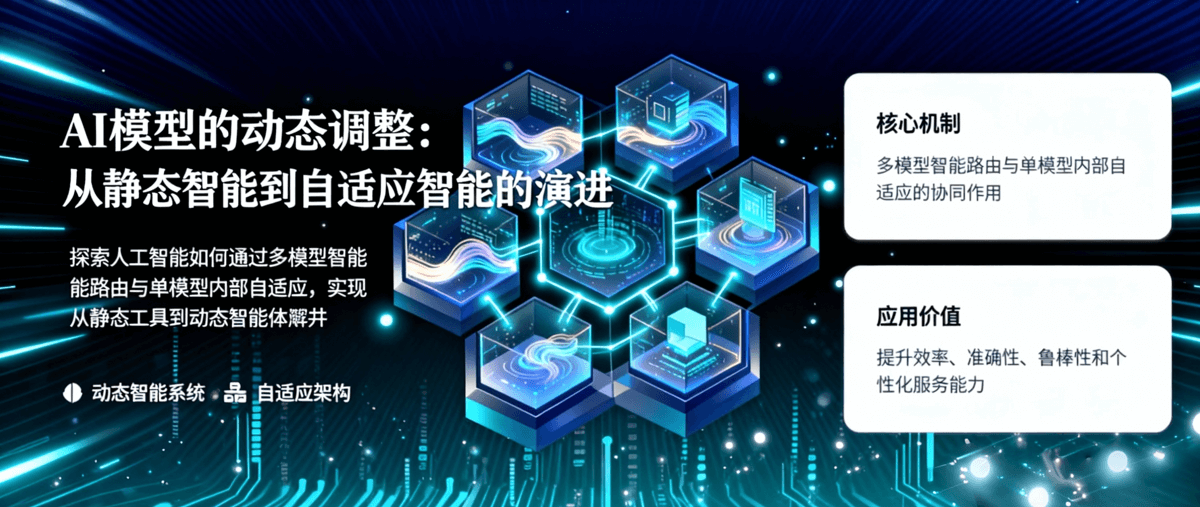
From Static Models to Dynamic Intelligence
The traditional AI model development process follows a relatively fixed lifecycle: offline training on large, static datasets, and deploying the trained model into the production environment. The limitation of this model is that once deployed, the model's knowledge and capabilities are "frozen," making it difficult to respond to dynamic changes in data distribution in the real world, the diversity of user needs, and the continuous emergence of new tasks.
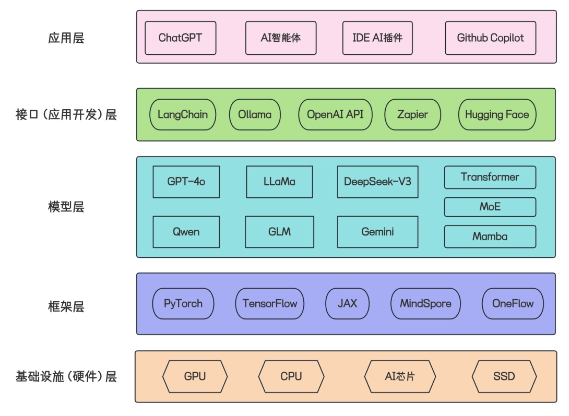
For example, if an image recognition model is mainly trained on daytime street scenes, its performance will significantly decline at night or under severe weather conditions. This phenomenon is called "Domain Shift." Similarly, a general language model cannot accurately answer professional questions in specific domains, such as medical diagnosis or legal consultation.
This static nature not only limits the breadth and depth of AI applications, but also brings high maintenance costs, because whenever new needs arise or data distribution changes significantly, it is often necessary to recollect data, annotate it, and train a completely new model from scratch, which is a time-consuming and resource-intensive process.
The Core Issues of Dynamic Adjustment
Implementing dynamic adjustment of AI models mainly revolves around two core issues: first, how to intelligently select the most suitable one among multiple pre-trained models to respond to user input; second, how to optimize output within a single model by dynamically adjusting parameters, structure, or inference strategies.
- Multi-Model Intelligent Routing: Solves the problem of "what to use," selecting the most suitable model from the model library based on input intent, complexity, and modality
- Internal Adaptation Within a Single Model: Solves the problem of "how to use it," dynamically adjusting model structure, parameters, or inference strategies during inference
Intelligent Routing and Selection Mechanisms Under Multi-Model Architectures
In the complex ecosystem of artificial intelligence applications, a single model often finds it difficult to respond to diverse and dynamic user needs. To overcome this limitation, multi-model architectures have emerged. The core idea is to build a "model library" composed of multiple specialized models, and dynamically select the most suitable model to handle a specific task through an intelligent "routing module."
The Basic Architecture and Advantages of Multi-Model Systems
A Multi-Model System is an advanced AI system design paradigm that abandons the traditional approach of relying on a single, massive, and general-purpose "giant" model, instead adopting a collection composed of multiple smaller, more specialized models (i.e., "expert models"). The core of the architecture lies in modular design. When a user request enters the system, the routing module first analyzes the request, understands its intent, domain, and complexity, and selects one or more most suitable models from the model library to handle the request.
Composition of a Multi-Model System
The core of a multi-model system consists of two key components: the Model Library and the Routing Module. The model library is a collection containing multiple pre-trained AI models, each with its own expertise. Models can be classified according to their capabilities; for example, some models excel at natural language understanding and generation (such as the GPT series), some perform excellently in image recognition (such as ResNet), and some focus on code generation or knowledge question answering in specific domains. This diversity enables the system to handle complex tasks across modalities and domains. The routing module is the "intelligent hub" of the entire system, whose responsibility is to analyze the input user request and, according to preset strategies or dynamically learned algorithms, select the most suitable model from the model library to handle the request. The decision-making process of the routing module can be based on various kinds of information, including keywords in the request, semantic vectors, users' historical behavior, contextual information, and even the real-time load and performance of the models.
Advantages of a Multi-Model System
Compared with a single-model architecture, the advantages of a multi-model architecture are mainly reflected in three aspects: specialization, scalability, and robustness. First, specialization is the core advantage. By assigning different tasks to models specifically optimized for those tasks, the system achieves performance far beyond that of a general-purpose model. Second, scalability is another highlight of a multi-model system. When a new task type or domain needs to be handled, it is only necessary to add a new expert model to the model library, without large-scale retraining or architectural adjustment of the entire system. Finally, robustness is enhanced. If an expert model fails or its performance declines, the routing module can quickly switch the request to another backup model or a suboptimal model, ensuring continuity and stability of service.
Multi-ModelCore Routing Strategies
In a multi-model system, the routing strategy is key to determining system performance. Currently, mainstream routing strategies include semantic routing, LLM-as-a-Router, rule-based routing, and machine learning model routing.
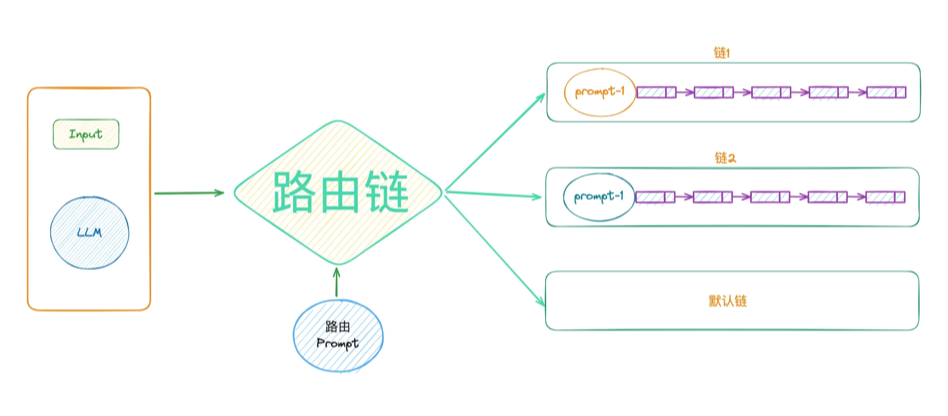
Semantic Routing
Semantic routing is an efficient and intelligent routing strategy. Its core idea is to use a vector space model to understand the deep meaning of a user query and match it with predefined "routes" or "intents." In specific implementation, the system prepares a set of representative example queries (utterances) for each predefined route (for example, "technical support," "sales inquiry," "small talk"). An embedding model (such as OpenAI's text-embedding-ada-002 or Hugging Face's sentence-transformers) is used to convert both the example queries and the user's real-time query into high-dimensional vectors. The routing decision process is to calculate the similarity between the user query vector and each route example vector (usually using cosine similarity), and route the query to the model or service corresponding to the route with the highest similarity. The advantage of this method lies in its efficiency and low cost. Vector similarity calculation is very fast and does not depend on expensive large model calls.
LLM-as-a-Router
"LLM-as-a-Router" is a more powerful and flexible routing strategy that directly uses a large language model (LLM) as the central decision engine. In this mode, the user's query, the list of models available to the system, feature descriptions, and routing instructions (usually provided in the form of a carefully designed prompt) are input together into the LLM. Through its powerful natural language understanding and reasoning capabilities, the LLM analyzes the intent, complexity, and required skills of the query, and then decides which model or models to invoke to handle the task. The greatest advantage of this approach lies in its high accuracy and context-awareness. The LLM can understand complex, multi-part queries, perform multi-step planning and tool invocation, and solve complex problems that require multiple models to work together. For example, for the query "Help me find an image of a cat, then describe it with a poem," the LLM router first invokes the image generation model to generate the image, and sends the image together with the description request to the text generation model. The cost of this strategy is higher expense and latency, since each routing decision requires one LLM inference.
Rule-based Routing
Rule-based routing is the simplest and most direct routing strategy, making decisions based on predefined "if-then" rules. The rules are usually based on explicit features of the user query, such as keyword matching, regular expressions, user ID, geographic location, or HTTP header information. For example, the system sets a rule: "If the query contains 'image' or 'picture,' route to the image generation model"; "If the user is a VIP, route to the most powerful large model." The main advantages of rule-based routing are simple implementation, extremely low cost, and fast response speed. Its decision process is deterministic and easy to debug and maintain. The disadvantages are equally obvious: lack of flexibility and generalization ability. The rules are static, need to be updated manually, and are difficult to handle users' diverse ways of expression and emerging query patterns.
ML Model-Based Routing
ML model-based routing is a strategy between rule-based routing and LLM routing. It performs routing decisions by training a dedicated, usually small, machine learning model (such as a classifier). This routing model can be a traditional machine learning model (such as SVM or a decision tree), or it can be a lightweight neural network. Its training data consists of a large number of user query samples and their corresponding optimal target model labels. At inference time, the user query is input into this routing model, and the model outputs the probabilities of one or more target models, based on which the system performs routing. The advantage of this method is that, compared with rule-based routing, it has better generalization ability and flexibility and can learn more complex patterns; compared with LLM routing, its computational cost is lower and its latency is smaller.
Dynamic Adjustment and Adaptive Mechanisms Within a Single Model
In addition to achieving dynamic adjustment at the macro level through multi-model routing, AI systems can achieve dynamic adaptive adjustment at the micro level, that is, within a single model. Internal adjustment mechanisms enable the model to dynamically change its own structure, parameters, or computation path according to different input data, achieving higher efficiency and performance when handling diverse tasks.
Dynamic Neural Networks
Dynamic Neural Networks are network models that can dynamically adjust the network structure or computation graph according to the characteristics of the input sample. Unlike traditional static networks (which execute the same computation process for all inputs), dynamic networks can allocate fewer computational resources to "simple" inputs and more computational resources to "difficult" inputs, thereby achieving the best overall balance between computational efficiency and model performance.
Dynamic Depth and Dynamic Width
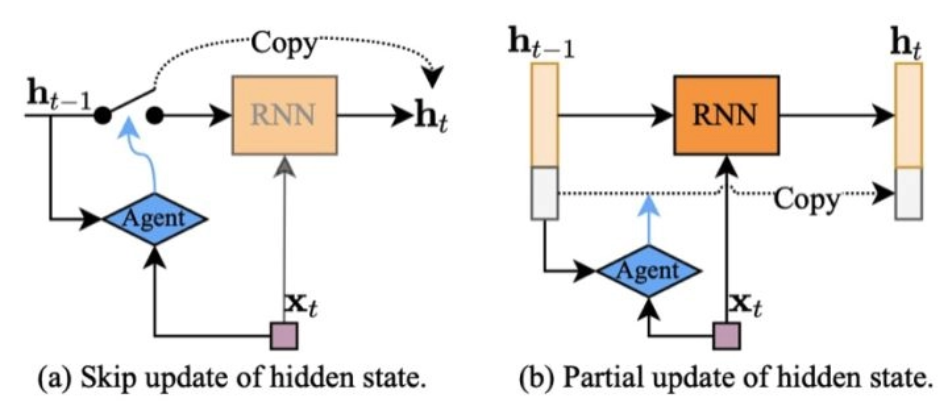
Dynamic depth means the model dynamically determines the network's inference depth based on the complexity of the input. A common implementation is the Early Exit mechanism, in which additional classifiers (called "exits") are added at certain intermediate layers of the network. During inference, if a sample's prediction confidence at an intermediate exit is high enough, the model can terminate computation early and directly output the result. Another approach is the Layer Skipping mechanism, in which the model learns a policy to selectively skip the computation of certain intermediate layers based on the input sample, dynamically adjusting the network's effective depth.
Dynamic Width means that when the model performs the computation of each layer, it dynamically selects and activates a subset of neurons or channels based on the input. For example, in a fully connected layer, the model can learn a gating mechanism to activate only the subset of neurons most relevant to the current input and "turn off" other irrelevant neurons, which can significantly reduce computation. The idea of dynamic width is widely used in Mixture-of-Experts models (MoE), in which the model selects a small subset of experts from a pool of "experts" at each layer to perform computation, realizing a form of Conditional Computation.
Mixture-of-Experts Models (MoE)
The Mixture-of-Experts model (Mixture-of-Experts, MoE) is a very successful and popular architecture for realizing dynamic network width. The core idea of MoE is to replace a massive neural network layer (usually the feed-forward network FFN layer in a Transformer) with a structure composed of multiple relatively small "expert" networks and a "Gating Network" or "Router". In an MoE layer, for each input token (or a small batch of tokens), the gating network decides which expert or experts to route it to for processing. For example, Google's GShard model successfully scaled a Transformer to over 600 billion parameters, with the core being the use of Top-2 gated MoE layers in the FFN layers of the encoder and decoder.
Attention Mechanisms and Gating Mechanisms
In deep learning models, especially the Transformer architecture, the Attention Mechanism and the Gating Mechanism are core techniques for realizing dynamic control of information flow. They enable the model to dynamically decide which information to focus on, which information to ignore, and how much information to pass between different modules, based on the importance of the input content.
Attention Mechanism
The essence of the attention mechanism is a dynamic weight allocation mechanism. In Self-Attention, the model computes a "Query" vector for each element in the sequence (such as a word or a token), compares it with the "Key" vectors of all other elements in the sequence, and computes the relevance scores between them. After the scores are normalized (such as through the softmax function), they form a set of weights, which are used to perform a weighted sum of the "Value" vectors of all elements in the sequence to obtain the final representation of that element. This process is dynamic: the weights are computed in real time based on the input sequence itself, and different input sequences will produce completely different attention weight distributions. This enables the model to capture long-range dependencies within the sequence, unrestricted by the physical distance between elements.
Gating Mechanism
Gating mechanisms are another important technique for achieving dynamic information control, deciding the proportion of information transmitted within the model by learning a "gate." One of the most famous gating mechanisms is the forget gate, input gate, and output gate in Long Short-Term Memory (LSTM) networks, which together control the flow of information in a memory cell (Cell State), enabling the model to selectively remember and forget information and effectively handle long sequence data.
Transformer²
Transformer² is a novel and pioneering adaptive large language model (LLM) framework that proposes an entirely new dynamic adjustment mechanism, allowing the model to dynamically adjust its own weight matrices during inference according to task requirements. The core idea of the framework is to decompose the LLM's "brain" (i.e., the massive weight matrices) into multiple independent, meaningful components, and through a learned policy, dynamically combine these components to adapt to different downstream tasks.
The Core Idea of Transformer²
The core of the Transformer² framework lies in a unique two-step process that runs through the model's training and inference stages. In the training stage, the framework introduces a method called "Singular Value Finetuning" (SVF). SVF uses reinforcement learning (RL) to train a set of compact representations called "z-vectors." Each z-vector corresponds to a specific downstream task and is essentially a set of "amplifiers" or "attenuators" used to adjust the strength of each component in the model's weight matrices. In the inference stage, the model adopts a two-stage adaptation strategy. The model analyzes the incoming task and understands its requirements; based on the identified task type, it applies the corresponding z-vector to modulate the model's weights, generating the final response best suited to that task.
Singular Value Finetuning (SVF)
Singular Value Finetuning (SVF) is the key technology for the Transformer² framework to achieve dynamic weight adjustment. SVF uses SVD as a "surgeon" to decompose the massive, complex weight matrices in an LLM into smaller, more meaningful, and independent components. Research has found that by enhancing the signals of certain components while suppressing others, the performance of an LLM on specific downstream tasks can be improved. Based on this finding, SVF learns a set of z-vectors during the training stage, with each z-vector corresponding to a task. A z-vector is a compact representation that specifies the desired strength of each decomposed component in the weight matrix.
Technical Implementation Methods of Dynamic Adjustment Mechanisms
To implement the complex dynamic adjustment mechanisms described above, support from underlying technologies is indispensable. These methods can be broadly divided into three categories: online learning, reinforcement learning, and model fine-tuning.
Online Learning
Online learning is a technology that enables a model to continuously learn and update in real time from a data stream. Unlike traditional training, which relies on batch data prepared all at once, it processes newly arriving data one by one or batch by batch, adjusting model parameters in real time. This approach enables the model to dynamically adapt to rapidly changing data distributions, making it very suitable for scenarios such as recommendation systems, financial risk control, and real-time monitoring. For example, an online education platform can use online learning to dynamically adjust learning content and difficulty based on students' real-time answering performance; in robot navigation (such as SLAM technology), the model can continuously compare predictions with sensor data, reducing cumulative errors through online updates and improving accuracy and robustness in dynamic environments.
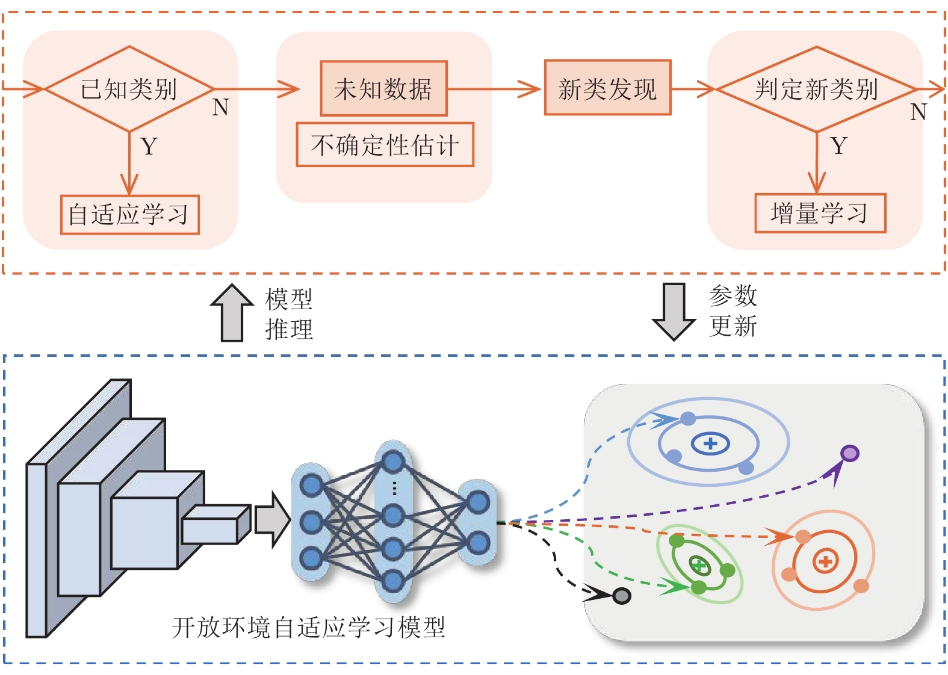
Reinforcement Learning
Reinforcement learning uses a "trial-and-error with feedback" mechanism to enable AI models (agents) to learn optimal policies through interaction with their environment. The model adjusts its behavior based on the rewards or punishments it receives for its actions, gradually optimizing its decisions. This approach is especially suitable for complex tasks where it is difficult to define an explicit loss function or where large amounts of labeled data are lacking, such as game playing, autonomous driving decisions, and so on. In dynamic adjustment, reinforcement learning can be used to optimize model generation strategies, multi-model routing selection, and more. For example, in image generation, reinforcement learning uses human preferences or aesthetic scores as reward signals to guide the model to generate images that better meet requirements; in interactive image editing, through multiple rounds of feedback training, the model can learn to handle complex user instructions.
Model Fine-tuning
Model fine-tuning is a technique that enables a pretrained model to quickly adapt to a specific task or domain. The basic idea is: first train a base model on large-scale general data, then use small-scale data for the specific task to make targeted adjustments to the model parameters. Fine-tuning can efficiently transfer existing knowledge, enabling the model to quickly achieve excellent performance on new tasks. To reduce the cost of fine-tuning large models, parameter-efficient fine-tuning (PEFT) techniques have emerged, such as LoRA, Adapter, and other methods, which greatly save computational resources while maintaining effectiveness by training only a small number of newly added parameters and freezing the vast majority of original parameters. Such techniques enable enterprises or individuals to quickly customize dedicated models at lower cost for vertical domains such as customer service, healthcare, and programming.
Dynamic adjustment drives the evolution of AI products
Dynamic adjustment mechanisms do not remain at the theoretical level; they have already been widely applied and validated in numerous AI application products, greatly improving product intelligence and user experience.
Intelligent customer service systems
Intelligent processing of multimodal input
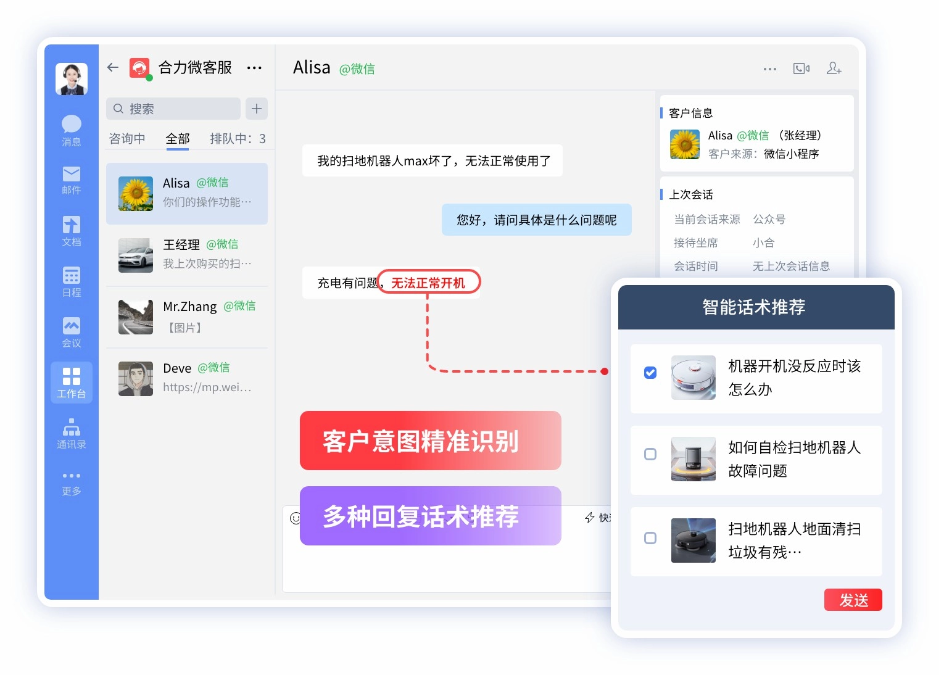
Modern intelligent customer service systems integrate multiple models to handle text, voice, and image input. For example, when a user uploads a product image to ask about color, the system first recognizes the image content through a vision model, then passes the result along with the text question to a language model to generate an answer. This multimodal collaborative way of working enables customer service to handle complex scenarios and provide comprehensive service.
Dynamic adjustment of personalized replies
Intelligent customer service dynamically adjusts the content and tone of replies by analyzing information such as user history and purchasing behavior. For example, for VIP customers, it invokes a warmer and more professional model, while for new users it adopts patient, guiding replies. It adjusts reply strategies according to user emotions (such as anger or anxiety), prioritizing emotional soothing to improve customer satisfaction.
Voice assistants
Dynamic decomposition of complex instructions
Voice assistants handle complex instructions through dynamic adjustment mechanisms. For example, if a user asks, "Find the highest-rated Italian restaurant nearby and navigate there, and also remind me about a meeting tomorrow afternoon," the system decomposes the instruction into three tasks: restaurant search, navigation, and schedule reminder, and dynamically invokes the relevant services to complete the operations. This capability allows voice assistants to evolve from "question-answering machines" into true "intelligent assistants."
Context understanding in multi-turn dialogue
In multi-turn dialogue, the voice assistant continuously updates its understanding of the user's intent by dynamically maintaining dialogue state. For example, if the user first asks "Beijing's weather tomorrow," then asks "What about Shanghai," the system can understand that this is an elliptical sentence, inherit the key information from the previous turn (the time "tomorrow"), and combine it with the new input (the location "Shanghai") to generate an accurate reply. Dynamic context understanding makes dialogue more fluent and natural.
Recommendation systems
Online learning and dynamic model updates
Recommender systems update model parameters in real time through online learning algorithms. For example, when a user frequently browses sports equipment, the system immediately adjusts the user profile, increases the weight of the "sports" tag, and subsequently recommends more sports-related products. The real-time feedback mechanism allows the recommender system to respond quickly to changes in user interests, avoid "information cocoons," and maintain the freshness of recommendations.
Dynamically Adjusting User Profiles and Recommended Content
Recommender systems dynamically adjust user profiles, optimizing profile vectors based on long-term interests and short-term behavior. For example, during "Double Eleven," they increase users' sensitivity to "discounts" and "promotions," recommending more promotional activities. At the same time, by adjusting the "exploration-exploitation" parameter, they find a balance between satisfying users' current needs and discovering potential interests, improving the accuracy and diversity of recommendations.
Model Monitoring and Continuous Optimization
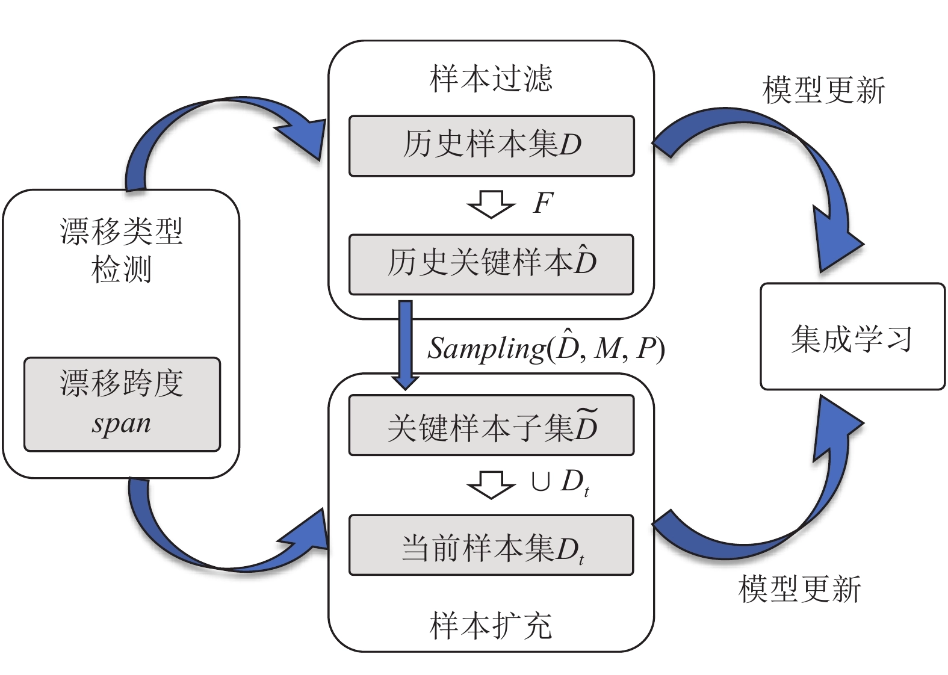
Building an AI system with dynamic adjustment capabilities is only the first step. To ensure that the system remains stable, reliable, and high-performing over long-term operation, a comprehensive model monitoring and continuous optimization system must be established. Real-world data is constantly changing, and after deployment, models will inevitably face performance degradation, namely "model drift." Therefore, continuous monitoring, diagnosis, and optimization of models are indispensable parts of dynamic AI system lifecycle management.
Detection and Diagnosis of Model Drift
Model drift refers to the phenomenon in which performance gradually degrades after deployment because the data distribution changes over time. To promptly detect and respond to model drift, an effective monitoring mechanism must be established. This mechanism usually continuously collects the model's input data and prediction results and compares them with historical data. Through statistical methods such as the Population Stability Index (PSI), the Kolmogorov-Smirnov test (K-S test), and others, it can quantitatively detect whether the distribution of input data has changed significantly. At the same time, it is necessary to monitor the model's key performance indicators (KPIs), such as accuracy, precision, recall, and so on. Once a sustained downward trend is found in the indicators, model drift may have occurred.
Online Update Strategies and A/B Testing
After model drift or performance degradation is detected, the model needs to be updated. Online update strategies support incremental learning or retraining with new data without interrupting service. For example, a sliding window approach is used to update the model using only data from the most recent period, ensuring that the model can learn the latest data patterns. After the model is updated, to verify whether the new version performs better than the old version, A/B testing is usually used. A portion of user traffic (for example, 10%) is directed to the new model (Group B), while most users (Group A) still use the old model. By comparing the performance of the two groups on key business metrics (such as click-through rate, conversion rate, and user satisfaction), the effect of the new model is scientifically evaluated. Only when the performance of the new model is statistically significantly better than that of the old model will it be fully rolled out to all users.
The Importance of Model Monitoring in Dynamic Adjustment
Model monitoring is the bridge connecting model deployment and continuous optimization, and it plays the role of a "sentinel" and "dashboard" in the entire dynamic adjustment system.
- Risk warning: Through real-time monitoring, abnormal fluctuations in model performance or declines in data quality can be detected in a timely manner, providing early warning and avoiding business losses caused by model failure.
- Performance evaluation: The monitoring system provides quantified performance metrics, helping developers and business stakeholders understand the model's actual operational performance and providing data support for model optimization and iteration.
- Problem localization: When problems occur with the model, detailed monitoring data (such as input/output logs, feature distributions, performance metrics, etc.) can help engineers quickly locate the root cause of the problem, whether it is a data problem, a model problem, or a code problem.
- Compliance and auditing: In certain regulated industries (such as finance and healthcare), model monitoring is a necessary condition for meeting compliance requirements. Complete monitoring records can provide an audit basis for the model's decision-making process, ensuring fairness, transparency, and interpretability.
Future outlook
The future AI dynamic adjustment mechanisms will evolve along three core directions: more intelligent, more efficient, and more trustworthy, marking a fundamental transformation of AI from a "tool" to an "intelligent agent."
- First, moving toward deep integration and perception. Future systems will break through the limitations of a single modality and achieve multimodal adaptation, dynamically fusing information and adjusting processing strategies based on different inputs such as text, images, and speech. At the same time, the learning process will become more real-time and distributed. The combination of online learning and federated learning will enable AI to continuously evolve using massive edge data while protecting privacy.
- Second, pursuing ultimate efficiency and self-organization. The "intelligence" of dynamic adjustment is not only reflected in decision-making, but will also penetrate into the model architecture itself. Neural architecture search and dynamic structure technologies will enable models to automatically generate or reorganize optimal computation graphs according to task requirements. The emergence of more powerful general adaptive frameworks will standardize and modularize technologies such as routing, fine-tuning, and reinforcement learning, greatly lowering the threshold and cost of building dynamic AI applications.
- Third, building the cornerstone of transparency and trust. To ensure the safety and controllability of dynamic intelligence, future core technologies will deeply integrate interpretability and causal inference capabilities. This will make the model's dynamic decision-making process no longer a "black box," but traceable, understandable, and intervenable, laying an ethical and safety foundation for the reliable deployment of AI in critical fields.
Dynamic adjustment mechanisms are the core of achieving the leap from static models to dynamic intelligent agents. By endowing AI systems with self-perception, autonomous decision-making, and continuous optimization capabilities, they not only solve the current adaptability problems of AI in complex real-world scenarios, but also pave a critical path toward more advanced artificial general intelligence (AGI). Although challenges remain in technical complexity, cost balance, and safety governance, a new era driven by adaptive intelligent agents and characterized by greater intelligence and efficiency is already clearly visible. We are moving toward a future in which AI can truly understand and dynamically adapt to the world.