
What is CoLingo
CoLingo is an innovative AI application development platform that simplifies the process of creating customized AI assistants. CoLingo's core components include Agent, Knowledge, Chat, and API. The components work together to provide powerful backend support and user-friendly frontend interaction. CoLingo's multi-functional plugins, support for multiple large language models, and rich frontend components make it a multi-functional and easy-to-use development environment.
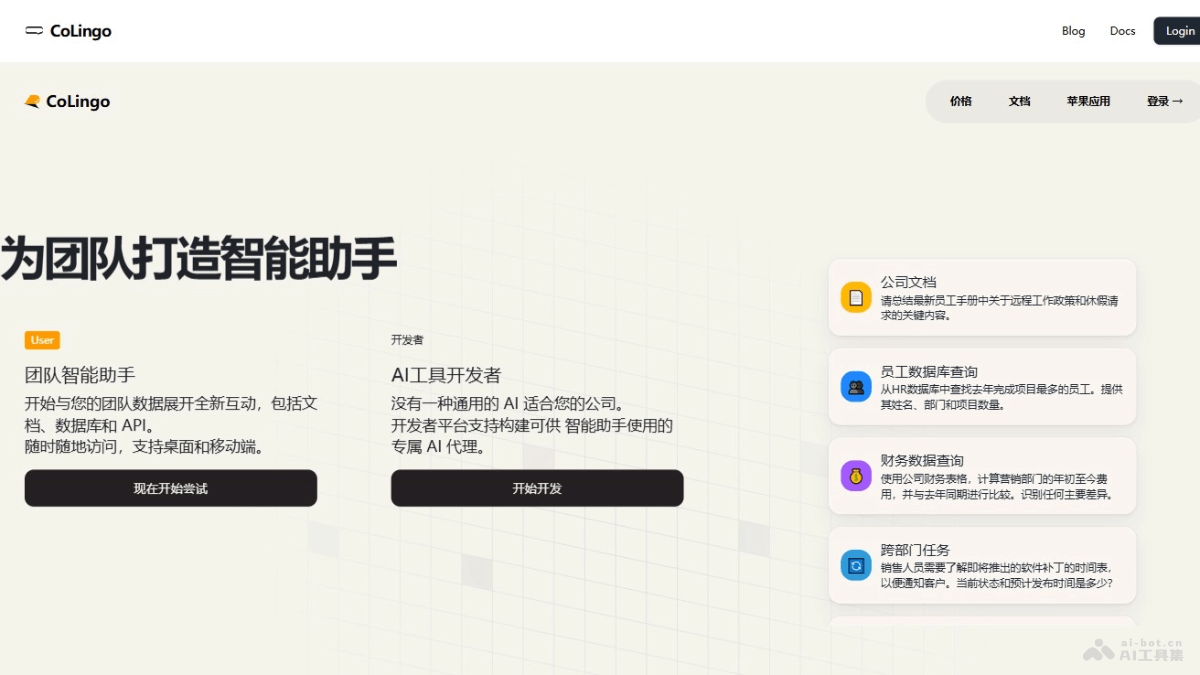
CoLingo's Main Features
- Role Setting: Set a role for the bot, such as customer service, sales, instructor, marketer, expert, etc., to match the business image.
- Knowledge Base Creation: Enter documents to create a knowledge base, allowing the bot to learn and optimize documents at any time based on training.
- System Integration: Closely integrate with existing systems to provide more efficient and intelligent services.
- Custom Interaction Interface: Supports custom interaction interfaces, serving as a professional image for the company's business and providing 24/7 service.
- Multi-Channel Terminal Publishing: Supports multiple channels such as web pages, WeChat groups, JS embedded web pages, and API access to meet the needs of different business scenarios.
- Data Viewing: Provides data viewing functionality to help users understand the effectiveness of the bot's knowledge services and optimize the bot based on data reports.
How to Use CoLingo
- Register and Log In: Visit CoLingoofficial website, register an account, and log in.
- Role Setting: When creating an AI assistant, set a role for it, such as customer service, sales representative, or marketing expert. The role will determine the AI assistant's interaction style and knowledge base.
- Knowledge Base Creation: Upload relevant documents to create a knowledge base. The documents will be learned by the AI assistant to answer questions.
- System Integration: If you want the AI assistant to integrate with existing systems, you need to follow the integration guide provided by CoLingo.
- Custom Interaction Interface: Design and customize the AI assistant's interaction interface according to business needs.
- Multi-Channel Terminal Publishing: Choose the channels where you want the AI assistant to provide services, such as web pages, WeChat groups, or API access, and configure them accordingly.
- Data Monitoring: After deploying the AI assistant, track its performance and user interactions using the data monitoring tools provided by CoLingo.
- Optimization and Iteration: Based on collected data and user feedback, continuously optimize the AI assistant's performance, update the knowledge base, and improve the interaction process.
- Using the API: Developers use the API provided by CoLingo to directly interact with callable objects and support products.
- Multi-Functional Plugins and Frontend ComponentsUse the plugins and components provided by CoLingo to enhance the AI assistant's functionality, such as search and database connections.
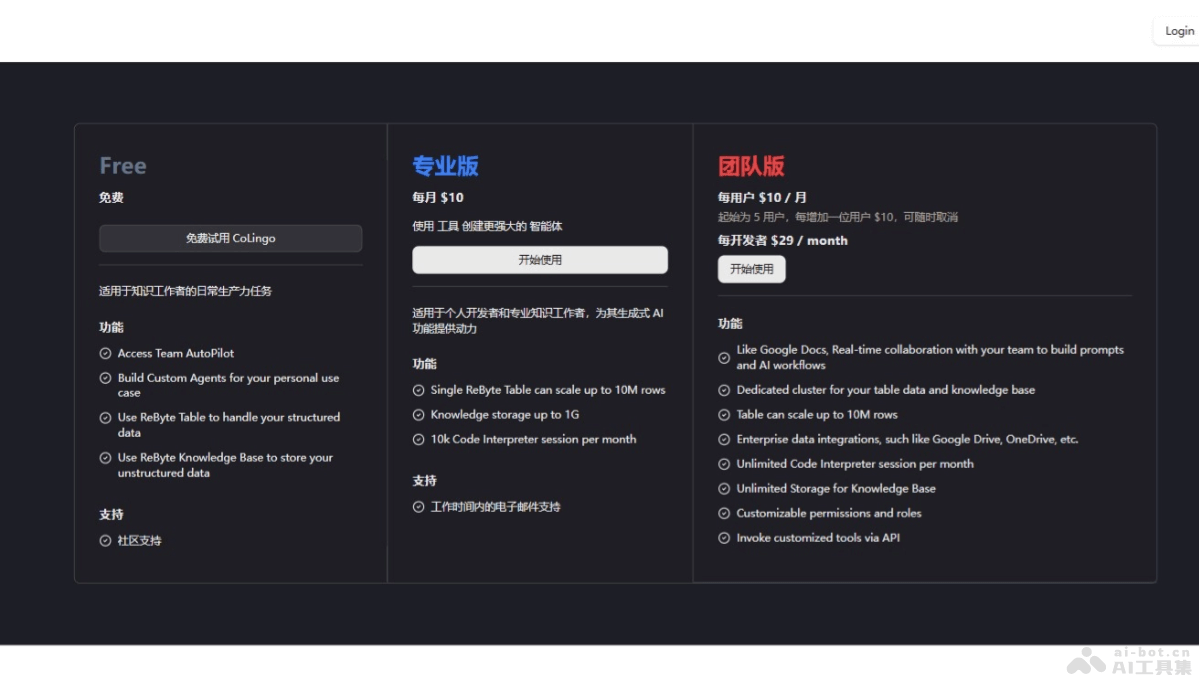
CoLingo's Product Pricing
- Free Version: Access Team AutoPilot to build custom agents for personal use cases.
- Professional Version: $10 per month. A single ReByte Table can scale to 10 million rows, knowledge storage space up to 16GB, and 10k code interpreter sessions per month.
- Team Version: $10/user/month, starting at 5 users, $10 for each additional user, $29/month per developer. Similar to Google Docs, collaborate with your team in real time to build prompts and AI workflows.
CoLingo Use Cases
- Customer Service: AI assistants provide 24/7 customer support, answer common questions, and reduce the workload of customer service teams.
- Sales Support: During the sales process, AI assistants help customers learn about product information, provide personalized recommendations, and assist in completing transactions.
- Education and Training: Serve as a virtual instructor to assist teaching, provide learning resources, evaluate student assignments, and conduct mock exams.
- Marketing Automation: AI assistants analyze customer data, provide market trend analysis, automate marketing activities, and improve marketing efficiency.
- Technical Support: AI assistants help users solve technical problems, provide troubleshooting guidance, and remotely assist in resolving complex issues.