
In today's rapidly evolving artificial intelligence landscape, agents have become a key force driving industrial transformation. Data shows that by 2025, the global agent market size will exceed $100 billion, and more than 70% of enterprises are actively deploying agent applications. Faced with numerous types of agent solutions, how to choose the most suitable architecture has become a common challenge for enterprises. Should you choose a reflex agent that responds quickly, or a goal-based agent skilled at complex planning? Should you adopt a learning agent capable of autonomous optimization, or a utility-based agent adept at balancing multiple objectives? This article systematically analyzes the technical characteristics and application scenarios of five major agent types, covering the complete technology spectrum from basic reflex agents to advanced learning agents. Through real-world cases and selection guidelines, it helps enterprises make precise decisions in their intelligent transformation according to their own business needs.
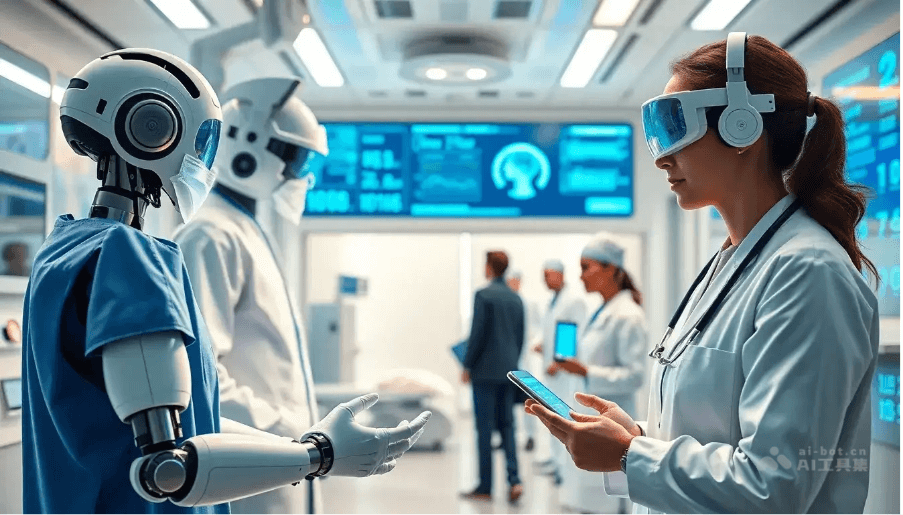
Agents — the "digital employees" of the AI era
What is an agent (AI Agent)?
An agent (AI Agent) is a core concept in the field of artificial intelligence, representing a computational entity that can autonomously perceive its environment, make decisions, and take actions to achieve specific goals. Unlike traditional software programs that passively execute instructions, agents possess three core characteristics: autonomy, reactivity, and proactivity. Autonomy means that an agent can operate independently and complete tasks without continuous human intervention; reactivity refers to its ability to perceive changes in the environment in real time and make corresponding adjustments; proactivity means that an agent can not only react to the environment, but also proactively take a series of actions to achieve preset goals.
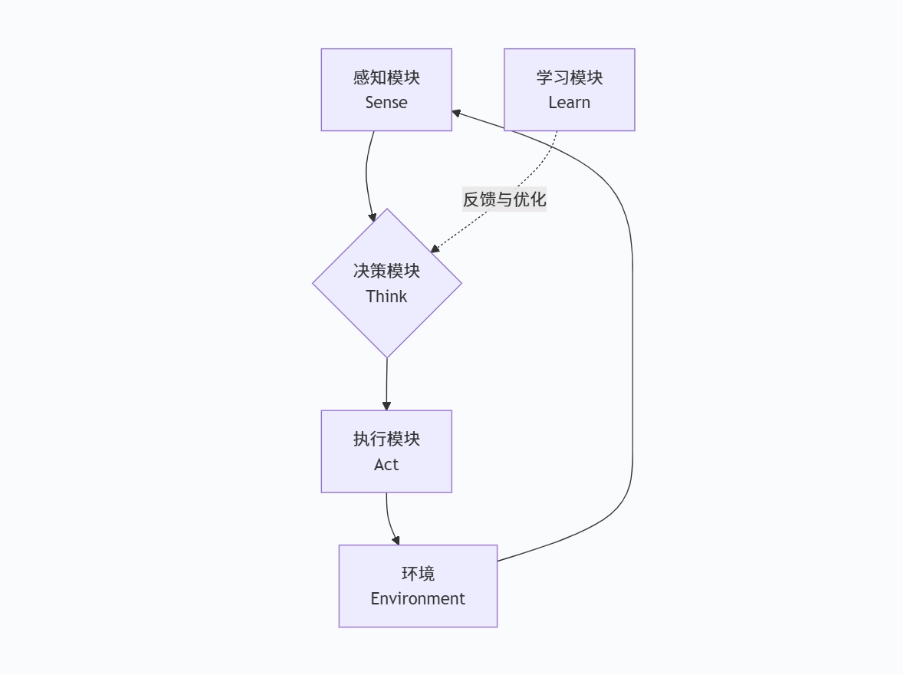
At the technical implementation level, modern agents are typically composed of four core modules: the perception module, the decision-making module, the action module, and the learning module. The perception module is responsible for collecting environmental information through sensors (such as cameras, microphones, API interfaces, etc.); the decision-making module uses algorithms and models to formulate action plans based on perceived information and internal goals; the action module translates decisions into concrete actions through actuators (such as robotic arms, speakers, API calls, etc.); the learning module continuously optimizes and updates the decision-making model by analyzing action results and feedback, achieving self-evolution.
According to Google Cloud's official definition, an AI agent is a software system that uses artificial intelligence technologies to achieve goals and complete tasks on behalf of users, demonstrating capabilities in reasoning, planning, and memory, possessing a certain degree of autonomy, and being able to learn, adapt, and make decisions independently. The definition emphasizes the role of agents as "digital employees" or "intelligent partners," with the ultimate goal of enhancing human capabilities rather than simply replacing humans, allowing us to focus on more creative and strategic work. The application scope of agents is extremely broad, from simple automation tasks (such as thermostat control) to complex decision support (such as financial trading), and further to multi-agent collaboration systems (such as intelligent traffic management). They are reshaping the operating models of various industries.
Why have agents become the core of AI development in 2025?
Entering 2025, AI Agents have rapidly evolved from a cutting-edge academic concept into a core technological force driving industrial transformation. Their emergence as the focus of AI development mainly stems from the leap in technological maturity, the surge in market demand, and the enormous potential to solve real business problems. First, generative AI technologies represented by large language models (LLMs) have made breakthrough progress, providing AI Agents with an unprecedented "brain." Powerful models endow AI Agents with deeper language understanding, logical reasoning, and task planning capabilities, transforming them from simple rule-driven tools into "agents" capable of complex thinking and autonomous action. Enterprises' demand to improve efficiency, reduce costs, and enhance competitiveness is increasingly urgent. It is predicted that in 2025, the global AI Agent-related market size is expected to exceed $200 billion, showing strong growth momentum.
At the same time, the "AI Agent Technology and Application Research Report (2025)" released by the China Academy of Information and Communications Technology points out that AI Agents are moving from laboratories to the core of industry at an unprecedented speed. The transformation from "tool" to "partner" marks that AI applications have entered a brand-new stage—the "AI Agent era." AI is no longer a chatbot that passively responds to user queries, but an autonomous system that can proactively understand needs, plan tasks, invoke tools, and collaborate.
In-depth Analysis of Five Core Agent Types
According to the complexity and working principles of an agent's "brain" (decision-making module), we divide them into five major types. This is an evolutionary process from "conditioned reflex" to "deliberation" and then to "self-evolution."
Type One: Reflex Agent—the Fast and Precise "Conditioned Reflex Responder"
- Meaning: A reflex agent, also called a simple reflex agent, is the most basic and simplest form in the spectrum of agent technologies. Its core working principle is based on a direct "sense-act" mapping mechanism, responding to the environment through a series of preset "condition-action" rules. When the agent perceives a specific state of the environment through sensors, it immediately triggers the corresponding preset action, and the entire process does not involve complex reasoning, planning, or memory. This design gives reflex agents an unparalleled advantage in response speed, with decision latency usually at the millisecond level, making them very suitable for scenarios with extremely high real-time requirements.。
- Working Principle: The agent internally has a set of preset "if... then..." rules. It perceives the current environment, and if the condition matches a certain rule, it immediately executes the corresponding action. It has no memory function and does not consider the past or the future.
- Technical Characteristics:
- Based on "condition-action" rules.
- Extremely fast response speed (millisecond level).
- Simple to implement and low in cost.
- Typical Application Scenarios:
- Industrial Control: Temperature monitoring on a production line; once it exceeds the threshold, the cooling system is immediately started.
- Network Security: An intrusion detection system immediately blocks the IP when a specific attack signature is found.
- Simple Customer Service Chatbot: When the user enters "check balance," the chatbot immediately replies with the balance inquiry process.
Reflex agents are the "grassroots workers" of the intelligent world, responsible for handling a large number of simple, repetitive tasks that require rapid responses, and are the foundation for building more complex systems.
Type 2: Model-based Reflex Agent — An upgraded version with "memory"
- Meaning: The Model-based Reflex Agent is an important evolution built on the Simple Reflex Agent. By introducing an "internal world model" (Internal World Model), it solves the fundamental flaws of the Simple Reflex Agent: no memory and inability to handle partially observable environments. The internal model enables the agent to perceive the current environment, "remember" past states, and to some extent predict future changes in the environment. The core of this capability is that the agent can maintain an internal representation of "how the world works," and infer the hidden state of the environment even without directly perceiving all information.
- Working principle: On the basis of the reflex agent, add an "internal world model". The model allows it to remember certain states of the environment, and even when it cannot directly perceive them, it caninferthe current situation of the environment and make more reasonable decisions.
- Technical characteristics:
- Has an internal state model, with basic memory and prediction capabilities.
- Can handle partially observable environments (i.e., situations with incomplete information).
- Typical application scenarios:
- Smart home: When coming home from work every day, the smart home system, based on the arrival times over the past week,predictsthat you are about to arrive home and turns on the air conditioning and lights in advance.
- Navigation software: Even if the GPS signal is briefly lost, the software can, based on the previous speed and direction,inferthe current location and continue navigating.
The Model-based Reflex Agent becomes more intelligent because it has "memory," and can cope with more complex environments with incomplete information.
Type 3: Goal-Based Agent — A goal-oriented "planner"
- Meaning: The Goal-Based Agent, also called a goal-directed agent, marks the transition of agents from simple "reaction" and "prediction" to true "planning" and "reasoning." Unlike the previous two types, the Goal-Based Agent has an explicit "goal" (Goal) that needs to be achieved. Its core task is not only to react to the environment or maintain a state, but to actively search for and execute a sequence of actions that can take it from the current state to the goal state. Its forward-looking planning capability enables it to handle more complex and multi-step tasks, making it a truly "intelligent" decision-making system.
- Working principle: The core of the agent is the "goal". It can not only perceive the environment and the current state, but also clearly know what thegoalit wants to achieve is. The decision-making process isfinding a path from the current state to the goal state。
- Technical characteristics:
- Has goal representation and planning capabilities.
- Can decompose complex goals into a series of subtasks or action sequences.
- Typical application scenarios:
- Project management software: Set the goal “complete product launch before the end of the month,” and the agent can automatically decompose tasks, allocate resources, track progress, and alert to risks.
- Logistics route planning: The goal is to deliver 10 packages within one day at the lowest cost, and the agent will plan the optimal delivery route sequence.
Goal-based agents are true “task managers.” They are good at planning and executing complex multi-step tasks and play an important role in enterprise management automation.
Type 4: Utility-Based Agents — the “economists” pursuing optimality
- Meaning: Utility-based agents (Utility-Based Agent), also called utility-oriented agents, are another important upgrade on top of goal-based agents. Goal-based agents can find a path to achieve a goal, but usually only care about “whether the goal can be achieved,” not “how good the achievement of the goal is.” In the real world, there is often more than one path to achieve a goal, and paths differ greatly in multiple dimensions such as cost, efficiency, and risk. Utility-based agents are designed to solve this problem. They pursue the achievement of goals, and even more pursue the “optimal” way of achieving them. By introducing the “utility function” (Utility Function) to quantify the “satisfaction” or “value” of each possible state, they choose the action plan that can bring the highest expected utility.
- Working principle: On the basis of goal-based agents, the concept of a “utility function” is introduced. A utility function can quantify the degree of goodness of different outcomes. When there are multiple plans that can all achieve the goal, a utility-based agent will choose the plan that can bringmaximum utility(or the highest satisfaction).
- Technical characteristics:
- Has utility evaluation and optimization capabilities.
- Can make the best trade-offs when multiple goals conflict.
- Typical application scenarios:
- Dynamic pricing systems: When ride-hailing platforms set prices during peak periods, the goal is not simply to “make more money,” but to find a balance among multiple goals such as “increasing driver income,” “suppressing user demand to avoid long waits,” and “maintaining platform competitiveness.” The balance point is utility maximization.
- Resource scheduling systems: In cloud computing, how should computing tasks be assigned to different servers so as to meet performance requirements while saving the most on electricity costs? A utility agent is needed to decide.
Utility-based agents are intelligent “decision optimizers,” dealing with more complex business decision problems that require weighing pros and cons.
Type 5: Learning Agents — self-evolving “lifelong learners”
- Meaning: Learning agents (Learning Agent) represent the highest form of agent technology development, with the core feature of possessingthe ability to learn from experience and self-improveability. Unlike all previous types of agents (whose decision rules or utility functions are usually pre-set and static), learning agents can autonomously discover patterns, optimize strategies, and adapt to new situations through interaction with the environment. This self-evolving capability makes it a key technological path toward achieving true autonomous intelligence and artificial general intelligence (AGI). A learning agent is typically designed as a closed-loop system containing multiple components, enabling it to continuously "trial and error-feedback-learn-improve."
- Working principle: This is currently the most cutting-edge and most powerful type of agent. It has a dedicated "learning module" and can, through continuous interaction with the environment, from the experience of success and failure,learn, continuously update its own decision model, thereby performing better and better over time.
- Technical characteristics:
- Possesses the ability to learn autonomously from data or experience.
- Performance continuously self-optimizes and adapts over time.
- Typical application scenarios:
- Personalized recommendation systems: The recommendation algorithms of Douyin and Taobao continuously, based on each click and dwell time,learnuser preferences, and the more they are used, the more they feel they "understand you."
- Autonomous vehicles: Through massive driving data accumulated in virtual and real environments,learnhow to handle various extremely complex traffic scenarios.
- Advanced game AI: NPCs in games no longer follow fixed scripts; they can, based on player behavior,learn, change their own strategies, and provide a more challenging and fresh gaming experience.
Learning agents represent the future direction of AI technology, possess nearly unlimited potential, and can solve extremely complex problems whose rules cannot be predefined.
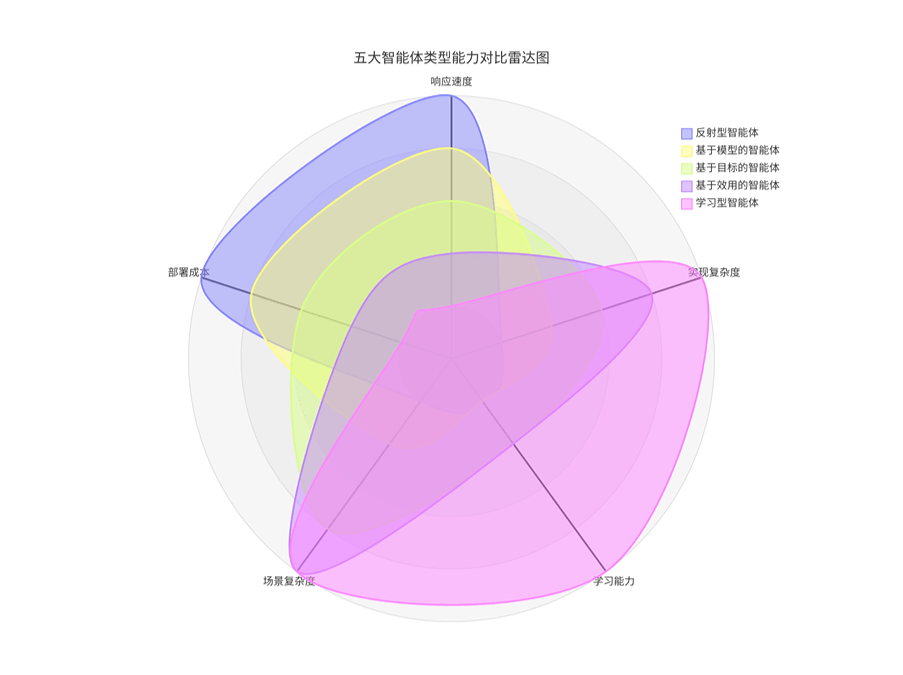
To compare the five major types more intuitively, we observe their capability differences across different dimensions through the radar chart below:
Outlook on 2025 Agent Application Trends
Entering 2025, AI agents are moving from the laboratory to the core of industry at an unprecedented speed, becoming the core engine driving the intelligent transformation of all industries. According to forecasts by the China Commercial Industry Research Institute, the global AI agent market size will explode from about 5.1 billion USD in 2024 to 11.3 billion USD in 2025, and is expected to approach 50 billion USD in 2030. The Chinese market also shows strong growth momentum, with the market size expected to reach 6.9 billion yuan in 2025. Behind this trend is a significant improvement in technological maturity and the continuous expansion of application scenarios. This chapter will deeply explore the cross-industry general technology trends of agent applications in 2025, focusing on analyzing specific application prospects in key industries such as manufacturing, finance, healthcare, and retail.
Cross-Industry General Technology Trends
Trend 1: Large Model Integration
The rise of large language models (LLMs) has brought revolutionary breakthroughs to agent technology, equipping agents with a powerful "brain." Traditional agents rely on manually written rules or domain-specific models, and their knowledge scope and ability to handle complex problems are limited. Agents integrated with LLMs possess unprecedented capabilities in natural language understanding, generation, reasoning, and planning. They can deeply understand complex, ambiguous, and even cross-domain user instructions and decompose them into a series of executable task steps. For example, Siemens' Industrial Copilot integrates generative AI with an agent system. Engineers only need to describe requirements in natural language, and the system can automatically generate PLC code and HMI interfaces, greatly simplifying complex engineering tasks. In the financial sector, JPMorgan's investment research agent "Ask David" can help analysts quickly process massive amounts of research reports and data and provide deep insights. This integration improves agents' task execution capabilities and, more importantly, lowers the threshold for human-computer interaction, enabling business personnel without technical backgrounds to easily collaborate with agents and greatly expanding the scope of agent applications.
Trend 2: Multi-Agent Collaboration
As business scenarios become increasingly complex, a single agent is difficult to handle complex work requiring multidisciplinary knowledge and multi-task collaboration. Therefore, multi-agent systems (MAS) have become a mainstream trend in agent development in 2025. In a multi-agent system, multiple agents with different specialized capabilities (such as a data analysis agent, a report generation agent, and an email sending agent) can work together like a human team to jointly complete a complex task. The collaboration model improves the efficiency and reliability of task processing and can achieve more complex system-level intelligence. For example, in the retail industry, more than 60% of leading enterprises have begun to adopt multi-agent systems to achieve closed-loop linkage among warehousing and logistics, marketing placement, and after-sales service. In the financial sector, multi-agent collaboration has become mainstream. Developers combine multiple single agents that have proven effective in specific tasks to build more powerful risk control, investment advisory, or operations systems.
Trend 3: Edge Intelligence
With the widespread adoption of IoT devices and the maturity of 5G networks, the sources of data generation are becoming increasingly distributed. Transmitting all data to the cloud for processing brings enormous network bandwidth pressure and latency and may involve data privacy and security issues. Therefore, moving AI computing power down to the data source—that is, edge computing—has become an inevitable trend. Edge AI enables agents to perform real-time perception, decision-making, and execution directly on the device side or local servers, achieving true low latency and high reliability. The "Blue Book on the Integrated Development of Industrial Large Models and Edge Intelligent Computing" released by China Mobile Research Institute systematically explains the strategic value of bidirectional empowerment between "edge intelligent computing" and "industrial large models," indicating that edge intelligence will experience explosive growth in 2025.
Analysis of Application Trends in Key Industries
Driven by general technology trends, agents are accelerating their implementation in key industries such as manufacturing, finance, healthcare, and retail, profoundly reshaping the business models and value chains of these industries.
Manufacturing: The Leap from Automation to "Intelligent Manufacturing"
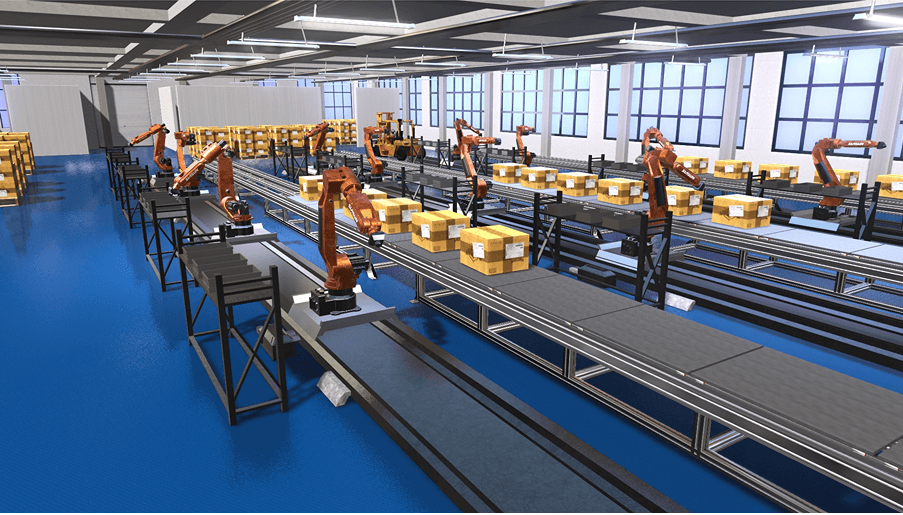
Manufacturing is an important field for agent applications and is transitioning from automation of a single link to intelligence and autonomy across the entire process. According to an IDC report, manufacturing accounts for 20% of AI applications.
- Digital Employees in Smart Factories: Intelligent agents are playing the role of "digital employees," deeply integrating into every aspect of production, management, and operations. For example, Advantech's smart factory lean production management agent, through zero-code development and multimodal analysis, helps enterprises achieve significant improvements in production efficiency and quality management. The "Quality Problem Analysis AI Agent" and "Proposal Duplication Check AI Agent" developed by Xi'an Geely Automobile have greatly improved problem-handling efficiency and equipment management capabilities, raising the equipment operating rate to 98.98%.
- Full-Process Intelligent Leap: Industrial giants such as Siemens are driving an intelligent leap from automation to autonomy. Its Industrial Copilot covers multiple stages including R&D, engineering, and operations. In the R&D stage, the AI assistant can generate models based on simple instructions; in the engineering stage, it can transform natural language requirements into PLC programs; in the operations stage, it can provide diagnostic support and optimization suggestions through multi-agent collaboration.
- Vertical Industry Large Models and Agent Ecosystems: Industries such as energy and chemicals are building vertical industry large models with hundreds of billions of parameters and plan to build 38 agents covering five core scenarios including production, safety and environmental protection, and scientific research, to achieve precise perception and autonomous decision-making.
Financial Industry: Reshaping Risk Control, Investment Advisory, and Customer Service
The financial industry is a data-intensive industry and one of the fields where agent applications are most mature and in-depth. An IDC report shows that the financial industry accounts for as much as 25% of AI applications. In 2025, financial agents are moving from concept to practice, and it is expected that more than 100 solutions covering the full chain including risk control and marketing will be implemented.
- Intelligent Risk Control and Compliance: Intelligent agents break through the limitations of traditional risk control, which relies on manual experience and fixed rules. The "digital-intelligent" risk control management system for retail inclusive credit built by Xiamen Bank has shortened the working hours of loan disbursement positions by 40% and reduced the proportion of asset balances of high-risk customer groups by 30%. "AI digital employees" such as AI credit approval officers and compliance quality inspectors are reconstructing the human cost structure of financial institutions and improving operational efficiency and risk control capabilities.
- Personalized Investment Advisory and Marketing: In the field of wealth management, robo-advisors can dynamically adjust investment portfolios and provide personalized investment advice based on customers' risk preferences, investment goals, and market changes. Bank of Jiangsu's "Zhiying" intelligent marketing system has achieved significant breakthroughs in precise customer acquisition and conversion in retail business.
- Multi-Agent Collaboration and Platform Building: Multi-agent architecture (MAS) has become mainstream in financial industry agent applications. Leading securities companies have begun to apply multi-agent systems to the field of robo-advisory to improve the intelligence level of services. At the same time, major banks and technology companies have successively launched enterprise-level agent platforms, such as Industrial and Commercial Bank of China's "ICBC Zhiyong" platform and Ping An Bank's AI Agent platform, to support the large-scale deployment and innovation of agents in financial scenarios.
Healthcare: Moving Toward Personalization and Precision
The healthcare field has extremely high requirements for the accuracy, reliability, and safety of AI, and agent applications are expanding from assisted diagnosis to broader scenarios such as personalized medicine and public health. An IDC report shows that the healthcare industry accounts for 15% of AI applications.
- Diagnostic Assistance and Efficiency Improvement: AI agents excel in image analysis, pathological diagnosis, and other areas, significantly improving diagnostic efficiency and accuracy while reducing the workload of physicians. For example, the Delphi-2M model published in Nature in 2025 can simultaneously predict the incidence of over 1,000 diseases, providing strong support for disease prevention and early intervention.
- Personalized Medicine and Health Management: By integrating multidimensional information such as a patient's genes, lifestyle, and environment, agents can provide precise disease prediction, diagnosis, and treatment plans, advancing the deepening of personalized medicine. In the health and wellness sector, AI-driven solutions are expanding from mere health monitoring to comprehensive life assistance and health management. It is projected that by 2033, the global AI elderly care market will reach 1.488 billion USD.
- Public Health and Resource Optimization: Disease prediction and early warning systems use AI agents to analyze massive amounts of data, enabling the prediction of transmission trends for diseases such as influenza and dengue fever in advance. For example, an AI-based COVID-19 transmission prediction model predicted the epidemic inflection point one week in advance during the Wuhan outbreak, with an accuracy rate of over 90%. Such systems can help optimize the allocation of medical resources, especially in grassroots and rural areas, by predicting demand patterns and optimizing scheduling to alleviate the shortage of medical resources.
Retail E-commerce: Creating the Ultimate Personalized Shopping Experience
Retail is one of the most active industries for AI applications. An IDC report shows that its AI application share is as high as 30%, ranking first among all industries. Agents are reshaping marketing, operations, and customer experience in retail.
- AI-Driven Hyper-Personalized Experience: In 2025, AI based on large models will be able to analyze users' omnichannel behavioral data in real time, providing a "thousand people, a thousand faces" super-personalized experience. From content recommendations on the app homepage to smart shopping guides in offline stores, and further to predictive shopping (transferring goods to the nearest warehouse before the user places an order), agents are pushing personalized services to the extreme.
- Virtual Shopping Guides and Digital Human Livestreaming: AI digital humans are playing an increasingly important role in the retail industry. A leading clothing brand used virtual anchors for 24-hour uninterrupted livestreaming, driving the average order value to 2.3 times that of human anchors.
- Intelligent Supply Chain Collaboration: AI agents are driving the intelligent upgrade of retail supply chains, achieving intelligent collaboration and optimization across the entire chain from demand forecasting and production planning to logistics distribution and inventory management. Large retailers such as Walmart have begun using "super agents" to uniformly manage global supply chains, achieving a seamless shopping experience and efficient operations.
Enterprise Agent Selection Strategy and Practice Guide
As agent technology matures and application scenarios continue to diversify, enterprises face the challenge of choosing the agent type best suited to their business needs from among numerous technical solutions and successfully implementing it to create business value. A successful agent project requires not only advanced technology but also a systematic selection decision framework and a clear implementation roadmap. Based on the previous in-depth analysis of the five core agent types and combined with industry best practices, this chapter provides enterprises with a practical guide from selection decision-making to scaled application.
How to Choose the Right Agent Type Based on Business Needs?
- Business Complexity Assessment:
- Task Determinism: Is the task process highly standardized, and are there a large number of exceptions? If the task process is fixed, a reflex agent or a model-based agent may be an efficient and economical choice.
- Environmental Dynamism: How frequently does the business environment change? How high is the degree of uncertainty? For highly dynamic and uncertain environments, learning agents or utility-based agents have greater advantages.
- Scope of Decision Impact: How large are the potential losses and scope of impact from incorrect decisions? For high-risk decisions, more robust and more interpretable agents are needed, such as utility-based agents, ensuring a well-developed human oversight mechanism.
- Data Availability: Do you have high-quality, large-scale historical data? The performance of learning agents is highly dependent on the quality and quantity of data.
- Technical Capability Matching:
- Reflex Agents: Suitable for scenarios with fixed processes and extremely high response time requirements, such as industrial safety monitoring and IoT device control.
- Model-Based Agents: Suitable for scenarios requiring state tracking and simple prediction, such as robot navigation and equipment condition monitoring.
- Goal-Based Agents: Suitable for multi-step task planning and project management scenarios, such as complex business process automation and robot task execution.
- Utility-Based Agents: Suitable for scenarios requiring multi-objective trade-offs and resource optimization, such as financial investment decisions and supply chain cost optimization.
- Learning Agents: Suitable for complex decisions and scenarios requiring continuous optimization, such as personalized recommendations and the evolution of intelligent customer service.
- Reference to Industry Application Best Practices:
- Manufacturing: Typically adopts a matrix model in which multiple types of agents work collaboratively. For example, reflex agents are responsible for safety monitoring, model-based agents are responsible for equipment prediction, goal-based agents are responsible for production scheduling, utility-based agents are responsible for overall operational efficiency optimization, and learning agents continuously optimize process parameters from production data。
- Financial Services: Often adopts a layered agent architecture. The front-end service layer uses learning agents to provide personalized services; the risk control layer uses utility-based agents for real-time risk assessment; the trade execution layer uses goal-based agents to execute complex strategies; and the monitoring and alerting layer uses reflex agents for anomaly detection and real-time alarms。
Cost-Benefit Analysis of Agent Deployment
- Cost Composition:
- Technology Costs: Includes hardware (such as servers and edge computing devices), software (such as AI platforms and development frameworks), and cloud service fees.
- Development Costs: Includes costs for data preparation, model training, system integration, and customized development.
- Human Resource Costs: Includes the investment of data scientists, AI engineers, business analysts, and project management personnel.
- Operations and Maintenance Costs: Includes costs for system monitoring, model updates, security maintenance, and continuous optimization.
- Benefit Assessment:
- Efficiency Improvement: By automating repetitive tasks, reducing manual operations and improving work efficiency.
- Cost Reduction: Reducing human resource costs, lowering operational overhead, and optimizing resource allocation.
- Revenue Growth: Improving customer conversion rates and average order value through personalized recommendations, precision marketing, and other methods.
- Risk Avoidance: Reducing potential losses through intelligent risk control, predictive maintenance, and other methods.
- Experience Optimization: Enhancing customer satisfaction and loyalty, creating new business value.
From Pilot to Scale: An Enterprise Agent Application Roadmap
- Launch a Pilot Project :
- Choose a High-Value, Low-Risk Scenario: Start with a scenario that has a clear business pain point, is easy to measure results, and has relatively simple technical implementation. For example, start with automated internal report generation, intelligent customer service Q&A, etc.。
- Form a Cross-Functional Team: Ensure the project team includes business experts, data scientists, and IT engineers, ensuring close integration of technology and business.
- Rapid Iteration, Validate Value: Adopt an agile development model, quickly build a minimum viable product (MVP), test on a small scale, collect feedback in a timely manner, and iterate and optimize.
- Integrate into Existing Workflows (Integration) :
- Embed Agents into Business Processes: Seamlessly integrate validated agent applications into existing business systems and daily workflows, ensuring they truly empower employees rather than becoming isolated tools。
- Establish a Human-Machine Collaboration Mechanism: Clarify the division of responsibilities between agents and humans, establish "Human-in-the-Loop” (Human-in-the-loop) oversight mechanisms, especially in high-risk decision-making processes, to ensure that human experts can intervene and review.
- Scaling Deployment (Scaling) :
- Build an enterprise-level agent platform: As pilot projects succeed, enterprises should consider building a unified platform for agent development, deployment, and management to support the rapid development and large-scale operation of more agent applications.
- Cultivate internal AI capabilities: Through internal training, recruitment, and external cooperation, build a professional team with capabilities in AI application development, operations and maintenance, and governance.
- Establish an AI governance system: Formulate policies related to data security, model ethics, risk control, and compliance to ensure the long-term, healthy, and sustainable development of agent applications.
Conclusion: Embrace agents and welcome a new AI era
AI Agents, as the next frontier in artificial intelligence development, are reshaping our world with unprecedented depth and breadth. From the simplest "stimulus-response" automation to intelligent systems capable of complex planning, value trade-offs, and self-evolution, the five core agent types provide us with a clear blueprint for technological evolution. Looking ahead to 2025, general technology trends represented by large model integration, multi-agent collaboration, and edge intelligence will further unleash the enormous potential of agents, driving profound transformation in key industries such as manufacturing, finance, healthcare, and retail.
For enterprises, agents are no longer a distant concept, but a strategic opportunity to improve productivity, optimize decision-making, and create new value. The key to success lies in enterprises abandoning the blind pursuit of technology, returning to the essence of business, and choosing the most suitable agent type based on their actual needs, technical capabilities, and cost budgets, while adopting a pragmatic path from pilot to scale. By building a human-machine collaborative ecosystem and deeply integrating agents into core business processes, enterprises can truly seize the opportunities of the new AI era and remain invincible in fierce market competition.
Agents are emerging as the "digital employees" of the AI era, advancing hand in hand with humans to jointly create a future that is smarter, more efficient, and full of infinite possibilities.