
What is ART
ART (Anonymous Region Transformer) is a new multi-layer transparent image generation technology that can directly generate multiple independent transparent layers (supporting RGBA format) based on global text prompts and anonymous region layouts. Layers can be edited, combined, or overlaid individually. ART's core advantages are its efficient generation mechanism and powerful transparency handling capabilities. By adopting anonymous region layouts, the generation model can autonomously decide which visual information aligns with the text, providing greater flexibility. ART introduces a layer-by-layer region cropping mechanism, significantly reducing attention computation costs, with generation speed more than 12 times faster than full attention methods. It supports multi-layer image generation with more than 50 layers, reducing conflicts between layers.
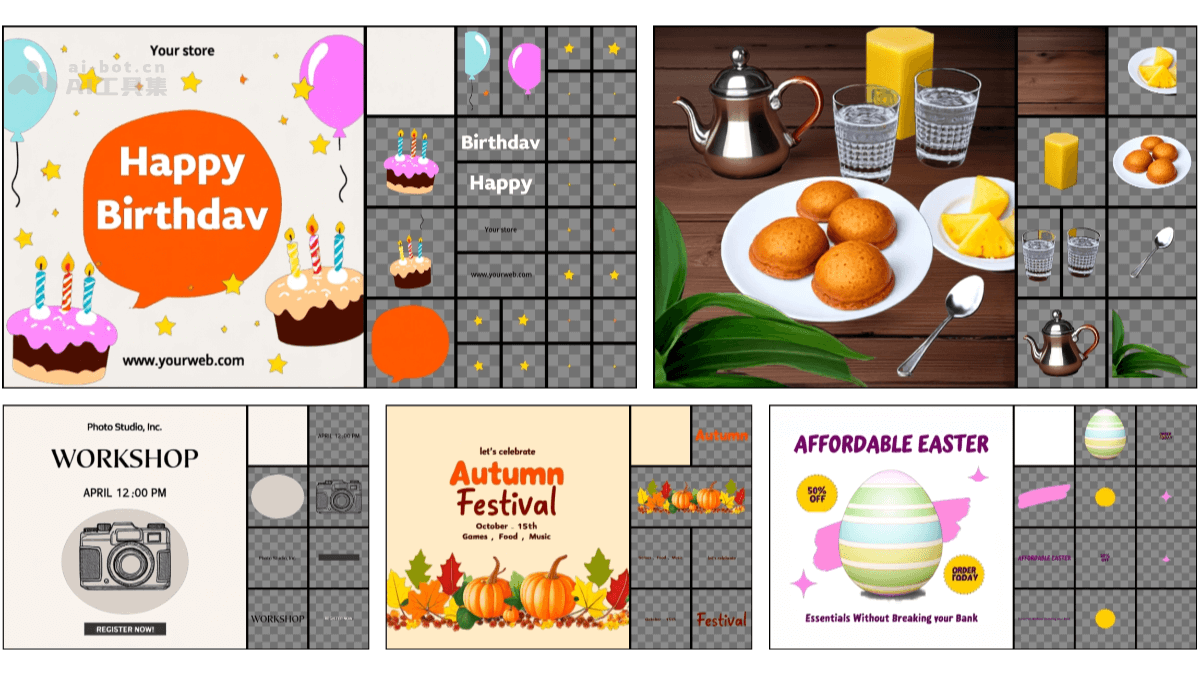
ART's main features
- Multi-layer transparent image generation: ART can directly generate multiple independent transparent layers (supporting RGBA format) based on global text prompts and anonymous region layouts. Layers can be edited, combined, or overlaid individually.
- Anonymous region layout: The design is inspired by "schema theory," supporting the generation model to autonomously decide which visual information aligns with text information, providing greater flexibility.
- Efficient generation mechanism: Introduces a layer-by-layer region cropping mechanism, selecting only visual information relevant to each anonymous region, significantly reducing attention computation costs, with generation speed more than 12 times faster than full attention methods.
- High-quality autoencoder: Proposes a multi-layer transparent image autoencoder that supports directly encoding and decoding the transparency of multi-layer images, further improving generation quality and efficiency.
- Reduced layer conflicts: Can handle multi-layer image generation with more than 50 layers, effectively reducing conflicts between layers.
ART's technical principles
- Layer-by-layer region cropping mechanism: ART introduces a layer-by-layer region cropping mechanism, selecting only visual information relevant to each anonymous region for processing. This mechanism significantly reduces attention computation costs, with generation speed more than 12 times faster than full attention methods, and can handle more than 50 different layers.
- Multi-layer transparent image autoencoder: ART proposes a high-quality multi-layer transparent image autoencoder that can directly encode and decode the transparency of multi-layer images. By embedding transparency information into RGB channels, ART supports precise control and scalable generation of multi-layer transparent images.
- Global text prompts and interactivity: Users only need to provide global text prompts and anonymous region layouts, and the model can autonomously generate the content of each region based on context.
- Global consistency and layer control: ART ensures visual consistency between different layers by generating a global reference image and background image, avoiding the layer conflicts common in traditional methods. Users can dynamically adjust the generated image content by modifying global prompts or anonymous region layouts.
ART's project address
- Project website:https://art-msra.github.io/
- Github repository:https://github.com/microsoft/art-msra
- arXiv technical paper:https://arxiv.org/pdf/2502.18364
ART's application scenarios
- Interactive content creation: ART supports users in directly generating multi-layer transparent images through global text prompts and anonymous region layouts. Users can isolate, select, and edit specific image layers to achieve more precise content customization.
- Art and design field: ART's multi-layer image generation capabilities provide artists and designers with a new way to create. It can be used to generate complex multi-layer images, supporting fields such as artistic creation, graphic design, and advertising production.
- Social Media and Personalized Content: Users can use ART to quickly generate personalized avatars, memes, or artworks to enhance the visual appeal of individuals or brands on social platforms.
- Corporate Marketing and Advertising: Enterprises can use ART to generate visual elements, such as advertising images, posters, or product design drawings, helping them stand out in a highly competitive market.
- Education and Research: ART can serve as a research tool in the fields of computer vision and deep learning, helping researchers explore new methods of image generation.