
What is AISmartCube
AISmartCube is a low-code platform that simplifies the creation of AI tools and automation processes. Users can quickly build AI tools through a drag-and-drop interface without programming knowledge. The platform provides access to major global large language models and integrates a variety of plugins such as image, speech recognition, and data scraping features. AISmartCube supports AI assistants, allowing users to call tools directly in chat, and provides a rich set of official templates. AISmartCube has a shared knowledge base that is updated in real time, covering technology, parenting, trends, and more, helping users build their own knowledge base. The platform provides ready-made tools and assistants to automate tasks such as social media, productivity, and copywriting.
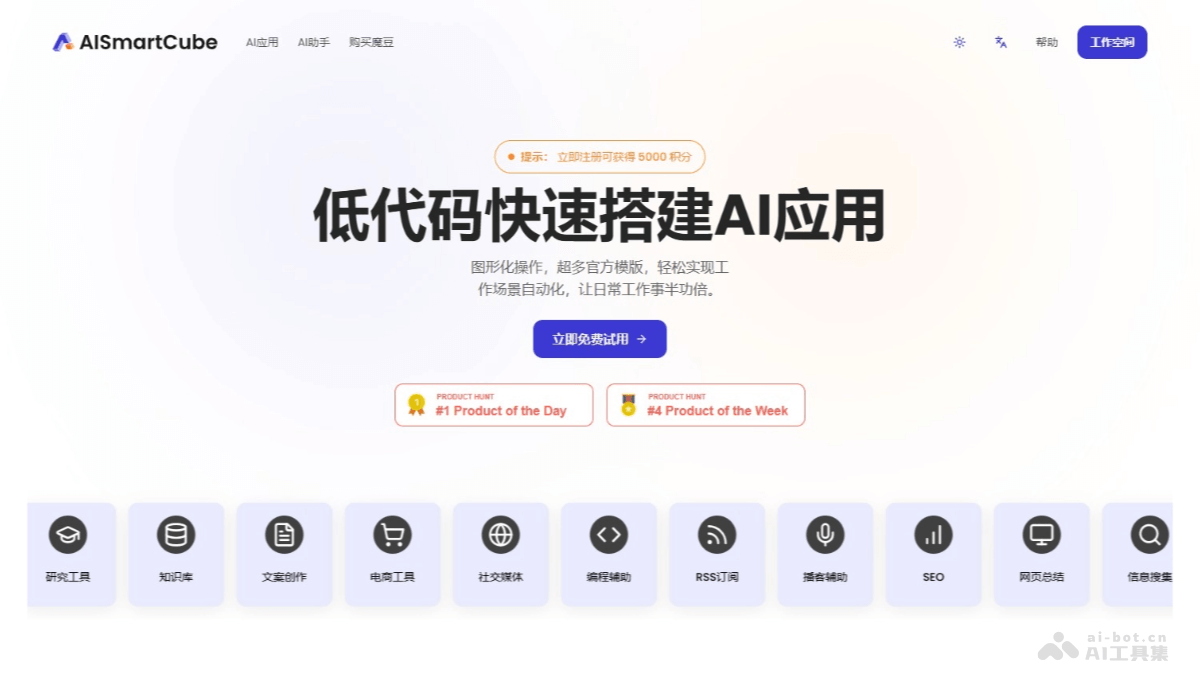
Main features of AISmartCube
- No-code AI tool building: Users can quickly build AI tools by drag-and-drop without writing code.
- Diverse nodes: Provides a variety of node types, including large language models (LLMs), speech recognition, image processing, data scraping, SEO data, and more.
- Access to global large models: Connects to globally renowned large AI models such as ChatGPT, Claude, and Gemini.
- Plugin integration: Supports integration of multiple plugins, such as image, speech, data scraping, Notion, SEO data, and more.
- AI assistant: Seamlessly connects with AI assistants to enable direct tool invocation in chat, and provides official assistant templates.
- Shared knowledge base: Provides a shared knowledge base updated in real time, including technology, parenting, real-time trends, media data, and more, allowing users to build their own knowledge base.
AISmartCube's official website address
- Official website address:aismartcube.com
AISmartCube's application scenarios
- Automated workflows: Build automation tools to simplify daily work tasks, such as data entry, report generation, customer service, and more.
- Customer service: Provide 24*7 customer support, handle common issues and inquiries, and improve customer satisfaction.
- Content creation: Generate articles, advertising copy, social media posts, and more to improve the efficiency and quality of content creation.
- Market analysis: Use data scraping and analysis tools to collect market trends and competitor information to support decision-making.
- Personalized recommendations: In e-commerce or content platforms, provide personalized product or content recommendations based on user behavior.