
"DeepSeek+DeepResearch: Making Scientific Research as Easy as Chatting" was written by research teams from Tsinghua University and Beihang University. It mainly discusses the application of artificial intelligence (AI) technology in the field of scientific research, how AI tools can simplify research processes, improve efficiency, and address many challenges faced in the research process. It focuses on introducing the functions, advantages, and applications of AI tools such as DeepSeek and DeepResearch in different research scenarios.
Webmaster Recommends:How to solve DeepSeek server being busy? 16 free full-power R1 alternatives

Getthe original PDF file of "DeepSeek+DeepResearch: Making Scientific Research as Easy as Chatting", scan the QR code to follow and reply: 20250223
1. What can it do?
-
Main challenges faced by scientific research
In modern scientific research, five major challenges include the complexity and interdisciplinarity of research projects, data explosion and management difficulties, long research cycles with lengthy and high-risk innovation processes, knowledge fragmentation and information overload, and issues of resource allocation and research management efficiency.
-
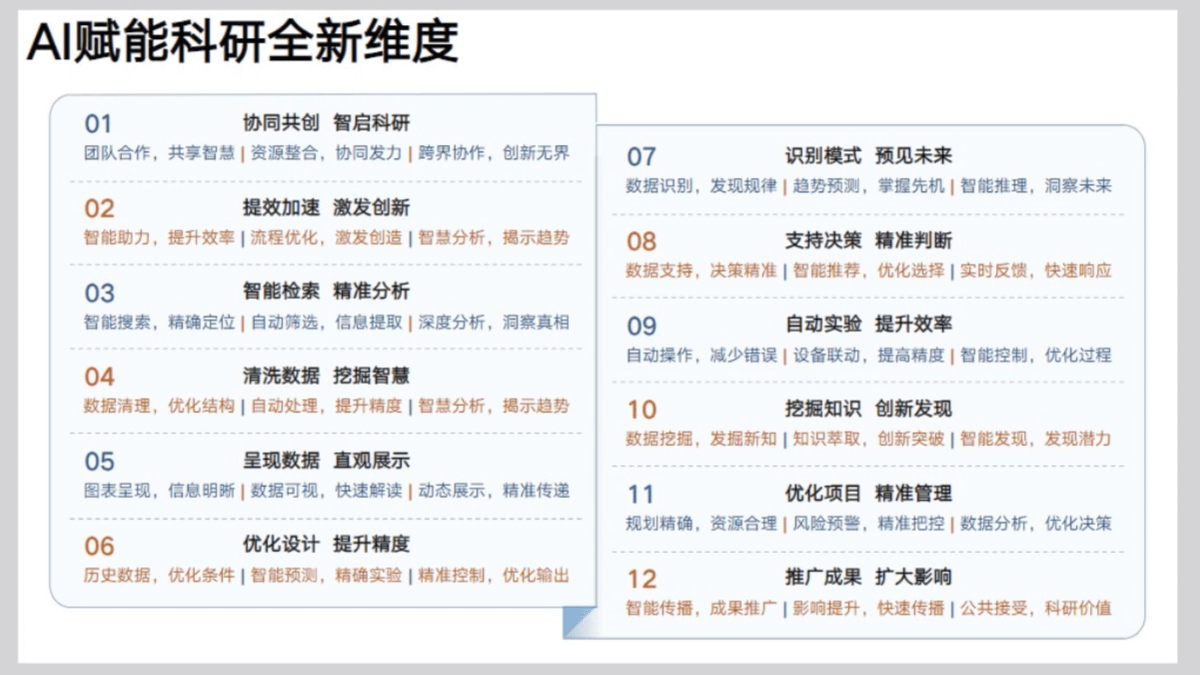
A new dimension of AI-empowered scientific research
It explains how AI empowers scientific research from 12 aspects: collaborative co-creation to inspire research, efficiency acceleration to stimulate innovation, intelligent retrieval and precise analysis, data cleaning to mine wisdom, data presentation for intuitive display, optimized design to improve precision, pattern recognition to foresee the future, decision support for accurate judgment, automated experiments to improve efficiency, knowledge mining for innovative discoveries, project optimization for precise management, and promoting results to expand impact.
2. How should it be done?
-
Instruction for writing article titles
How to generate 5 English titles for a research paper based on the provided manuscript abstract and explain the reasons.
-
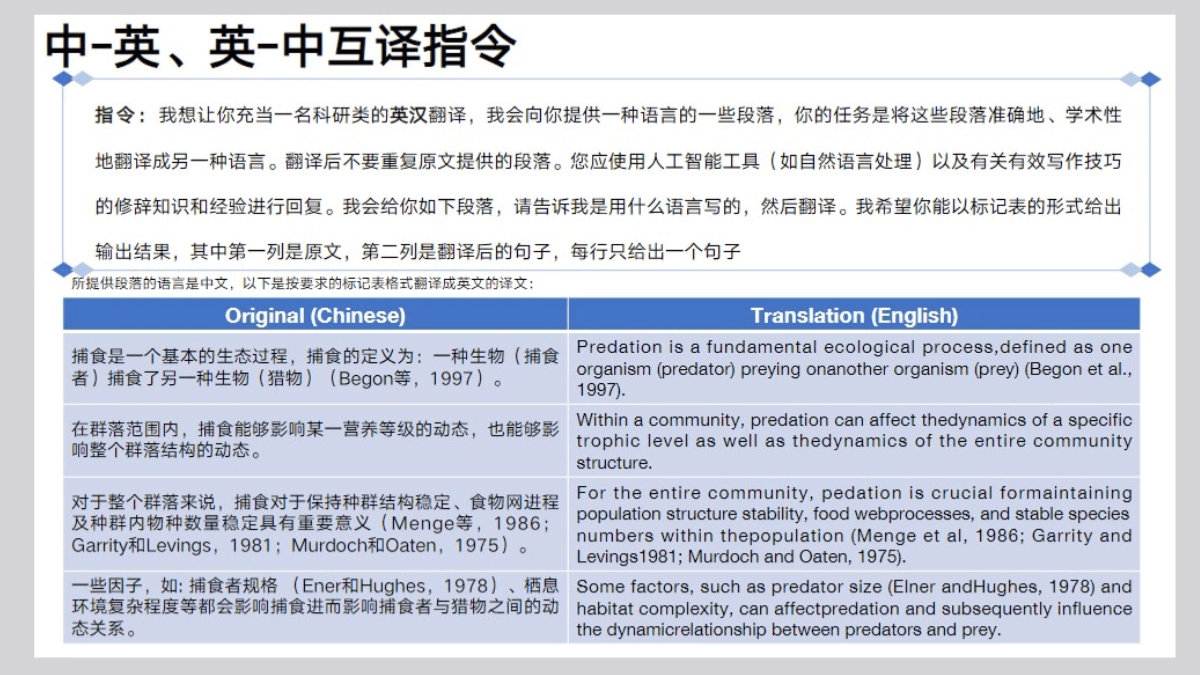
Chinese-English and English-Chinese translation instructions
Explain how to accurately and academically translate Chinese paragraphs into English, and present the output in the form of a markup table.
-
Chinese academic writing polishing instruction
How to improve the spelling, grammar, clarity, conciseness, and overall readability of the provided text, and provide the output in the form of a markdown table.
-
English academic writing polishing instruction
How to polish English paragraphs in academic papers to conform to academic style, and list all modifications and reasons in a markup table.
-
Instruction for improving logic and coherence between paragraphs
Analyze the logic and coherence between sentences in each paragraph of the text, and propose improved text and improvements.
-
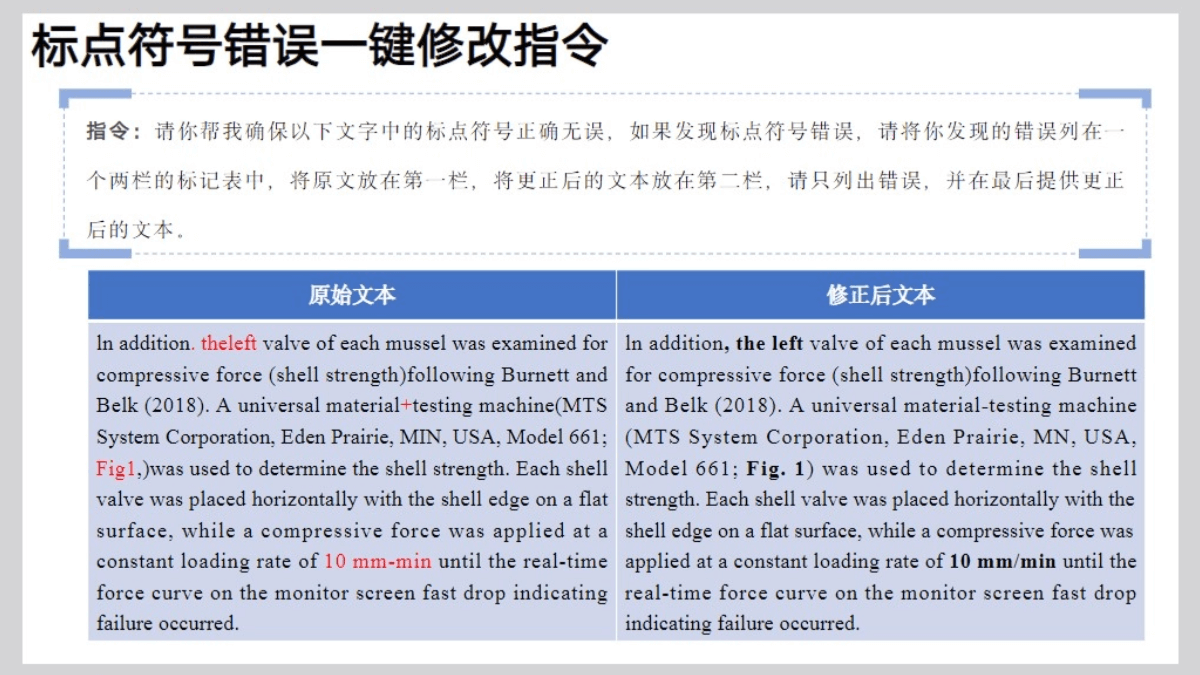
One-click punctuation error correction instruction
How to ensure that punctuation in the text is correct, and list the errors found and the corrected text.
-
Rewriting and plagiarism reduction instruction
How to rewrite paragraphs using the original text, rewriting the text in a scientific research tone and style.
-
Instruction for interpreting figures in literature
How to interpret figures in papers as a domain expert.
-
Instruction for paper reference formatting
How to check formatting issues in references and provide corrected references.
-
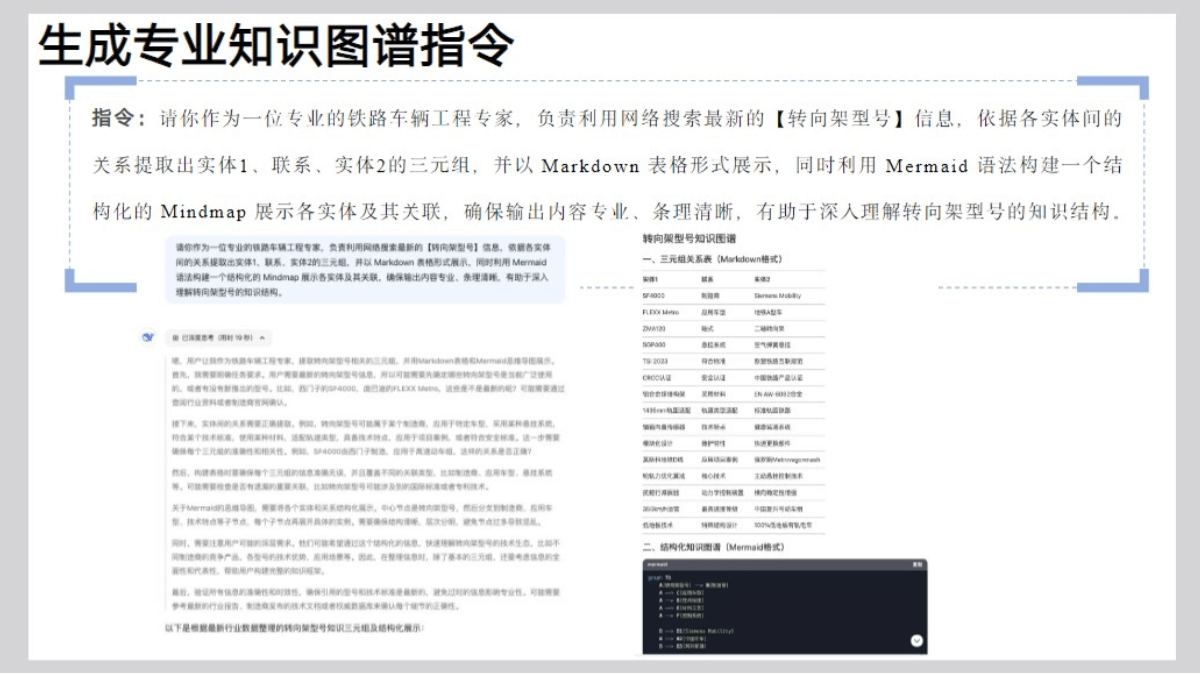
Instruction for generating a professional knowledge graph
How to use web search for the latest information, extract entities and relationships, and build a knowledge structure.
-
Instruction for paper topic selection
From a professional perspective, provide public administration graduate students with a basic overview of the e-commerce field, key research topics, directions suitable for in-depth exploration, and 5 specific research directions.
-
Efficient Literature Reading Instructions
How to efficiently read papers, extract core content, and objectively evaluate the strengths and weaknesses of the literature.
-
Literature Content Extraction Instructions
How to summarize and extract the main content of the literature, including the research topic, core content, research methods, theoretical introduction, and main viewpoints.
-
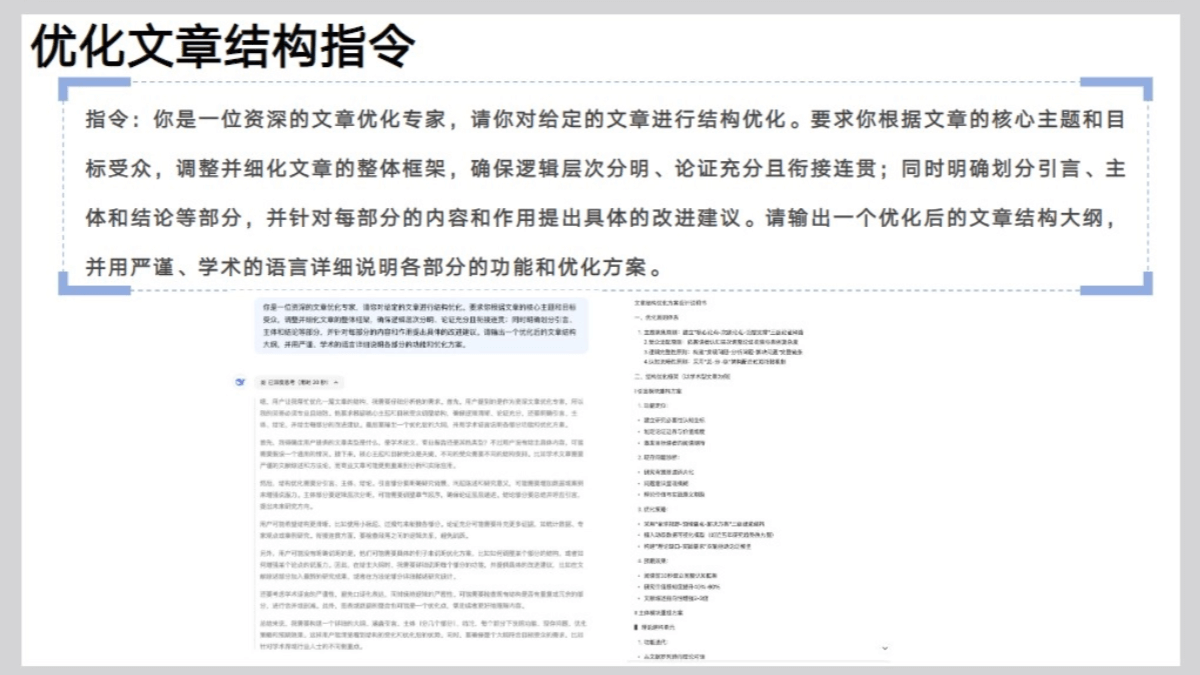
Article Structure Optimization Instructions
How to optimize the structure of an article, adjust the overall framework of the article, and propose improvement suggestions.
-
Literature Review Writing Instructions
How to write a literature review, covering the research background, main theories and methods, current research trends and challenges, etc.
-
Generate Thesis Questionnaire Instructions
How to generate an academic thesis questionnaire on a specific research topic.
-
Simulated Thesis Defense Instructions
How to conduct a simulated graduation defense in a question-and-answer format.
-
Topic Selection and Research Question Determination Instructions
How to recommend highly innovative and research-valuable thesis topics based on disciplinary development trends, research hotspots, and existing literature.
-
Thesis Research Content Writing Instructions
How to analyze the current research status, list research gaps, and design a research plan based on the research topic.
-
Thesis Research Approach Writing Instructions
How to analyze the current research status, list research gaps, and provide a research approach based on the research topic.
-
Thesis Technical Plan Writing Instructions
How to analyze the current research status, list technical plans, and select the corresponding technical plan based on the research topic and research approach.
-
Thesis Abstract Writing Instructions
How to write a concise and powerful thesis abstract based on the research topic.
-
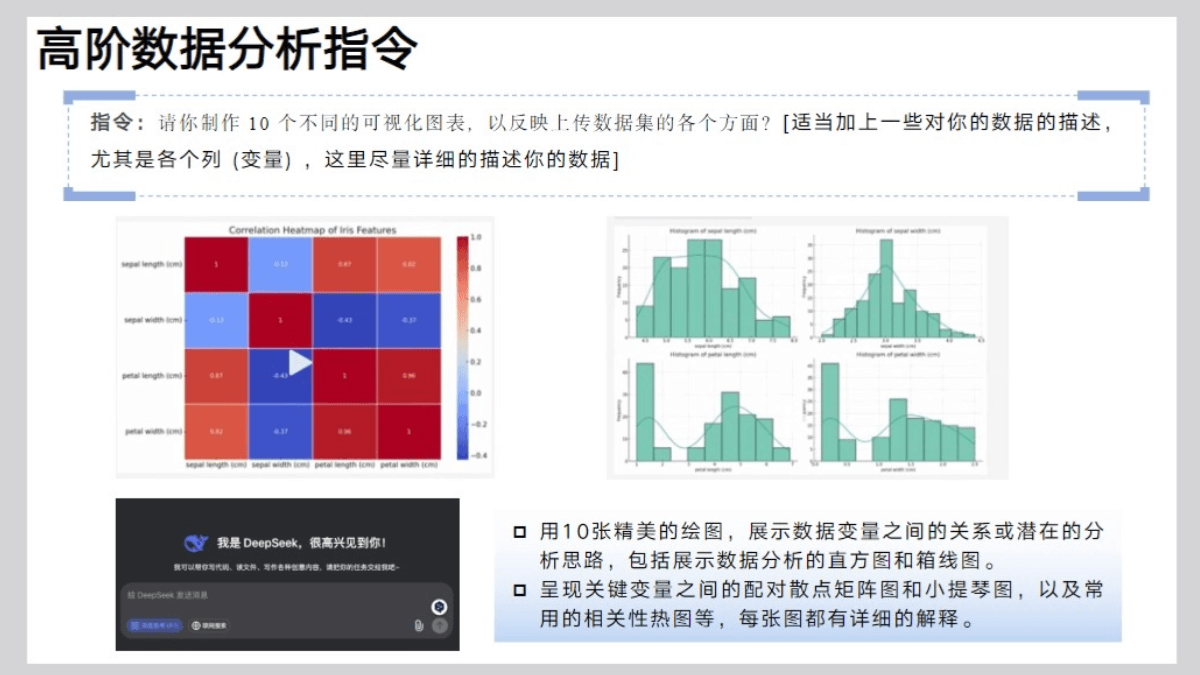
Advanced Data Analysis Instructions
How to create 10 different visualization charts to display the relationships between data variables or potential analysis ideas.

Obtain"DeepSeek+DeepResearch: Making Scientific Research as Simple as Chatting" original PDF file, scan the QR code to follow and reply: 20250223
III. How are the results?
-
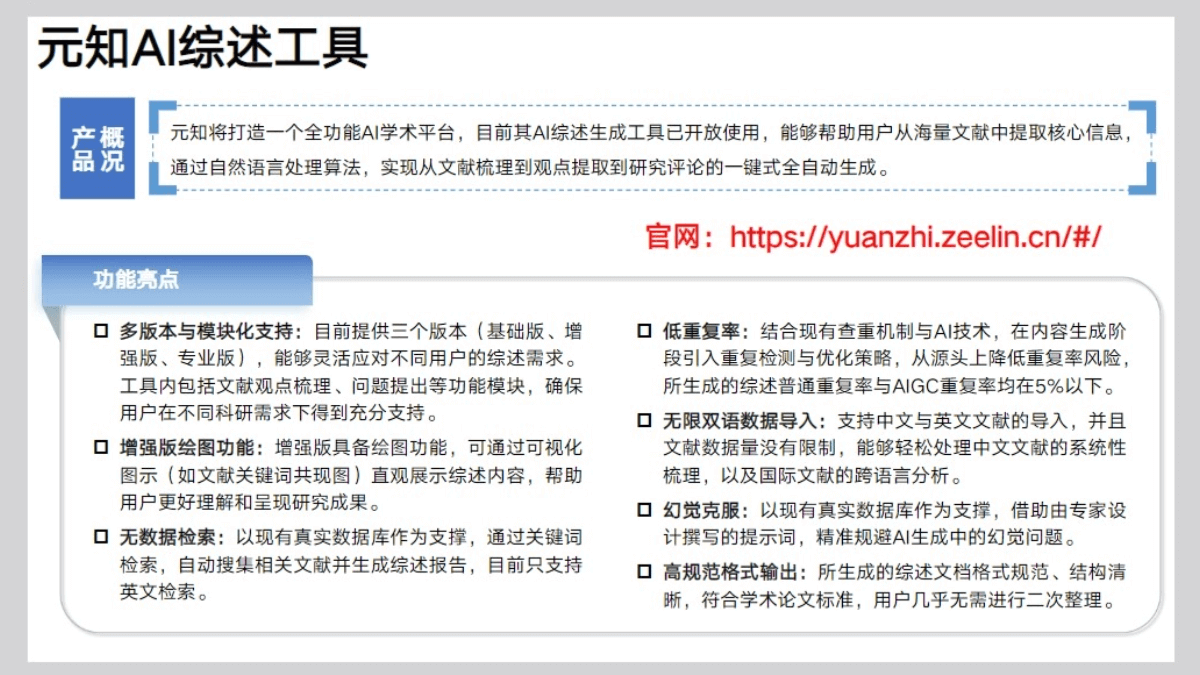
Yuanzhi AI Review Tool
Introduce the overview and functional highlights of the Yuanzhi AI Review Tool, including multi-version and modular support, enhanced drawing functions, no-data retrieval, low repetition rate, unlimited bilingual data import, hallucination overcoming, highly standardized format output, etc.
-
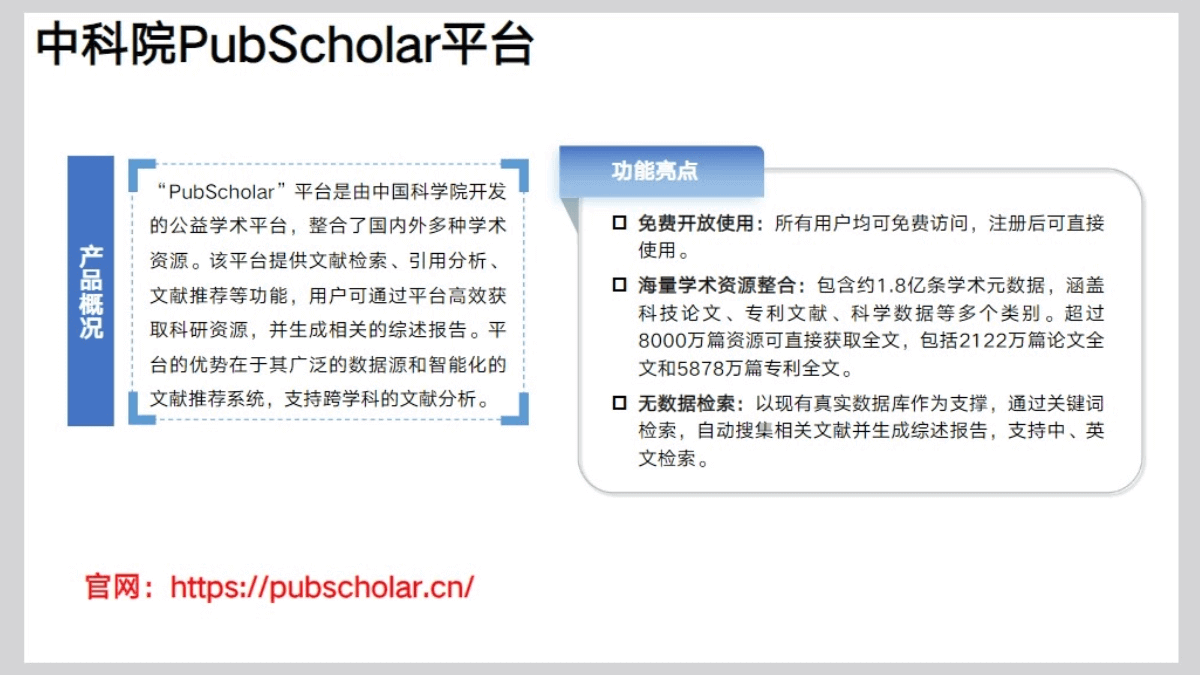
Chinese Academy of Sciences PubScholar Platform
Introduce the overview and functional highlights of the Chinese Academy of Sciences PubScholar Platform, including free and open access, integration of massive academic resources, no-data retrieval, etc.
-
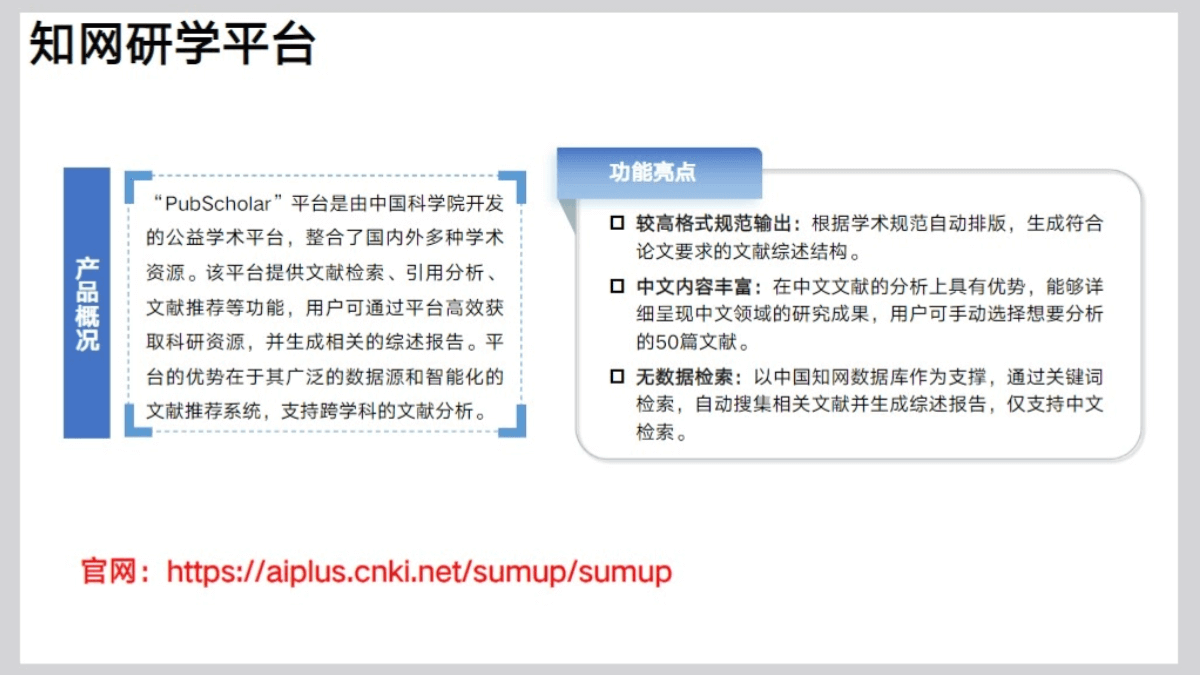
CNKI Research Platform
Introduce the overview and functional highlights of the CNKI Research Platform, including relatively high-standard format output, rich Chinese content, no-data retrieval, etc.
-
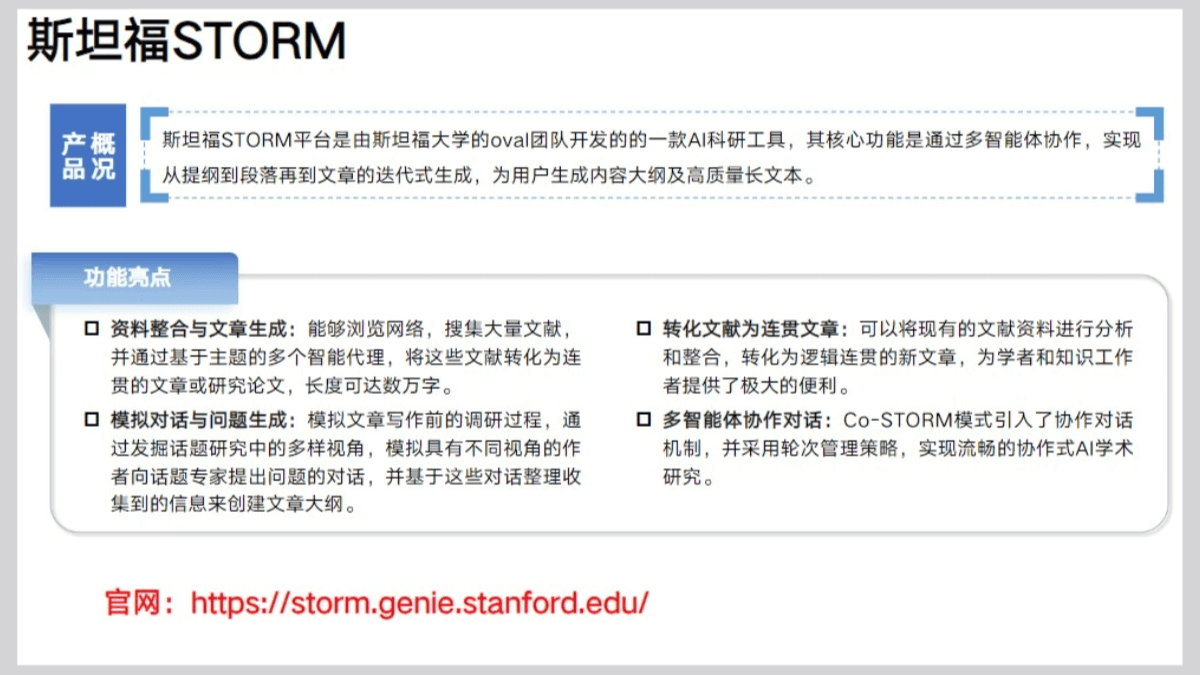
Stanford STORM
Introduce the overview and functional highlights of the Stanford STORM platform, including material integration and article generation, simulated dialogue and question generation, conversion of literature into coherent articles, multi-agent collaborative dialogue, etc.
-
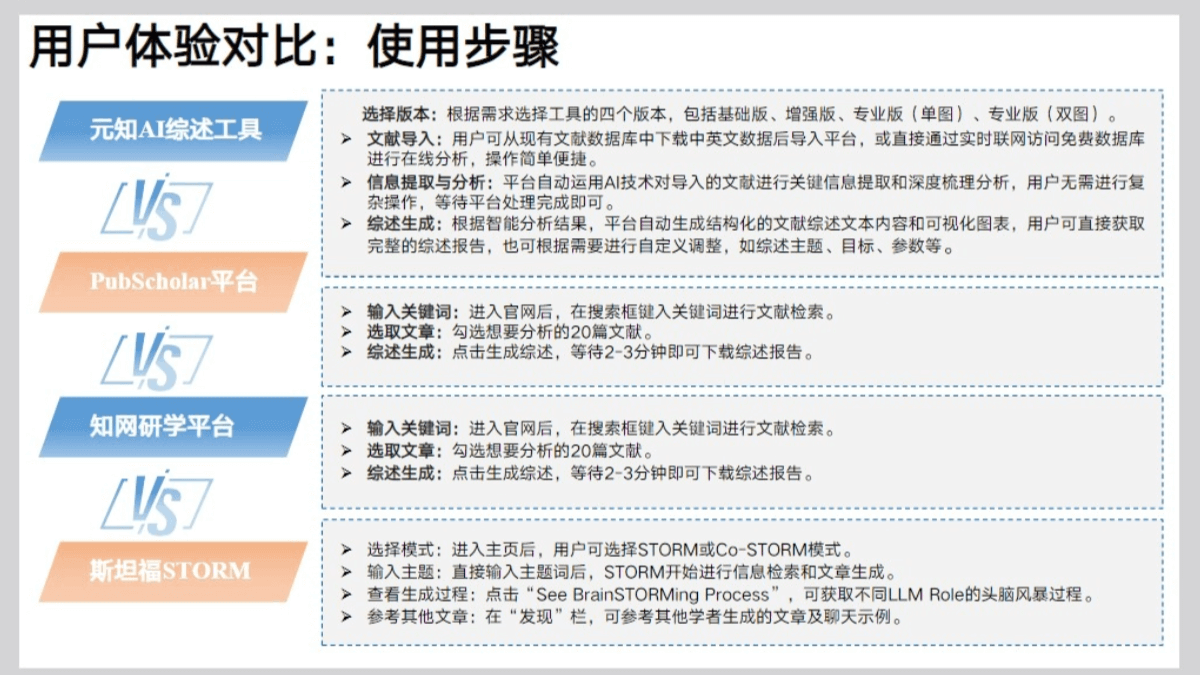
User Experience Comparison: Usage Steps
Compare the usage steps of the Yuanzhi AI review tool, the Chinese Academy of Sciences PubScholar platform, the CNKI Research platform, and Stanford STORM.
III. Additional Knowledge
-
Introduction to Basic Knowledge of DeepSeek + DeepResearch
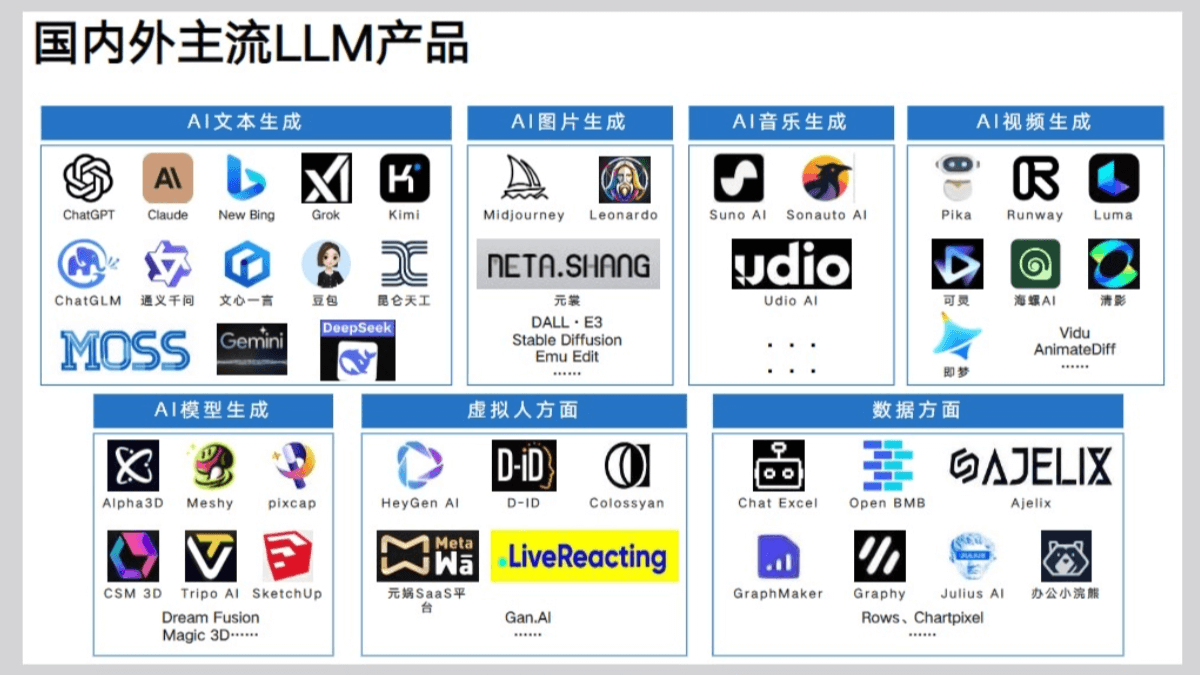
Mainstream LLM products at home and abroad, including aspects such as AI text generation, AI image generation, AI music generation, AI video generation, AI model generation, virtual humans, and data.
-
DeepSeek: Disruptive Breakout, Topping Hot Discussions
Describe DeepSeek's development milestones, including its founding time, the release of open-source code large models, the release of general large models, the release of a new generation of reasoning models, etc., as well as the global attention it has attracted.
-
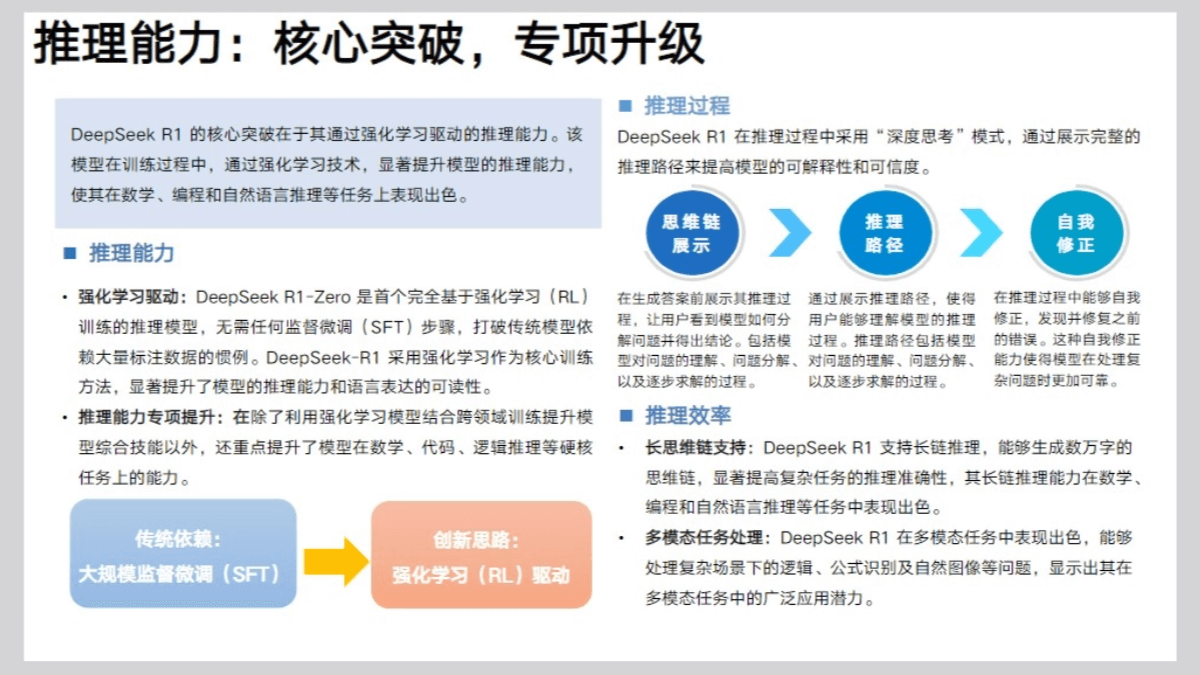
Reasoning Ability: Core Breakthrough, Specialized Upgrade
Introduce the reasoning ability of DeepSeek R1, including reinforcement learning-driven, specialized improvement of reasoning ability, the reasoning process, etc.
-
Training Method: Data Cold Start, Progressive Stages
Describe DeepSeek R1's training method, including the definition and role of cold-start data, data sources and characteristics, the impact on model training, and the specific process of multi-stage training.
-
Cost Reduction and Capability Improvement: Architectural Innovation, Technical Efficiency Enhancement
Introduce how DeepSeek improves model performance and reduces computational cost and memory usage through architectural innovation and model distillation technology, including model distillation technology, architectural innovation, multi-head latent attention mechanism, multi-token prediction, FP8 mixed-precision training, etc.
-
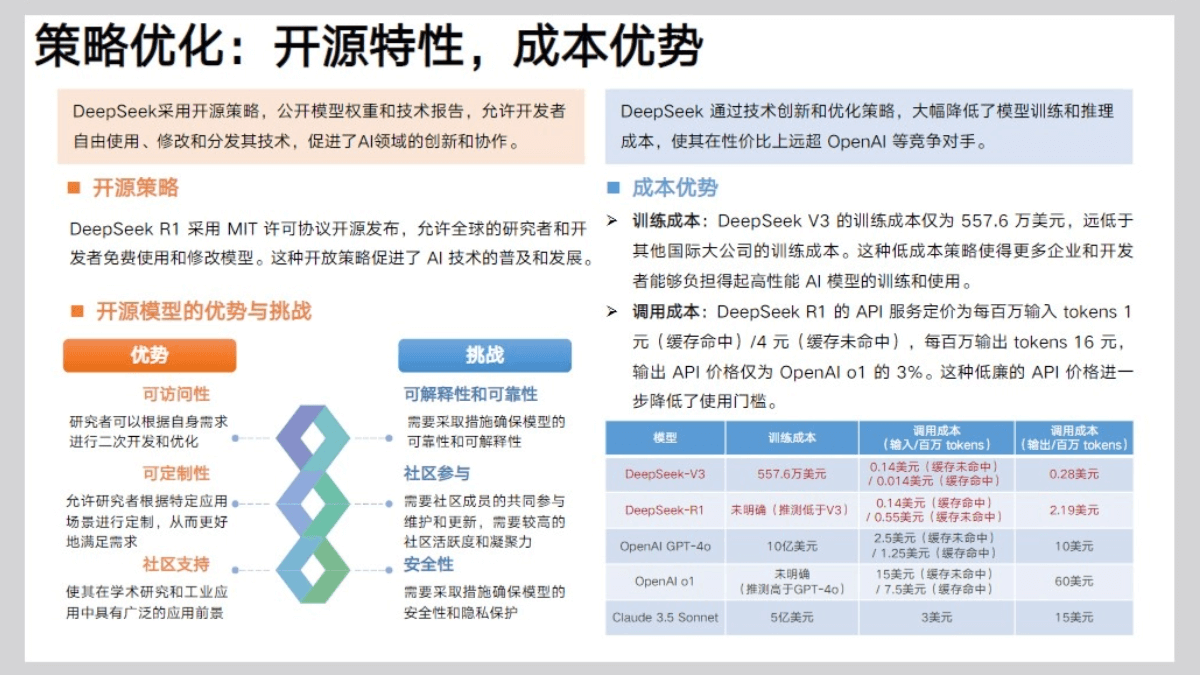
Strategy Optimization: Open-Source Characteristics, Cost Advantages
Describe DeepSeek's open-source strategy and cost advantages, including training cost, invocation cost, and the advantages and challenges of open-source models.
-
Testing and Evaluation: Benchmarking Against the Top, Outstanding Capabilities
Introduce the performance of DeepSeek R1 in reasoning tasks, knowledge-based tasks, and other tasks, as well as its capabilities in educational knowledge question answering, mathematical reasoning, code generation, etc.
-
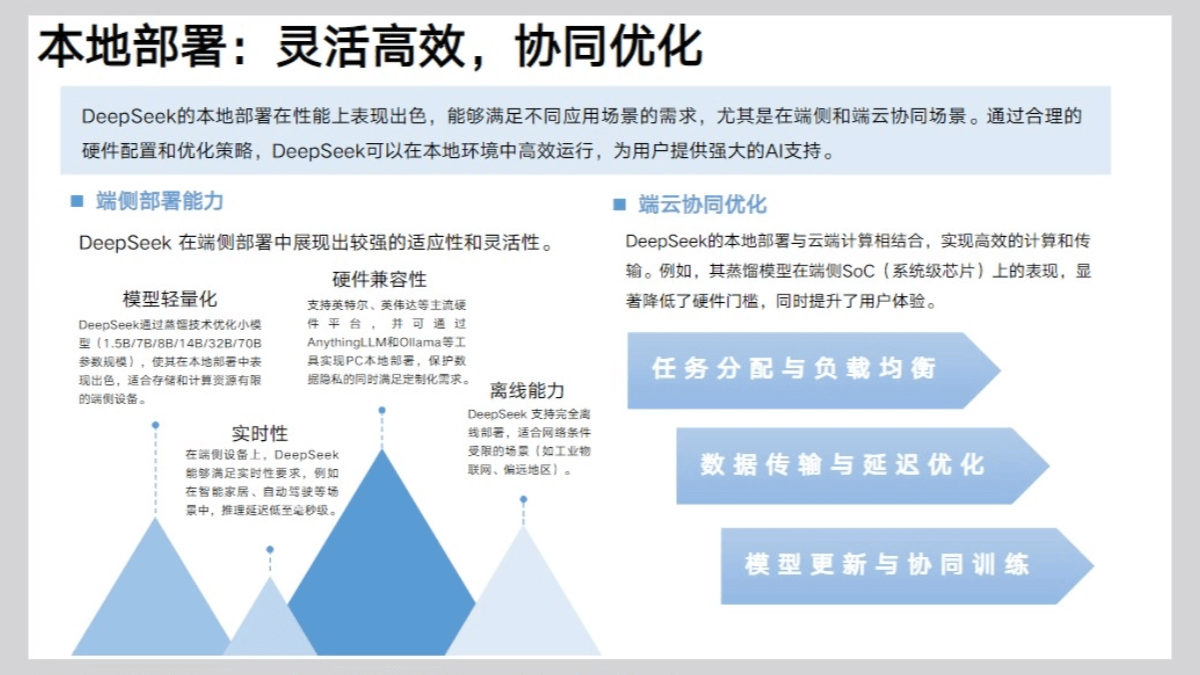
Local Deployment: Flexible and Efficient, Collaborative Optimization
Describe DeepSeek's device-side deployment capabilities and device-cloud collaborative optimization, including model lightweighting, real-time performance, hardware compatibility, offline capabilities, task allocation and load balancing, data transmission and latency optimization, model updates and collaborative training, etc.
-
Comparative Advantages: High Cost-Effectiveness, Technology for All
Compare DeepSeek with top similar products at home and abroad in terms of company, model, product type, core functions, advantages, and disadvantages.
-
Revolutionizing Technical Standards: Low Cost, High Performance, Open Co-Creation
Describe how DeepSeek, through innovative technical paths, reshaping pricing logic, and promoting R&D transformation, prompts the AI industry to re-examine technology application and development directions.
-
Reshaping the Industry Landscape: Breaking Shackles, Active Competition
Describe how DeepSeek's rise has changed the competitive landscape of the AI market, including activating market competition, China-US technology competition and cooperation, and upgrading the global AI industry chain.
-
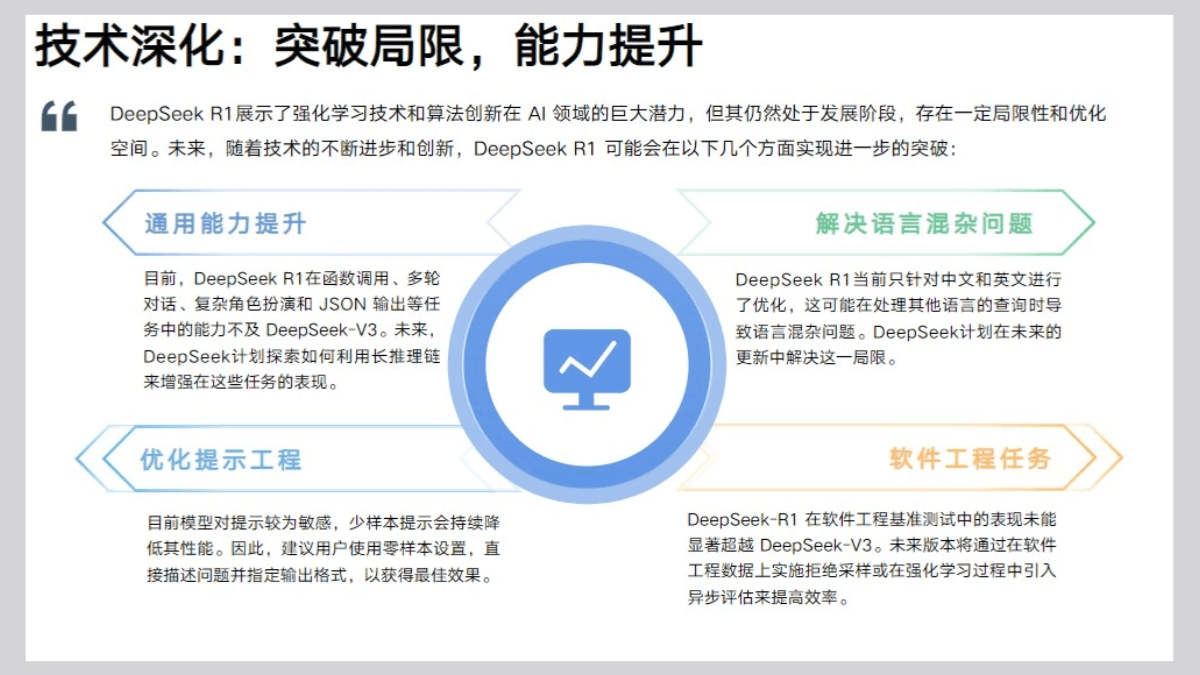
Technical Deepening: Breaking Through Limitations, Capability Improvement
Describe DeepSeek R1's plans for improving general capabilities, solving the language mixing problem, optimizing prompt engineering, software engineering tasks, and other aspects.
-
Scenario Expansion: Innovation-Driven, Vertical Deep Cultivation
Describe DeepSeek R1's future applications in the medical field, financial field, education field, legal field, industrial field, embodied intelligence exploration, self-evolving system construction, multimodal fusion, etc.
-
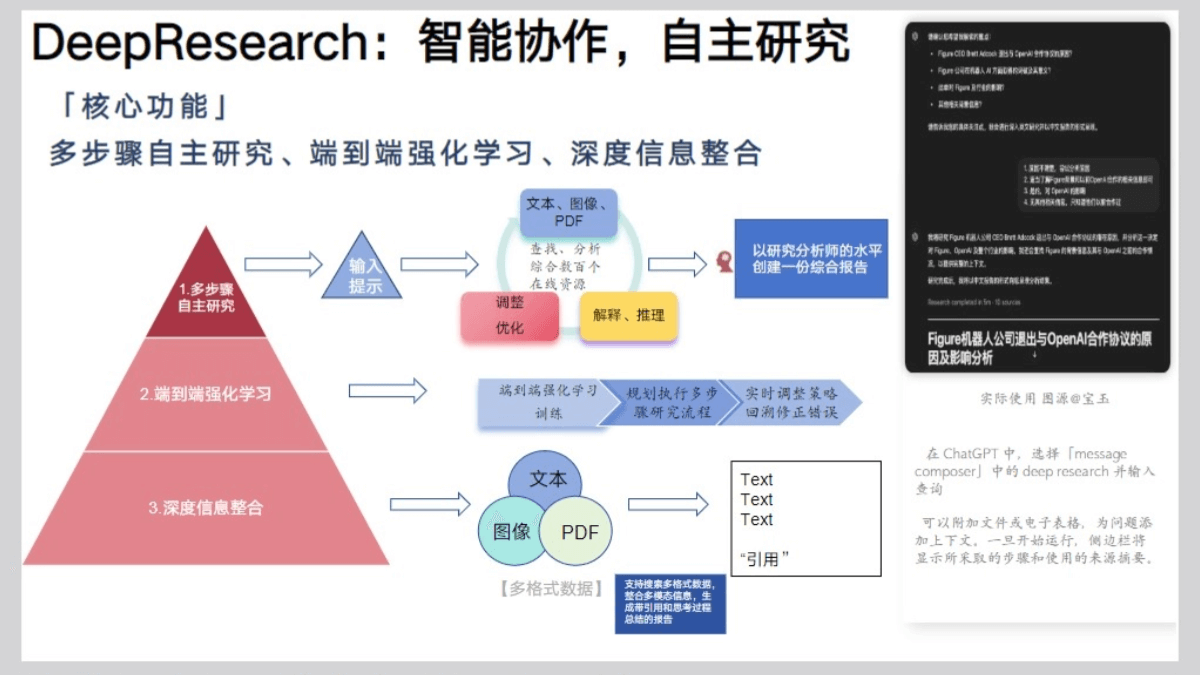
DeepResearch: Intelligent Collaboration, Autonomous Research
Introduces the core features of DeepResearch, including multi-step autonomous research, end-to-end reinforcement learning, deep information integration, and its applications in scenarios such as academic research, financial analysis, consumer decision-making, and business research.
-
Technological Innovation: Automated Processes, Breakthrough Efficiency
Explains content such as automated processing and intelligent decision-making in technological innovation, deep industry research and data-driven approaches, and full-process automation of complex tasks.
-
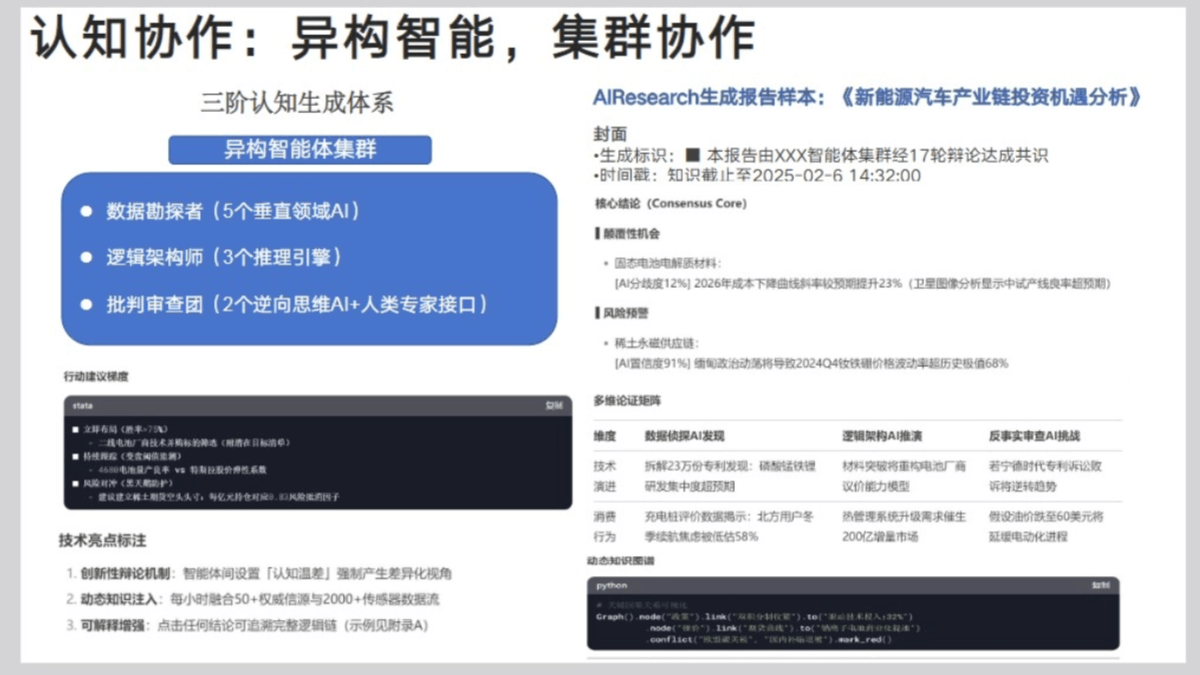
Cognitive Collaboration: Heterogeneous Intelligence, Cluster Collaboration
Introduces the third-order cognitive generation system, heterogeneous agent clusters, and the situation of introducing optimization agents to achieve automation of complex tasks.
Get"DeepSeek+DeepResearch: Making Scientific Research as Simple as Chatting" PDF original file, scan the code, follow, and reply: 20250223