
Hi everyone, this is Sister Orange, who uses AI first whenever a problem comes up。
Every day when you wake up, the AI world is a new scene.
The domestic AI battle, from Yuanbao red envelopes to Qwen milk tea, truly shows that every generation has its own "eggs" to collect.
Things are not quiet abroad either. Two heavyweight models have been released in the AI programming field:
Anthropic's:Claude Opus 4.6
OpenAI's:GPT-5.3-Codex
The two companies dropped their bombshells almost at the same time. While drinking Qwen milk tea, let's quickly get to know the highlights and advantages of the two models.
01. Model advantages and key benchmarks
Claude Opus 4.6
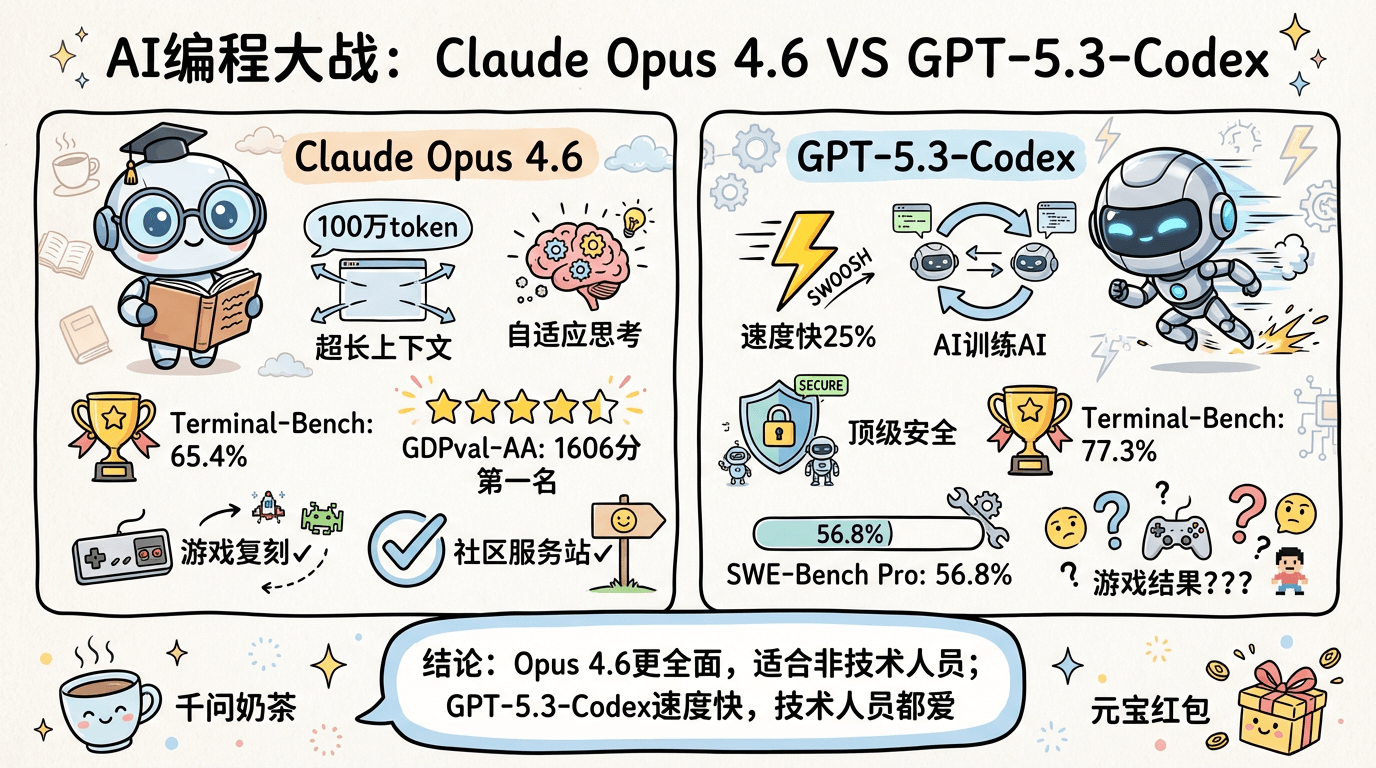
One of the most impressive upgrades is support for a 1 million token context window, roughly enough to hold the concept of several full-length novels at once. It excels at complex task planning and long-cycle task handling, discovering problems on its own and trying to correct errors.
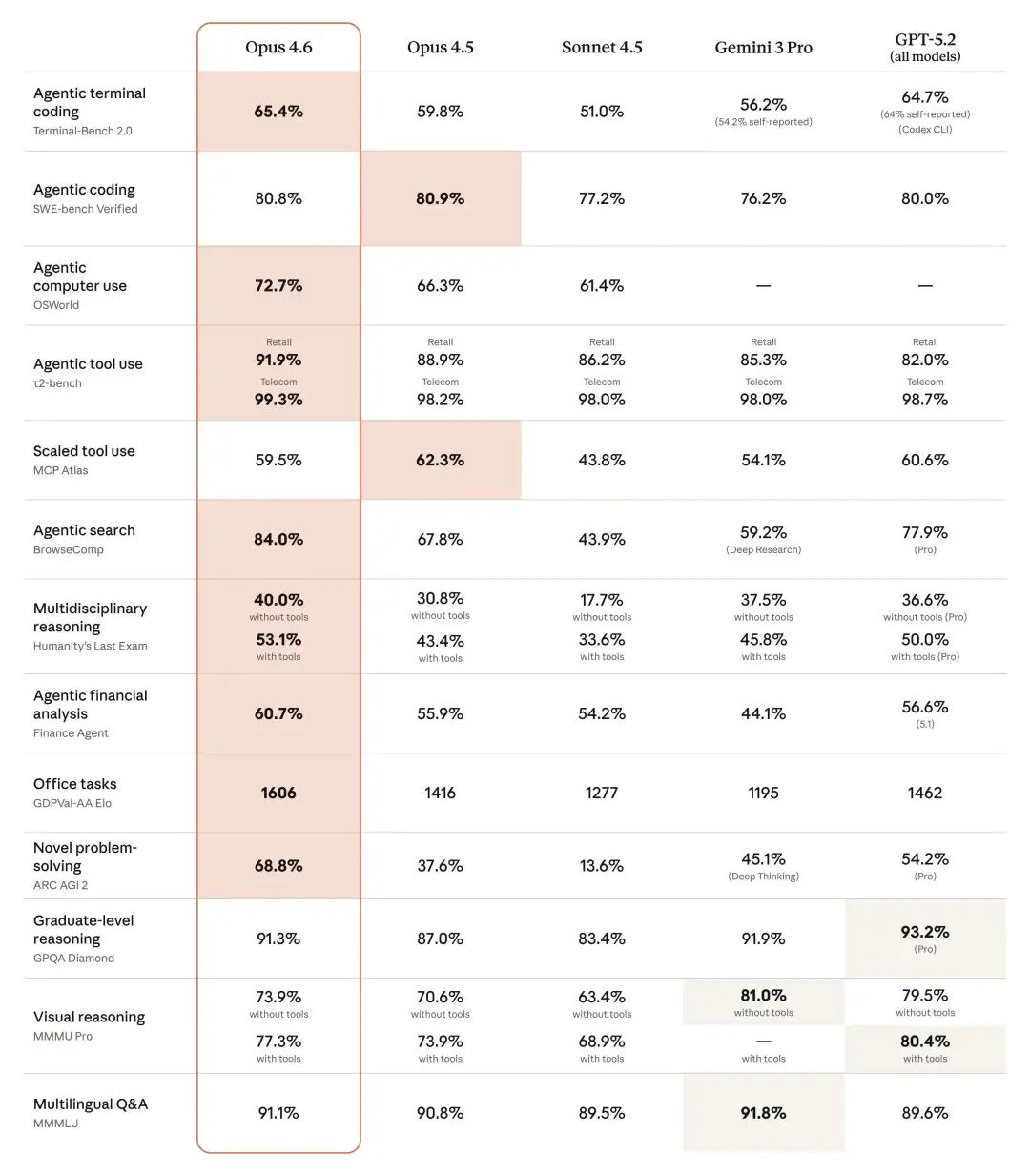
It performs excellently in professional fields such as finance and law, leading the industry in the GDPval-AA score. Newly addedadaptive thinkingandfour levels of effort control (Effort control)regulation. It also strengthens integration with office software (such as Excel and PowerPoint).
Key model benchmarks
- Terminal-Bench 2.0 (evaluates agent coding ability): achieved the highest score of 65.4%.
- GDPval-AA (evaluates professional-domain knowledge work): Elo score of 1606, 190 points higher than its own previous generation Opus 4.5 and 144 points higher than GPT-5.2.
- Arena.ai comprehensive evaluation: ranked first in all three major areas: code, text, and expert.
GPT-5.3-Codex
Speedis 25% fasterthan the previous generation GPT-5.2-Codex, and completing the same tasks uses half the tokens.The first AI model to participate in its own creation.Supports parallel multitasking, suitable for rapid iterative development.
Users can interrupt in real time during task execution and adjust direction, and can view progress, ask questions, and suggest corrections. Full-process automation from requirements document writing, code writing, debugging and deployment to monitoring and analysis. The first model to receive OpenAI's "high capability" cybersecurity rating.
Key model benchmarks
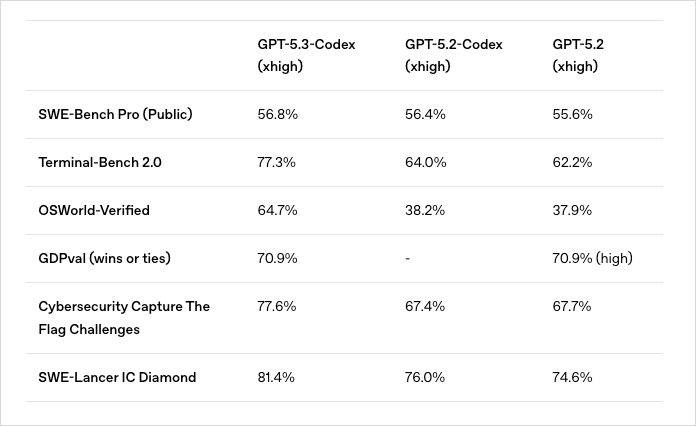
- Terminal-Bench 2.0 (evaluates agent coding ability): score 77.3%.
- GDPval (comprehensive knowledge work evaluation): performance on par with GPT-5.2.
- SWE-Bench Pro (evaluates ability to solve real GitHub repository problems): score 56.8%.
02. Hands-on experience
I happened to buy limited-time plans for both models, so let me quickly try them out~
Purchase plan URL:https://vipcheap.com/zh
For overseas models, a website that can use WeChat Pay is really amazing. I have personally tested it, and it is absolutely safe.
1. Game recreation
Back then, besides WeChat red envelopes being a huge hit, WeChat also had a Jump Jump mini game that was very popular. It is still fresh in my memory. Let's recreate it.
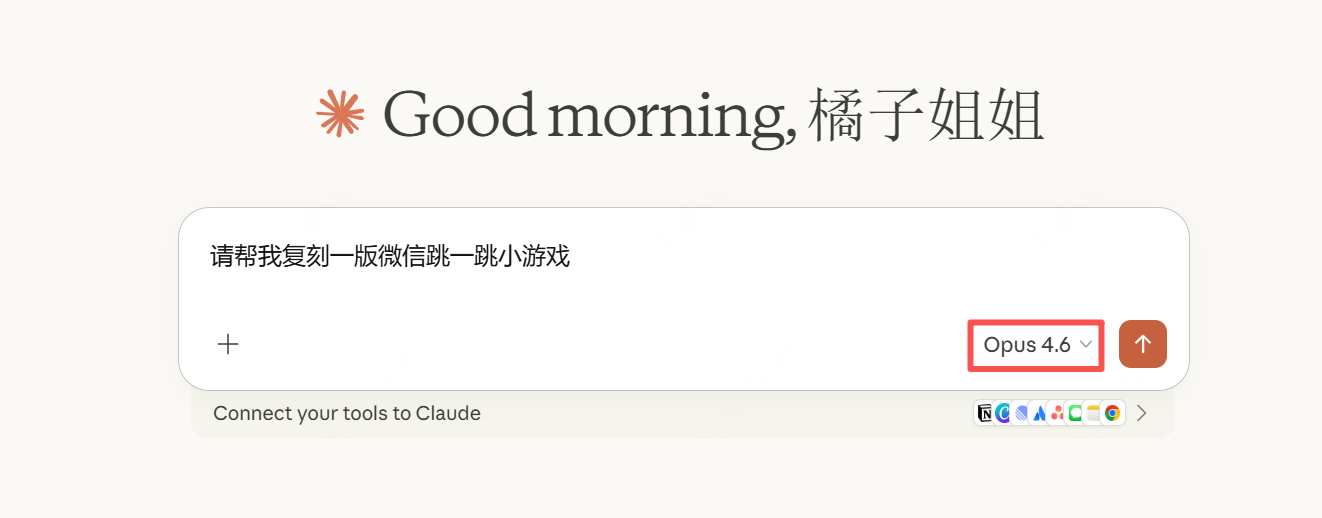
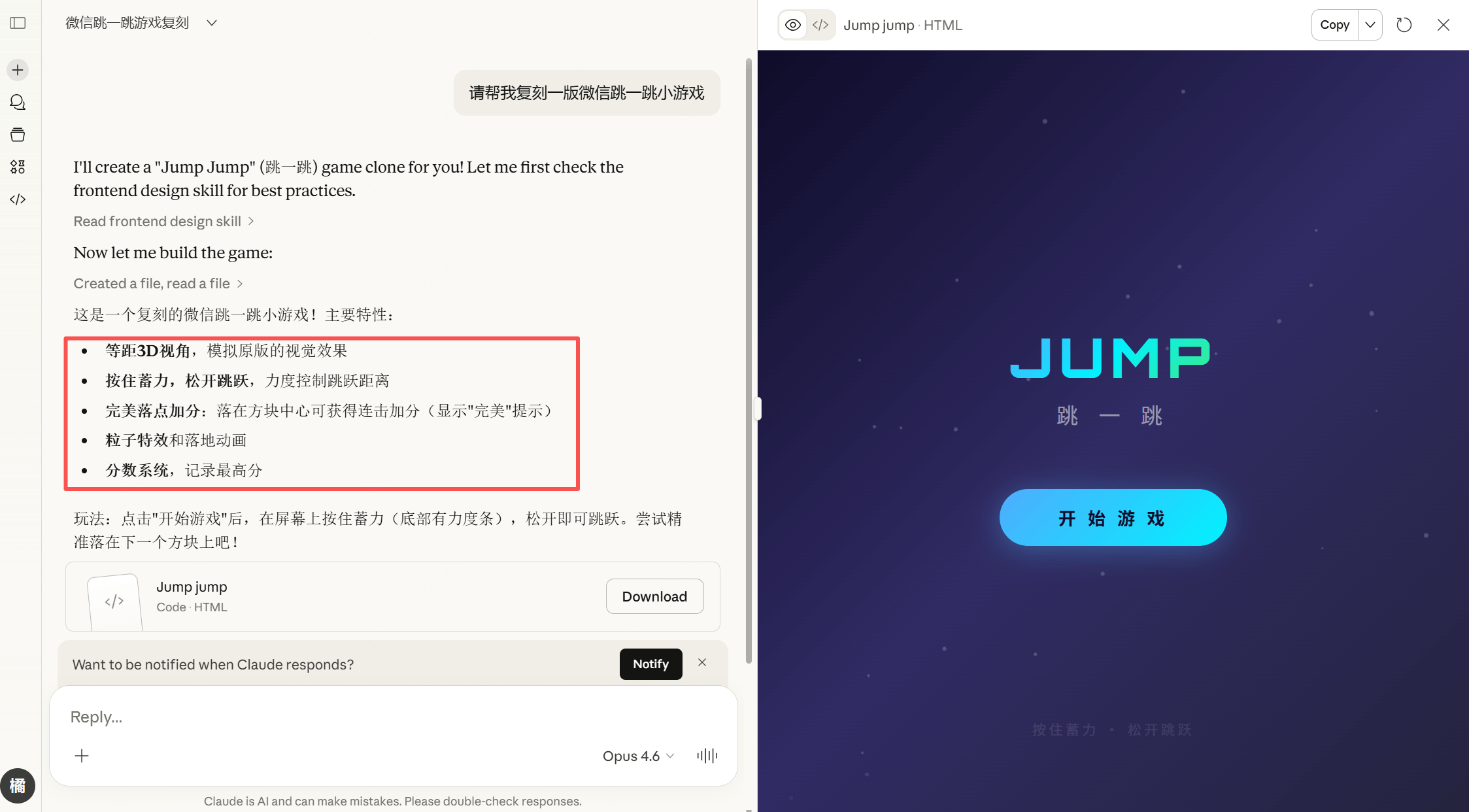
Visit the Claude official website, enter the prompt, and select the model Opus 4.6
Please help me recreate a version of the WeChat Jump Jump mini game
It was generated in less than three minutes, automatically providing a 3D perspective and game effects.
After trying it out, I optimized it through several more versions:
Please optimize the front-end page, including: 1. The landing area can be objects of different shapes. 2. Adjust the jumping object to a 3D little milk dragon. 3. The game area should finally be displayed centered on the page. 4. Appropriately enhance some game effects.
Please change the "3D little milk dragon character" to a "colorful little horse."
Optimize the "perfect landing" effect. In addition to adding points, display a "different Year of the Horse blessing" prompt each time.

The generated effect feels similar to WeChat Jump Jump, except the UI still isn't very high-end.
Let's take a look at the playtest effect:
To be honest, it's actually a bit addictive to play.
Let's take another lookGPT-5.3-Codex
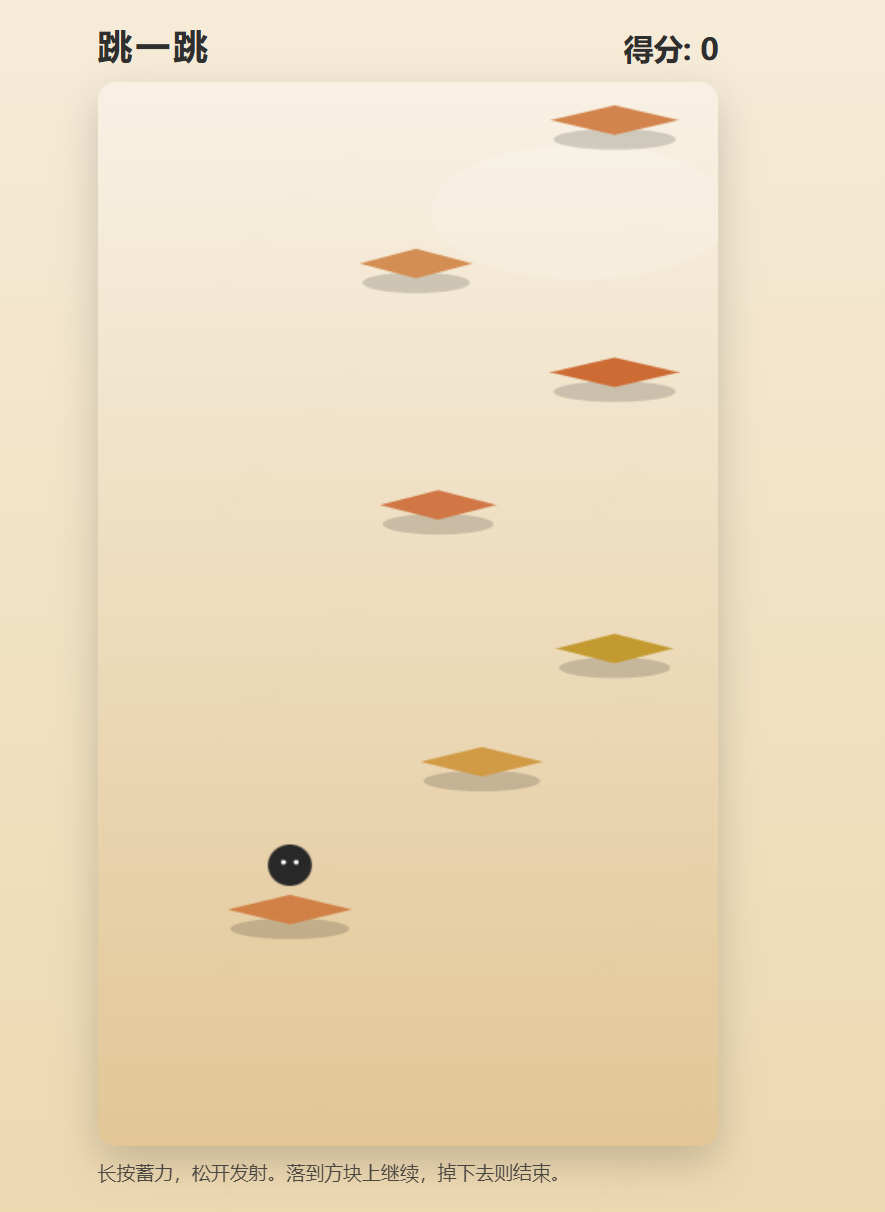
I used it in VSCode. I entered the same prompt and selected the GPT-5.3-Codex model.

It was also completed in three minutes.

This effect stunned me. Is there not even a bit of artistic sense?
I also optimized several versions of the prompt.
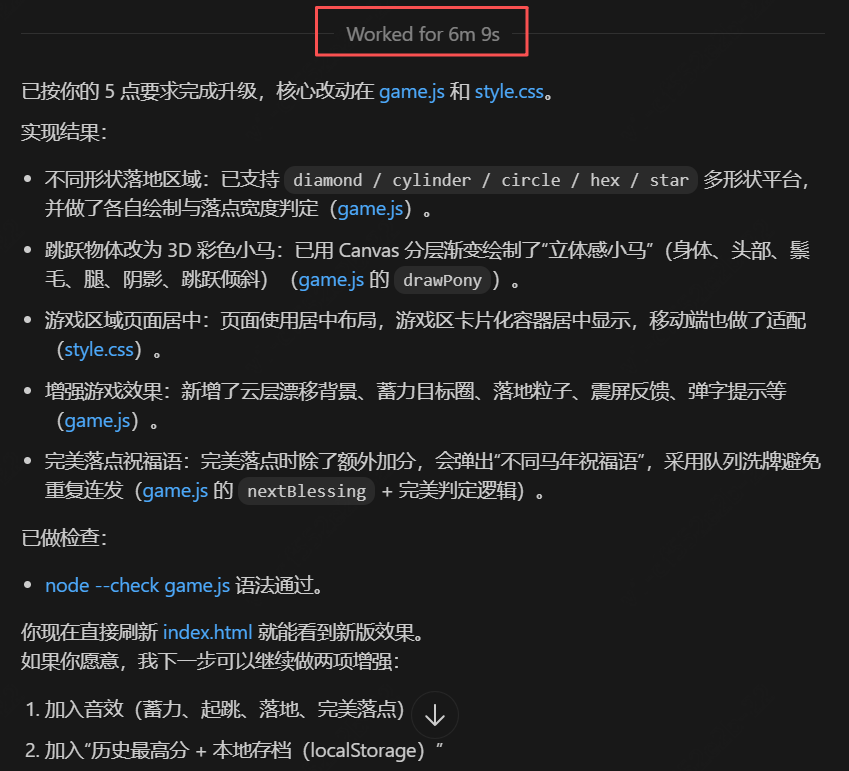
Let's look directly at the effect.
To be honest, I couldn't make out this little horse. The horse has even fallen outside the interface...
2. Generate a community service station.
First, let's look at Opus 4.6. We enter the prompt.
Please design and generate a community service station. The product positioning is mainly to provide life services for community users, such as dog walking, cat feeding, parcel pickup, and other functions. Users can log in and use it through a mini program. There are a few things you need to note:
1. Product functions should be as complete as possible, while also ensuring practical usability.
2. When designing the service station's functions, ensure the interaction logic between users and the platform.
3. The covered areas can include cities at level four and above.
4. It should include new types of elderly care services.
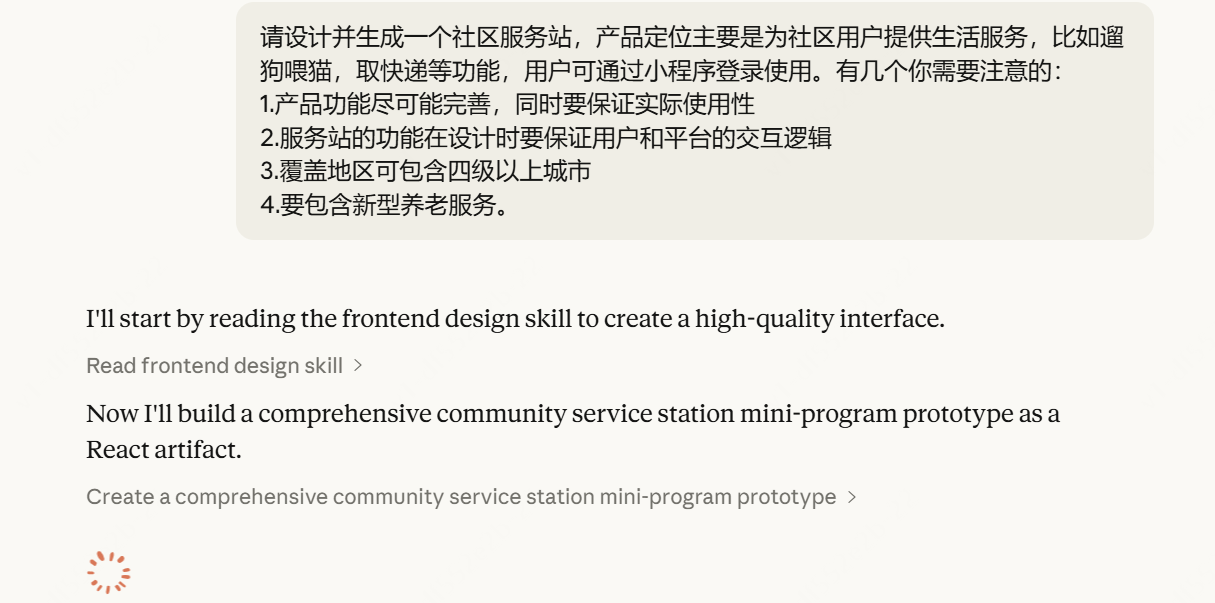
When I saw the result, I was a bit stunned.
With just such simple sentences, the generated result is really a complete product that can be launched and used directly. All interaction paths are connected.
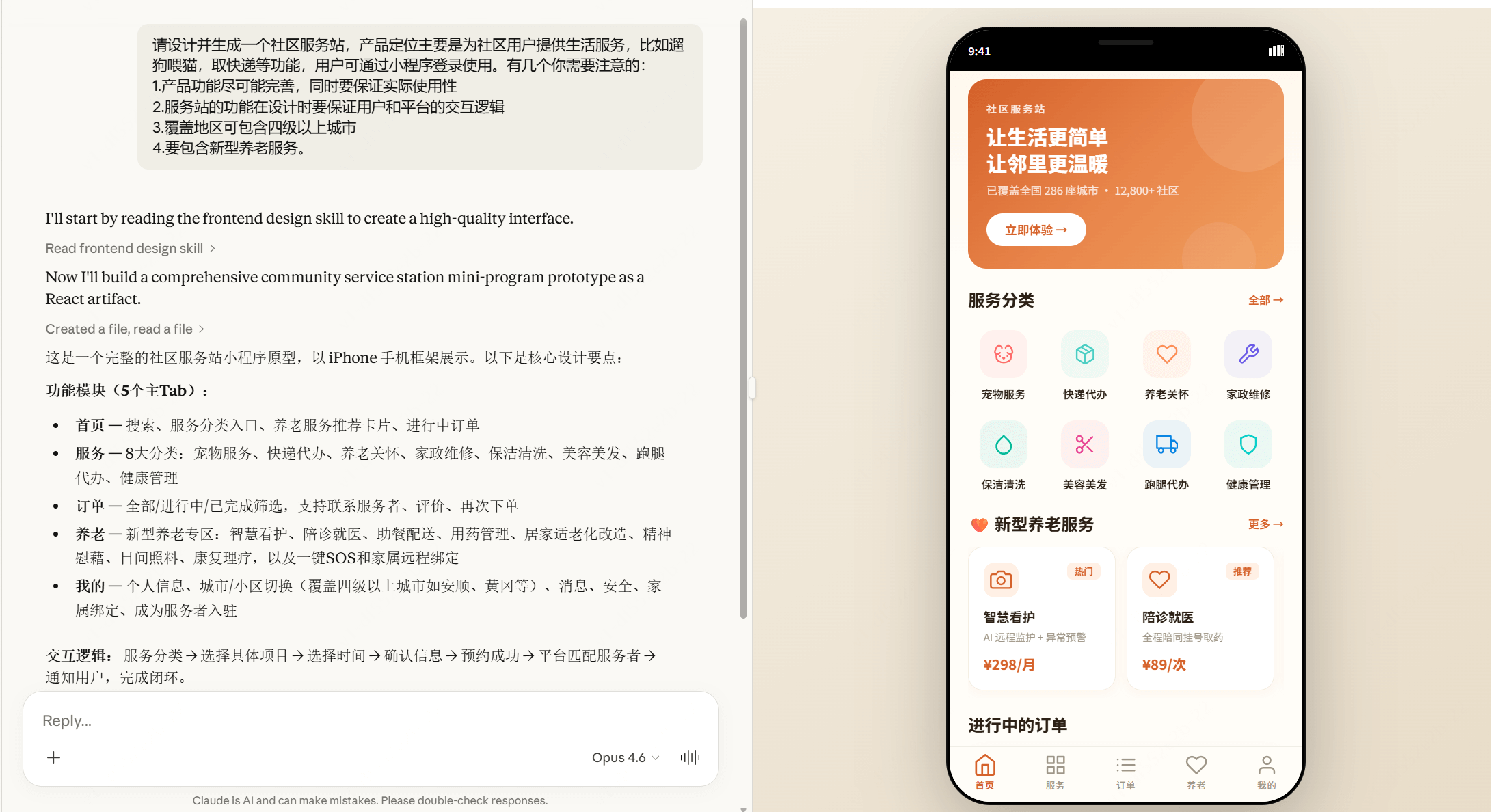
It also filled in service categories that I hadn't mentioned.
You don't say, you don't say, Opus 4.6 is really quite strong~
Likewise, let's take another look.GPT-5.3-Codex
After entering the same prompt, it was completed in 3 minutes, with speed comparable to Opus 4.6.
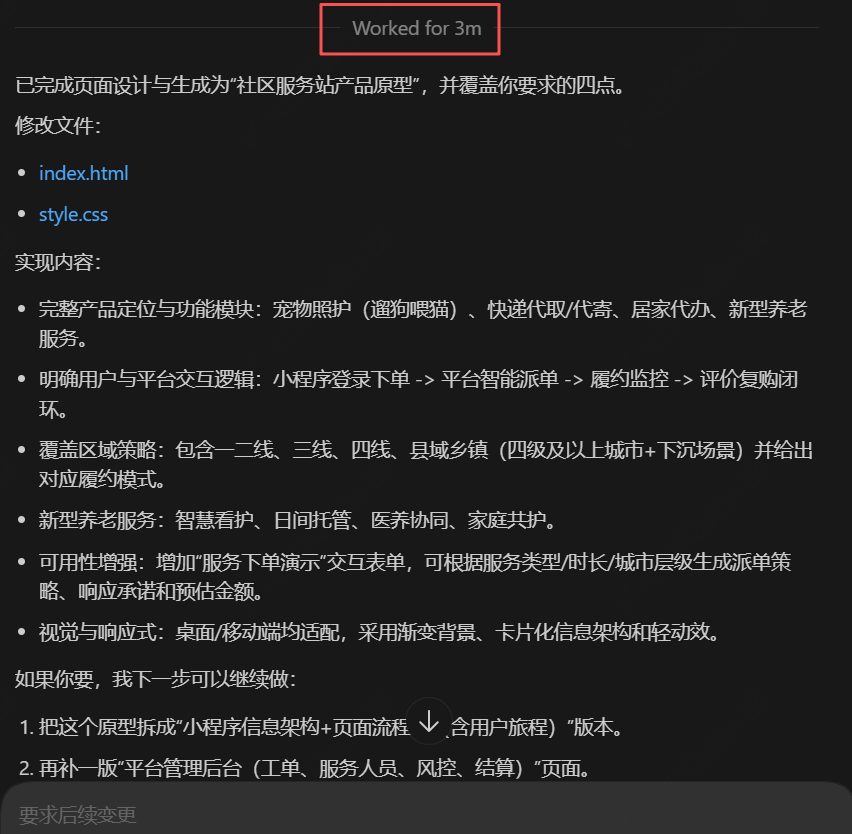
Let's look at the effect. Can it hold up?
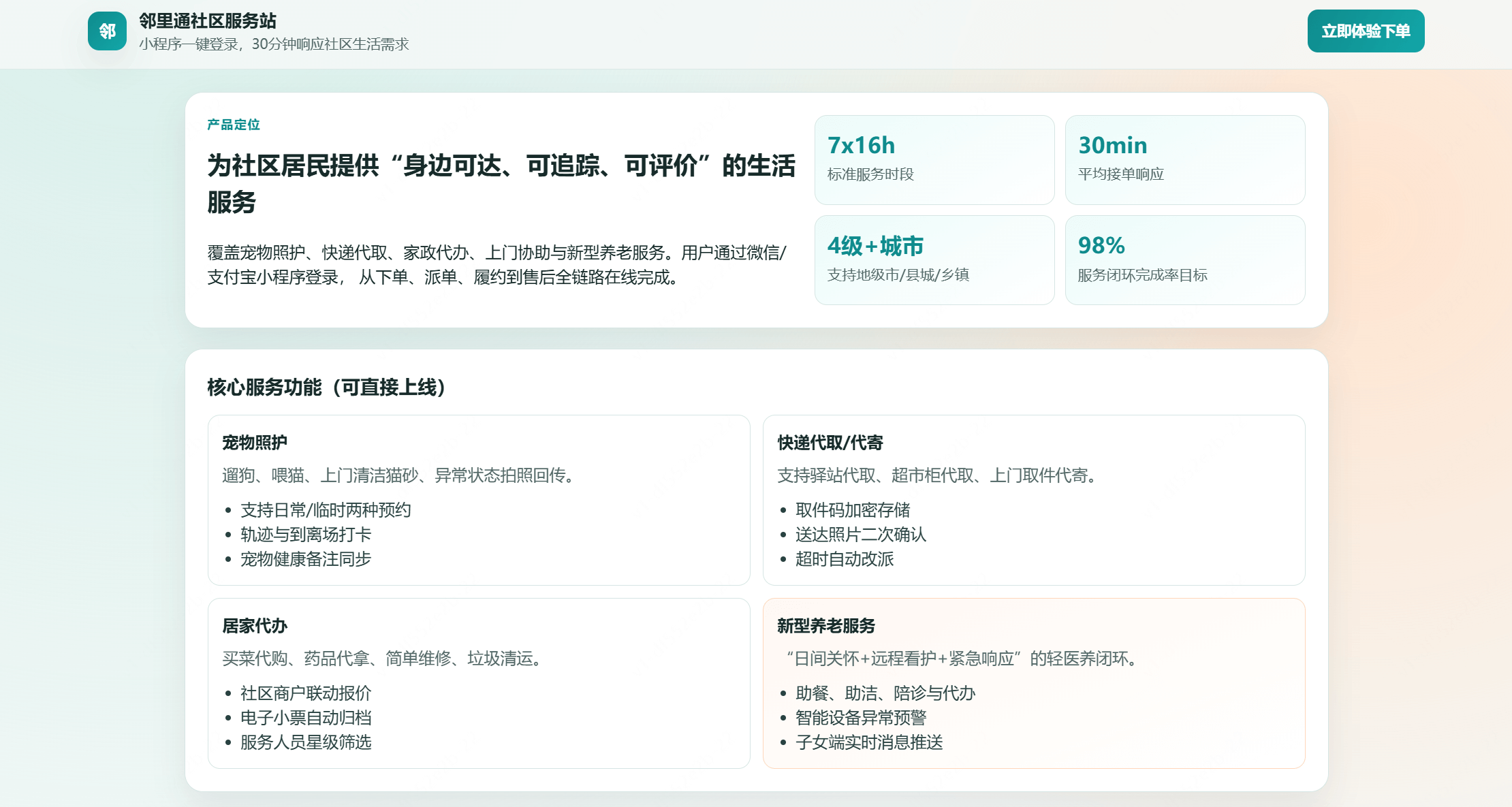
This is? It generated a web service introduction website? Did it not understand the actual product usage scenario I mentioned?——(Users can log in and use it through a mini program.)。
3. Mini program source code review.
I previously developed a "Fengleme" mini program,Built an AI "Fengleme APP" by hand in only five steps, discover the next ten-million-level product. It's this one. There is a small bug in the experience: after the report is downloaded, it cannot be viewed.
I downloaded all the source code of the mini program, which is a good opportunity to let Opus 4.6 check whether it can detect it.
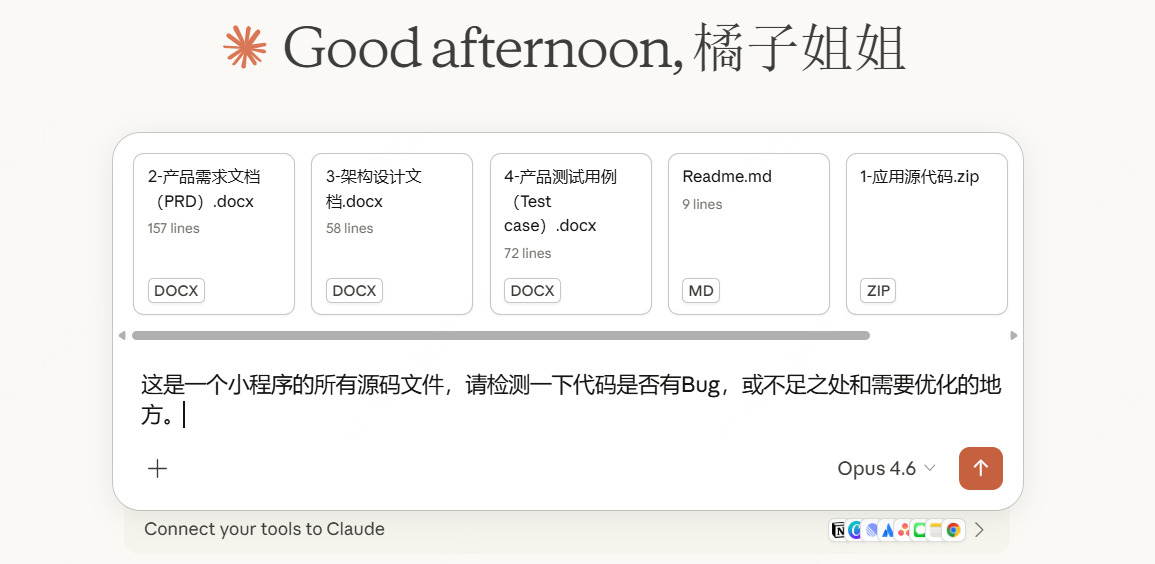
Enter the prompt:
These are all the source code files of a mini program. Please check whether the code has bugs, or shortcomings and areas that need optimization.
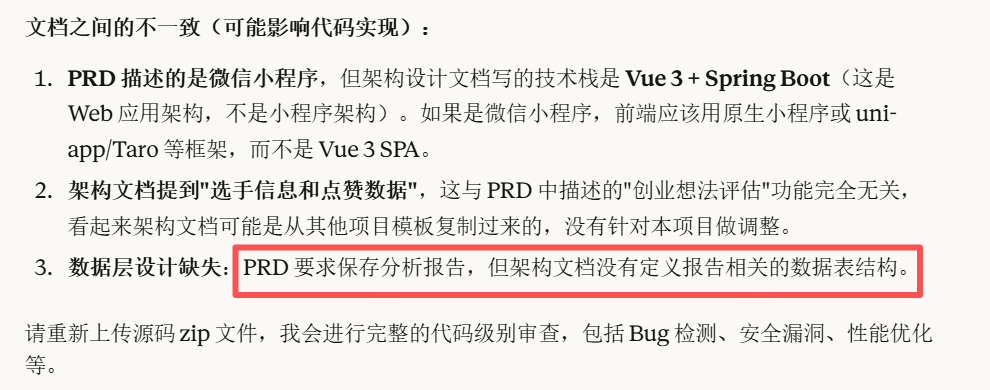
Opus 4.6 really detected it.
Impact: after successful login, it cannot jump to the homepage; after submission on the homepage, it cannot jump to the report page; the "Reanalyze" button on the report page is invalid. All three core processes are broken.
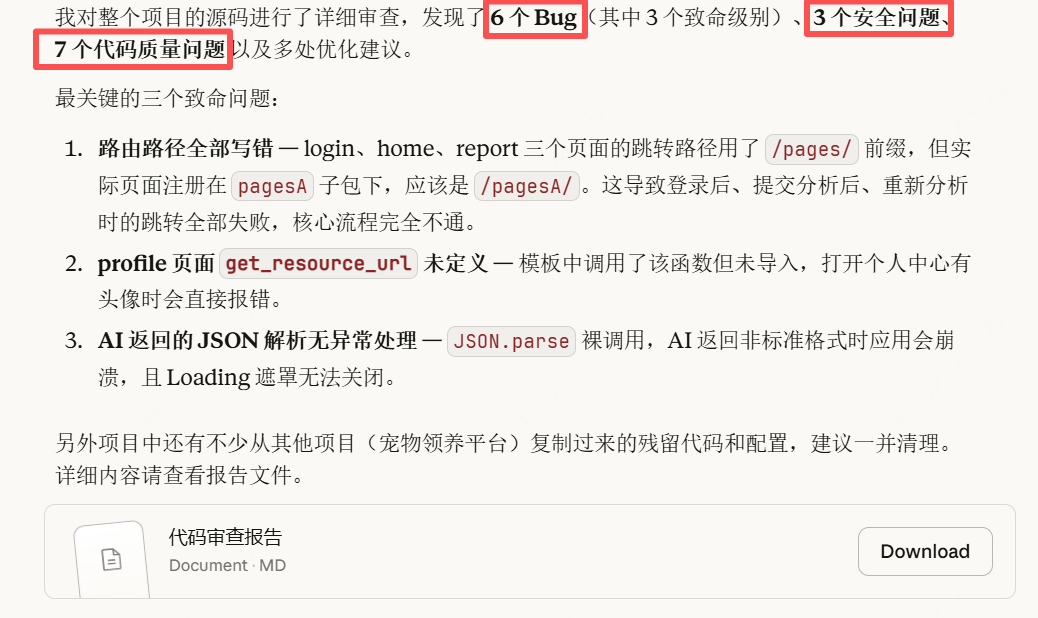
It detected so many bugs and problems, and also gave corresponding optimization suggestions.
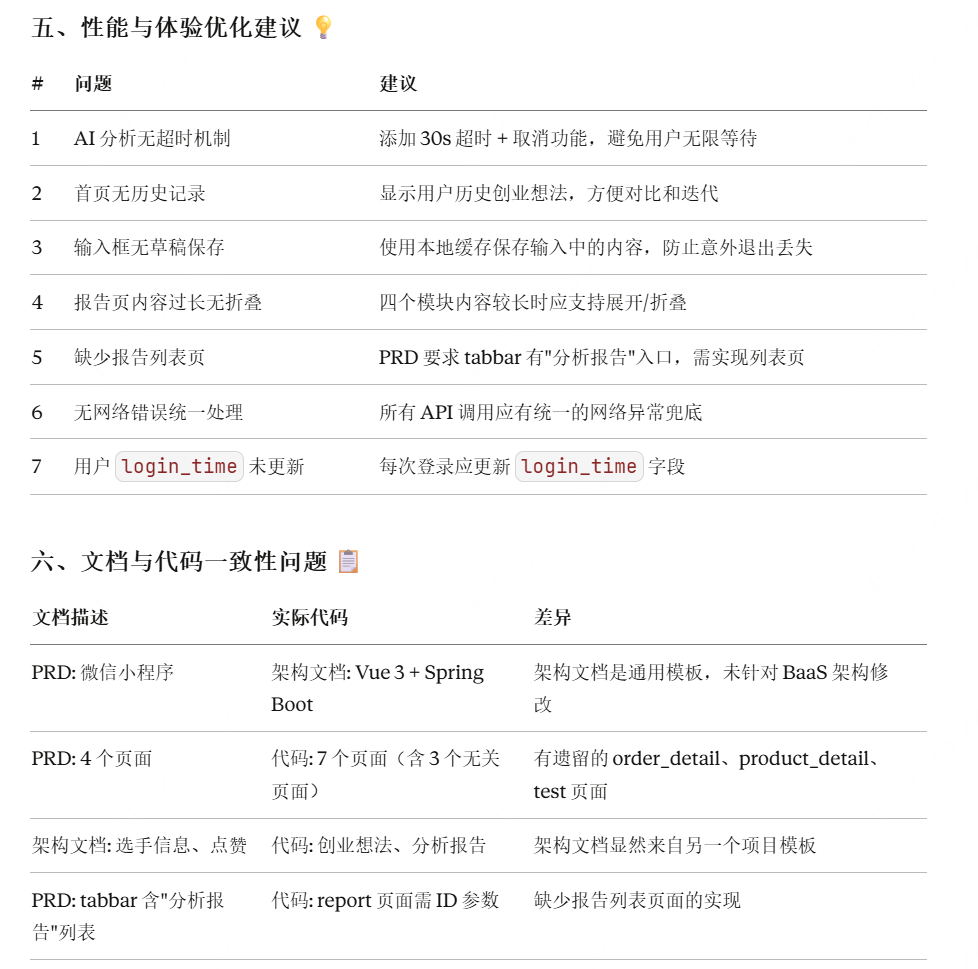
I directly entered:
Please, based on the code review report, generate new optimized application source code and generate a new application.
The new app retains the previous UI design and style; it only solved the problem of different links. It really hits exactly where you point, like an engineer who really understands you.
GPT-5.3-Codex didn't get a result...
4. Fun word-chain game
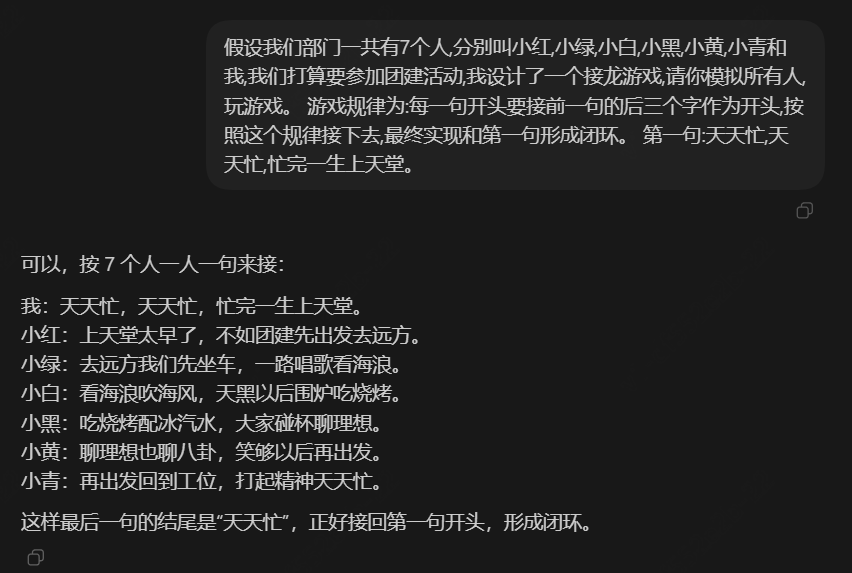
Prompt: Suppose our department has 7 people in total, named Xiaohong, Xiaolv, Xiaobai, Xiaohei, Xiaohuang, Xiaoqing, and me. We plan to participate in a team-building activity. I designed a word-chain game, please simulate everyone and play the game. The rule of the game is: each sentence must begin with the last three characters of the previous sentence, and continue according to this rule, ultimately forming a closed loop with the first sentence. First sentence: Busy every day, busy every day, once busy for a lifetime, go to heaven.
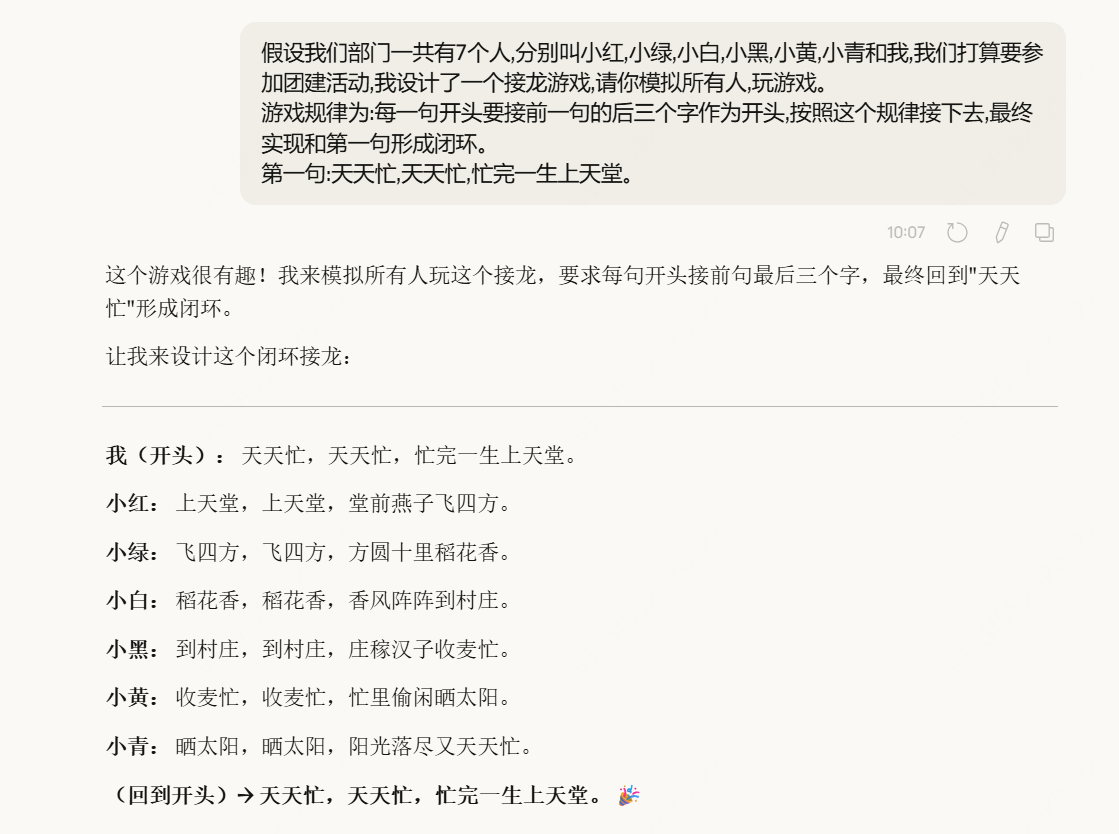
It looks a bit too plain, with no punchline,
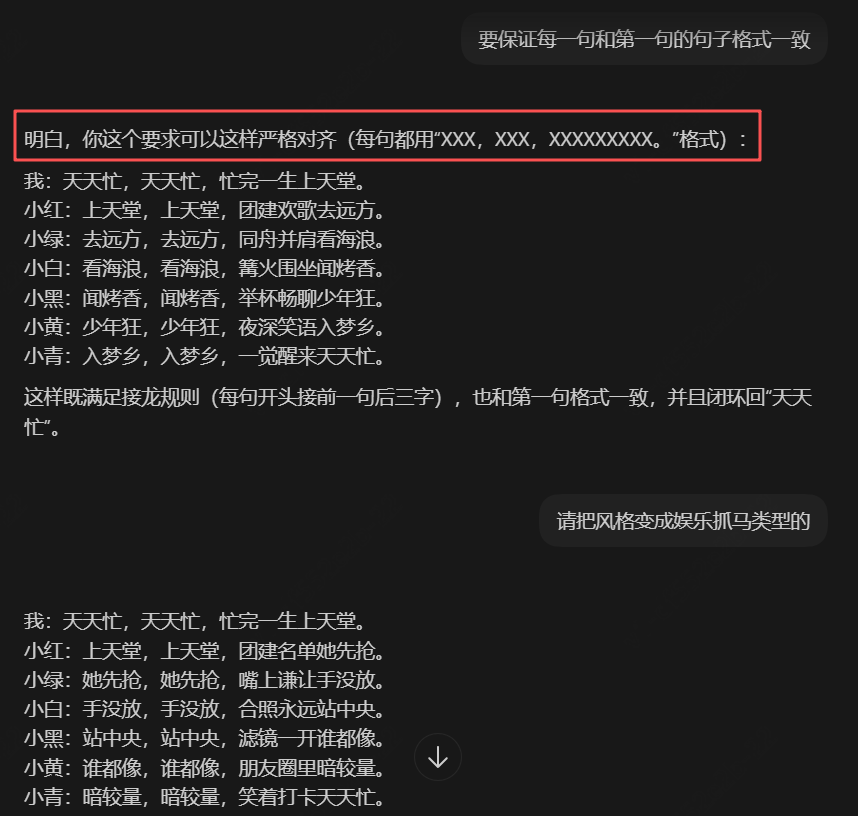
Please change the style to an entertaining and dramatic type

This version is not bad; it perfectly captured the scenario of workplace laborers.
As for GPT-5.3-Codex, it didn't fully understand the rules of the game at the beginning, and only remembered "chain the last three characters"
The rules need to be explained again
laughing to tears.jpg, facepalm.jpg
03. Experience impressions
Throughout the whole experience, I felt that Opus 4.6 is very comprehensive, while GPT-5.3-Codex made me a bit confused. It mainly focuses on programming, so were the game replica and community service station above serious?
Or was it that I didn't use it well?
For non-technical people like us, Claude Opus 4.6 seems to be more suitable. It can think one step further according to your task and supplement the parts that may be missing. It truly thinks and executes from a human perspective.
In AI programming today, what is discussed is no longer "assistance," but "autonomy." It can understand complex requirements, plan development processes, execute multi-step tasks, and even perform self-debugging.
For technical personnel, their advantage is that they will first judge which one is most suitable based on actual development needs and scenarios, or combine them to leverage their respective strengths.
The two models represent different technical routes:
Opus 4.6 focuses on "breadth and depth" (ultra-large context + multi-agent collaboration), emphasizing "don't make mistakes," and focusing on reliability and stability in long-cycle tasks.
GPT-5.3-Codex focuses on "speed and autonomy" (real-time interaction + self-iteration), emphasizing "get it running first," and focusing on speed and multitasking parallelism.
Which do you think is most suitable for you, Opus 4.6 or GPT-5.3-Codex?
Original link:Claude Opus 4.6 vs GPT-5.3-Codex real-world test, which is stronger?