
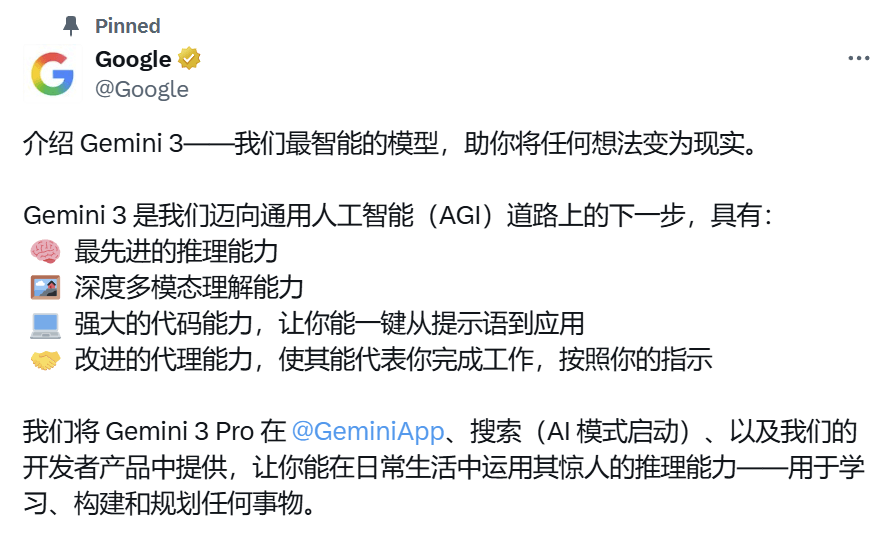
The long-awaited Gemini 3is finally here! This time, it's a comprehensive upgrade in reasoning, multimodal, coding, and agent capabilities.
GooGle DeepMind says: This is the world's best multimodal understanding model, and also our most powerful agent and Vibe Coding model to date.
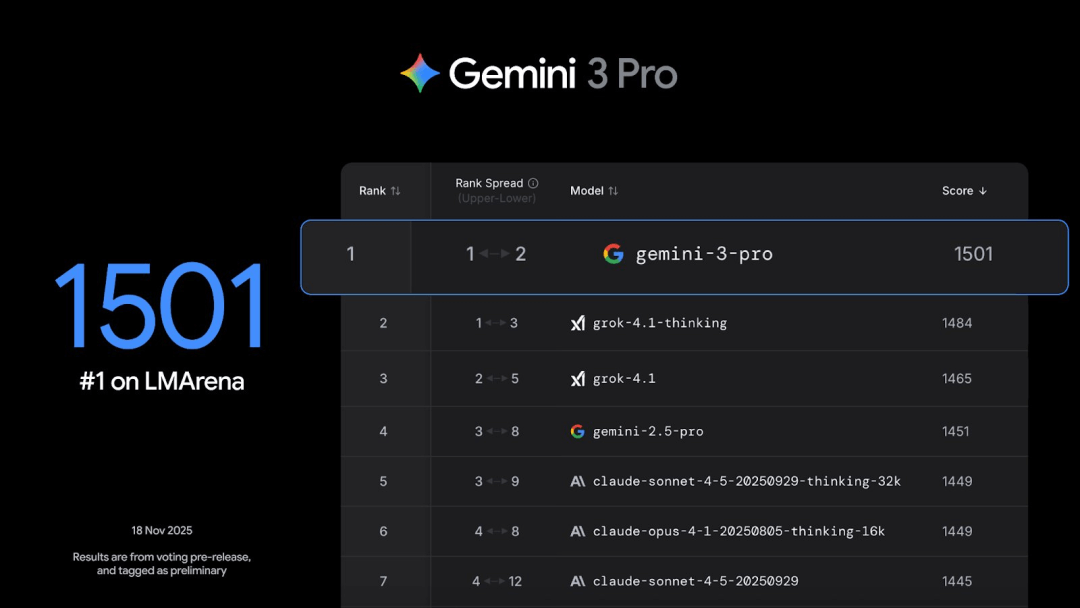
As soon as it was released, Gemini 3 almost topped all benchmark tests, and on the LMArena human blind test leaderboard it broke through a 1500 Elo score for the first time. Gork 4.1 had just reached the top not long ago before being pushed down!
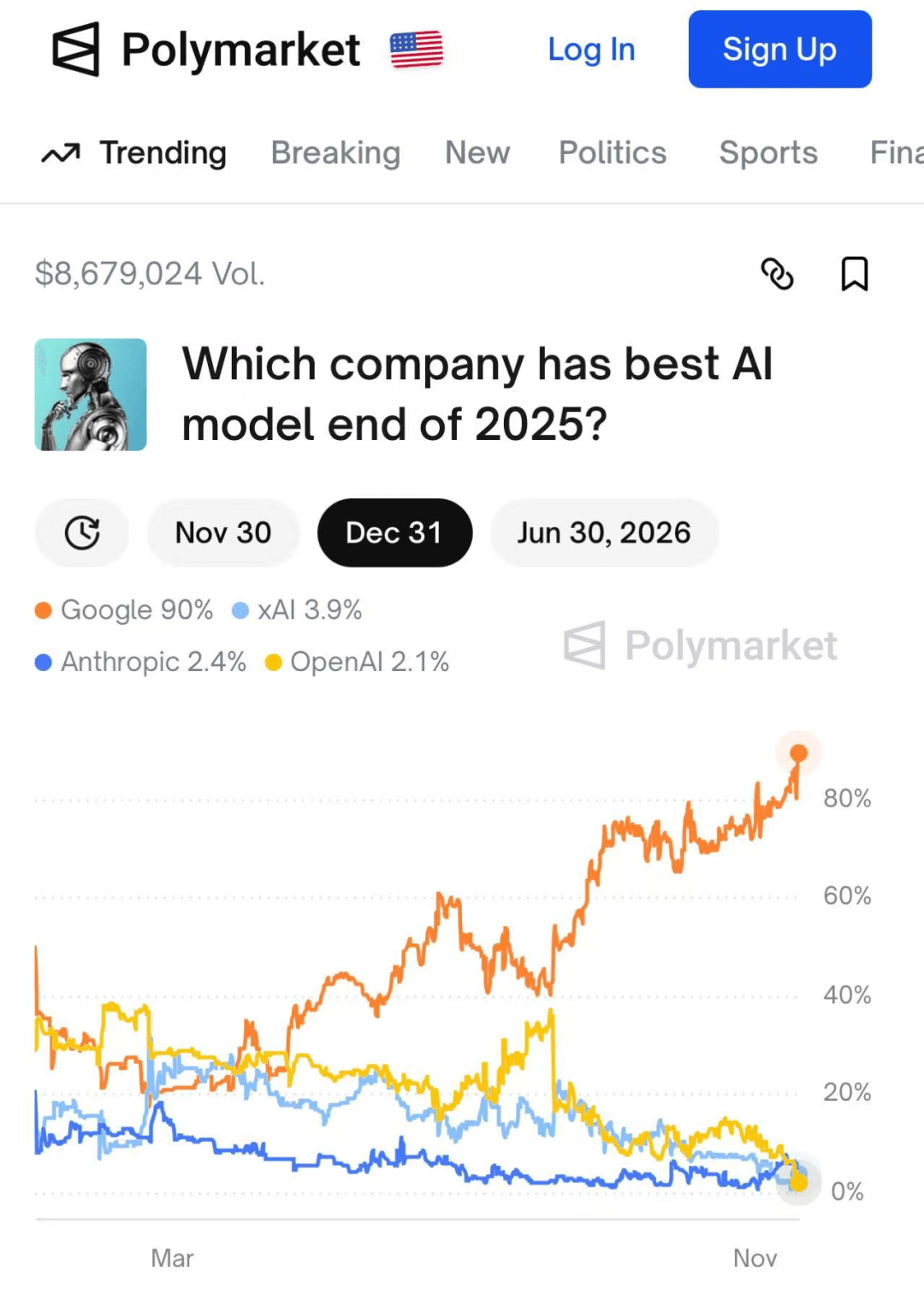
In the discussion on Polymarket about "Which company will have the best AI model by the end of 2025?", Google Gemini took nearly 90% of the votes, far ahead.
The scores are indeed high, but you still have to try it yourself to know whether there's real substance. Let's test it together.
Experience address:https://aistudio.google.com/
01. Hands-on test cases
case1 Image understanding
Prompt: Describe this image in language as precisely as possible, and generate a complete prompt that can reproduce this image.
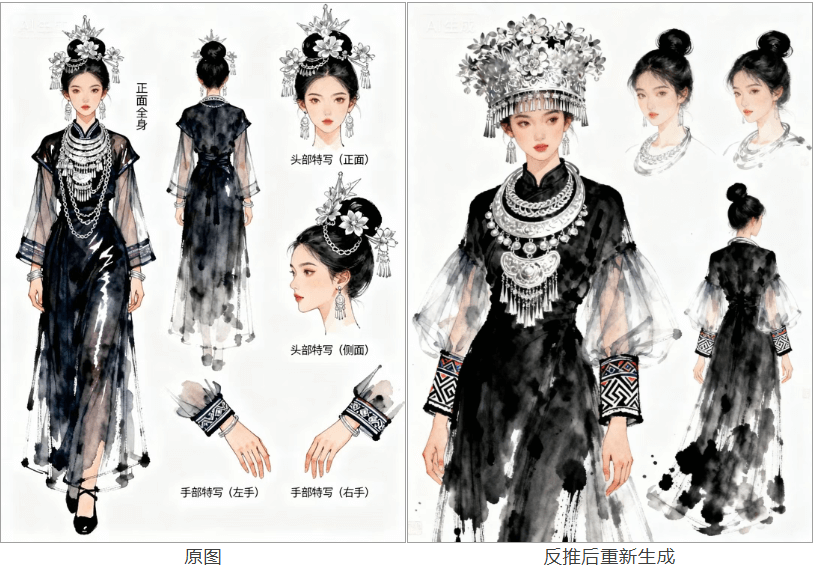
Gemini 3 accurately identified that this is a character design image, and analyzed in detail the image's composition and layout, character features, clothing details, and artistic style. The information recognition is quite accurate.
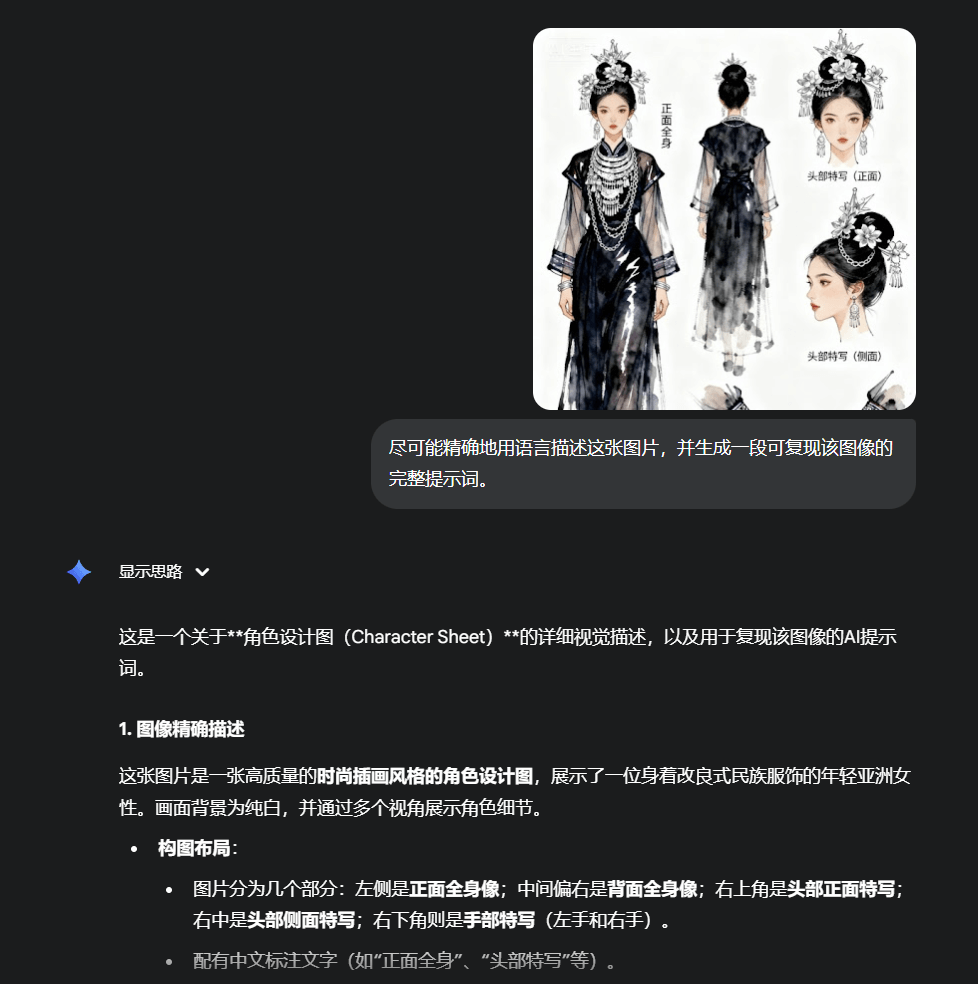
The complete prompt given by Gemini 3 is as follows:
Character design sheet, multiple views including full body front, full body back, head close-up, and hand details. A beautiful young Chinese woman wearing a stylized black ink-wash painting long dress with translucent tulle sleeves. She is adorned with heavy, intricate traditional Miao ethnic silver jewelry, including a large layered silver neck ring, chest chains, and a floral silver headdress with tassels. High bun hairstyle. The dress features a wet-on-wet watercolor texture, black ink gradients, and ethnic geometric embroidery on cuffs. White background. Fashion illustration style, watercolor and ink art style, elegant, ethereal, high quality, detailed character concept art. –ar 3:4 –v 6.0
The style of the generated image is almost identical to the original. Elements such as the sheer fabric in the clothes and the silver ornaments on the character's head and body were all restored. Although there are still some differences in image details and layout, I think being able to restore it to this extent is quite good.
case2 Text recognition
A friend sent me an image. He said he took notes when he was learning data analysis back then, and now wants to look them up again, but it has become very hard to make out what was written.
We sent it to Gemini 3 for recognition to see.
Prompt: Extract the text content in the image, and preserve the original layout structure and symbols.
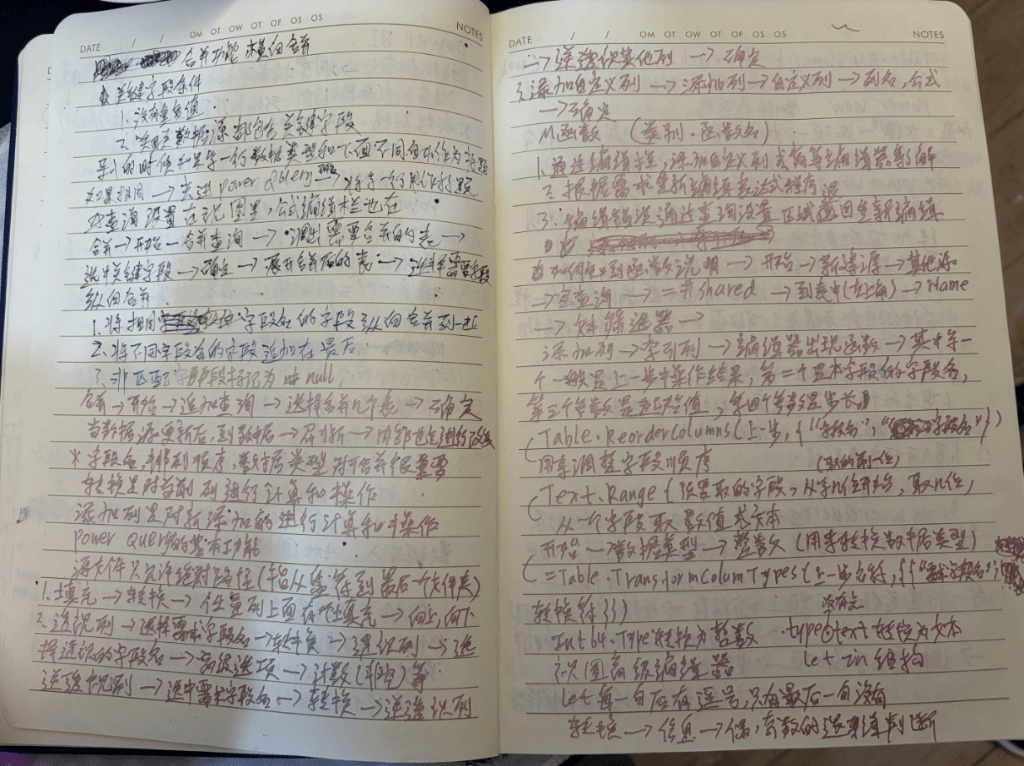
Gemini 3 recognized in just a few seconds that this is a document about function processing operations in Power Query:
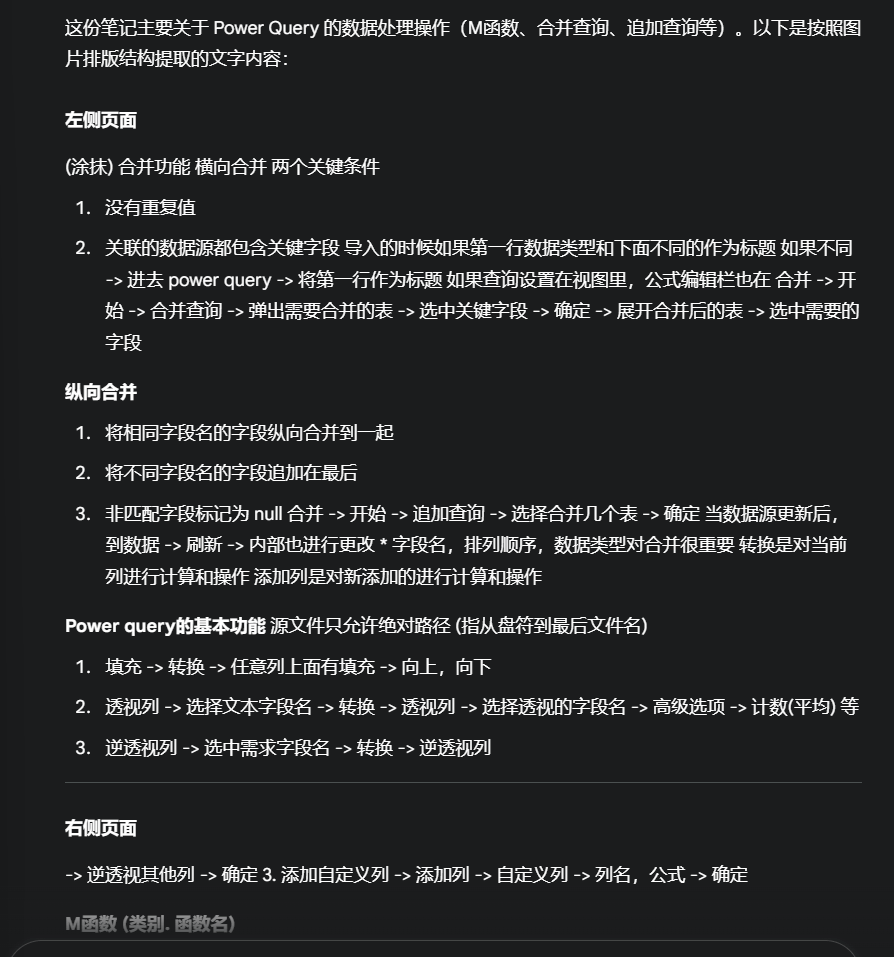
The accuracy of symbol and text recognition is quite high. Many characters I couldn't recognize, but Gemini 3 recognized them all, with only a few wrong characters; the layout is average, with many paragraph breaks missing.
case3 Video understanding
Prompt: Help me analyze in detail each shot in this video to ensure I can replicate it.
Gemini 3 identified that this is a typical high-energy, fast-paced travel Vlog from a branch factory, and also found well-known bloggers with a similar style, and stated that the core of this video lies in beat-synced editing, seamless transitions, and high-quality B-Roll (empty shots). The content and key points are all quite correct.
For this 4-minute video, Gemini 3 divided it into 7 stages according to narrative logic and musical emotion, and analyzed in detail the visuals of each shot, not only including what the visuals contain, but also describing in detail the shooting and post-production techniques.
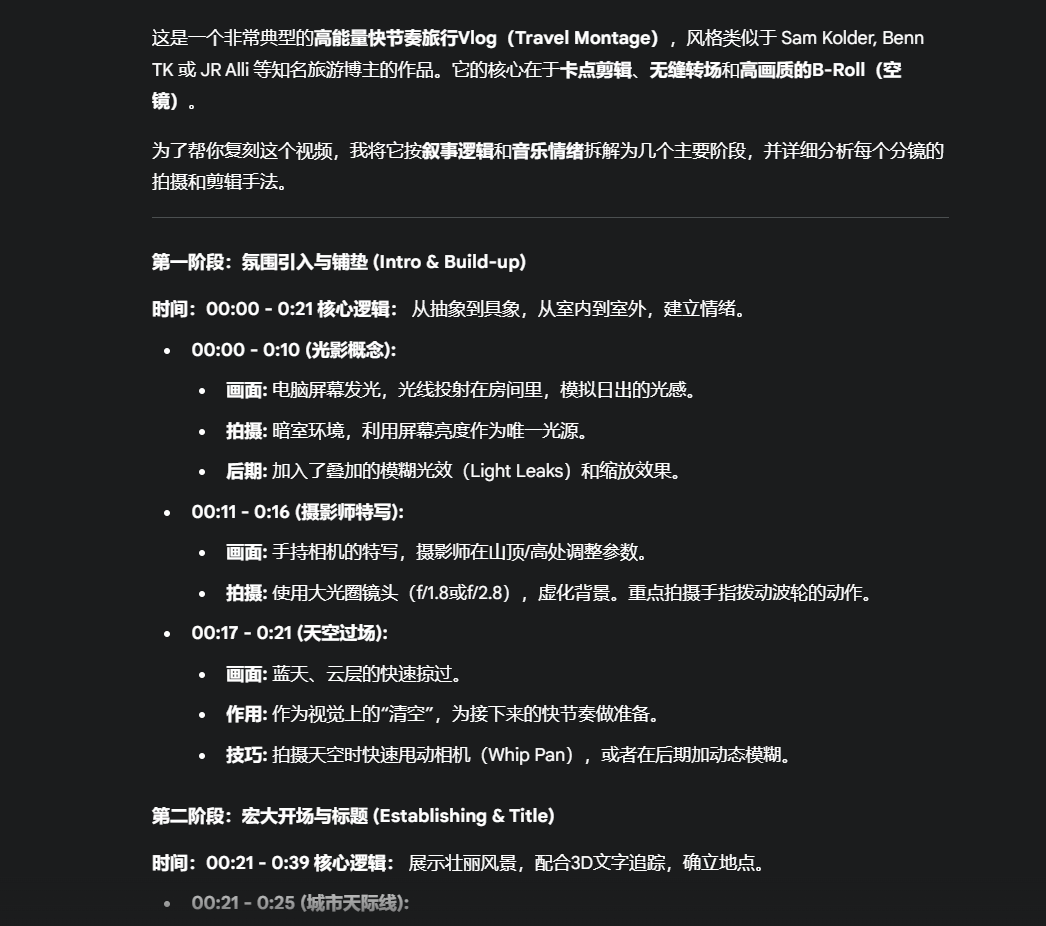
Finally, Gemini 3 gave 3 key suggestions:
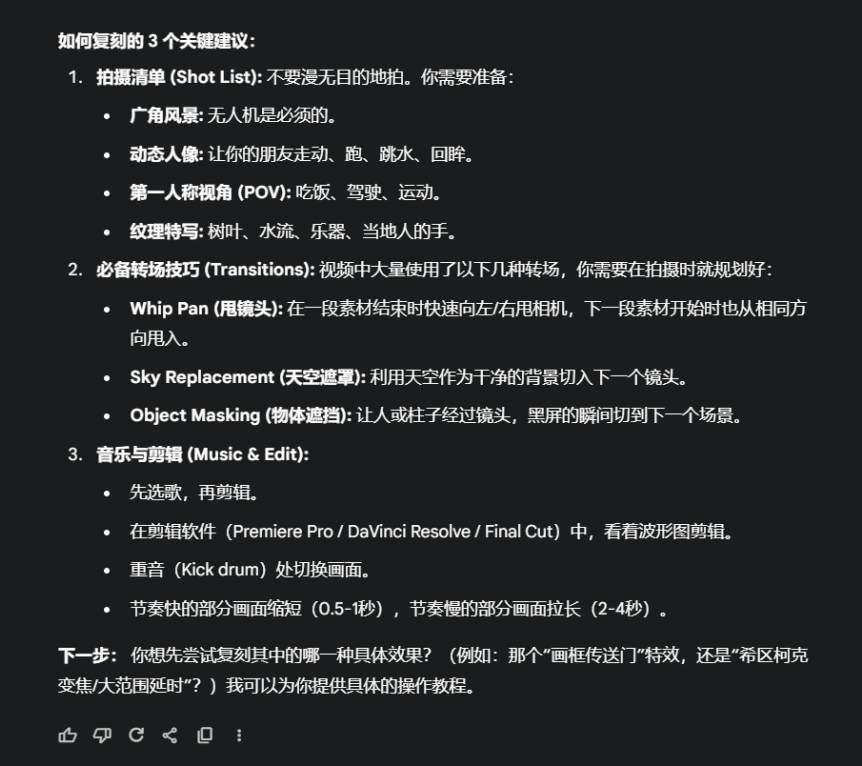
What shooting equipment is needed, what state the people appear in on camera, how to plan the transitions, and finally how to edit it into a finished piece—Gemini 3 covered all the key points to pay attention to in the actual shooting process.
case4 SVG animation
Prompt: Generate an SVG animation demonstrating the working principle of a diode rectifier circuit.
With one simple prompt, Gemini 3 drew an animated circuit diagram, making it easier to understand the knowledge point, and also added a waveform chart beside it. The page layout is quite good, and the animation effect is also very well done.
However, the waveform chart still needs some optimization. The shape is right, but the values are not very accurate. Splitting the input and output into two independent coordinate systems would be more appropriate.
case5 Math Practice Trainer
Prompt: Create a webpage that displays an animation made with emoji to demonstrate the principles of an AI Agent.
Gemini 3 made a case demonstration animation. When a user sends a request to check the weather, the AI Agent does not know the real-time weather conditions. At this point, the AI Agent will call a search tool, and after querying, reply the data to the user.
The whole process is simple and clear, understandable even to people with no background at all, and the animation is also very smooth. Pretty good.
case6 3D Excel Simulator
Prompt: Place a computer in a 3D space where the viewpoint can be moved, and create an operable Excel simulator in that computer. Features: provide 10 types. At the same time allow changing the viewpoint height.
The page generated by Gemini 3 looks like this. We can switch viewpoints freely, zoom in, zoom out, move up and down, and rotate, and the Excel on the computer screen is also editable. It can be seen that Gemini 3's multimodal understanding ability and UI generation ability are quite on point.
case7 Math Practice Trainer
Prompt: Create a single-page application implemented with only a single HTML file. The specific requirements are as follows:
Name: Math Practice Training
Goal: Improve the speed and accuracy of doing math problems.
Features: timed quizzes, difficulty settings, score tracking.
Interface: The overall style should remain minimalist, with large font sizes and easy-to-read text.
At first I thought its interface was so simple that it must be pretty bad.
But after actually using it, it is indeed pretty good. You can adjust the time, number size, and operation types, which is very suitable for elementary school students to practice addition, subtraction, multiplication, and division.
There is also a scoring system, which is equivalent to playing a game.
case8 Website Development
I tried making a membership discount website, and I completed it through natural language conversation. The following are the step-by-step prompts:
Prompt 1: Help me generate a membership discount website that supports claiming membership codes and purchasing membership card codes, divided into two tabs: Latest and Hottest.
Prompt 2: Help me add a user center and authentication, support one-click login with a Google account, and users who are not logged in cannot claim or purchase. After clicking, guide them to register and log in. Logged-in users can see what they have bought in the past and what they have claimed for free.
Help me add claim data and purchase data to the products, showing how many people have claimed and how many people have purchased. The Hottest tab is sorted in descending order by claim count and purchase count, and the Latest tab is sorted by launch time. Add a date directory on the left, in reverse order by day.
Prompt 3: The dates on the left are not attractive enough. Make them scrollable, remove the display of specific dates, and change it to display by month. The UI style should still refer to the previous version and does not need major changes.
Under the Latest and Hottest tabs, divide them into two columns for display. The first column is all memberships that can be claimed for free, with two products per row. The second column is memberships that can be purchased at a discount, with one product per row. Add a discount strength display, strike through the original price, and automatically convert and display the discount strength, keeping 1 decimal place, for example: 6.6 fold.
Prompt 4: Our product name is VipCheap. Help me take the letter "V" as the main element and generate a LOGO to put on it. The LOGO has a darker background as the main color tone, and the V element is white.
Keep the category tags under Latest and Hottest for me; it just needs to be similar to the previous style.
Claim a free membership card, show how much remaining stock there is, and if the remaining amount is 0, it cannot be claimed and the button should be grayed out.
Prompt 5: Overall it's very good, help me change the LOGO to a rounded rectangle, everything else stays the same.
Popular rankings, add the claim count, sort in descending order by claim count, everything else stays the same.
Prompt 6: After the free claim, change the button text to "View Membership", change the color, and it can be clicked to open a popup previewing the claimed card code and information on how to claim and redeem it, while everything else stays unchanged.
Prompt 7: Paid discount section, purchasing a product needs a popup to confirm the quantity, total amount, and payment method (supporting PavPal, WeChat, Alipay, credit card); after purchase, guide the user to view the card code information and redemption method, and these records and information can also be viewed in the personal center.
The paid discount section displays 10 by default, and everything else must remain strictly unchanged.
This is the final website:
We can register and log in, view and purchase products; the page aesthetics are quite good, and the interactions are very smooth.
Across multiple rounds of natural language conversation iteration, Gemini 3 can always maintain the overall UI style, page layout, and component logic, and it won't become more and more messy as changes are made. This is crucial for someone like me who doesn't understand code.
I also casually had it generate an admin backend:
Prompt: Based on the latest version of the product features above, comprehensively sort out which functions are involved in the backend management system and the create, read, update, and delete requirements. After sorting out the complete requirements, generate an admin backend. It needs to support two system roles: super administrator and operations. The operations role permission configuration does not support deleting any data (products, orders, users).
Based on the frontend pages and existing functional logic, Gemini 3 filled in modules such as the dashboard, product management, order flow, users, and system permissions. The entire backend was reverse-engineered from the frontend web pages, which is very much like a qualified product manager.
02. Some Sharing
From actual testing, I found that the value of Gemini 3 is far more than simply a stronger model; its rewriting of the way we work may be more intuitive than benchmarks and parameters.
In the future, the smallest team in the AI era should be 2 people, namely 1 PM who understands growth and can use AI + 1 senior full-stack developer who is proficient in AI.
- Gemini 3's instruction following, frontend implementation, and visual aesthetics are all excellent, and it can almost replace the work of UI and frontend. As long as we explain the requirements clearly, Gemini 3 can automatically fill in the logic and deliver a usable finished product, which is much more mature than I expected.
- The AI era is still in a new round of technological revolution. The emergence of new technologies will bring new needs and new products. At this stage, the requirements for PMs place more emphasis on understanding AI technology and growth, which will be more important than traditionally understanding requirements.
- PMs use AI to complete requirements sorting, visual interaction drafts, and even frontend code implementation, reducing the communication, handoff, and execution between two roles in the middle. A month's workload is compressed into 1 day. The group that Gemini 3 helps the most is actually PMs, not RDs.
- To achieve a truly highly available, high-concurrency, and stable product or system, 1 senior full-stack developer is still needed. It cannot be a junior developer, nor a pure backend developer. It needs to be a senior full-stack developer who is proficient in AI, to complete the final stage of service development and launch.
AI is rewriting team size, and also rewriting the productivity curve. It also means there is no longer a long cycle between creativity and product.
The next product era will grow into a new form amid such trends.
Original link:Google officially released Gemini 3, and after playing with it for a day, I reached one conclusion!