
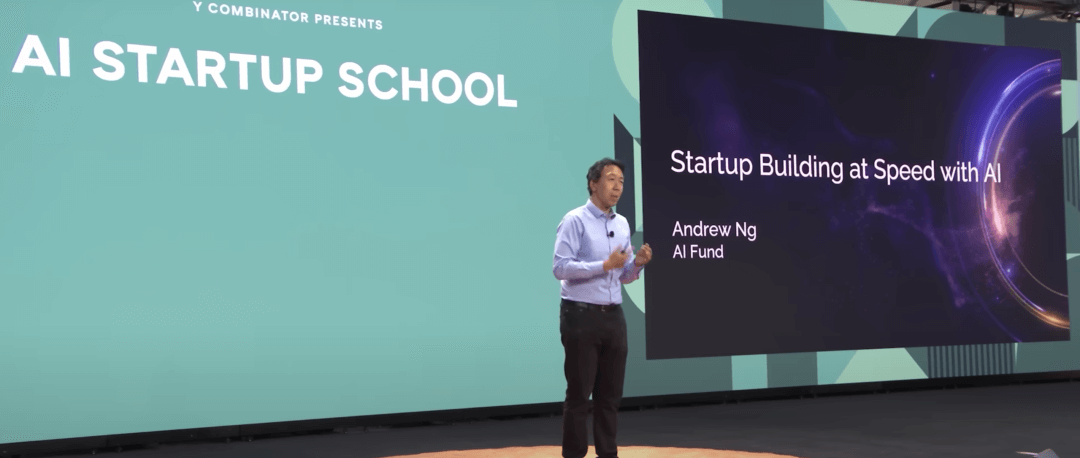
"Execution speed is an important indicator of a startup's probability of success." — Andrew Ng
Recently,AI Fundfounder Andrew Ng's talk at AI Startup School—"How Can AI Startups Move Faster Than Others?"—sparked an enthusiastic response overseas.
In this talk, he brought real, hands-on experience to break down one core question:In an era where AI technology is advancing at breakneck speed, how can you quickly build products and start a business?
Next, K-jie will walk everyone through the content of this talk~
01. Focus on the application layer: where the biggest opportunities lie
Andrew Ng punctured a truth right away: the media always loves to hype technical concepts,but what truly enables entrepreneurs to implement and make money is precisely the applications that can help users solve specific problems.
He compared the AI technology stack to a pyramid: the bottom layer is chips and cloud services, the middle is large models, and the top layer is applications that directly solve user needs.
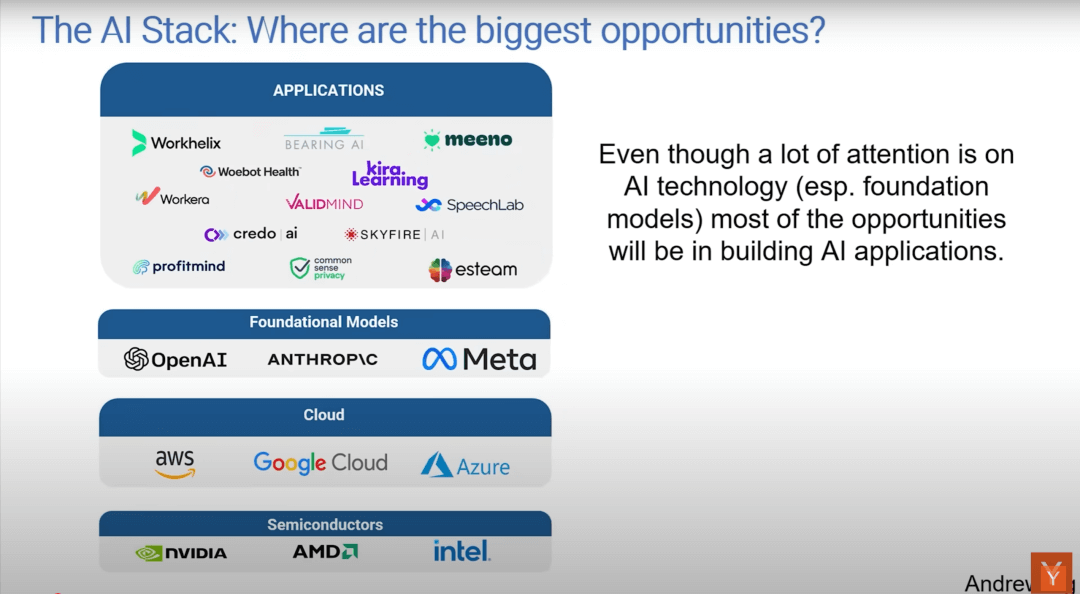
"If the application layer doesn't make big money, who will pay for the underlying technology?"
The AI Fund he runs incubates one application-layer company per month—this is playing with cards face up: find a specific problem in a vertical scenario and use AI to build an "empowerment tool," which is the optimal solution for ordinary people to enter.
I resonate with this so much. Too many teams around me keep grinding away at "building a better large model," but what ordinary people really need may just be specific tools like "using AI to automatically translate materials" or "helping small business owners optimize copy."
The closer you are to users, the more tangible the opportunities.
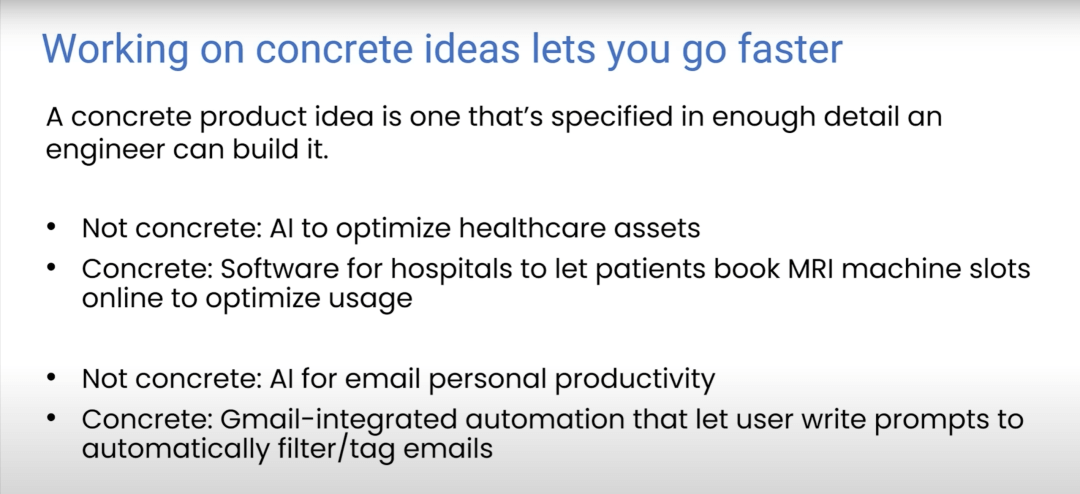
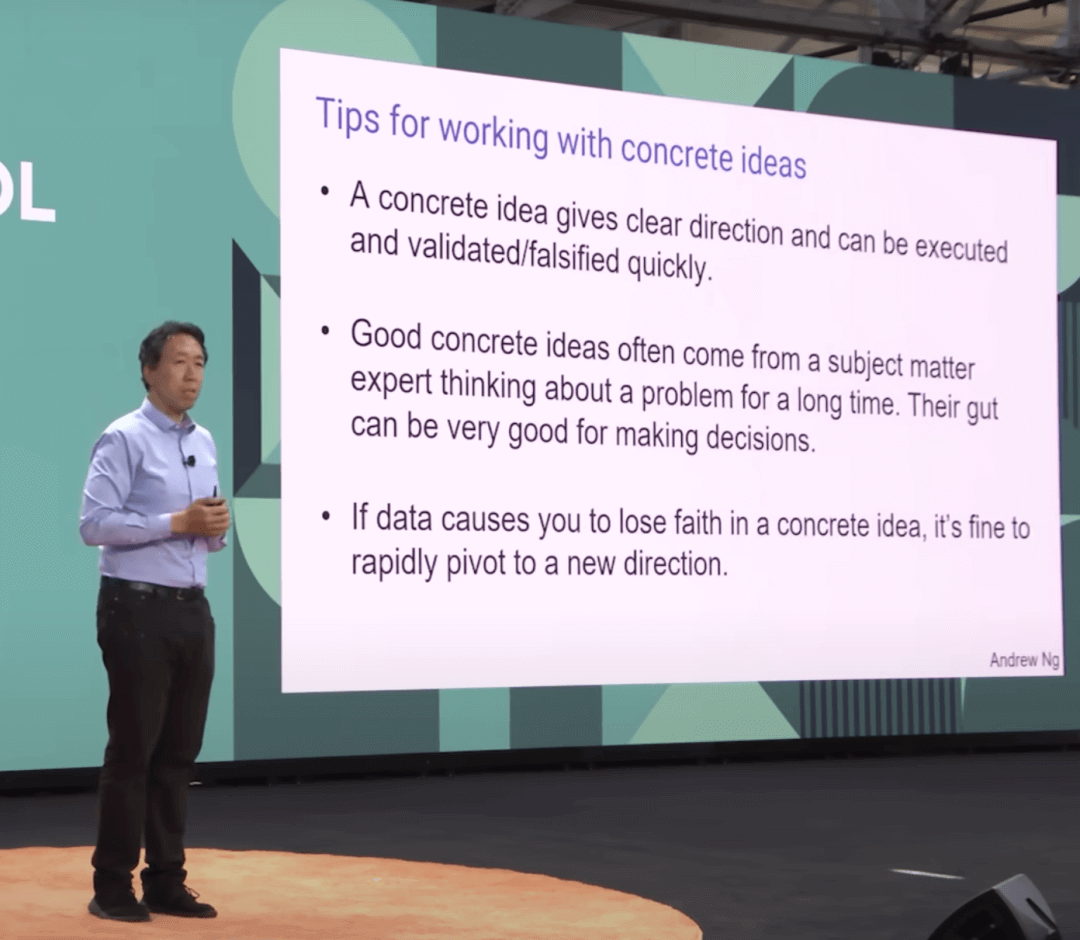
At the same time, he also gave some tips for handling specific ideas:
- Specific ideas can provide a clear direction and can be quickly executed, validated, or falsified.
- Good specific ideas often come from an expert in a certain field thinking about a problem over the long term. Their intuition is very helpful for making decisions.
- If data makes you lose confidence in a specific idea, it's fine to quickly pivot to a new direction.
02. Product management becomes the new bottleneck
What overturned my understanding the most was this passage: "After AI sends engineer efficiency soaring, there aren't enough product managers."
Previously, one product manager led six engineers; now some teams propose "one product manager leads 0.5 engineers"—because engineers run too fast, and the decision of "what feature to build" has instead become the bottleneck.
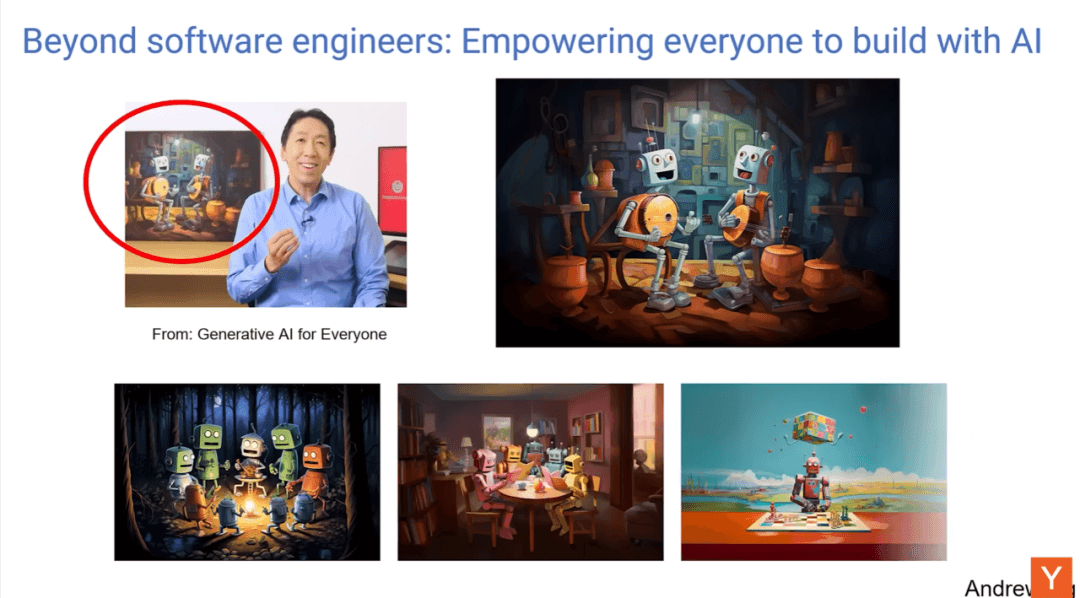
And his advice is also very practical: either have product managers learn to code, or have engineers understand product.
PMs who understand code or engineers with product thinking can better connect development and requirements and improve efficiency.
It seems that,team composition in the AI era really needs to be restructured。
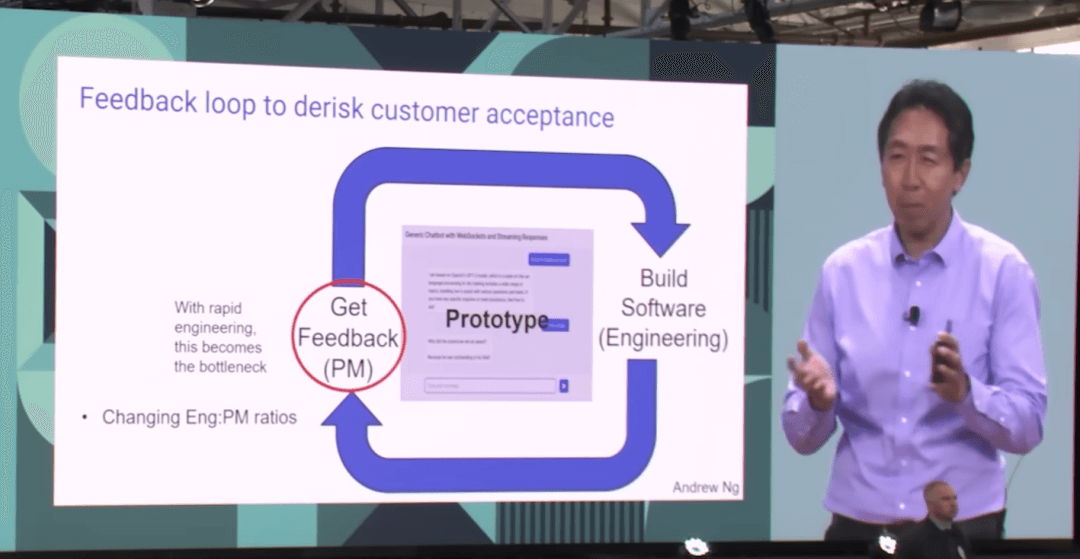
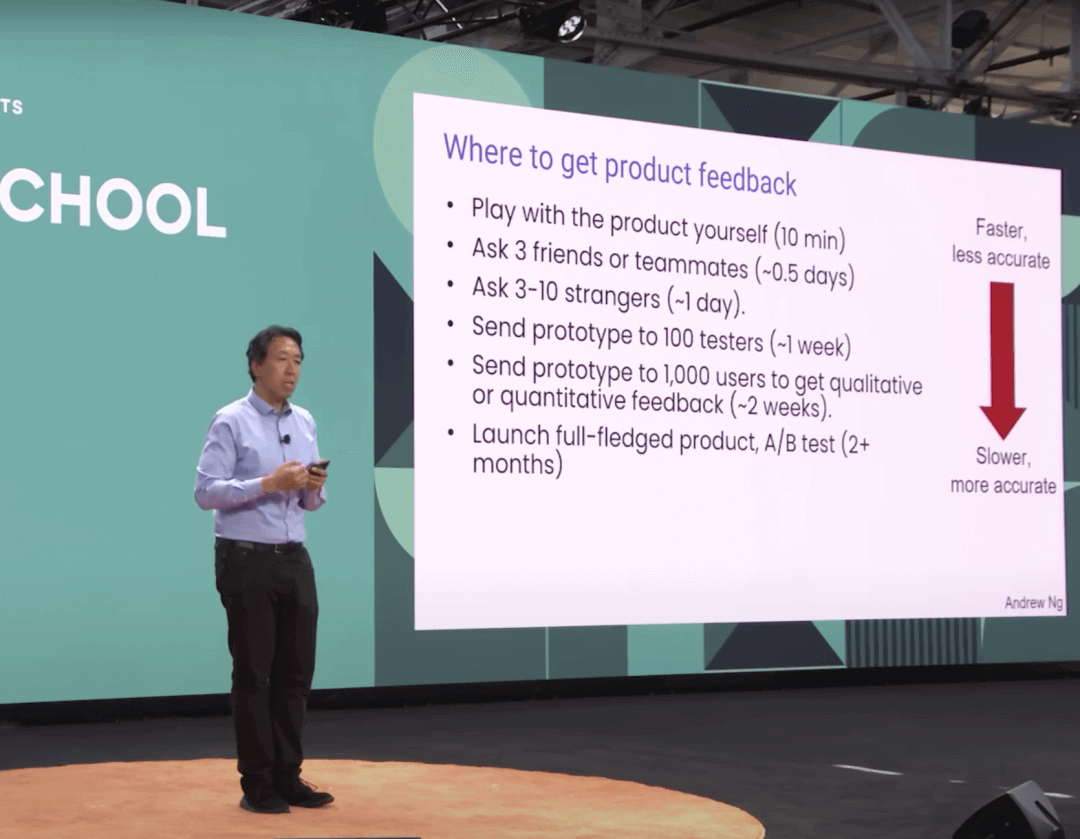
In addition, to address this challenge, Andrew Ng emphasized the importance of establishinga rapid feedback mechanismand shared a series of strategies he commonly uses personally.
03. Methods for cultivating product intuition
1. The fastest path: use "expert feel" to directly penetrate needs
From the user's perspective, use domain experience to break through indecision! For example, when I want to make a content tool, the lag when editing until dawn and the frustration of subtitle errors and omissions are the most real demand signals.
2. The second-fastest approach: precisely calibrate with 3-5 "reliable feedback providers"
Not enough feel on your own? Pull in a few people who know the field as "human testers."The key to this trick is choosing the right people: Reject "yes-men"; prioritize finding people with "domain intuition who dare to speak the truth," and use their feedback to fill in cognitive blind spots.
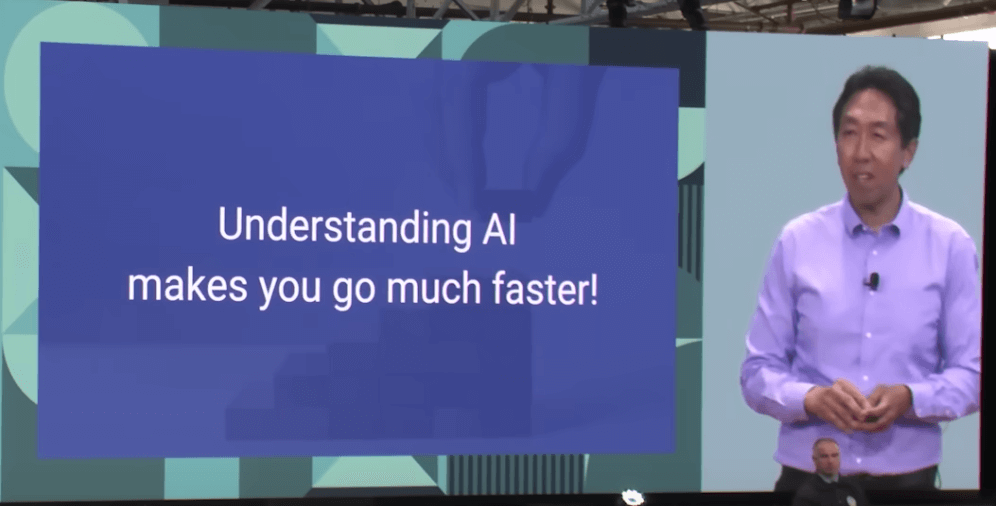
3. Street实战: "Wild Feedback" from 3-10 Strangers
This is a big move strongly recommended by Andrew Ng: go to cafes and hotel lobbies to get passersby to try it.
True, we usually think about slacking off in these places, so the feedback obtained this way is especially real and can pull us out of our own hype in no time!
4. Scale Validation: A "Batch Feedback Pool" of 100+ Users
Want to be more stable? Push the prototype to more than 100 target users and use scale feedback to screen demand.
Remember! In this step, what we need to pay attention to islisten for common issues。
5. The slowest but most accurate: useA/B testing"dissect user psychology"
Use A/B testing to calibrate intuition, but do not stop at choosing A or B. We need to dig deep into the psychological logic behind the data, use the data to update the model, and improve the ability and speed of making high-quality decisions by intuition.
04. Some Sharing
After listening to Andrew Ng's speech, I realized that the essence of AI entrepreneurship is seeing who better "understands people." Andrew Ng breaks "product intuition" into practiceable steps, teaching us to use human "warmth" to harness AI "speed."
When everyone is anxious about whether AI will replace entrepreneurs, he points out: domain experience, the ability to capture demand, and the courage to trial and error are the moats of AI entrepreneurship.
In particular, when he says, "Specific ideas need rapid validation, expert intuition should be used well, and data feedback should calibrate," it hits the pain points of AI entrepreneurship exactly.
This speech is not only a sharing of methodology, but also a strong shot in the arm for ordinary people:In the AI era, if you are willing to go deep, dare to trial and error, and are good at capturing, there will always be opportunities to "make products that make people scream"。
Original link:Interpretation of Andrew Ng's latest speech: How to quickly build products and start a business in the AI era?