
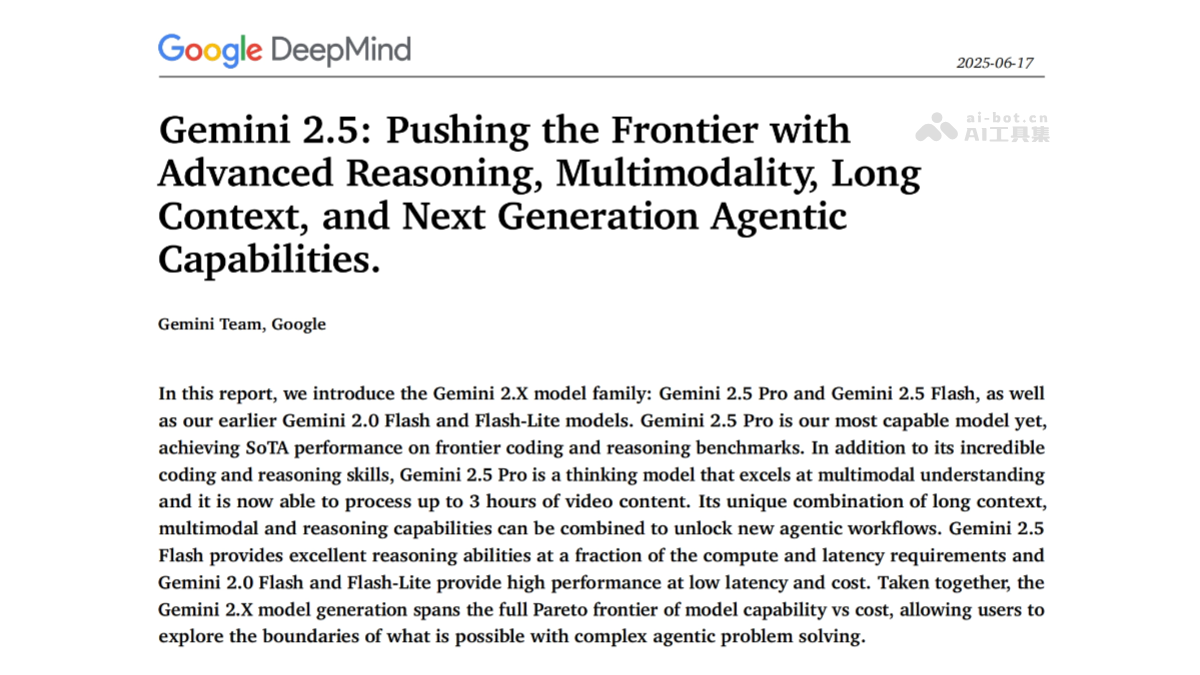
The "Gemini 2.5 Model Technical White Paper" introduces Google DeepMind's Gemini 2.5 model family, a new generation multimodal AI model family, including versions such as Gemini 2.5 Pro and Gemini 2.5 Flash. Gemini 2.5 Pro performs excellently in reasoning, coding, and multimodal understanding, supports context processing of up to 1 million tokens, and can analyze 3 hours of video content. This series of models possesses advanced "thinking" capabilities and supports dynamic allocation of computational resources for high answer accuracy. Gemini 2.5 Flash provides high-performance reasoning with low latency and low cost. The models also have significant improvements in safety, multilingual support, and factuality, and are widely used in fields such as code generation, educational tools, and creative design, demonstrating powerful agent capabilities and practical application potential.

Get the original PDF file of Google's "Gemini 2.5 Model Technical White Paper", scan the QR code to follow and reply: 20250621
Introduction
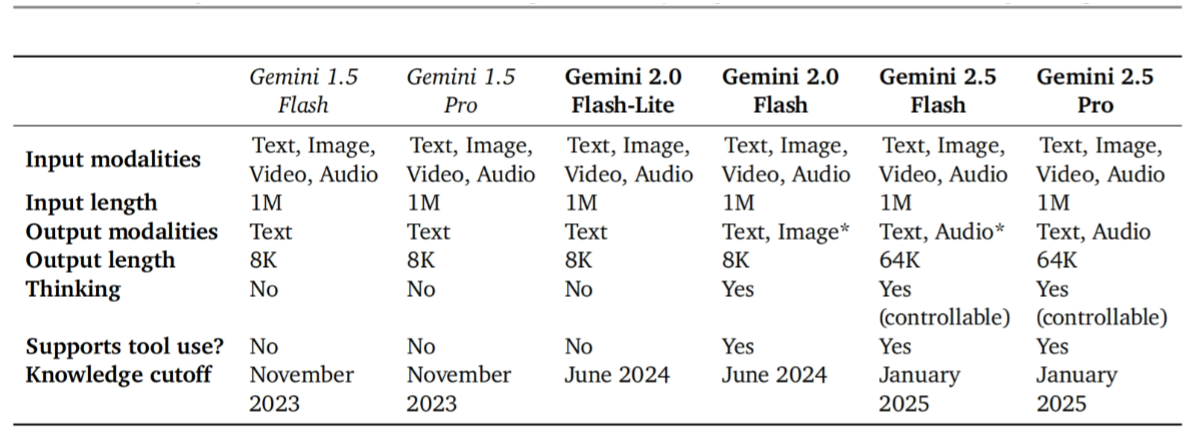
Introduces the Gemini 2.5 series model family (including Gemini 2.5 Pro and Gemini 2.5 Flash), emphasizing multimodality, long context, reasoning ability, and tool use features.
- Gemini 2.5 Pro: The currently most powerful model, supports 1 million token context, and can process 3 hours of video content.
- Gemini 2.5 Flash: An efficient reasoning model that provides excellent reasoning ability under lower computational and latency requirements.
- Gemini 2.5 Flash-Lite: An efficient lightweight AI model launched by Google, supports 1 million token long context and tool calling, provides high-performance reasoning with ultra-low latency and low cost, and is suitable for large-scale application scenarios.
Model Architecture, Training and Dataset
- Model Architecture: A Transformer architecture based on sparse Mixture of Experts (MoE), supports multimodal input (text, images, audio, video). Based on dynamic routing of input tokens to a subset of parameters (experts), it decouples total model capacity from computation and per-token serving cost. Gemini 2.5 has made significant progress in large-scale training stability, signal propagation, and optimization dynamics, directly improving performance after pretraining.
- Dataset: The pretraining dataset is a large-scale, diverse data collection covering multiple domains and modalities, including publicly available web documents, code, images, audio, and video.
- Training Infrastructure: Trained based on the TPUv5p architecture. Uses synchronous data parallel training and performs distributed training on multiple Google TPUv5p accelerators with 8960 chips. Major software training infrastructure improvements include elastic slicing and split-phase SDC detection, improving training resilience and efficiency.
- Post-training: Improvements in supervised fine-tuning (SFT), reward modeling (RM), and reinforcement learning (RL) improve model performance.
- Thinking: The model improves answer accuracy based on additional reasoning time ("Thinking") and supports dynamic allocation of computational resources.
- Capability-specific Improvements:
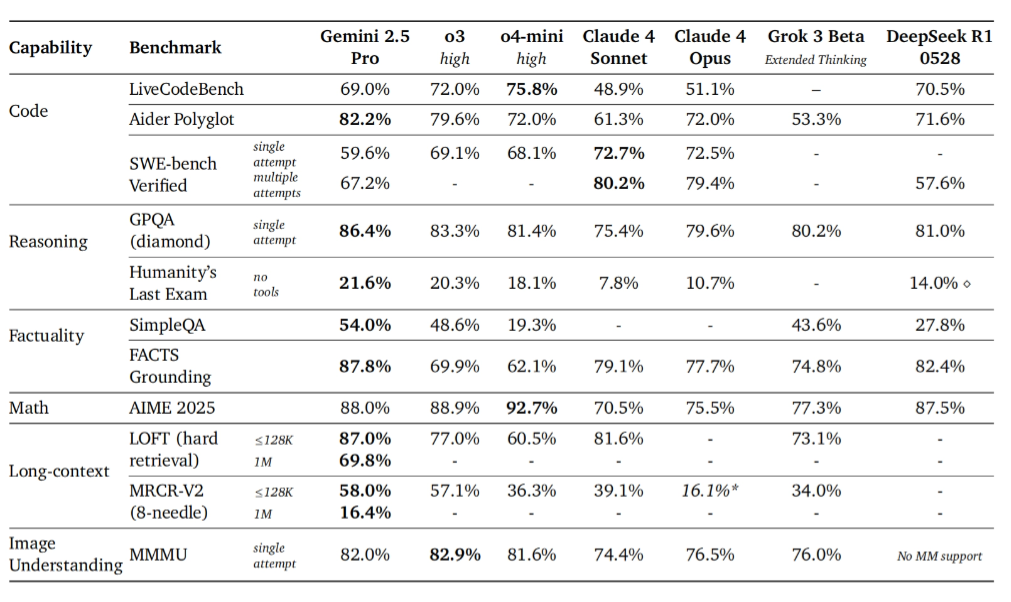
- Code: Code generation and understanding capabilities are significantly improved (e.g., LiveCodeBench score increased from 30.5% to 69.0%).
- Factuality: Integrate Google Search tools to improve multimodal factual accuracy.
- Long Context: Optimize retrieval and reasoning over million-token contexts.
- Multilinguality: Supports 400+ languages, with optimized performance for Chinese, Indic languages, and others.
- Audio/Video: Add audio generation and video understanding capabilities (such as 3-hour video analysis).
- Agentic Use Cases: The Gemini Deep Research agent performs excellently on complex tasks.
- The Path to Gemini 2.5: The iterative process of experimental model versions (such as Gemini 2.0 Pro and the 2.0 Flash image generation model).
Quantitative Evaluation
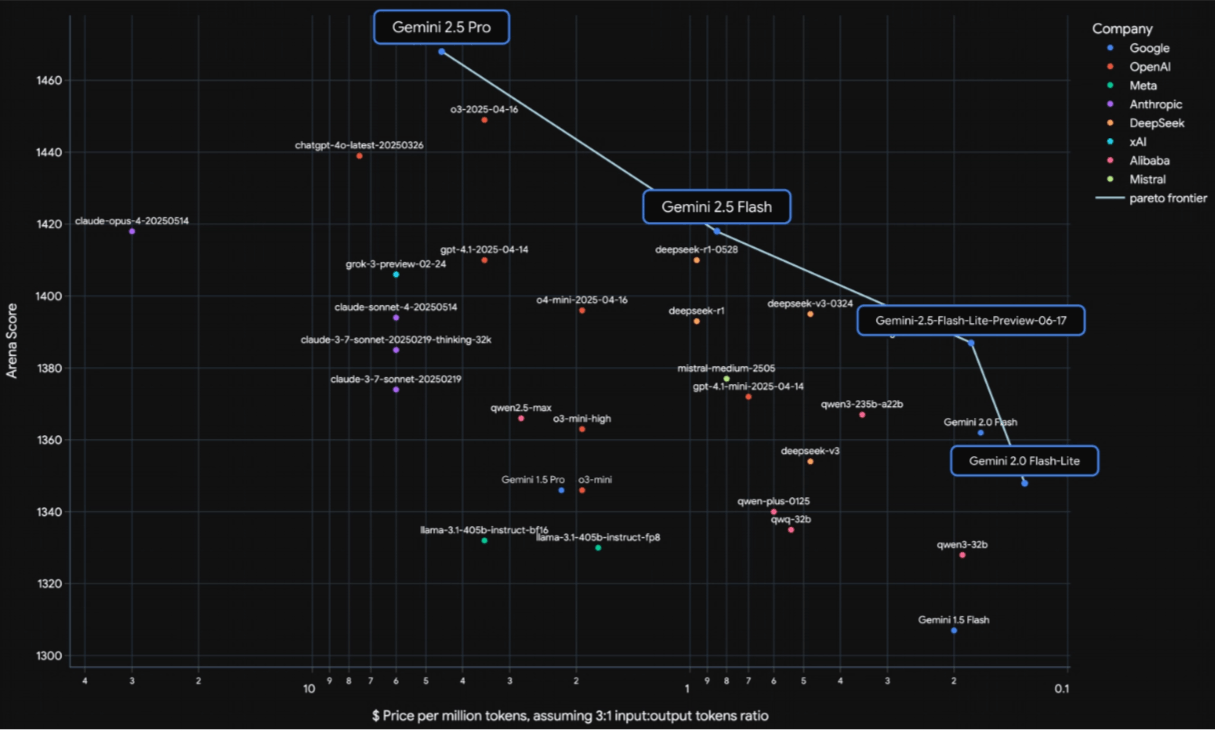
- Methodology: Compare the performance of the Gemini 2.5 model with the Gemini 1.5 model, and the performance of Gemini 2.5 Pro with other large language models.
- Core Capability Results: Gemini 2.5 Pro leads in coding (Aider Polyglot 82.2%), mathematics (AIME 2025 88.0%), and long-context tasks (LOFT 87.0%). Compared with other large models (such as GPT-4o and Claude 4), Gemini 2.5 Pro performs best in multimodal and factual tasks.
- Audio/Video Evaluation: Achieves SOTA on benchmarks such as FLEURS (speech recognition) and VideoMME (video understanding).
Example Use Cases
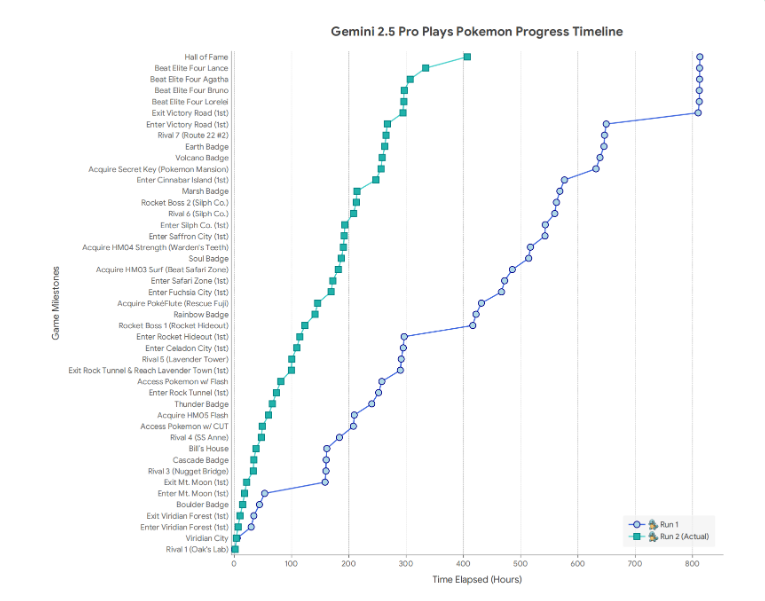
- Gemini Plays Pokémon: An independent developer used Gemini 2.5 Pro to complete Pokémon Blue, demonstrating long-horizon task planning and complex reasoning capabilities.
- What Else Can Gemini 2.5 Do?: Convert scripts into interactive tools, generate SVG images, create educational applications, and more.
- Gemini in Google Products: Applied in products such as Google Search (AI Overviews) and NotebookLM (podcast generation).
Safety, Security, and Responsibility
- Our Process: A safety evaluation framework, including automated red teaming and external expert review.
- Policies and Desiderata: Prohibit the generation of harmful content (such as violence and medical errors), and pursue responsiveness helpfulness and neutrality.
- Training for Safety: Optimize safety through data filtering and reinforcement learning.
- Results on Training Evaluations: Gemini 2.5 reduces policy violations by 8.2% compared with the previous generation of models, while also improving response friendliness (+18.4%).
- Automated Red Teaming (ART): Describe the process and results of Automated Red Teaming (ART). Gemini 2.5 Flash and Pro, while maintaining strong safety, have become the most helpful models to date.
- Memory and Privacy: Analyze the discoverable memorization rate and privacy risks of the Gemini 2.5 models, finding that the memorization rate of the Gemini 2.5 models is significantly lower than that of previous models, and no outputs containing personal privacy information were found.
- Safety Evaluation and Frontier Safety Framework: Describes a comprehensive safety evaluation of Gemini 2.5 Pro, including evaluations in areas such as CBRN (chemical, biological, radiological, and nuclear information risks), cybersecurity, machine learning R&D, and deceptive alignment.
- External Safety Testing: Describes the results of the external safety testing program, including an evaluation of Gemini 2.5 Pro (Preview 05-06), focusing on autonomous systems risks, cybersecurity risks, CBRN risks, and societal risks.
Get Google's "Gemini 2.5 Model Technical Whitepaper" PDF original file, scan the QR code to follow and reply: 20250621