
"2024 Mobile AI Application Scenario Research Report". It comprehensively analyzes the current status and development trends of the global and Chinese artificial intelligence markets, focusing on the market landscape, user behavior, application scenarios, and future development directions of mobile AI applications. In 2024, the mobile AI market shows a clear trend of divergence, with language model applications occupying a dominant position,Doubao, Kimi Intelligent Assistant, and Wenxiaoyan and other applications performing prominently. Subsectors such as intelligent companion chat, image processing, and intelligent tools are also developing rapidly, and user demand is accelerating its migration to mobile devices. The report provides an in-depth analysis of the user profile of mobile AI applications, including users' awareness of AI, usage scenarios, willingness to pay, and usage feedback.


Obtain"2024 Mobile AI Application Scenario Research Report" original PDF file, scan the QR code, follow, and reply: 20250226
AI Market Overview
-
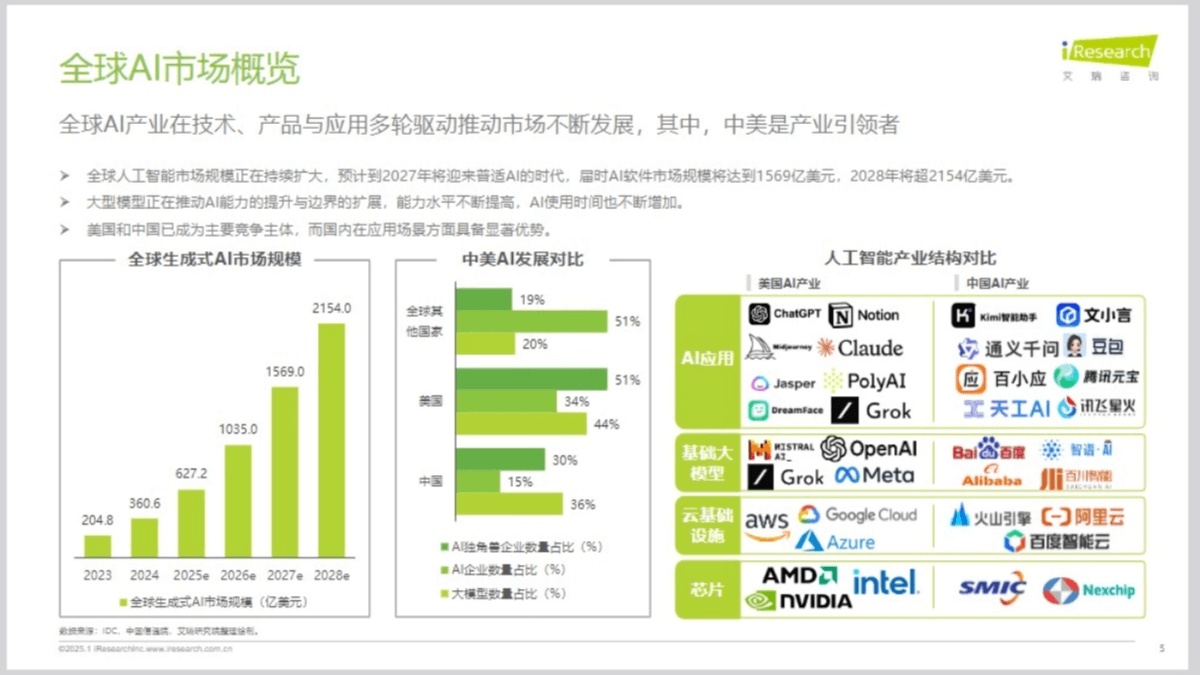
Global AI Market Overview: The global AI market continues to expand, and a universal AI era is expected to arrive in 2027. China and the United States have become industry leaders, driving multi-round development of AI technologies, products, and applications.
-
Comparison of Artificial Intelligence Industry Structure: Compare the industrial proportions of the United States and China in AI applications, foundation large models, cloud infrastructure, and chips.
-
Comparison of AI Development Between China and the United States: Show the proportions of China and the United States in the number of AI unicorn companies, AI companies, and large models, and predict the growth trend of the global generative AI market size.
-
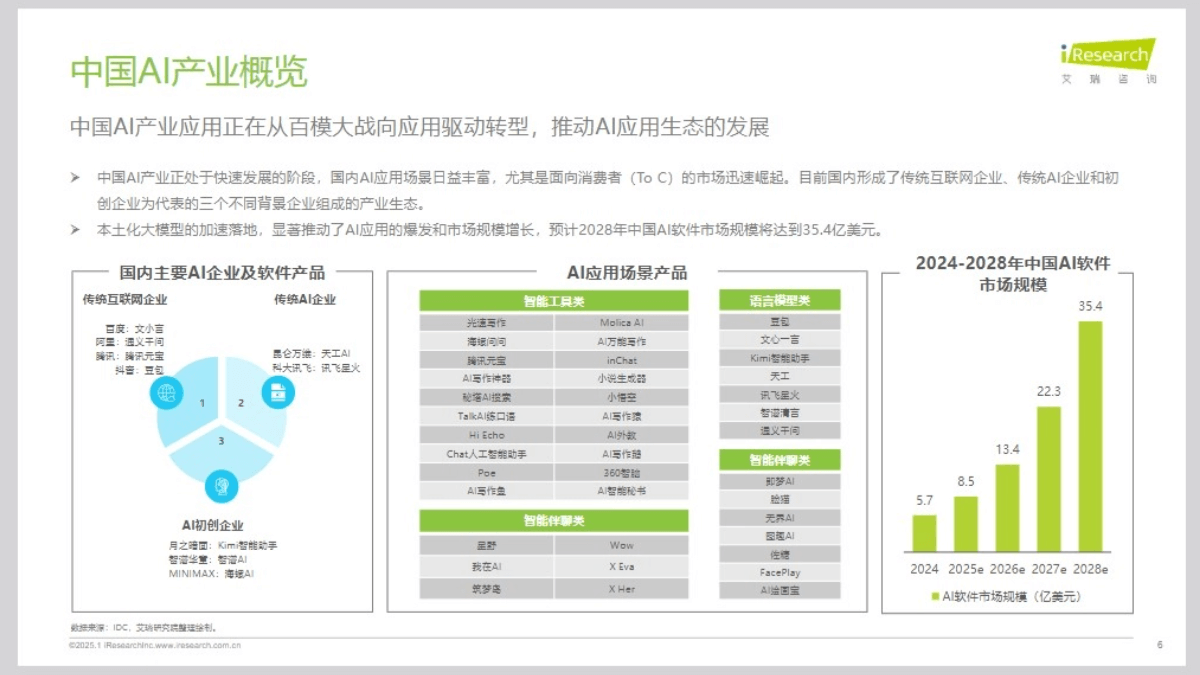
Overview of China's AI Industry: China's AI industry is transforming from a battle of a hundred models to application-driven development, and localized large models are accelerating implementation, promoting the development of the AI application ecosystem. Introduce major domestic AI enterprises and software products, including representative products from traditional internet companies, traditional AI companies, and AI startups.
Mobile AI Market Research
-
Strong Traffic Growth in the Mobile AI Sector: In 2024, the number of monthly active devices for mobile AI doubled, per capita monthly usage time continued to climb, and market acceptance increased significantly.
-
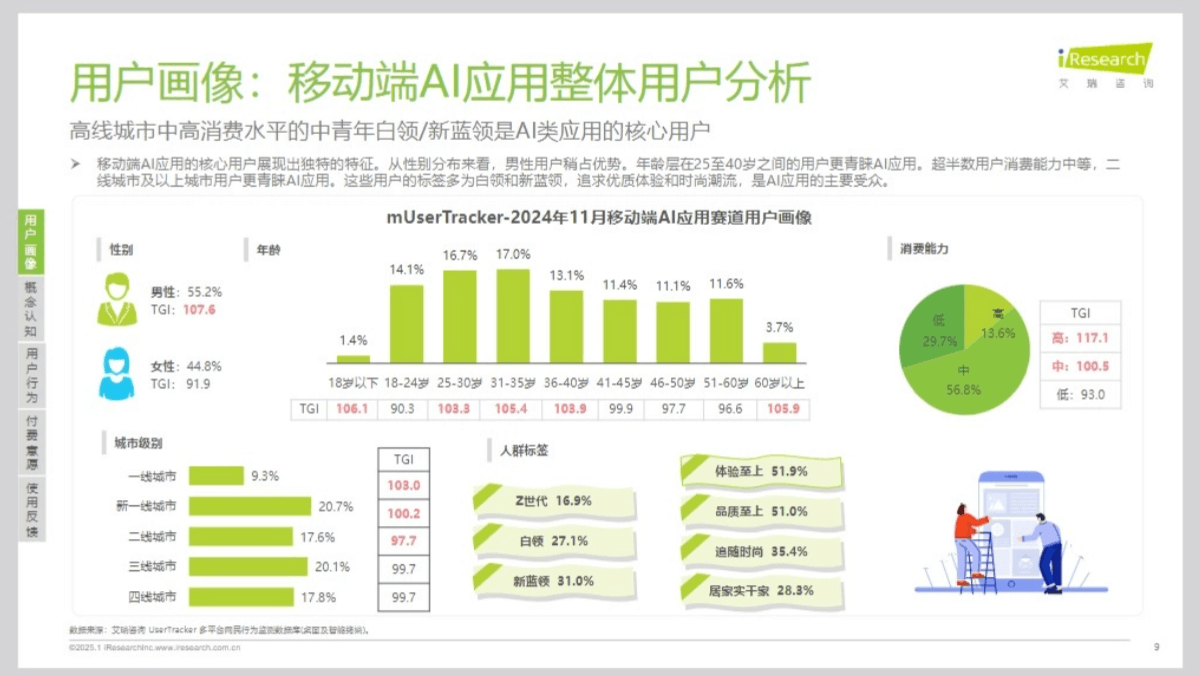
User Profile: Overall User Analysis of Mobile AI Applications: Analyze the core user characteristics of mobile AI applications, including gender, age, spending power, city tier, and crowd tags.
-
Users' Awareness of AI and Information Acquisition Channels: Users' awareness of AI continues to increase, and social media and work and study are the main sources of information. Users' time of exposure to AI and the occasions for use are also analyzed.
-
User Behavior: Feedback and Occasions for Use Brought by Mobile AI Products: Analyze the role of mobile AI applications in improving work efficiency, assisting search, and providing accurate materials, as well as the scenarios in which users begin to use AI and the appeal of functions.
-
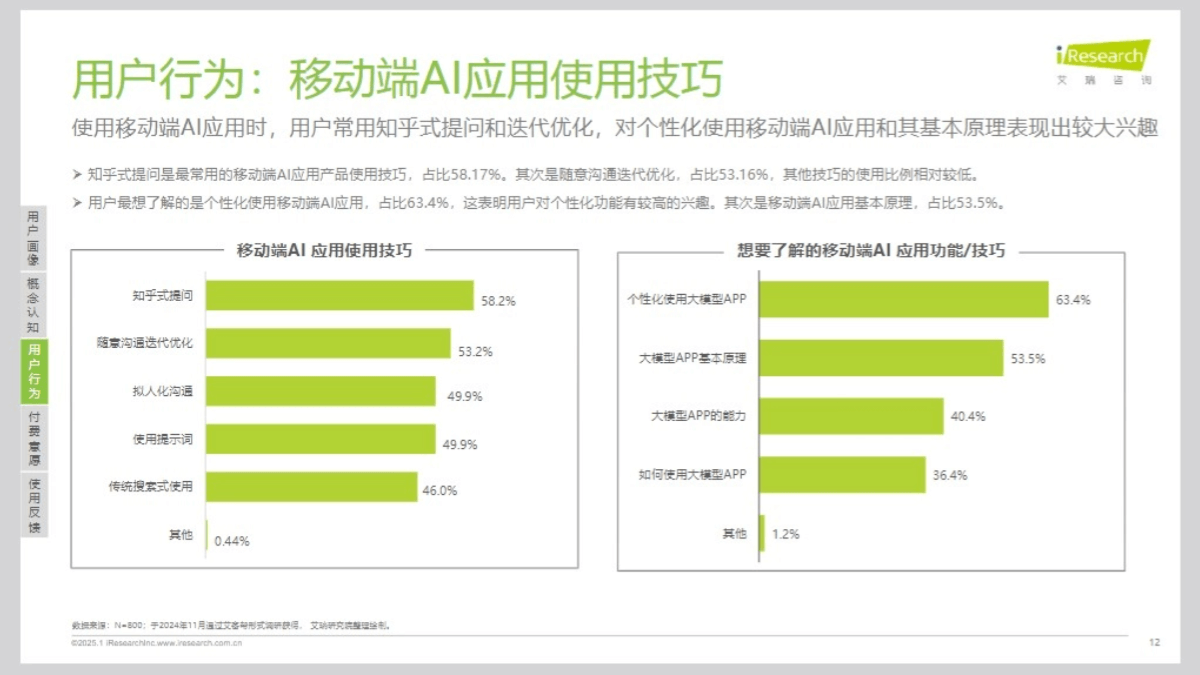
User Behavior: Tips for Using Mobile AI Applications: Users' commonly used tips for using AI applications, such as Zhihu-style questioning and iterative optimization, as well as users' interest in personalized use and the basic principles of AI applications.
-
User Payment: Willingness to Pay, Payment Range, and Methods for Mobile AI Applications: Analyze users' willingness to pay for mobile AI applications, payment ranges, and payment methods, such as free basic version + value-added services and monthly subscription models.
-
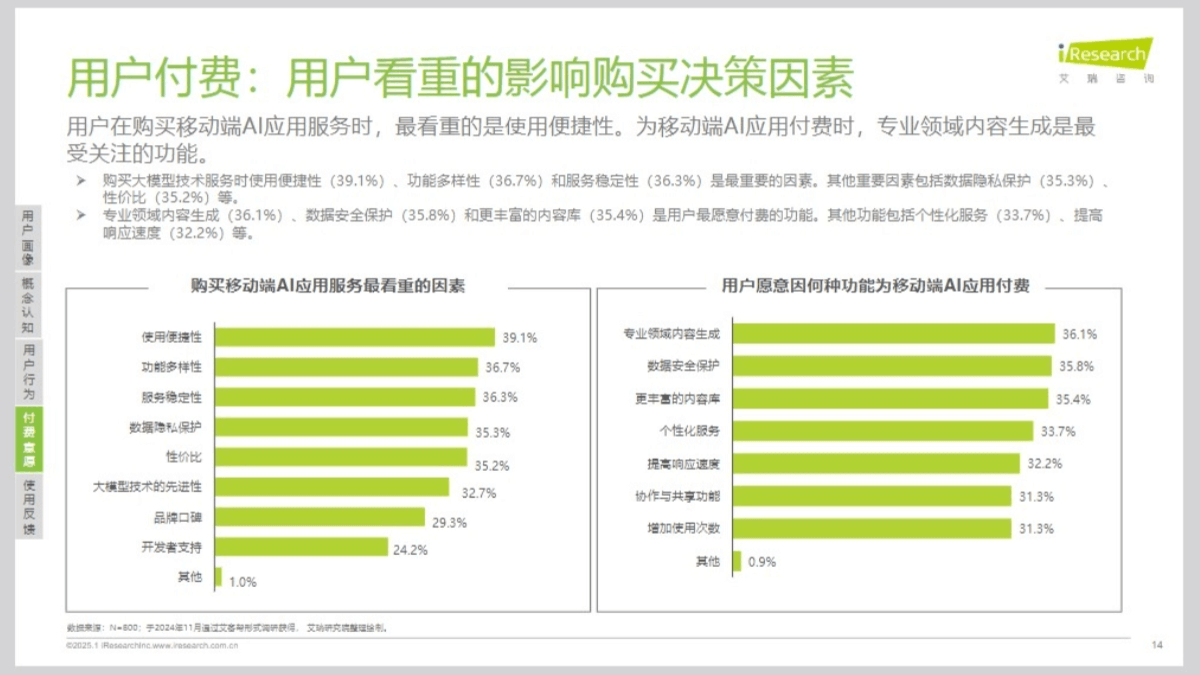
User Payment: Factors Users Value That Influence Purchase Decisions: The factors users value most when purchasing mobile AI application services, such as ease of use, feature diversity, data privacy protection, etc.
-
User payment: awareness of advanced features and willingness to pay: Users' awareness of advanced mobile AI features, such as expert assistants, cloud collaboration, etc., and their willingness to pay for advanced features.
-
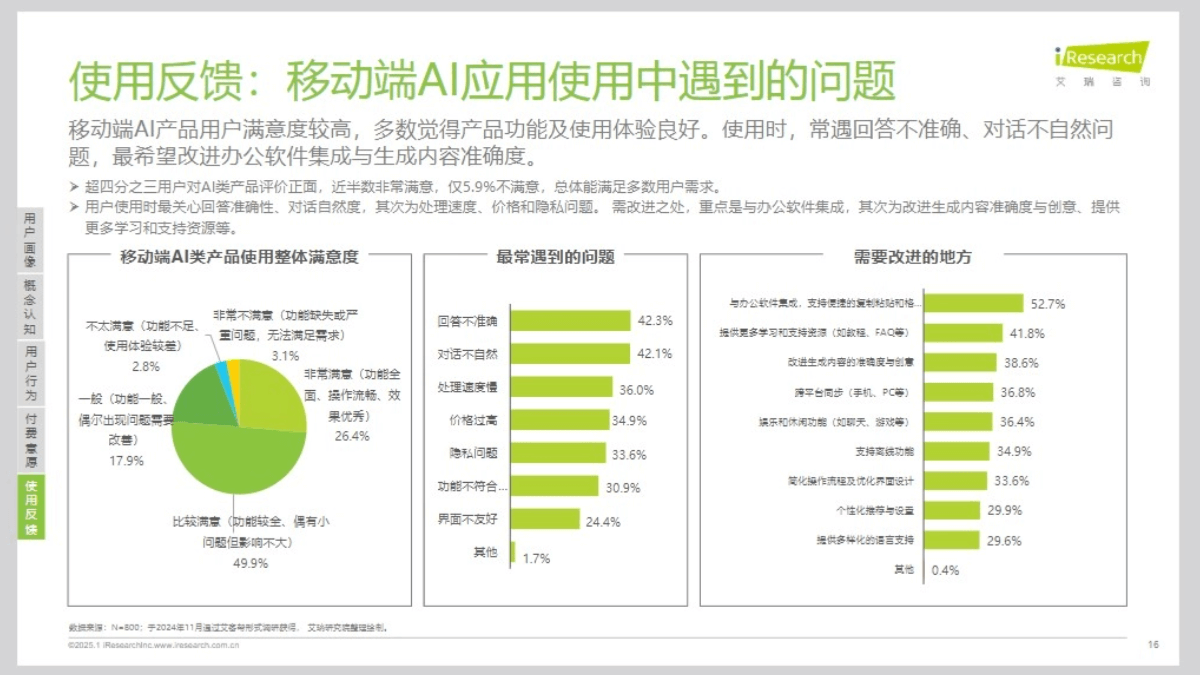
Usage feedback: problems encountered when using mobile AI applications: Users' overall satisfaction with mobile AI applications, as well as problems encountered during use, such as inaccurate answers and unnatural conversations; areas needing improvement include integration with office software and accuracy of generated content, etc.
Research on Mobile AI Market Segments
-
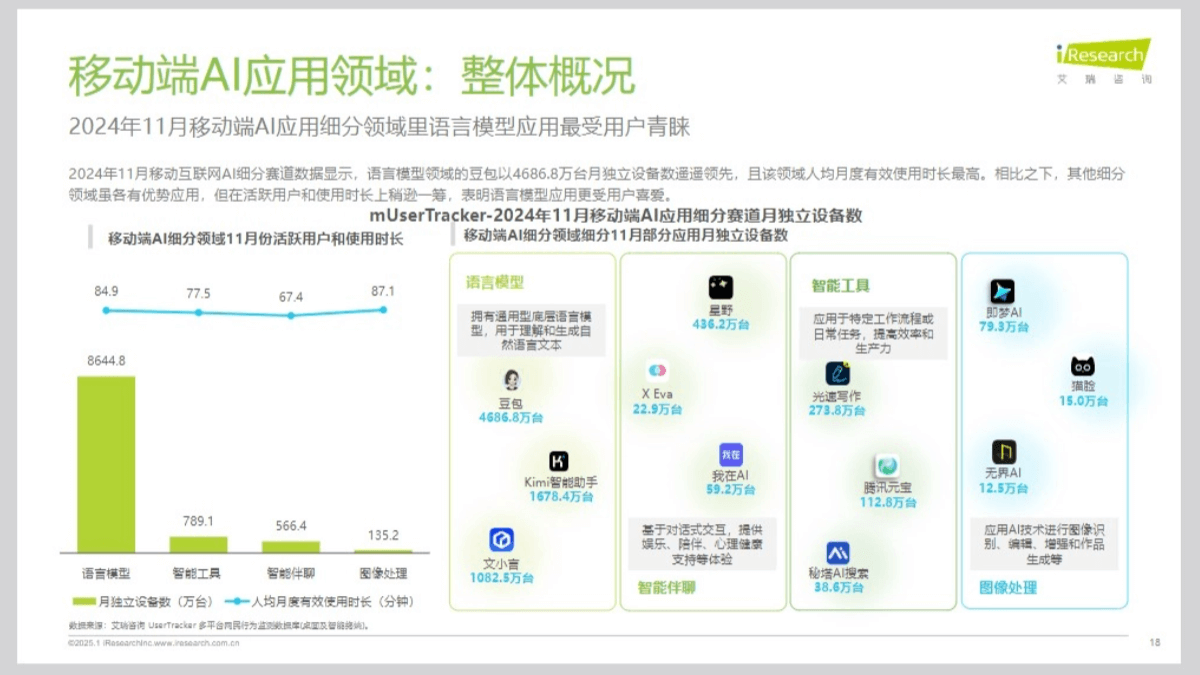
Mobile AI application field: overall overview: Data on mobile internet AI market segments in November 2024 shows that language model applications are the most popular, leading in active users and usage time.
-
Mobile AI applications: user behavior in the language model segment: Analyze user behavior in language model applications, such as the active user scale and growth trends of Doubao, Kimi Intelligent Assistant, Wenxiaoyan, and other applications, as well as users' core functional needs for these applications.
-
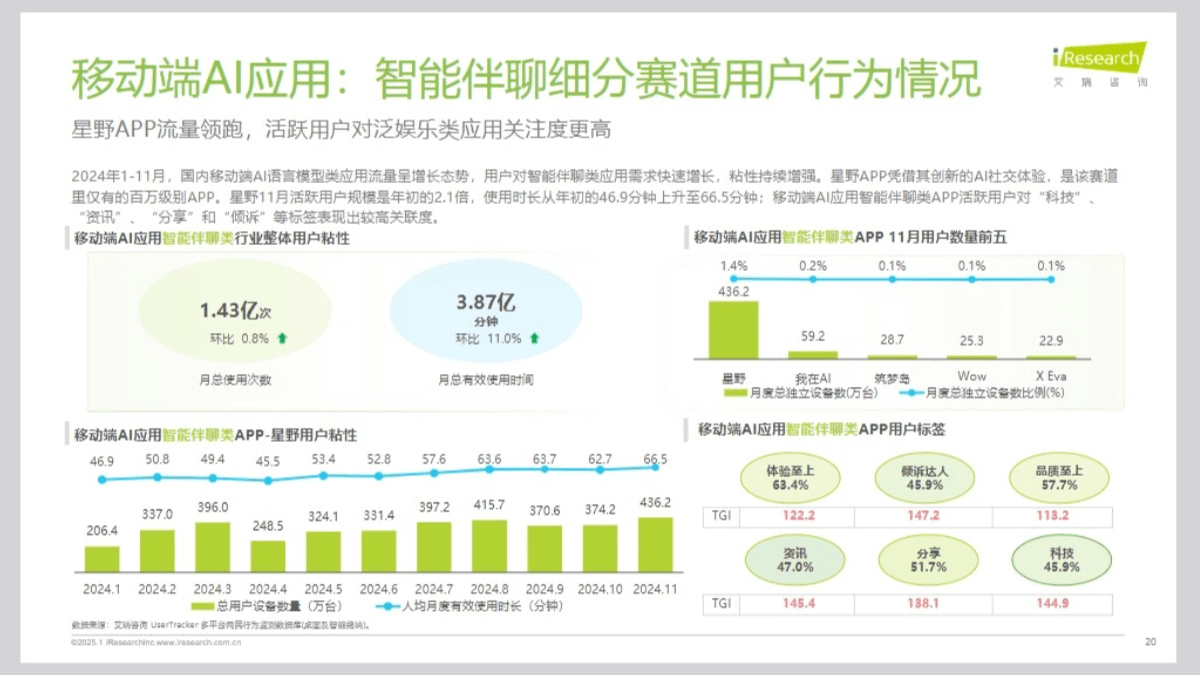
Mobile AI applications: user behavior in the intelligent companion chat segment: User demand for intelligent companion chat applications is growing rapidly. Xingye APP stands out with its innovative AI social experience, and users show greater interest in pan-entertainment applications.
-
Mobile AI applications: user behavior in the image processing segment: User stickiness in the image processing field continues to strengthen. Leading applications such as Wujie AI and Tuqu AI meet user needs through differentiated features, and traffic in this market segment has growth potential.
-
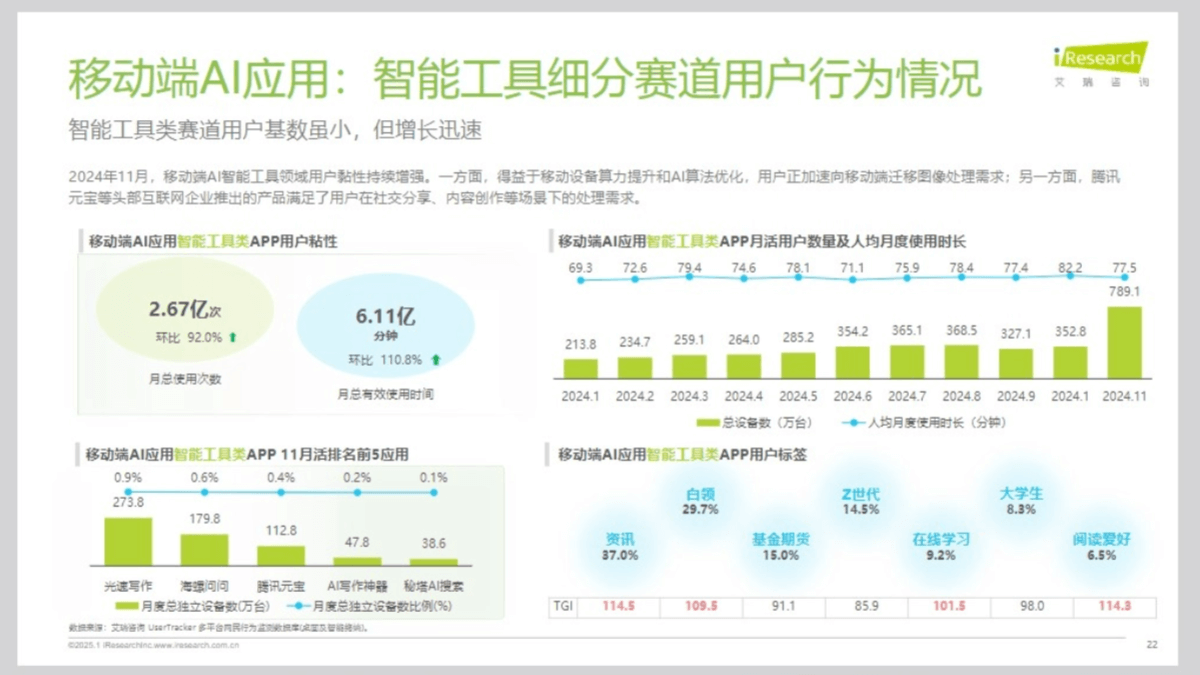
Mobile AI applications: user behavior in the intelligent tools segment: Although the user base in the intelligent tools segment is small, it is growing rapidly. Products launched by leading internet companies such as Tencent Yuanbao meet user needs.
Research on Mobile AI Application Scenarios
-
Main usage scenarios of mobile AI applications: Analyze the proportion and time share of users using mobile AI products in the four major scenarios of daily life, work and study, entertainment and leisure, and parent-child education.
-
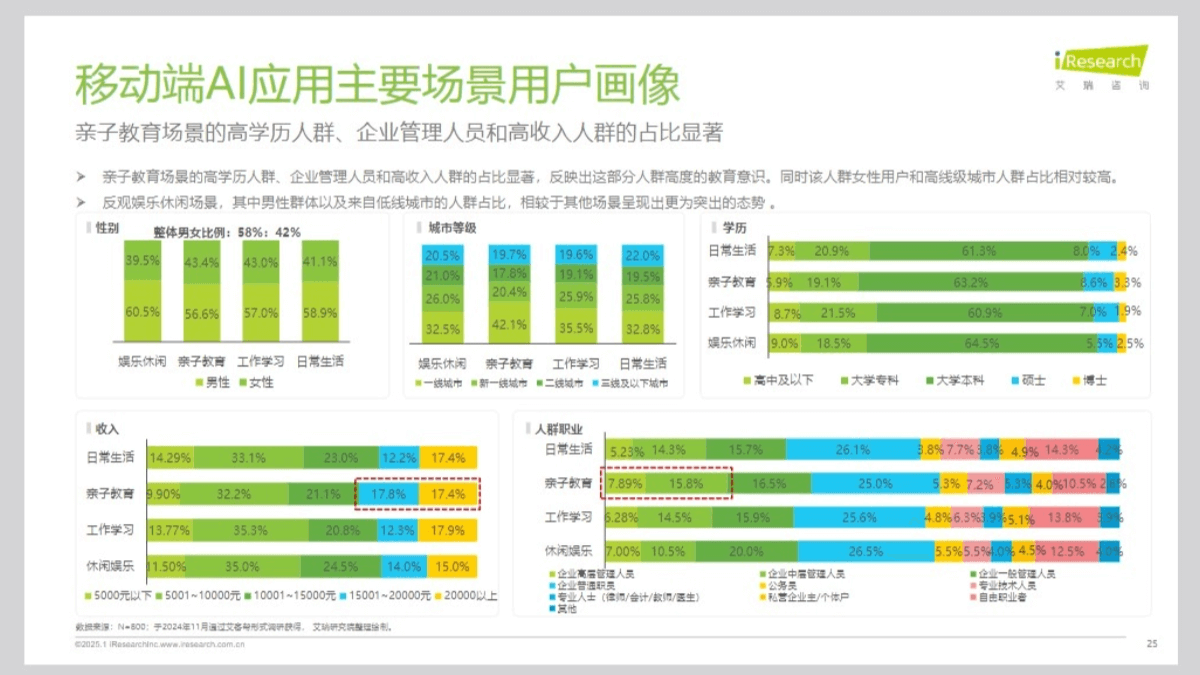
User profiles for major mobile AI application scenarios: Show user characteristics such as gender, education, city tier, income, and occupation in different scenarios; for example, in the parent-child education scenario, the proportions of highly educated people and high-income people are significantly higher.
-
Usage cycle, frequency, and duration of mobile AI applications: Analyze the cycle, frequency, and duration per use of mobile AI applications by users in various scenarios; for example, usage frequency is higher in parent-child scenarios.
-
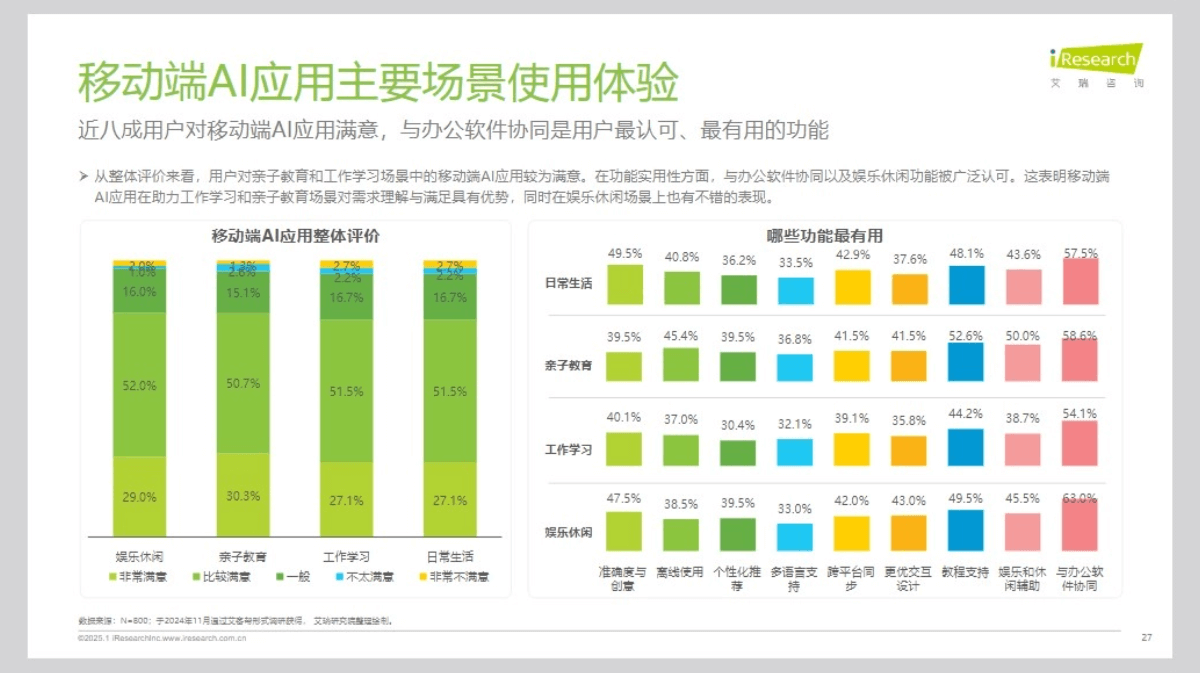
Usage experience in major mobile AI application scenarios: Users' overall evaluation of mobile AI applications, as well as the features they most recognize and find most useful in different scenarios, such as collaboration with office software and entertainment and leisure features, etc.
-
Willingness to pay for mobile AI applications: Users' willingness to pay in different scenarios, including the monthly fees they are willing to pay, payment models, and willingness to pay for features such as data security protection and professional content generation.
Future Outlook for AI Applications
-
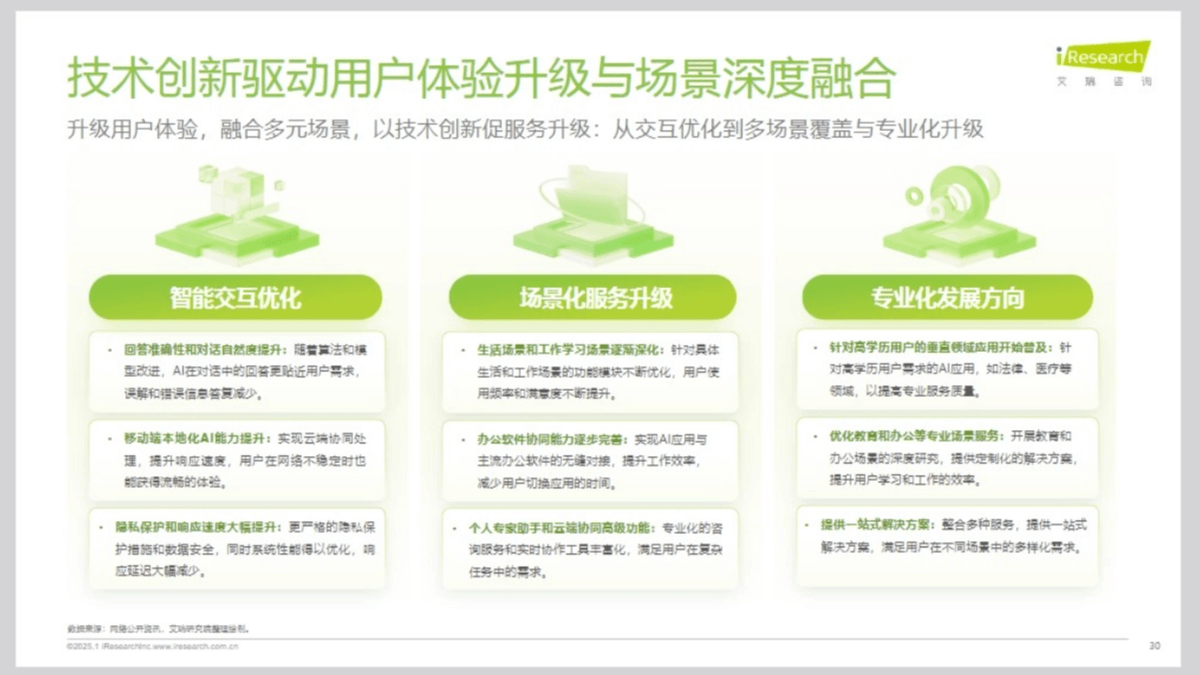
Technological innovation drives user experience upgrades and deep integration of scenarios: With improvements in algorithms and models, AI answer accuracy and dialogue naturalness have improved, localized AI capabilities have been enhanced, privacy protection and response speed have improved, life, work, and study scenarios have gradually deepened, office software collaboration capabilities have been perfected, personal expert assistants and cloud collaboration features have become richer, vertical domain applications for highly educated users have become widespread, services for professional scenarios such as education and office work have been optimized, and one-stop solutions have been provided.
-
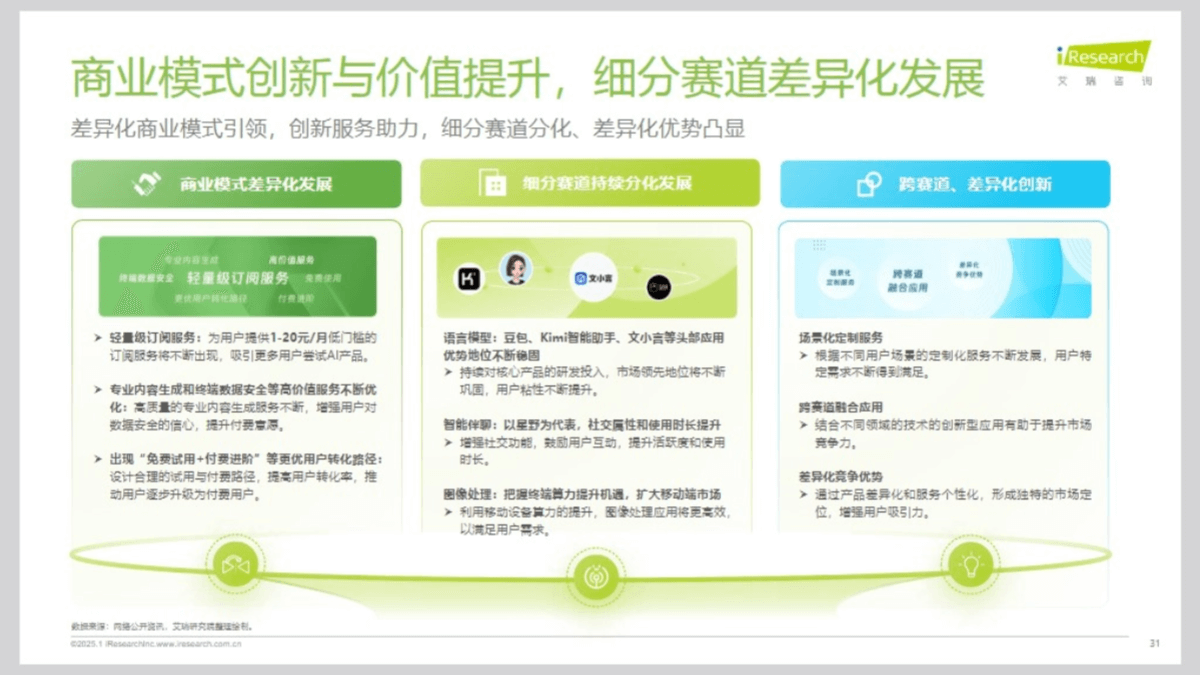
Business model innovation and value enhancement, differentiated development in segmented tracks: Segmented tracks such as language models, intelligent companion chat, and image processing achieve sustained differentiated development through differentiated business models and innovative services, such as lightweight subscription services, professional content generation optimization, and free trial + paid upgrade models.
-
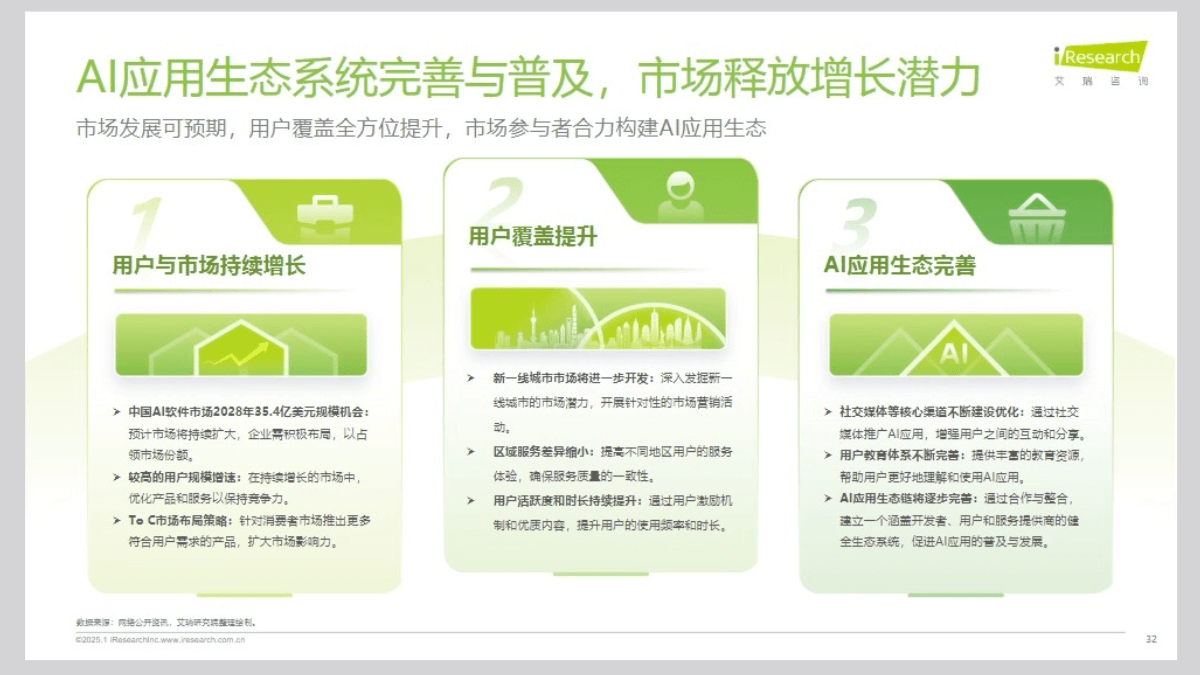
Improvement and popularization of the AI application ecosystem, release of market growth potential: China's AI software market continues to expand, user scale growth is high, new first-tier cities have great market potential, regional service differences are narrowing, user activity and duration continue to increase, core channels such as social media are continuously built and optimized, the user education system is being improved, and the AI application ecosystem chain is gradually being perfected.
Getthe original PDF file of the 2024 Mobile AI Application Scenario Research Report, scan the code, follow, and reply: 20250226