
Since 2023, the wave of generative artificial intelligence (AI) centered on large language models (LLMs) is reshaping the digital world with unprecedented depth and breadth. As the most core entry point for human interaction with information, search engines and browsers are undergoing a paradigm revolution. This article systematically analyzes for ordinary users the essential differences between AI-driven search/browsers and traditional products. It will conduct a comprehensive and in-depth comparative analysis from multiple dimensions, including core technical architecture, user experience and interaction, performance and efficiency, market landscape and business models, privacy and security, and the future ecosystem.

The evolution from "link lists" to "intelligent answers"
The fundamental difference between traditional search and AI search lies in the way they answer user questions. This difference stems from their completely different technical architectures.
Traditional search/browser
Based on "crawl-index-rank" keyword matching
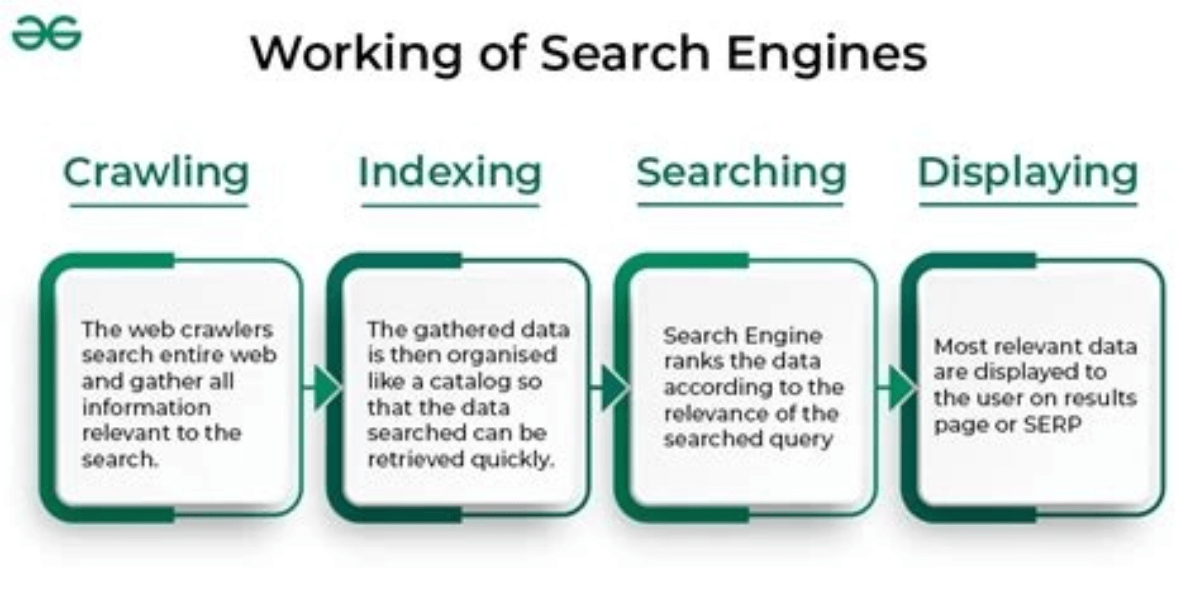
Traditional search engines, such as the well-known Google and Baidu, have maintained a relatively stable core workflow for decades:
- Web crawler (Crawl): Releases countless "spider" programs to continuously crawl public web page content on the internet day and night.
- Build an index (Index): Processes the crawled content, extracts information such as keywords and links, and builds an inverted index like a huge library catalog. This index associates keywords with the web page addresses that contain them.
- Query and ranking (Rank): When a user enters keywords, the engine quickly finds all relevant web pages in the index, then sorts these web pages through a set of complex ranking algorithms (such as Google's once-famous PageRank), and finally presents them to the user in the form of a "blue link list".
The essence of this model iskeyword matchingandinformation retrieval. It does not "understand" the user's true intent, nor does it "generate" answers, but instead provides the user with a list of web pages that may contain the answer, and the user clicks, reads, filters, and integrates the information on their own.
AI search/browser
Intelligent synthesis based on "retrieval-augmented generation (RAG)"
AI search engines, such asPerplexity, Google's AI Overviews, and AI features integrated into major browsers, have adopted a revolutionary architecture, with the core being retrieval-augmented generation(Retrieval-Augmented Generation, RAG) . This seemingly complex technology can be broken down into two core steps: "retrieval" and "generation" .
- Step 1: Intelligent retrieval (Retrieval)
- Intent understanding: When a user enters a question (even vague natural language), AI first uses an embedding model (Embedding Model) to convert the question into a string of numbers, namely a "vector" (Vector). This vector represents the semantic position of the question in multidimensional space .
- Semantic search: AI then searches a massive, real-time updated vector database (Vector Database) to search in. This database stores vectorized representations of countless web pages, documents, and images. What it looks for is not an exact match of keywords, but the document fragments that are semantically closest to the user's question vector. This enables AI to understand that "what to wear when the weather is a bit cold" and "recommend clothing suitable for a temperature of 10 degrees" mean the same thing.
- Step Two: Augmented Generation
- Constructing the Prompt: The system combines the user's original question with the several most relevant information fragments retrieved in the previous step into a rich prompt.
- LLM Generates the Answer: Finally, this enhanced prompt is sent to a Large Language Model (LLM), such as GPT-4 or ERNIE Bot. Based on these reliable and up-to-date information sources, the LLM, like a learned expert, directly generates a well-organized, logically coherent comprehensive answer, and often attaches links to the information sources.
The enormous advantage of the architecture lies in combining the LLM's powerful reasoning and language capabilities with traditional search's ability to obtain real-time information, effectively alleviating problems inherent to the LLM itself, such as the "knowledge cutoff" and "hallucinations" (that is, fabricating facts out of thin air).
Core ConclusionTraditional search is amover of information, providing raw materials; AI search is aprocessor of knowledge, directly delivering the finished product.
The transformation from "searching by hand" to "asking aloud"
Differences in technical architecture directly lead to disruptive changes in user experience.
Information Acquisition Method: From "Analyzing Links" to "Obtaining Answers"
- Traditional experience: The user is a researcher. Faced with a long list of search results, they need to click through one by one, quickly scan, separate the true from the false, and finally summarize the answer themselves in their mind or in notes. This process is time-consuming and labor-intensive, and is full of interference from ads and low-quality content.
- AI experience: The user is a decision-maker. AI directly provides an organized and summarized answer, freeing users from the cumbersome filtering of information. The interaction method has also changed from single keyword input toconversational search , which allows multi-turn dialogue and follow-up questions about details. For example, you can first ask "the best season to travel to Bali," and then follow up with "are there any recommended hotels during that period? Budget 1,000 yuan per night," and the AI can understand the context and give relevant suggestions.
Multimodal Interaction Capability: Beyond the Boundaries of Text
- Traditional experience: Mainly limited to text. Although there are functions such as image search, they are usually independent searches based on content feature matching and cannot be effectively combined with text queries.
- AI experience: Native support for Multimodal input and output. Users can upload an image and then ask in text: "Where can I buy a similar style of this clothing?". Google's Multisearch feature even allows users to point their camera at objects in the real world while querying with voice or text. This capability greatly broadens the application scenarios of search, extending from online information queries to interaction with the physical world.
Interface Design: From "Static Toolbar" to "Intelligent Assistant"
- Traditional browser: The interface design is very mature and solidified, with the core being the address bar, tabs, and bookmarks bar.
- AI browsers/search: The interface is more dynamic and intelligent. They often integrate an AI assistant (Agent) that can understand the user's goals and proactively provide help, such as automatically summarizing webpage content, drafting emails, planning trips, etc.
AI is driving browsers to evolve from a passive information display tool into one that can autonomously execute tasks: anintelligent agent platform。
The trade-off between speed and depth
AI search has brought a leap in experience, but behind this is enormous performance and cost overhead.
Response time: immediacy vs. thinking time
- Traditional search: Extremely fast. Because results are pre-indexed, the response time for a query is usually sub-second (for example, within 0.5 seconds).
- AI search: Relatively slow. Because it needs to perform multiple steps in real time, such as retrieval, prompt construction, and calling an LLM for generation, the response time usually ranges from a few seconds to more than ten seconds. Although some optimized AI searches perform excellently in specific scenarios, overall, users need to wait longer for deeper answers.
Energy consumption and operating costs
This is one of the most severe challenges facing AI search, and it also directly affects its business model and the final cost to users.
- Energy consumption: The energy consumption of AI queries is astonishing. Research data shows that the power consumption of one AI search may be several times or even dozens of times that of traditional search. If billions of searches worldwide were switched to AI mode, it would put enormous pressure on global energy supply and the environment.
- Operating costs: The powerful computing resources needed to support AI search (such as NVIDIA GPUs) are extremely expensive. It is estimated that the computing cost of a single AI search query is more than 10 times that of traditional search. This makes the traditional search "free" model that relies on advertising difficult to sustain.
AI search uses highertime costsandcomputing costsin exchange for a substantial reduction in the user'scognitive cost(thinking and analysis).
Market landscape and business models
The sharp increase in costs is profoundly changing the business logic of the search engine market.
Market competition landscape
- Traditional giants: Google, Bing, and others still occupy more than 90% of the market share, but they are facing the "innovator's dilemma." On the one hand, they must keep up with AI and integrate AI features (such as Google AI Overviews) into existing products; on the other hand, the high cost prevents them from boldly replacing everything wholesale, lest they erode the advertising profits they rely on for survival.
- AI upstarts: Startups represented by Perplexity AI, as well as domestic ones such as Metaso AI Search and DeepSeek, are rising rapidly with a purer AI experience, attracting a large number of early users, with astonishing user growth rates. According to data from July 2025, Perplexity AI's global user base has reached 140 million, with a monthly growth rate of 13%.
Business models and user costs
- Traditional model: C-end users pay nothing, while B-end advertisers pay. Users "pay" for the service by contributing their data and attention.
- AI model: Generally adopts a "free + premium" (Freemium)subscription model. The free version provides basic features, while the Pro version offers more powerful advanced features such as a wider selection of AI models and unlimited deep search, for a fixed monthly fee (e.g., $20 per month).
This means that in the future, obtaining high-quality, ad-free in-depth information may require paying directly, marking a major shift in the information consumption model.
User Adoption and Satisfaction
Surveys show that although AI search has some issues, user satisfaction is generally higher, especially when handling complex research-oriented questions. However, most users (about 76.6%) still use AI search as anauxiliary tool, combining it with traditional search.
The main pain points of AI search are concentrated ininformation accuracyandthe "hallucination" problem, which remains a challenge that all AI products need to overcome.
Privacy, Security, and Content Governance
The introduction of AI has also brought new governance challenges.
Privacy Protection: Cloud Processing vs. Local Computing
- Traditional Browsers: They have long been criticized for tracking user data for advertising. Although they offer privacy modes, data processing mainly occurs in the cloud.
- AI Browsers: Many emerging AI browsers makeprivacy protectiona core selling point. One of their key technical trends is On-Device AI. By running lightweight AI models directly on the user's phone or computer (such as Google's Gemini Nano), functions such as text summarization and smart replies can be implemented without uploading sensitive data to the cloud.
This greatly improves privacy and security, and also allows it to work inoffline mode, with faster response speeds.
Content Moderation and "Hallucination" Mitigation
- Traditional Search: Content moderation mainly targets the index database, combating illegal, vulgar, or spam websites.
- AI Search: It faces a dual challenge: first, ensuring that the information sources it retrieves are themselves reliable; second, not producing "hallucinations" during the answer generation process.
- Mitigation Strategies
- RAG Architecture:itself is an effective hallucination mitigation mechanism
- Strict Source Citation:ensure that every answer has a reliable information source
- Fact-Checking:manually or automatically verify generated content
- Model Fine-Tuning:train for specific domains to improve accuracy
- Introducing User Feedback:allow users to flag incorrect information to improve the model
- Effect Measurement: The industry is quantifying and evaluating the reliability of AI models through indicators such as "hallucination rate", "Precision", and "Recall". For example, some data show that the hallucination rate of the Google Gemini model is relatively low, at about 4%. Perplexity performs excellently in the accuracy of citing news sources.
- Mitigation Strategies
No model can achieve 100% accuracy.
Evolution from Tool to Platform
Impact on SEO and Content Creators
AI search is overturning the traditional logic of search engine optimization (SEO). In the past, the goal of content creators was to get their web pages to rank first in search results. Now, the goal has becometo get their content selected by AI and incorporated into the generated answers . This means:
- Content is king 2.0: Simply stuffing keywords has completely ceased to work. High-quality, clearly structured content with a clear point of view and authoritative sources is more likely to be adopted and cited by AI .
- "Zero-click search" intensifies: Because users get answers directly on the search page, their willingness to click through to the original website may decrease. This will severely challenge the survival model of websites that rely on advertising traffic.
Developer ecosystem: extensions vs. agents
- Traditional browsers: Have a mature extension ecosystem, such as the Chrome Web Store, which provides countless small tools that enhance browser functionality .
- AI browsers: Are building an entirely newagent ecosystem. Developers can create AI plugins that can call various tools (such as booking tickets, sending emails, data analysis) . This makes the browser no longer just an information gateway, but ageneral-purpose work platform。
that can help users complete complex tasks. Although this ecosystem is still in its early stages, its growth rate and room for imagination far exceed those of traditional extensions.
A panoramic comparison of advantages and disadvantages
AI search/browsers
Strengths:
- Extreme improvement in cognitive efficiency:Its greatest appeal lies in freeing users from the role of "information drudges." Directly deliveringintegrated answers, rather than a list of links, greatly saves users' time and energy in reading, filtering, and summarizing information, and is especially suitable for quickly understanding an unfamiliar field, writing a first draft of a report, or planning complex tasks (such as travel or learning paths).
- Powerful complex problem handling and multi-turn dialogue capabilities:Can understandcontext, conduct multiple rounds of follow-up questions and in-depth discussion. You can keep deepening and revising questions as if consulting an expert, and the AI can remember the previous conversation and give coherent responses. This is something traditional keyword search cannot achieve.
- Multimodal interaction and task execution:Not only can it process text, but it can also understand images and voice, and even in the future, video. You can upload a photo of a plant and ask for its name, or ask for a dinner recipe based on the ingredients in the refrigerator. AI browsers can evenactively execute tasks, such as automatically filling out forms, summarizing web pages, and translating foreign-language documents, becoming a true personal productivity assistant.
- A higher upper limit for information acquisition (in theory): For open-ended questions that require creativity and reasoning (such as "write a poem about autumn using metaphor" or "name my new startup"), AI can generate entirely new content, while traditional search can only provide viewpoints that others already have.
Weaknesses:
- "Hallucination" and accuracy risks:This is currently AI's most fatal weakness. LLMs may, in an extremely confident tone,fabricate information that appears real but is completely false(such as fabricating nonexistent academic papers or events). Users need to remain vigilant at all times and cannot trust its results the way they trust mathematical formulas; they must perform cross-verification.
- Response latency and high cost:The "thinking" process causes its response speedto be slower than traditional search. Behind this is astonishing computing power consumption and energy cost, which directly led to therise of paid subscription models, breaking the internet convention of "free" information and potentially exacerbating the digital divide.
- Reduced information transparency:Traditional search presents source links, making information tracing relatively easy. AI provides a "perfect" summary, but users find it difficult to see all the information referenced in its generation process, may miss important differing viewpoints or nuances in the original data, and there ishidden biasrisk.
- Potential damage to the content ecosystem: The "zero-click search" phenomenon may reduce traffic to high-quality content websites, dampen the enthusiasm of original creators, and in the long run may erode the high-quality information sources that AI models themselves need to learn from.
Traditional search/browser
Strengths:
- Unmatched speed and stability:Millisecond-level response speed, with a smooth and predictable experience. For finding a known website, verifying a simple fact (such as a company's customer service phone number), or making a quick price comparison, traditional search is stillthe fastest and most reliabletool.
- Controllability and transparency of information:Users havecomplete autonomous control. They can see the original source of information, judge the credibility of websites on their own, compare viewpoints from different sources, and thereby form their own independent judgment. This process itself is also an important form of information literacy training.
- Mature free business model:The "advertising-supported service" model verified over decades makes itcompletely freefor the vast majority of users, with an extremely low barrier to obtaining information.
- Mature technology and extremely broad indexing scope:After decades of development, its web crawler and indexing technologies are very mature, with extremely high coverage of publicly available internet pages, making it almost a complete map of the internet.
Weaknesses:
- "Cognitive overload" in user experience: Users need to face massive search results of uneven quality, including interference fromads and SEO spam contentand content farms. The process of filtering information is time-consuming and labor-intensive, and can easily make people feel tired and confused.
- Unable to handle complex and ambiguous needs:It relies heavily on users entering accurate keywords. For complex, multi-condition ambiguous needs such as "help me plan a one-week in-depth cultural trip to Beijing suitable for bringing children and elderly people, with a medium budget," traditional search seems powerless and can only return very general results.
- A passive tool that cannot provide proactive service:It isa passive tool waiting for instructions, does not reason, cannot create, and cannot think ahead like an assistant about what you should do next. Its value lies in retrieval, not intelligent service.
- Single form of interaction:It primarily relies on text keyword input. Although it supports image and voice search, these functions are usually isolated and cannot perform deep, intelligent interaction that integrates multiple media.
Summary and Selection Recommendations
| Feature Dimension | AI Search/Browser | Traditional Search/Browser |
|---|---|---|
| Core Value | Intelligent processing, delivers answers | Efficient retrieval, provides sources |
| Best Scenarios | Complex research, content creation, planning and decision-making, multimodal interaction | Quickly finding known information, verifying facts, comparing prices, wanting to judge independently |
| User Experience | Conversational, immersive, highly efficient | List-based, self-controlled, highly transparent |
| Reliability | There is a risk of "hallucination", requiring cross-verification | Source information is visible, allowing independent judgment, but vigilance is needed against spam content |
| Speed and Cost | Slower response,may require payment | Extremely fast response, completely free |
| Information Breadth | Limited by retrieval scope and model knowledge | Full internet index, extremely wide scope |
| Demands on Users | Requires ability to ask questions (prompt engineering), requires critical thinking | Requires ability to extract keywords, requires information screening ability |
How to Choose?
- When you need to quickly understand a complex topic, write a paper, make a plan, or brainstorm creative ideas, -> choose AI search first. Treat it as your senior consultant or intern.
- When you need to find a specific website, verify an exact fact, or want to see the original source of information, -> choose traditional search first. Treat it as your library catalog or navigation map.

Future Outlook
In the future, the two will not be in a relationship of replacement, but of collaborative coexistence. The smartest users will learn to "spar with both hands": use AI search to quickly generate preliminary answers and ideas, then use traditional search to verify the key facts within them and dig deeper into the original information.
We are in a transitional period. AI search and traditional search will coexist and complement each other for several years to come. But the long-term trend is clear:
- The ultimate form of interaction: The boundaries between search and browsers will become increasingly blurred, ultimately merging into an omnipresent "AI assistant" that interacts in natural language.
- The trade-off between cost and experience: AI models will continue to be optimized, inference costs will decrease, and response speeds will increase. By then, subscription fees may be lowered, and the adoption rate of AI search will further increase.
- Credibility is the core battlefield: Whoever can provide the most accurate, most reliable, and verifiable answers will win in the next generation of information competition.
Practical Advice for Ordinary Users
- Daily Browsing:Continue using traditional search engines and enjoy their speed and free features
- In-Depth Research:Use AI search tools to handle complex problems and obtain comprehensive answers
- Privacy First:When handling sensitive information, choose a browser that supports on-device AI
- Use multiple tools together:Use AI search as a supplement to traditional search, not a complete replacement
- Critical thinking:Even when using AI search, maintain skepticism and verification of information sources
- Watch for developments:As technology advances, the cost and experience of AI search will continue to improve