
Introduction
With the rapid advancement of artificial intelligence technology, AI writing has become an important tool for content production and is widely used in many fields such as news, education, marketing, and social media. AI writing has greatly improved the efficiency of text generation and promoted content innovation and diversification. With the widespread adoption of AI automated writing systems, the problems of content repetition and vulgarization have become increasingly prominent. A large amount of homogenized text weakens the originality and credibility of information; the outflow of vulgar content can easily harm user experience and cross legal and ethical bottom lines. How to effectively avoid content repetition and vulgarization in AI writing has become a key issue in promoting the healthy development of AI writing. This article will systematically discuss the technical principles, cause analysis, and solutions, and look ahead to the future trends of AI writing.
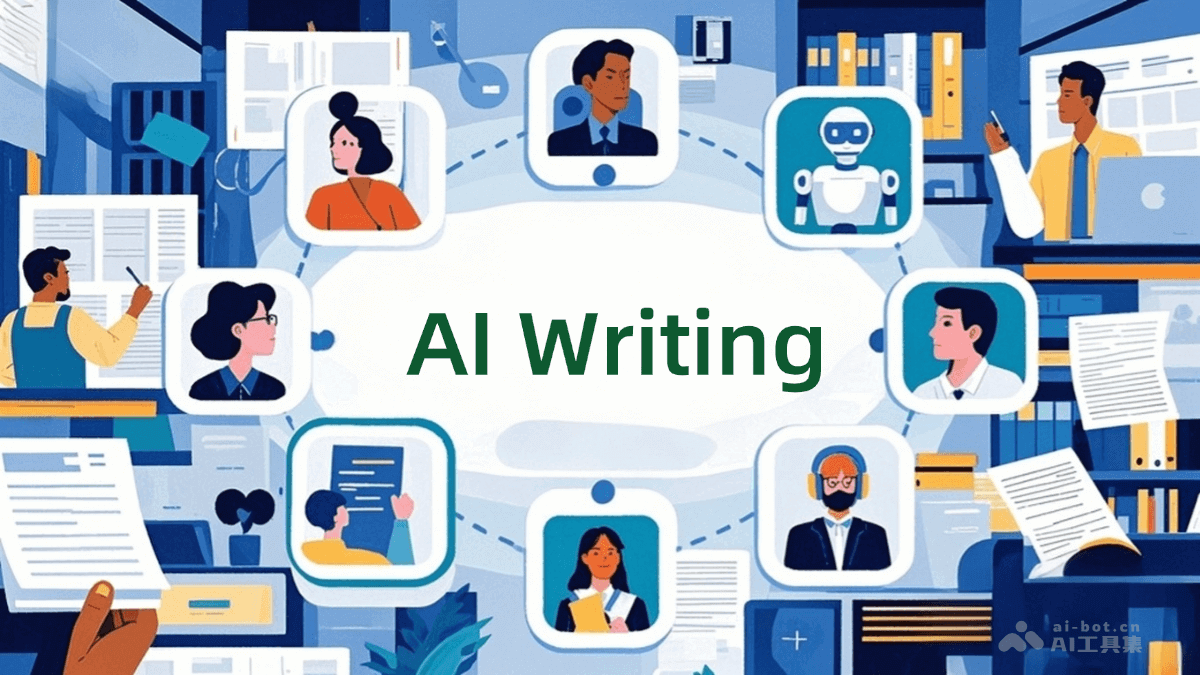
Explanation of the Concept of AI Writing
Basic Principles of AI Writing
The core of AI writing is natural language processing (NLP) technology. NLP belongs to the field of artificial intelligence and focuses on the branch that enables machines to understand and generate natural language.
Modern AI writing is mostly based on deep learning neural network models. The basic process is as follows:
- Corpus Collection and Preprocessing: A large amount of text data from different fields, styles, and genres is collected and processed through cleaning, annotation, word segmentation, deduplication, and other steps, laying a solid corpus foundation for subsequent model training.
- Model Training: Through machine learning on massive amounts of text data, the model independently extracts language patterns, grammatical structures, contextual semantics, and so on, forming the ability to "understand" human language. Current mainstream models such as GPT (Generative Pre-trained Transformer), ERNIE, T5, and LLaMA use the Transformer deep neural network architecture as their foundation.
- Model Inference and Generation: When the user inputs a "prompt" or initial fragment, AI infers the contextual logic based on the knowledge obtained from training and generates coherent text according to language statistical probabilities and semantic relevance, and can adapt to writing needs of different lengths, styles, and purposes.
- Result Optimization and Post-processing: AI writing systems introduce post-processing steps such as content detection, text polishing, logical error correction, and beautification, which can improve the readability and professionalism of the final draft.
Common Types of AI Writing Systems
According to differences in the depth of AI participation and applicable scenarios, AI writing systems are mainly divided into the following three categories:
- Template-based AI Writing: By setting writing templates, such as the five elements of news template, product introduction template, and so on, AI automatically fills in according to specific data (such as time, place, person, event, features, etc.) to generate standard text. Typical applications include financial news briefs, e-commerce product descriptions, and so on. The advantage is process-based automation, and the drawback is low flexibility and originality, making it difficult to handle complex writing or creative writing needs.
- Generative AI Writing: Based on neural network large language models (LLM), for a prompt or topic, text is autonomously generated without template restrictions, and complex tasks such as style imitation, metaphor creation, and long-form serialization can be performed. Representatives include ChatGPT, ERNIE Bot, Claude, and so on. The tools can understand context, extend the author's ideas, and enhance the diversity of written expression. The disadvantage is that the generated content may be uneven in quality, with risks of repetition or inappropriate expression.
- Hybrid AI Writing: Combine the dual advantages of templates and generative AI, such as using templates to define the overall framework/key points for each section, and using AI in each section to freely continue and polish, achieving both structural standardization and content innovation. Suitable for medium-to-long-form writing and copy planning that requires both precision and creativity.
| Type | Working Principle | Typical Applications | Pros and Cons |
|---|---|---|---|
| Template-based AI writing | Preset framework + data filling | News briefs/product descriptions | ✅Efficient and standardized ❌Low flexibility |
| Generative AI writing | Large model free creation | Novels/marketing copy | ✅Highly creative ❌Requires manual review |
| Hybrid AI writing | Template structure + AI segmented generation | Industry reports/academic assistance | ✅Balances structure and innovation |
The choice among the three major types specifically depends on the application scenario and content quality requirements, and is inseparable from the coordinated improvement of content compliance, creativity, and intelligence.
Causes of content repetition and vulgarization
Content repetition and vulgarization are the most prominent and common problems in AI writing. To solve these two major problems, their causes must be analyzed.
Causes of content repetition
- Severe homogenization of training data: Most AI language models rely on large-scale public corpora for training. If most corpus sources converge (such as general encyclopedias, news websites, forum posts, etc.) and fail to cover diverse fields and styles, the model's performance naturally tends to be consistent and lacks innovation.
- Convergent model generation approaches: AI-generated content prioritizes "safety" and needs to preferentially select the words or phrases with the highest probability to ensure logical coherence and standardized expression. The "optimal solution" easily leads to all kinds of text being stereotyped and expression patterns becoming homogenized, increasing the similarity of articles.
- Lack of real-time knowledge update mechanisms:Most AI models have slow update cycles and cannot integrate new knowledge points, facts, and viewpoints in real time. When generating content, models rely on data from the training period, making it difficult to inject novelty and unique viewpoints.
- Heavy dependence on input prompts: AI writing depends to a large extent on the quality of the inputter's prompts. If the input is highly formulaic or too broad, the output content will highly overlap with online materials.
- Functional content and common-sense content easily repeat: Standard content in many industries (such as news, e-commerce, etc.) is limited by "information elements," making similar expression difficult to avoid, which easily leads to repetitive AI output.
Causes of the vulgarization problem
- Low quality of training data: In the massive text collected from open-source networks, there is vague, inappropriate, or vulgar content (such as rumors, jokes, low-level entertainment information, etc.). Without sufficient filtering, such content is "learned" by the model and will appear in generated text.
- Models lack ethical judgment capability: AI models are far inferior to humans in judging morality, law, and social norms. Even the most advanced AI cannot accurately distinguish what is socially recognized as inappropriate expression and what are sensitive topics that need to be avoided.
- Content incentive mechanisms favor sensationalism or traffic: AI systems, in order to "attract readers' attention," generate content with a spoofing, exaggerated, and vulgar flavor, meeting the needs of internet fragmented culture for "low barriers and easy dissemination." In essence, it is the technological externalization of traffic-oriented short-sighted behavior.
- Incomplete management and review mechanisms: Early or non-standard AI writing platforms lack targeted content analysis and regulatory measures, leading to vulgar vocabulary, implicit discrimination, biased descriptions, etc.
- Impact of users' own input: Users intentionally input inappropriate content or vulgar tendencies in prompts, and AI is easily misled when understanding the prompts, producing unhealthy text.
Methods to avoid content duplication
The problem of duplicate AI writing content reduces the originality and quality of content, and in subdivided fields such as academia, news, and marketing, it can bring security and compliance risks. To effectively reduce or even avoid content duplication, industry and academia have explored many effective technical and management methods.
Technical means to detect and avoid content duplication
- Text similarity detection tools: Text similarity detection technology is the infrastructure for avoiding content duplication problems. For automatically generated AI text, the following common algorithms and tools are used:
- SimHash/MinHash: Convert text into fingerprints and determine similarity through hash values, which is efficient and suitable for rapid preliminary screening of large batches of text.
- Cosine similarity: Represent text as vectors and calculate angular similarity, suitable for detailed analysis.
- Improved edit distance algorithm: Such as Levenshtein distance, which has high sensitivity to short text rewriting.
- Multi-channel real-time deduplication mechanism: AI writing platforms enable "self-deduplication" and "cross-platform comparison" mechanisms.
- Diversified input prompts and personalized settings: Guide users to use varied prompts, specify themes and styles, and focus on writing perspectives, detailed descriptions, structural arrangements, etc.
- Automatic content rewriting and diversified sentence generation: Use AI's powerful semantic understanding and expression capabilities to automatically rewrite the draft in diversified sentence patterns, expression order, and logical structure, helping to greatly reduce similarity without deviating from the main idea of the content.
- Connect to dynamic knowledge and external fact databases: By connecting to external data sources such as authoritative information, encyclopedias, and real-time events, AI can integrate first-hand and latest materials to generate unique content.
How to improve the originality of AI writing
Originality can help establish brand reputation and credibility in the content field and is the core of sustainable long-term content production. To improve the originality of AI writing, start from the following aspects:
- Diversification of corpora and screening of high-quality corpora: Broaden the scope of corpus collection for AI models, strive to cover multiple dimensions such as culture, industry, professionalism, and innovation, and reduce the proportion of corpora on "hot topics" or "viral news." Invest resources in screening high-quality sample texts and establish a high-quality training set.
- Enhance innovation incentives for models: Encourage models to generate more innovative language expressions and perspectives. For example, adopt "reward-based learning" to specifically reward outputs in which the model produces novel syntax, original viewpoints, and unique metaphors, so that the model forms a driving force for innovative expression during the training stage.
- Introduce adversarial training mechanisms: Based on adversarial training between a generator and a discriminator (similar to a GAN architecture), the model is guided to recognize "inertial patterns" and "innovative patterns," mechanically forcing it to repeatedly revise repetitive content and more actively generate novelty.
- Deep human editing under human-machine collaboration: AI writing is not "fully automated takeover." Before publication, manuscripts must pass review by professional editors, who evaluate and optimize them across multiple dimensions including facts, logic, positioning, and style, combining human creativity with the efficiency of AI tools to achieve original breakthroughs to the greatest extent possible.
- Cross-domain interdisciplinary training: Introduce text corpora from different fields, industries, and countries to break the expressive mindsets that the model forms within a single domain.
Strategies for avoiding content vulgarization
Vulgar content affects the quality of dissemination, violates legal and moral norms, and causes negative impacts on enterprises, platform brands, and even the social environment. Avoiding vulgarization in AI writing depends on coordinated efforts across multiple links such as data, algorithms, and management.
Content filtering and review mechanisms
- Keyword filtering/maintenance of prohibited-word lexicons: Establish a dynamic lexicon that collects common sensitive, vulgar, discriminatory, and illegal terms online. During text reasoning and generation, AI automatically blocks or triggers an alert for outputs that overlap with the lexicon. For example, in generating content for adolescents, expressions involving restricted-rated words or illegal and criminal content are subject to a one-vote veto.
- Text sentiment/semantic detection: Use technologies such as machine learning and sentiment analysis to judge the semantic tendency of AI-generated text. The system can identify obviously vulgar words and, through pattern recognition, detect "borderline" content (such as hints and innuendo), intervening and correcting it in a timely manner.
- Sample-level content review and manual correction: For important manuscripts or high-risk scenarios, add a manual review step. Editors use methods such as targeted scoring, issue annotation, and text rewriting to ensure that AI-produced content conforms to the moral and legal standards of the platform and society.
- Multi-model/multi-process collaborative review: Introduce a multi-model mutual evaluation mechanism: outputs that the primary generation model considers "safe" must undergo secondary verification through specialized processes such as a "safety model," a "values model," and a "moral judgment model," and can be released only after passing detection.
Cultivating AI's moral and aesthetic standards
- Value screening of training corpora: Strictly limit corpus collection and training content mainly to mainstream positive, healthy, and scientific content, and completely remove sample texts containing sensitive, discriminatory, group-biased, online rumor, or lowbrow-interest content, minimizing the risk of the model mistakenly learning harmful values.
- Open moral guidance and human-machine co-learning: Leading AI development companies, such as OpenAI and Baidu, have established ethics guidance teams specifically to assess the ethical boundaries of model expression. Based on manual feedback and machine cross-model discussion mechanisms (such as RLHF, i.e., reinforcement learning from human feedback), mainstream social values are incorporated into the model's expression style.
- Regular updating of knowledge and social norms: AI platforms should maintain a normalized repository of social rules and case-based educational materials. Whenever there is major social opinion turbulence, a safety incident, or new legislation, the model's knowledge and self-check rules should be updated in a timely manner to stay in step with the times.
- Industry-specific standards and scenario-based training: Different fields (such as children's education and online literature, financial news and pan-entertainment short essays) have vastly different moral and aesthetic requirements. AI should establish separate content compliance models for each scenario, and implement the strictest safety standards for high-risk scenarios such as educational texts, medical and health copy, and public press releases.
Application Scenarios and Writing Standards of AI Writing
The application scenarios of AI writing have different requirements for the uniqueness, standardization, and security of content. The following categorizes by industry/field and analyzes typical application scenarios and content standards of AI writing.
News Reporting and Media Communication
- Application Description: News organizations use AI to generate brief news flashes, stock market updates, sports reports, major emergency event updates, etc. Robotic news editors increase the production capacity of original reporting, integrating multi-channel information into structured, compliant news articles at the earliest opportunity.
- Content Requirements:
- Information is accurate, fast, and free of major omissions;
- Avoid false, exaggerated, and vulgar content;
- Comply with journalistic ethics and legal regulations;
- Emphasize timeliness and originality.
- Compliance Measures: Implement multi-level fact-checking, deduplication and comparison, and manual review by editors-in-chief to prevent the spread of duplicate content and information such as rumors, vulgar content, and inflammatory material.
E-commerce Copywriting and Product Information Generation
- Application Description: E-commerce platforms use AI to automatically generate product titles, descriptions, selling point extraction, comparative analysis, etc., improving the efficiency of new product launches and reducing the manual writing cost of launching products in large batches.
- Content Requirements:
- Clear expression, accurate information, and copyright compliance;
- Novel language and varied styles, highlighting brand characteristics;
- Reject false advertising, malicious exaggeration, and vulgar descriptions.
- Compliance Measures: Set category/style-specific templates for products, keyword filtering, and also support multiple rounds of manual editing and user feedback error-correction mechanisms.
Textbooks, Teaching Auxiliaries, and Adaptive Educational Content Generation
- Application Description: AI writing is widely used in a broad range of scenarios such as online education video scripts, exercise explanations, essay templates, and auxiliary teaching materials, effectively reducing the burden on teachers and editors.
- Content Requirements:
- Content is scientific, accurate, and unambiguous;
- Standardized expression, avoiding errors and harmful guidance;
- Rigorous style, balancing interactivity and inspiration.
- Compliance Measures: Establish multi-level content review and sensitive screening mechanisms, and strictly control elements such as ideology, ethics, and language according to differences in age group, subject, and teaching objectives.
Marketing and Brand Communication
- Application Description: Advertising agencies, content marketing organizations, etc. make extensive use of AI writing to customize KOL copy, social media short posts, brand advertorials, promotional campaign plans, and complex user persona customization scenarios.
- Content Requirements:
- Highly personalized content, with prominent creative and innovative elements;
- Strictly abide by industry laws and regulations, and resist vulgar online hype;
- Emphasize emotional marketing and brand security.
- Compliance Measures: Dynamically adjust product and customer style dictionaries, introduce risk warnings for different groups (youth protection/self-discipline in sensitive industries, etc.), and update multi-level sample text data.
Law, Official Documents, Research, and Government Publicity
- Application Description: AI automatically completes typical texts such as regulatory summaries, policy interpretations, government gazettes, public opinion analysis, and special research reports.
- Content Requirements:
- Laws and regulations are rigorous, and expressions are standardized and accurate;
- Absolutely avoid misleading guidance, ambiguity, and ethical flaws;
- Ensure timeliness, authority, and compliance.
- Compliance Measures: Ongoing integration with regulatory databases, self-checking of sensitive topics, and mandatory manual proofreading at important stages.
Online literature, novels, and pan-entertainment creation
- Application Description: Improve the efficiency of online literature authors and assist in generating novel outlines, plot development, character dialogue, and other management and operational copy. It plays a role in the production of entertainment content such as murder mystery games, anime, and interactive game texts.
- Content Requirements:
- Rich in imagination and innovative in narrative, but it must promote positive energy;
- Resolutely prevent the infiltration of harmful themes such as pornography, violence, and horror;
- Focus on tone, diversified expression, and also take into account the protection of minors.
- Compliance Measures: Content review before works go online (manual + machine), industry self-discipline conventions, violation detection models, construction of user reporting channels, etc.
Academic research and paper assistance
- Application Description: Academic writing, abstract extraction, reference organization, paper draft organization, academic public opinion analysis, project report writing, etc.
- Content Requirements:
- Comply with academic integrity and academic ethics;
- Strictly require originality;
- Citations must be accurate, and plagiarism and vulgar, lowbrow content are opposed.
- Compliance Measures: Connect to mainstream plagiarism-check databases, dedicated plagiarism-check algorithms for AI-generated papers, and manual review by multiple experts.
Other scenarios: customer service, FAQ, public opinion monitoring, etc.
- Application Description: Intelligent customer service systems, automatic answering and information push, smart city public opinion information summaries and early warnings, etc.
- Content Requirements:
- Reduce the mechanical feeling and improve service friendliness;
- Ensure communication compliance and sensitive word blocking;
- Reflect emergency handling and humanistic care.
- Compliance Measures: Intelligent sensitive word replacement library, regular business rule updates, and manual review mechanisms for emergency intelligence.
Challenges Faced
AI writing has enormous prospects, but it also faces many difficulties and real-world challenges. Difficulties at the technical, ethical, and regulatory levels urgently need systematic breakthroughs.
Technical bottlenecks have not yet been fundamentally broken through
- Limited "comprehension": AI excels at statistical and patterned writing, but there is a gap in its true understanding of highly abstract human expressions such as metaphors, puns, and emotions, making contextual errors or off-topic writing likely.
- Insufficient contextual coherence and logic: In scenarios such as long-form writing and complex argumentation, AI may produce inconsistencies, unclear logic, or self-contradictions.
- Balancing patterned writing and innovation: It tends toward safety, conservatism, and patterned writing, and creative expression lacks soul, with limited imagination.
Ethical and legal risks are prominent
- Content compliance and attribution of responsibility are ambiguous: AI-generated content involves issues such as falsity, discrimination, obscenity, and infringement, making it difficult to identify the responsible parties, which will slow down the pace of building platform legitimacy.
- Copyright Protection and Plagiarism Disputes: If AI writing is not properly managed, it can lead to large-scale plagiarism, harm the interests of original authors, and bring about legal lawsuits and losses to business reputation.
- Value Security and Social Guidance: How can AI algorithms incorporate the values of the times? How can we avoid large-scale vulgar content affecting social conduct? Technology companies, industry organizations, and experts from academia need to jointly guard against this.
Summary
As an important application of artificial intelligence in the content industry, AI writing has improved the efficiency and flexibility of text production and promoted content innovation and the broad accessibility of knowledge. Issues such as content repetition and vulgarization have become the main challenges facing the healthy development of AI writing. In the future, with technological progress and the improvement of industry standards, AI writing is expected to achieve higher content originality, stronger value guidance, and higher safety and compliance standards. Only on the basis of balancing innovation and responsibility can AI writing continue to bring positive value to society and help the content industry move toward a more intelligent and healthier future.