
This article comprehensively examines the latest advances in artificial intelligence music generation technology between 2024 and 2025, systematically analyzing core technical architectures, data ecosystems, evaluation systems, commercial applications, legal challenges, and market dynamics. The study finds thatDiffusion ModelsandTransformerthe integration of architectures has become the technical mainstream, while data copyright issues and the ambiguity of legal regulatory frameworks remain the main constraints on industry development. Based on the latest academic literature, industry practice, and market data, the report provides decision-making references for researchers, developers, and policymakers.

In-Depth Analysis of Core Technical Architectures
To enable AI to create pleasant and beautiful music, it first needs to understand and process the basic elements that make up music, just like a human musician: melody, harmony, rhythm, and timbre. The elements are intertwined and together shape the emotion and style of music. Deep learning models simulate human understanding of music by transforming music data into numerical representations and learning the complex relationships among those representations. This chapter will explore in depth how AI separately models and processes the core musical elements.
Modeling and Generation of Melody
Melody is the most easily perceived element in music, usually defined as a sequence of notes with pitch and duration, and it constitutes the "main line" or "tune" of music. For AI, the core task of generating melody is to learn the generation patterns of note sequences, that is, to predict the next most likely note given the context (the note sequence already generated).
Prediction and Learning of Pitch Sequences
AI models, especially LSTMs and Transformers, can capture statistical patterns in pitch sequences by learning from large amounts of melody data. For example, the model can learn that combinations of notes within certain scales (such as major or minor) are more common, or that leaps of certain intervals (such as thirds or fifths) are more natural than large leaps (such as sevenths). During training, the model continuously optimizes its internal parameters to maximize the predicted probability of the true melody sequences in the training data. The process is essentially learning a probability distribution, namely P(next note | all previous notes). The model learns not only the connections of individual notes but also higher-level melodic structures, such as phrase repetition, sequence (repeating a melody at different pitches), and variation.
Development of Melodic Contour and Motif
Excellent melodies have a macro-level contour and motif development. Melodic contour refers to the overall direction of the melodic line in terms of pitch, such as rising, falling, or wavy. A motif is the smallest meaningful fragment in a melody, usually recurring and developing throughout a work. Advanced AI models, especially Transformers, perform outstandingly in learning and generating melodic contours and motifs because they can capture long-range dependencies. For example, a well-trained model can generate a rising melodic line and, after the climax, respond with a descending phrase to create a sense of balance.
Analysis and Construction of Harmony
Harmony is the vertical dimension of music, studying the effects produced when multiple notes sound simultaneously, and how chords connect to form chord progressions. Harmony provides background and support for melody and is an important source of musical emotion and color. A
- Learning the Patterns of Chord Progressions: In Western music, chord progressions follow a certain functional harmony theory; for example, certain chords (such as the dominant chord) have a strong tendency to resolve to the tonic chord. AI models automatically learn these patterns by analyzing large amounts of music data. For example, the model can learn that in C major, the G7 chord (dominant seventh chord) is often followed by the C chord (tonic chord). In this way, AI can generate harmonic progressions that conform to functional harmony theory and sound harmonious and natural. Some studies incorporate harmonic constraints directly into the generation algorithm; for example, when generating a melody, they increase the probability of notes that belong to the current chord, ensuring the melody's compatibility with the harmony.
- Harmonic Consistency and Sense of Tonal Center: Harmonic Consistency is an important indicator for measuring the quality of generated music; it refers to whether the music consistently revolves around a clear tonal center. Good musical works have a clear tonality, and all chords and melodies are related to it. AI models need to learn how to maintain this sense of tonal center. By learning from large amounts of music with clear tonality, the model can internalize the rules of tonality, maintain harmonic consistency during generation, and create music with clear structure that is easy to understand.
Capture and Creation of Rhythm
Rhythm is the temporal skeleton of music, composed of note durations, accents, and tempo, giving music its sense of motion and groove. When generating rhythm, AI needs to learn and represent notes of different durations (such as quarter notes and eighth notes), and understand how to combine them into beats and measures.
- Representation of Beat and Duration: In AI models, rhythm information is encoded together with pitch information. For example, a musical event is represented as a tuple containing event type (such as "note on"), pitch, velocity, and duration. By learning sequences of events, the model grasps the patterns of rhythm. For example, it learns that in 4/4 time music, each measure usually has the duration of four quarter notes, and the first beat is usually a strong beat. By learning from large amounts of music in different styles, the model can master various rhythmic patterns, from simple marches to complex jazz swing rhythm.
- Recognition and Generation of Rhythmic Patterns: In addition to learning basic beats and durations, AI can recognize and generate more complex rhythmic patterns, such as syncopation (placing accents on weak beats) and polyrhythm (using multiple independent rhythms simultaneously). Complex rhythmic patterns are the soul of many musical styles (such as Latin music and African music). Through deep learning, the model discovers irregular rhythmic features from data and applies them to new music generation.
Representation and Synthesis of Timbre
Timbre is a key feature that distinguishes different instruments or voices; even when pitch and loudness are the same, sounds produced by different sources sound completely different. Timbre is mainly determined by the sound's spectrum and envelope, and is a complex multidimensional feature. For AI models that directly generate audio (such as WaveNet and Jukebox), learning and synthesizing timbre is one of the core tasks.
- Timbre as a Collection of Spectral Features: In digital audio, timbre is represented by a spectrogram. A spectrogram displays the frequency components and intensity of a sound at different points in time. The spectrograms of different instruments have unique patterns; for example, the spectrogram of a violin contains rich overtones, while the spectrogram of a flute is relatively pure. AI models, especially convolutional neural networks (CNNs), learn these features from spectrograms and use them as the basis for generating specific timbres.
- Learning to imitate instrument timbres through models: By training on large amounts of recordings of a specific instrument, audio generation models can learn that instrument's timbral characteristics. For example, a WaveNet model trained only on piano recordings will be able to generate audio with a piano timbre. More advanced models, such as Jukebox, can generate complete band performances containing multiple instruments with rich timbres. By learning the fine structure of audio waveforms, models can imitate the dynamic characteristics of instruments, such as Attack, Sustain, Decay, and Release, making the generated music sound more vivid and realistic.
The Music Revolution of the Transformer Architecture
With its powerful long-sequence modeling capability, the Transformer architecture has become a core engine for music generation. The technical breakthroughs of 2024-2025 are mainly reflected in three directions:
- Efficient Transformer Variants: The quadratic complexity of traditional Transformers incurs enormous computational overhead on long audio sequences. Recent research has significantly reduced computational cost through sparse attention mechanisms, linear approximations, and hierarchical modeling. For example, the MusicGen model uses an encoder-decoder Transformer structure and controls musical style and emotion through text conditional input, avoiding the problem of repeatedly training on data. The architecture supports instrument-specific output control and performs excellently in generating structural coherence. MusicGen's Transformer has 48 layers, a hidden dimension of 1536, and about 1.5 billion parameters. The key innovation lies in predicting multiple codebook tokens in parallel rather than traditional autoregressive serial generation, increasing generation speed by 3-5 times.
- Transformer-VAE Hybrid Architecture: To balance generation diversity and structural consistency, the academic community has developed Transformer-VAE hybrid models. The architecture combines the latent space representation capability of VAEs with the sequence modeling advantages of Transformers to generate works that are creative while maintaining musicological logic. During training, the VAE encoder compresses music sequences into low-dimensional latent vectors, and the Transformer decoder generates complete works based on the vectors, effectively solving the mode collapse problem under the pure Transformer paradigm.
- Multimodal Conditional Control: The latest models in 2025, such as Meta's JASCO, support multimodal inputs, including text descriptions, chord progressions, rhythmic patterns, and reference audio clips. Fine-grained control is achieved through cross-attention mechanisms, making the generated results highly aligned with creative intent.
Diffusion Models: The Mainstream Path for High-Fidelity Generation
Diffusion models have become the de facto standard in the field of audio generation, and their gradual denoising process excels at capturing complex audio distributions.
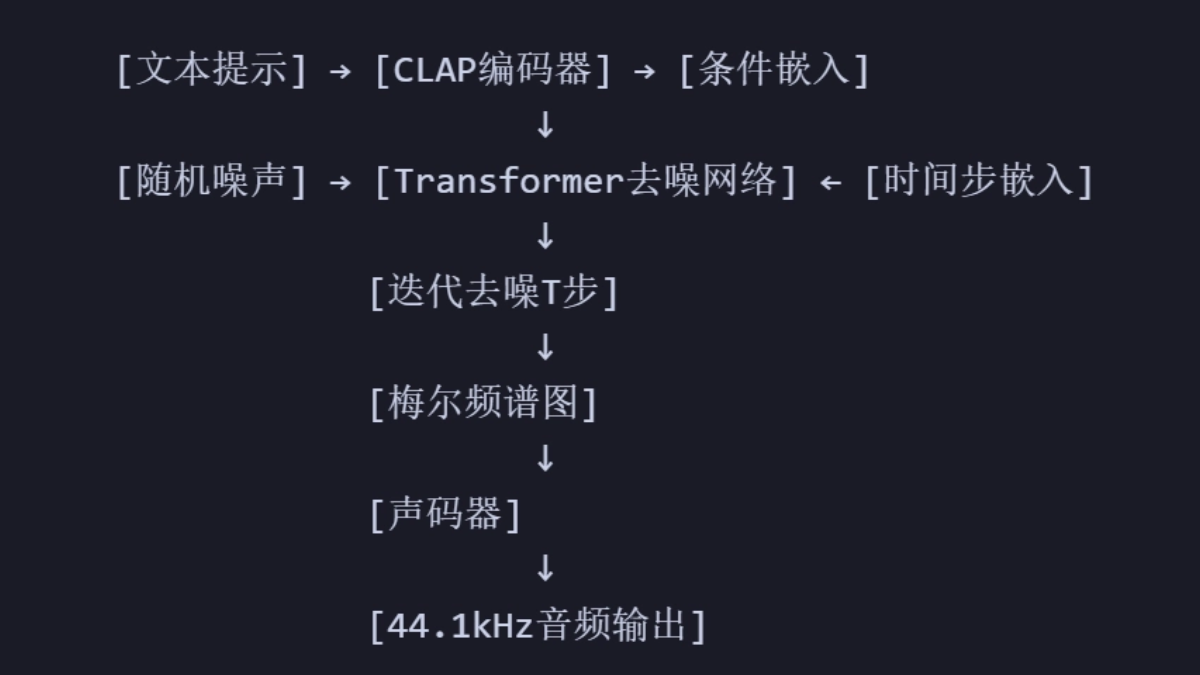
- Basic Audio Diffusion Process: During training, the model gradually adds Gaussian noise to real audio over T steps (usually 1000 steps) and learns the reverse denoising process. During inference, it starts from pure noise and gradually restores the target audio through conditional guidance (such as text embeddings). Key improvements in 2024 include:
- Speed Optimization: The DPM-Solver++ algorithm compresses the number of sampling steps to 20-50, shortening inference time by 60%
- Condition Enhancement: Using the CLAP text encoder or T5 language model as the condition network improves text-audio alignment accuracy
- Audio Quality: In 44.1kHz stereo generation, diffusion models have reached professional production standards
- Diffusion Transformer (DiT) Architecture: The Diffusion Transformer architecture that emerged in 2025 (such as Stable Audio 2.0) combines the diffusion process with Transformers, replacing the traditional UNet as the denoising network with a Transformer. This design maintains better temporal consistency when generating long-form music (up to 3 minutes), with FAD scores reduced by 15-20% compared to pure diffusion models.
The Evolution of Variational Autoencoders (VAE)
In music generation, VAEs mainly undertake the tasks of latent space learning and style transfer. Their advantage lies in explicit probabilistic modeling, making them suitable for scenarios requiring controllable diversity.
- Hierarchical VQ-VAE Architecture: OpenAI's Jukebox employs a hierarchical vector-quantized VAE, compressing audio into multi-level discrete codebooks. The lower levels capture fine-grained acoustic details, while the higher levels encode semantic structure. An improved version in 2024 expanded the codebook size to 8192, resulting in significant reconstruction quality improvement.
- VAE-GAN Hybrid Framework: Combining the generative capability of VAE with the discriminative capability of GAN, it forms a bidirectional optimization objective. The generator maintains diversity through VAE reconstruction loss, while the discriminator enhances realism through adversarial loss. The architecture can capture subtle rhythmic dynamics when generating drum beats and basslines.
Neural Vocoders: From Representations to Audio
Any generative model ultimately requires a vocoder to convert intermediate representations into waveforms. BigVGAN and EnCodec have become industry standards:
- BigVGAN: A GAN-based vocoder that achieves real-time inference at a 24kHz sampling rate, with CPU latency below 50ms.
- EnCodec: Meta's open-source neural network encoder, supporting 32kHz high-fidelity reconstruction with a compression ratio of 100:1, and is the default vocoder for MusicGen.
Dataset Ecosystem: Scale, Copyright, and Preprocessing
Current State of Large-Scale Public Datasets
In 2024-2025, dataset scale has grown exponentially, and copyright compliance is a core challenge.
| Dataset Name | Scale | Format | Copyright Status | Primary Use |
|---|---|---|---|---|
| PDMX | 250,000+ MusicXML scores | MusicXML | Open source, commercially usable | Symbolic music generation |
| MAESTRO | 200+ hours of piano recordings | MIDI/Audio | Research license | Piano transcription |
| MusicLyric | 1,200 hours of audio-lyrics pairs | WAV/Lyrics | Partially copyright-protected | Lyrics-melody alignment |
| Sleeping-DISCO 9M | Millions of audio clips | Mel spectrograms | Complex copyright ownership | Audio classification |
| LakhMIDI | 176,581 MIDI files | MIDI | Public after cleaning | Multi-track music generation |
Copyright Dilemma and Legal Risks
The copyright controversy over AI training data peaked in 2024. The main issues include:
- Legality of the Training Phase: The U.S. Copyright Office's 2025 policy report explicitly states that using copyright-protected works to train AI without authorization may constitute infringement, but the "fair use" defense is still under judicial review
- Similarity of Generated Results: The EU AI Act requires generative AI providers to disclose the sources of training data. If the generated content is substantially similar to a specific copyrighted work, they must bear infringement liability
- China's Regulatory Practice: China has passed blockchain evidence preservation regulations, requiring that the proportion of human creation in AI-generated content be no less than 30%, in an attempt to quantify the standard of "originality".
Industry Response Strategies:
- Commercial Licensing:Suno、Udioand other platforms negotiate with music publishers to obtain authorization for training data.
- Data Cleaning: Use music information retrieval (MIR) technology to identify and filter copyrighted works.
- Synthetic Data: Use physical modeling synthesizers to generate copyright-free training data and avoid legal risks.
Standardized Data Preprocessing Workflow
Preprocessing quality directly affects model performance, and industry best practices had already taken shape by 2024:
Audio Data Preprocessing:
- Resampling: Standardize to 44.1kHz or 48kHz to avoid aliasing.
- Loudness Normalization: Use the EBU R128 standard, with a target loudness of -23 LUFS.
- Pitch Detection: The CREPE algorithm extracts F0 for melody modeling.
- Mel Spectrogram Computation: Window length 2048, hop length 512, 80 mel bands.
Symbolic Data Preprocessing:
- Time Quantization: Align MIDI events to a 16th-note grid.
- Chord Recognition: Use a CRF model to automatically annotate chord progressions.
- Structural Segmentation: Identify verse/chorus/bridge based on dynamic programming.
Evaluation System: From Objective Metrics to Subjective Perception
Latest Advances in Objective Evaluation Metrics
Fréchet Audio Distance (FAD)
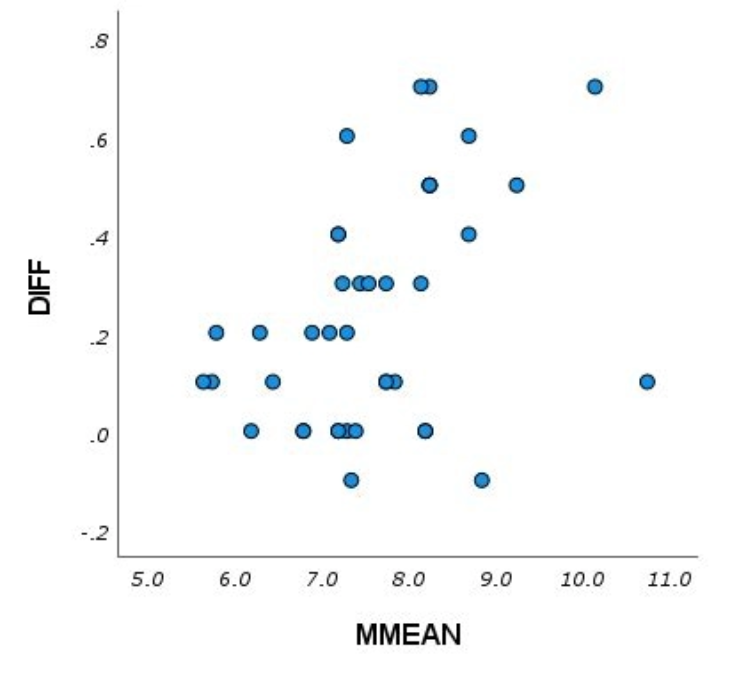
FAD has become the "gold standard" for audio generation, evaluating quality by comparing the distribution distance between generated audio and real audio in the VGGish feature space. Research in 2024 found:
- Correlation with Human Perception: The Spearman correlation coefficient between FAD and subjective MOS scores reaches 0.78, outperforming KL divergence (0.65) and the IS score (0.52).
- Limitations: FAD cannot capture musicality, creativity, and emotional expression, and may misjudge generation results that are "technically perfect but musically mediocre".
- Improved Versions: FAD-NIS introduces note structure similarity as a weighting factor, raising the correlation to 0.85 in melody generation tasks.
CLAP Score: Text-Audio Alignment Evaluation
The CLAP (Contrastive Language-Audio Pretraining) model maps text and audio into the same embedding space, and is used to measure the consistency between generation results and prompts. Best practices in 2025 include:
- Multilingual Support: The LAION-CLAP model supports 50+ languages and performs excellently in cross-cultural music generation evaluation.
- Fine-Grained Control: In addition to the overall CLAP score, it also evaluates style matching (0-1), emotional consistency (0-1), and instrument accuracy (0-1).
- Case Study: In the evaluation of MusicGen, the CLAP score reached 0.68, significantly higher than Riffusion's 0.52.
Other Auxiliary Metrics
- KL Divergence: Measures the difference between generated audio and target audio in the distribution of concept labels, and is suitable for style transfer evaluation.
- Spectral Convergence: Evaluates mel spectrogram reconstruction accuracy; values below 0.5 are considered good quality.
- F0 Frame Error (FFE) : Evaluates pitch accuracy; in singing voice synthesis tasks, an FFE below 10% is acceptable.
Subjective Listening Experiment Design
The subjectivity of music requires that evaluation must include human feedback. Experimental designs in 2024-2025 show a standardization trend:
Crowdsourced Evaluation Platforms
- Platform Selection: Amazon Mechanical Turk and Prolific have become mainstream, ensuring participant focus.
- Participant Screening: Require participants to listen to music >5 hours per week, and pass a basic music theory knowledge test (accuracy >70%).
- Sample Size: Collect at least 500 independent ratings per study to ensure statistical significance.
Evaluation Dimensions
In addition to overall quality, 2025 research emphasizes multi-dimensional evaluation:
- Musicality : Melodic fluency, harmonic reasonableness, rhythmic stability.
- Creativity : Novelty, surprise, avoiding clichés.
- Emotion Expression : Emotion recognition accuracy, emotional intensity matching.
- Structure Coherence : Naturalness of section transitions, logical thematic development.
Result Analysis
A Mixed Effects Model is used to handle nested data (the same participant evaluating multiple samples) and control for individual bias. A 2024 user preference study of Udio vs Suno showed that Udio leads by 12% in harmonic richness, while Suno wins by 8% in melodic memorability, indicating that different models have their own areas of strength.
Legal and Ethical Challenges
Judicial Dilemmas of Global Copyright Ownership
Currently, there is no unified global determination of copyright for AI-generated music, and the core principle of "human authorship" is generally followed, meaning copyright protection must be based on human creative contribution.
Artists' Living Space Is Being Squeezed
- Economic Threat: A 2024 musicians' union survey showed that more than 67% of professional musicians believe AI directly threatens their livelihood. Because the cost of AI creation is extremely low, it has already caused a significant decline in prices in commercial music markets such as advertising and game soundtracks.
- Value Shock: When massive amounts of cheap AI music flood the market, the labor value and pricing system of human artists are severely challenged.
Risk of Cultural Homogenization
Algorithm training data favors mainstream works, leading to convergence in the style of generated results. Research shows that more than 85% of AI-generated music is in Western pop styles, while niche genres and traditional ethnic music elements are systematically marginalized, putting global cultural diversity at risk.
The Debate Over Emotional Authenticity
The industry remains reserved about the artistic value of AI music. The Grammy Awards have stipulated that works containing AI content must meet the requirement of "meaningful human contribution" to be eligible. General feedback suggests that although AI music is "technically perfect," it often feels "emotionally hollow," lacking the human core that touches the soul.
Diverse Applications of AI Music Generation
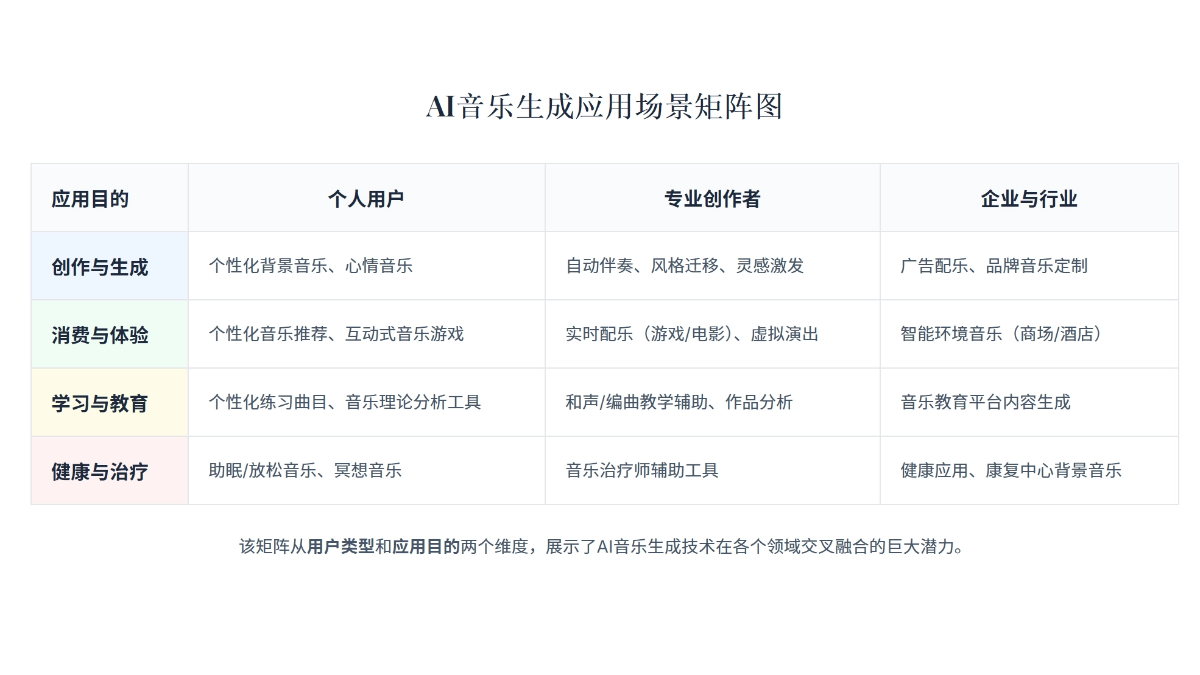
With the rapid development of AI music generation technology, applications have far exceeded the mere scope of "automatic composition" and penetrated every link of the music industry, giving rise to entirely new modes of creation, consumption, and interaction. From providing creative assistance to professional musicians, to generating personalized background music for ordinary users, to empowering specific industries such as gaming, film, and education, AI is reshaping the music ecosystem. This chapter will focus on innovative applications of AI music generation in multiple fields.
Music Creation Assistance and Inspiration Stimulation
AI is becoming an indispensable "intelligent partner" for music creators, capable of handling tedious arrangement work and even serving as a "muse" that sparks inspiration.
- Automatic accompaniment and arrangement: For many independent musicians, adding rich harmony and accompaniment to a simple melody is a highly technically demanding task. AI Harmonizer and automatic arrangement tools can greatly simplify this process. For example, a user only needs to input a vocal melody, and the AI system can automatically generate matching four-part harmony, bass lines, drum beats, and even string pads, quickly building a complete song framework, allowing creators to focus more energy on core melody and lyric writing.
- Style transfer and fusion creation: After learning a large amount of music in different styles, AI models can master the unique characteristics of various genres (such as jazz, rock, classical, and electronic). Creators can conduct style transfer experiments, for example, adapting a pop melody into a bossa nova style, or fusing Bach's counterpoint with modern electronic beats.
Personalized music recommendation and generation
In the streaming era, users are no longer satisfied with passively receiving recommendations and crave a more proactive and personalized music experience. AI music generation technology precisely meets this need.
- Recommendation algorithms based on user behavior: Traditional recommendation systems are mainly based on collaborative filtering or content analysis. AI systems that combine generative capabilities can understand users' musical tastes more deeply. By analyzing users' historical playlists, like records, and even physiological feedback (such as heart rate), AI can build a highly personalized user profile and generate unique music that fully matches their preferences.
- Generating personalized music that matches the user's mood: Furthermore, AI generates music based on the user's real-time state or specific needs. For example, a meditation app generates relaxing, ever-changing ambient music in real time based on the user's brainwaves or breathing rate. A fitness app dynamically generates motivating, beat-synchronized energetic music based on the user's running rhythm. This "on-demand generation" model transforms music from a standardized commodity into a highly customized service.
Real-time and dynamic music generation
In interactive media such as games and films, music needs to be closely synchronized with the visuals and players' actions to provide an immersive experience. Traditional linear scoring methods are difficult to adapt to dynamically changing needs, and AI provides an ideal solution for real-time, adaptive music generation.
- Adaptive scoring in games and interactive media: In games, background music needs to change in real time according to players' actions, changes in game scenes (such as moving from a peaceful village into intense combat), and the advancement of the plot. AI music generation systems can analyze the game state and seamlessly generate, mix, or transition music, creating a dynamic soundscape that always fits the gaming experience perfectly. For example, when a player's health is low, the music automatically becomes tense and urgent; when the player explores an unknown area, the music becomes mysterious and full of suspense.
- Intelligent score generation for films and videos: For video creators, finding suitable background music for a video is a time-consuming task. AI scoring tools can automatically generate matching music based on the video's content, emotion, rhythm, and scene changes. Users only need to upload the video, and AI can analyze the visual features and create unique, copyright-free scores, greatly improving the efficiency and quality of video production.
Music Education and Assisted Learning
AI technology has also brought revolutionary changes to music education, offering personalized learning experiences and intelligent teaching assistance.
- Personalized Practice Track Generation: AI generates tailor-made practice tracks based on the student's performance level and practice needs. For example, for students learning specific scales or rhythmic patterns, AI generates melodies of moderate difficulty that incorporate these elements, helping students engage in targeted practice. This personalized learning approach is more effective than traditional one-size-fits-all teaching materials.
- Harmony and Melody Analysis Teaching Tool: AI serves as a powerful music analysis tool, helping students understand complex music theory. For example, when a student inputs a piece of music, AI automatically analyzes the chord progression, tonal layout, melodic structure, etc., and presents them in a visualized way. This makes abstract music theory intuitive and easy to understand, lowering the learning threshold.
Conclusion and Outlook
Core Conclusions
- Mature Technology: The integration of diffusion models and Transformers has become mainstream, capable of generating structurally coherent, high-fidelity long music. Multimodal conditional control allows AI to evolve from a generation tool into a creative partner.
- Copyright Is the Key Bottleneck: The legality of training data and the copyright ownership of generated content are the biggest obstacles to industry development, and the relevant legal framework is still being contested.
- Evaluation System Needs Upgrading: Existing metrics can measure audio quality but cannot effectively evaluate the artistry and creativity of music.
- Explosive Growth of Application Scenarios: From creative assistance to real-time scoring for games and film and television, applications are flourishing across the board, lowering the barrier to creation and reshaping the music industry.
Future Outlook
AI music generation will evolve in a deeper, more standardized, and more collaborative direction. At the technical level, models will move from learning data to understanding music, generating works with more human-like details and artistic depth by internalizing music theory and performance techniques. At the same time, mechanisms such as blockchain traceability and micropayment revenue sharing will gradually mature, providing clear solutions for copyright ownership and benefit distribution, and safeguarding the rights and interests of original creators. The creative model will shift entirely toward real-time interactive human-machine collaboration, and prompt engineer may become a new role specifically guiding AI to unleash its creative potential. The ultimate democratization of technology will trigger unprecedented fusion and revival of musical styles. When technical barriers disappear, the core value of music will return to humanity's unique emotions, thoughts, and sincere expression. AI music generation has broad prospects, and future success depends on whether a balance can be found among technology, law, and the humanities.