Many friends who make songs with AI have probably felt a similar sense of letdown: the melody of the song you generated is smooth, the lyrics have clever touches, you've listened to it on loop many times, and the more you listen, the better it seems. But as soon as you post it on Douyin or a music platform, the numbers are especially bleak—plays won't go up, and saves and shares are few and far between.
At this point it's easy to fall into self-doubt: Is it that the lyrics aren't touching enough? Is the melody not catchy enough? Or is it simply bad luck, and you haven't run into people who can appreciate this song?
These factors will have some influence, but most of the time, the problem isn't whether the song itself is good or not—it's the order in which you create.
Most people make songs starting from "What kind of song do I want to write?"; but people who can truly make highly shareable works will first think clearly: Who will listen, when will they listen, and why will they stop to listen to this song.
This is the core I want to talk about with everyone today—producer's mindset.

It will make you, before generating a song, first think clearly about who the listeners are, what they are going through, and why they should stop to listen to this song. Then decide which line the chorus should most keep, how to keep people in the first 30 seconds, and how the emotion of the whole song should build upward.
First, let's talk: How hit-song studios make songs
Many people think making a song means first writing the complete lyrics, then slowly adding melody and arrangement. In fact, mature studios don't follow this order at all; the entire logic revolves around listeners and spread.
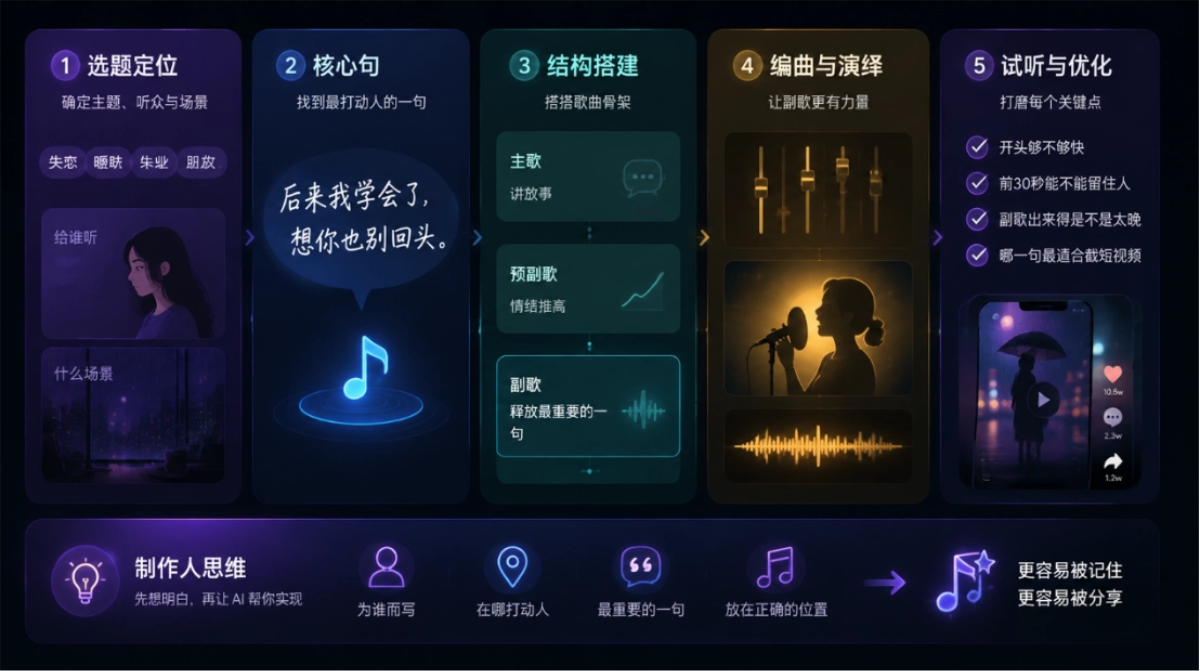
Usually the first step is to decide the topic.
This time, should it be about heartbreak, ambiguous romance, graduation, friendship, or some kind of common emotion many people are experiencing. Once the topic is set, then clarify who this song is written for and in what scenario listeners will encounter it.
For example, written for a girl who just broke up, scrolling late at night through a short video of rainy night street scenes, wanting to find a song to speak for her the feelings she hasn't said out loud.
Another example: written for old friends who have gone their separate ways, when flipping through old photos and suddenly remembering the regret of a certain summer.
Once the people and scenes are set, the whole song has a clear direction, rather than vaguely pursuing "sounding good."
Next, the team will first grind on the most core line in the chorus. It might be a catchy melody, or a lyric that makes you want to share it right after hearing it, for example:
Later I learned, even when I miss you, don't look back.
Once this line is set, composition, lyrics, and arrangement will all unfold around it. The verse is responsible for telling the story clearly, the pre-chorus pushes the emotion upward, and the chorus sings this most important line thoroughly. The arrangement adds more instrumentation to the chorus, the vocals sing with more power here, and the melody is made easier to remember.
When the final product comes out, it still needs another round of adjustment around spread, with the core looking at four things:
- Whether the opening cuts in fast enough; a too-long intro easily drives people away
- Whether the first 30 seconds can keep people; whether there is a desire to keep listening
- Whether the chorus comes too late; whether it misses the time when everyone's attention is most focused
- Whether there is any section or line that is naturally suited to being cut out as short-video background music
This approach—starting from listeners and ending with spread—is the producer's mindset.
When making songs with AI, you also need this mindset first. AI can help you generate melody, vocals, and arrangement, but who this song should be written for, at which moment it should move people, and where the most important line should go require you to think clearly first.
Master these 7 approaches, and with AI you can also make songs with hit potential
1. First, define the audience and scenario. Don't just say to write a sad love song.
Giving AI only one sentence like "write a good pop love song" is equivalent to handing over all creative initiative. The broader the description, the more likely the generated result will be mediocre.
Make the listener and scenario specific, and the result will be much better, for example:
Write a Chinese pop love song, written for young people who are still pretending to have let go after a breakup. The scene is a rainy night after work, sitting alone in the back seat of a taxi, passing a familiar street corner. The verse should feel like talking to oneself, and the chorus should push the emotion higher. Female vocals, opening with piano, adding drums and harmony in the latter half, with the whole song controlled to around two minutes.

Write the audience, scene, emotional changes, and arrangement clearly. The more specific the information AI receives, the closer the output will be to the effect you want.
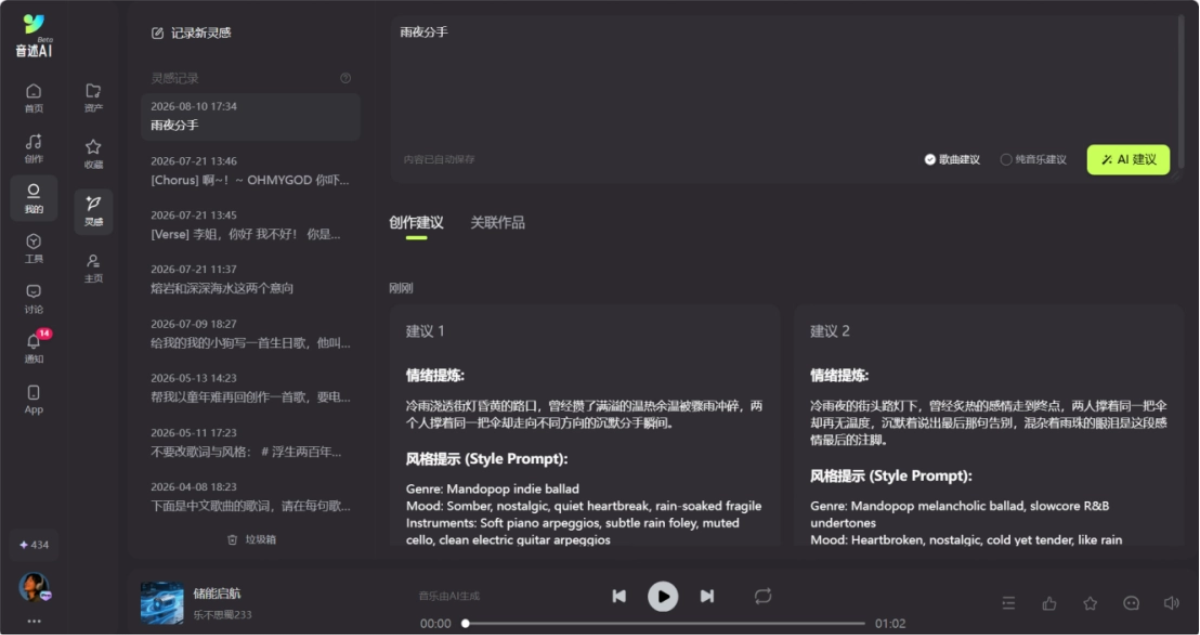
If you have scenes and ideas in mind but can't express them, you can use thisYinshu AIinspiration feature to refine emotions and specific visual scenes with AI suggestions.
2. Think of the core line of the chorus first, then lay out the full lyrics
Whether a song can be remembered often depends on that one line in the chorus.
This line should be simple, like something a person would really say at a certain moment. Don't rush to have AI write the entire lyrics. First think of three to five lines yourself, read them once to feel them out, and keep the one that feels the most powerful.
For example:
Later I learned, even when I miss you, don't look back.
I deleted the chat history, but I didn't delete the rain that night.
After you left, I only then learned to go home alone.
After choosing, directly give AI a clear requirement:
The first line of the chorus is fixed as "Later I learned, even when I miss you, don't look back," and this line repeats twice in the chorus. Sing it more restrained the first time, and raise the melody the second time, add harmony, and release the emotion completely.
With a core line, the whole song has a center of gravity. After listening, the audience can also remember one line that belongs to this song.
3. Capture attention in the first 30 seconds; don't let the intro drive people away
When a song is posted to short videos and music platforms, no one will patiently listen to the whole song before deciding whether they like it. The vast majority of people decide within the first few dozen seconds whether to keep listening.
In the first 30 seconds, at least two things should be achieved: let people understand what the song is about, and make people willing to wait for the chorus to arrive.
Many songs play an intro for more than twenty seconds without the vocals entering, and people have already swiped away. Others have verses that are too long, with the chorus delayed until after one minute, so the best part never gets a chance to be heard.
You can arrange it according to this timing rhythm:
5 to 10 seconds: go directly into the melody, or open with one lyric line. An intro can exist, but don't hide the key point for too long.
10 to 30 seconds: the verse explains a specific image. For example, "the seventh rainy day after you left" is far more likely to make people stop than the vague "I am so sad alone."
40 seconds to around 1 minute: let the chorus appear. The line you most want people to remember should be revealed as early as possible.
After generating it, you can loop the first 30 seconds separately and listen three times. If after listening you still can't say clearly what the song is about, the verse needs to be rewritten; if you don't have the urge to keep listening to the chorus, move the chorus earlier, or replace the opening.
4. Build the emotion layer by layer, and use ups and downs to support the whole song
Most songs that are pleasant to listen to over time are not straightforward; they hold back at the beginning, gradually move upward, and only fully release at the chorus.
You can refer to this classic structure:
- Opening: Use simple instrumentation and lighter vocals to establish the scene and basic emotion; piano and guitar both work well.
- Verse: Telling one specific small thing is enough; you don't need to cram meeting, passionate love, arguments, and breakup all into one song. The more specific it is, the easier it is for people to relate.
- Pre-chorus: Push the melody upward, gradually bring in drums and instruments, and let people feel that the chorus is coming soon.
- Chorus: Release the most core line of the whole song; the title, emotion, and memorable point are all concentrated here.
- Second chorus: You can raise the melody, add harmonies, or change the singing approach. The first time lets people understand; the second time lets people remember.
- Ending: When the emotion settles, stop promptly. If the outro is too long, it is very easy for people to exit early.
5. Generate several versions and screen them, keeping the one with the most outstanding chorus
The probability that the first version is exactly perfect is very low.
For the same lyrics and the same style, generate at least three to five versions. You don't need to listen to the whole song; focus on the chorus. What you are looking for is the version where, as soon as the chorus comes in, you feel "this line is right."
Some versions have a good melody, but the vocal emotion is not quite there; some have the emotion, but the chorus is not striking enough; some are ordinary at the beginning, but once the chorus comes in, it can carry the whole song.
If you find repeated generation too troublesome, you can use音述AI, which automatically generates two versions each time, making comparison and screening very efficient.
After finding the direction, give 音述 AI more specific revision requirements, for example:
Keep this version's chorus melody, and shorten the intro to within 8 seconds. Make the verse vocals lighter, as if holding back emotion while speaking. Add harmonies to the second chorus, and stretch out the final line's ending note.
The more clearly you can say what is wrong and what you want changed, the closer the next version will be to the effect you want.
6. Think about the distribution scenario in advance; don't wait until the song is done to consider it
Many people think that once the song is finished, production is over. In fact, for songs intended for distribution, release and scenario adaptation are also part of production.
Besides sounding good, a song also has to be usable — it should be convenient for others to cut into videos, pair with copy, and use for secondary creation.
From the very beginning of creation, you can think clearly: what kind of visuals is this song suitable to pair with?
For example, driving on a rainy night, graduation ceremony, breakup copy, city night scenes, travel vlogs, fitness videos, wedding scenes, and so on.
If the use scenario is clarified at the time of creation, after the song is released, the probability of users and bloggers using it as background music will be much higher.
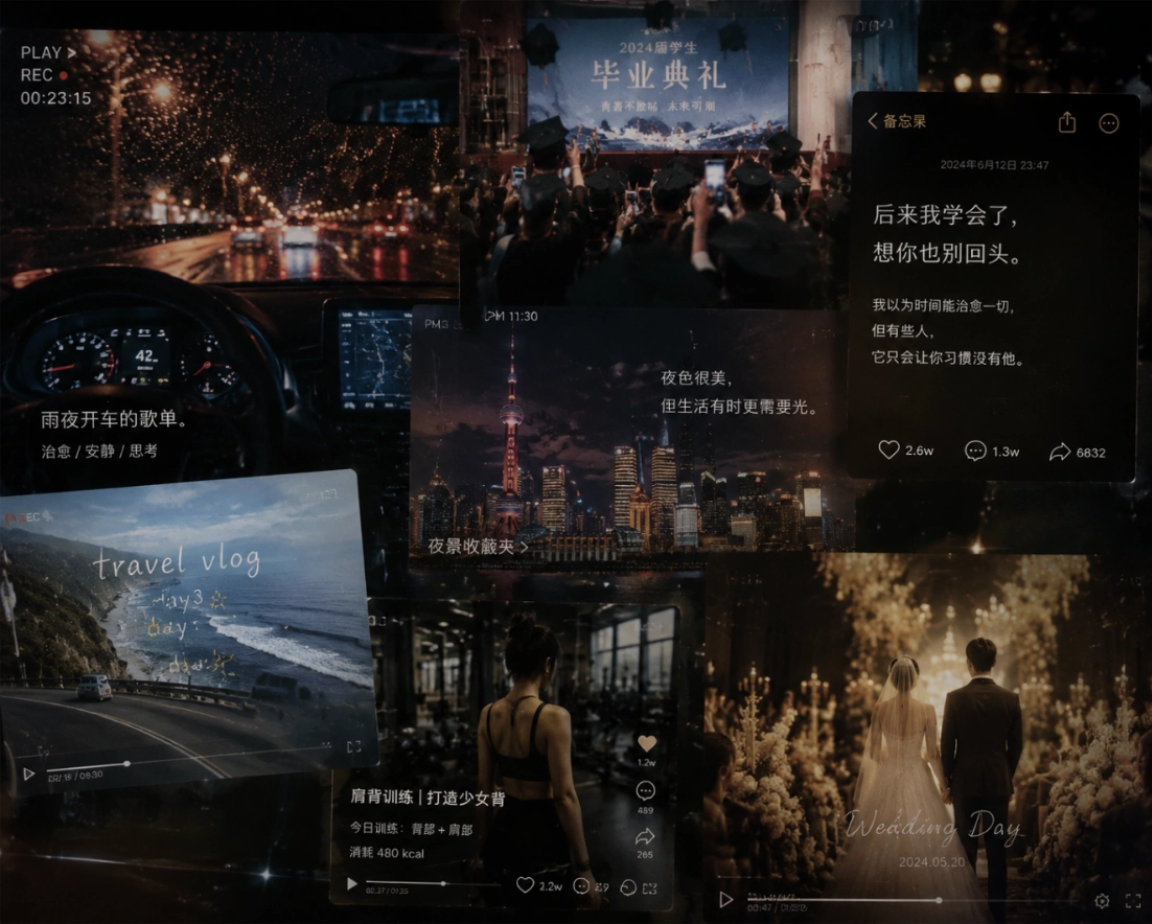
For example, if you want to make a song suitable for listening to while driving on a rainy night, the opening can leave a bit of spatial feeling, the vocals should not be too full, and the chorus can then push the emotion up. Later, when releasing it, the video visuals, copy, and cover will also more easily have a unified style.
The suitable use scenarios should preferably be written into your requirements from the very beginning of creation.
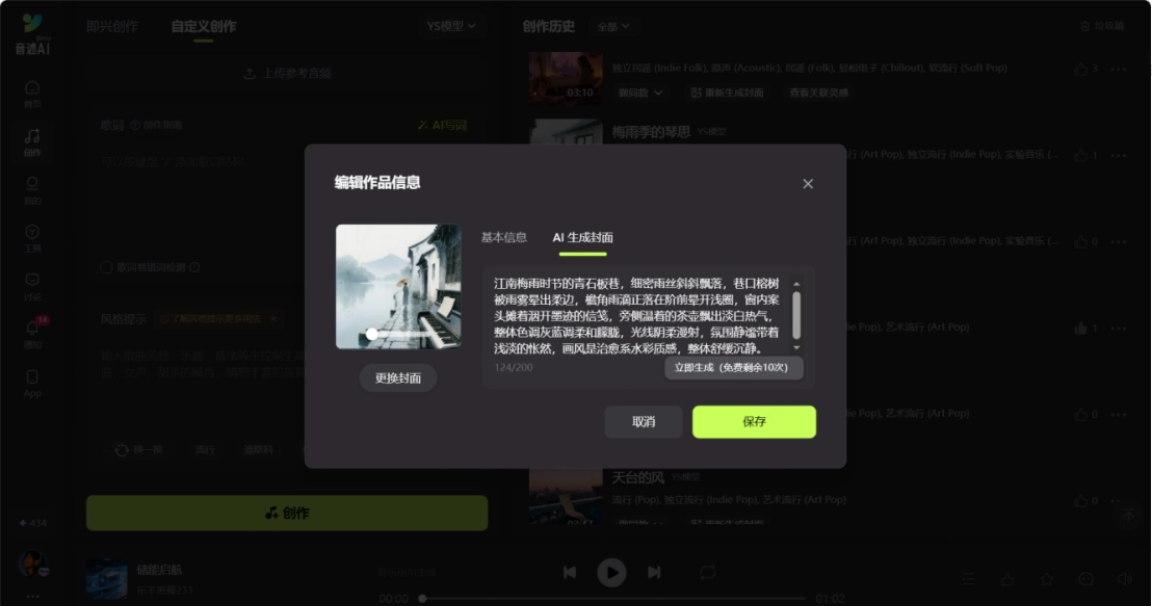
If you don't want to make your own music cover, you can also directly use 音述AI's free AI cover generation feature, which is very convenient.
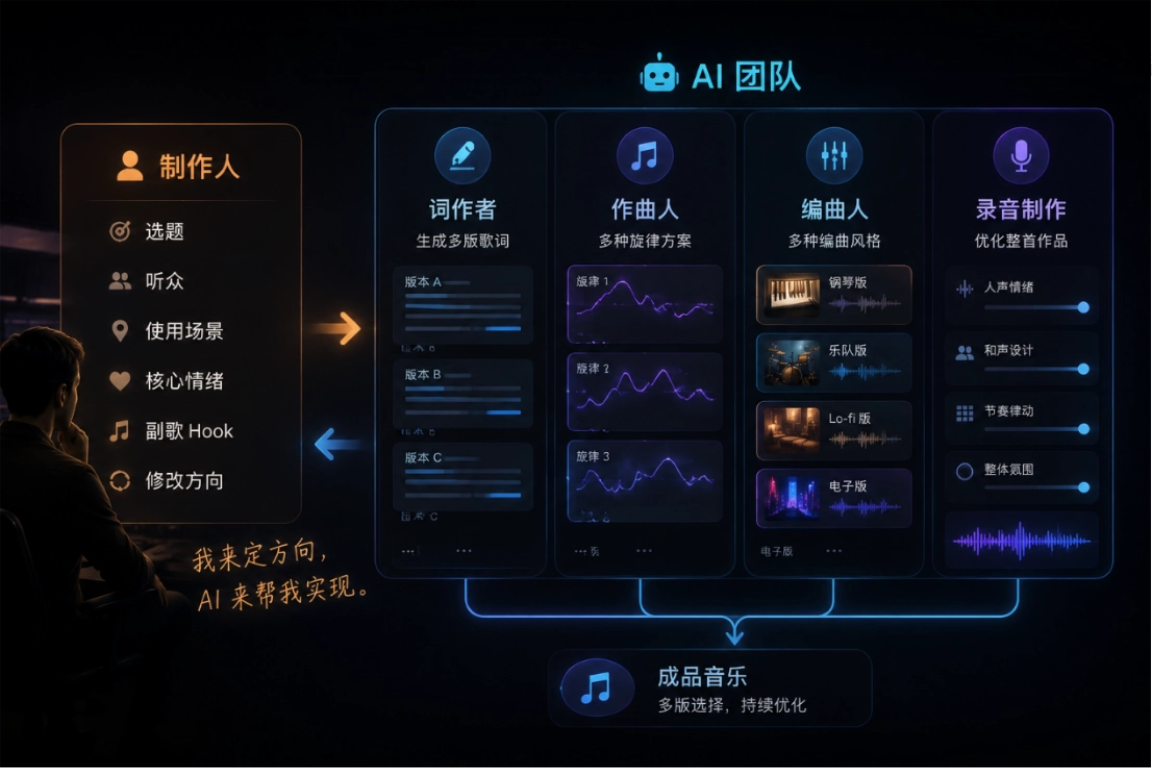
Treat AI as your production team
Don't treat AI as just a button responsible for "producing a song."
Treat it as a production team that needs you to clearly assign roles, and it will be easier to achieve the effect you want.
You are the producer.
You are responsible for determining the topic, audience, use scenario, core emotion, chorus hook, and the direction of each round of revision.
AI can separately take on different tasks:
- Lyricist, write multiple versions of lyrics based on your direction.
- Composer, try different melodies for the same set of lyrics.
- Arranger, try different feels such as a piano version, band version, Lo-fi version, electronic version, and so on.
- Recording production, adjust the vocal emotion, harmonies, rhythm, and the overall atmosphere of the song.
When making songs this way, you don't need to keep waiting for the AI to give you answers.
You need to keep giving it clear feedback:
Keep this chorus, shorten the intro to within 8 seconds. Make the verse more restrained, as if holding back from speaking. Make the second chorus more explosive, add a little harmony, and stretch out the last line.
Give direction first, listen to the result, then point out exactly what should be changed. This is how a producer works.
Finally, here is a creation template you can use directly
Every time you openYinshu AI , first write the following information clearly.
1. Target audience
Urban young people aged 22 to 30 who just broke up.
2. Usage scenario
Getting off work on a rainy night, sitting in the back seat of a taxi, hearing this song while scrolling short videos.
3. Core emotion
Saying you've let go, but actually you still haven't.
4. One Hook line
Later I learned, missing you doesn't mean turning back.
5. Song structure
The verse tells the story, the pre-chorus builds momentum, and the chorus releases the emotion.
6. Music style
Piano plus pop drum kit, female vocals, with harmony added in the chorus.
7. Communication goal
Enter the theme in the first 10 seconds, have the chorus appear around 40 seconds, suitable for clipping 15 to 30 seconds as short-video background music.
Give all this information to Yinshu AI together, and the generated result will be much more specific than "write a sad love song."
Every song you write can start from this template.