
Introduction
In recent years, the wave of artificial intelligence-generated art (AIGA) technologies represented by Midjourney and Stable Diffusion has swept the globe, completely transforming the creation model of visual content. Through simple text descriptions ("prompts"), the general public can generate image works comparable to those of professional artists. While inspiring unlimited creative potential, this has also triggered a profound legal and ethical "soul-searching": Do artworks generated by algorithms infringe the copyright of existing artists? How should originality be defined? To whom should copyright belong? As of 2025, no unified legal consensus has yet formed globally. Technological development continues to outpace the law, and we are in a critical period of exploration and rule reshaping.
Principles of AI Generation
How It Works
Discussing the copyright ownership of AI-generated art cannot avoid the fundamental question: How exactly does the act of "creation" occur? A simple understanding of how it works is the first step in judging what role humans play and how much intellectual labor they contribute. Currently, mainstream AI painting technologies are mainly divided into two major schools.
- Generative Adversarial Networks (GANs): Generative Adversarial Networks (GANs) were the main force in the early field of AI painting. It can be imagined as a study group composed of two "masters":
- Generator: Its task is to create paintings out of thin air that pass as real. At first, it paints very poorly, like a child's scribble.
- Discriminator: Its task is to distinguish which paintings are real (from the training data) and which are fake paintings made by the "forgery master."
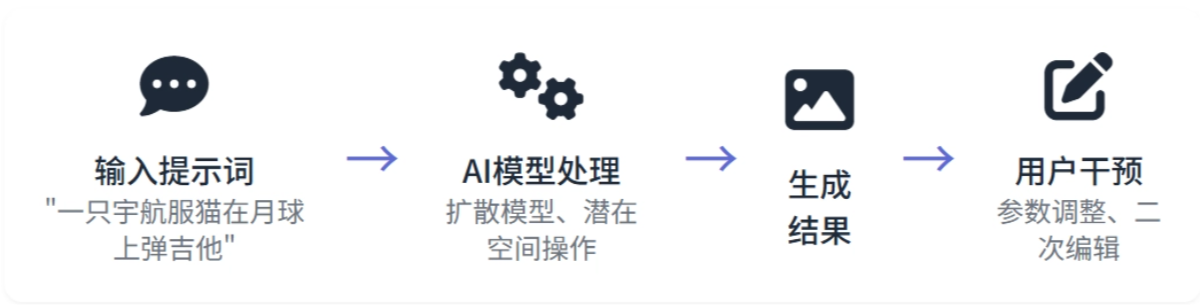
- Diffusion Models: Diffusion models are currently (as of 2025) the most popular and technically mature AI painting models. The model works as follows:
- Noise-adding process (forward diffusion): Take a clear photo (for example, a cat) and add random "noise" to the photo (like TV static) until the photo becomes completely irregular random noise, and the original cat image information completely disappears. This is AI "learning" how to turn order into chaos.
- Denoising process (reverse diffusion): The AI model learns the reverse process of "adding noise." Given pure random noise, plus a user instruction (for example, "a cat wearing a crown"), the AI follows the instruction to "carve" details out of the chaotic noise, gradually removing the noise and restoring a clear, specific, and instruction-compliant brand-new image.
Training Data
The training datasets used in AI model training contain hundreds of millions of "image-text description" pairs, including a large number of copyrighted artworks, photographic photos, and personal illustrations. Through learning from the data, AI grasps the connections between the forms, styles, and concepts of all things in the world. For example, it knows what a "cat" looks like and what the "Van Gogh style" feels like. When AI generates images, it does not create out of thin air; rather, within its "memory" (model parameters), based on the user's prompt, it performs complex recombination, fusion, and re-creation of the massive content it has learned.
The core of the AI art copyright dispute is whether AI companies' use of copyrighted works to train commercial models without authorization constitutes infringement of the original authors' copyrights. At present, there have been multiple class-action lawsuits worldwide by artists and image companies against AI companies, alleging copyright infringement. The copyright issue is the biggest legal minefield in this field.
What Is Originality?
Having understood at the technical level how AI "paints," we now turn to the legal level to explore the core of copyright protection: originality. For a work to obtain copyright protection, it must satisfy two basic conditions: creation by a human author, and the work itself possessing originality.
Originality and Human Authorship
Under the traditional copyright law framework, originality does not require a work to be unprecedented and stunning. The legal threshold for creativity is very low, known as the "modicum of creativity" principle. It mainly contains two layers of meaning:
- Independent Creation: The work is completed independently by the author, not plagiarized or copied from another's work.
- Minimal Creativity: The work contains the author's intellectual creation or personal choices and cannot be a purely mechanical labor output.
The default premise of copyright law is that the author must be a human author. The law incentivizes and protects human intellectual creative activity. Animals' "paintings," naturally formed beautiful scenery, and simple charts automatically generated by machines are all excluded from copyright protection.
The Originality Challenge of AI-Generated Works
The focus of the AI generation controversy is: in the process of using AI to generate art, where is the human intellectual input reflected? Can that input cross the threshold of minimal creativity?
- Proponents' View: The user's contribution is not just pressing a generate button. High-quality AI works require the user to engage in:
- Prompt design: Conceiving unique concepts, selecting precise descriptive words, style words, artist names, composition instructions, lighting effects, etc., is complex intellectual selection and expression.
- Parameter adjustment and iteration: The user repeatedly adjusts various parameters of the AI model (such as random seed, guidance strength, etc.) and repeatedly redraws or iterates on unsatisfactory results, full of subjective aesthetic judgment and choice.
- Selection and arrangement: AI can generate multiple images at once, and the user selects the most satisfactory one, or splices and modifies multiple images; the screening and editing process reflects human creativity.
- Opponents' View: AI occupies the dominant position in creation. The prompts provided by the user are ideas or instructions; what transforms those ideas into concrete, complex visual expression is the AI model itself. AI completes all the painting work, and the human contribution is relatively limited.
The Idea/Expression Dichotomy
A core principle in copyright law: the law protects the expression of ideas, not the idea itself. For example, the idea of "a boy enters a magic school to study" is not protected, while the specific plot, characters, and textual descriptions in J.K. Rowling's *Harry Potter* are protected expression.
In AI art creation, the boundary becomes blurred. Are the prompts input by the user unprotected ideas, or do they already constitute original expression? Is the generated image AI's expression of the user's ideas, or the user's self-expression completed with the aid of an AI tool? There is currently no unified answer, and this has become the key point of disagreement in court rulings across countries.
From Author-Centered to Work-Centered
Faced with the challenges brought by AI, legal scholars have begun to reflect on whether the perspective of copyright law should be adjusted. Traditional author-centrism emphasizes the act of creation and authorship, while the new work-centrism holds that perhaps the focus should be on whether the work itself objectively exhibits distinctiveness and innovation, without getting entangled in how exactly it was created. This shift in perspective provides an entirely new way of thinking for resolving the copyright issues of AI works.
Global Judicial Practice: Different Paths in China and the United States
Faced with AI-generated art, courts around the world are feeling their way forward. Judicial decisions in the United States and China display two截然different and highly representative lines of thinking, providing excellent examples for understanding the complexity of the issue.
United States: Holding Firm to the Fortress of the "Human Author"
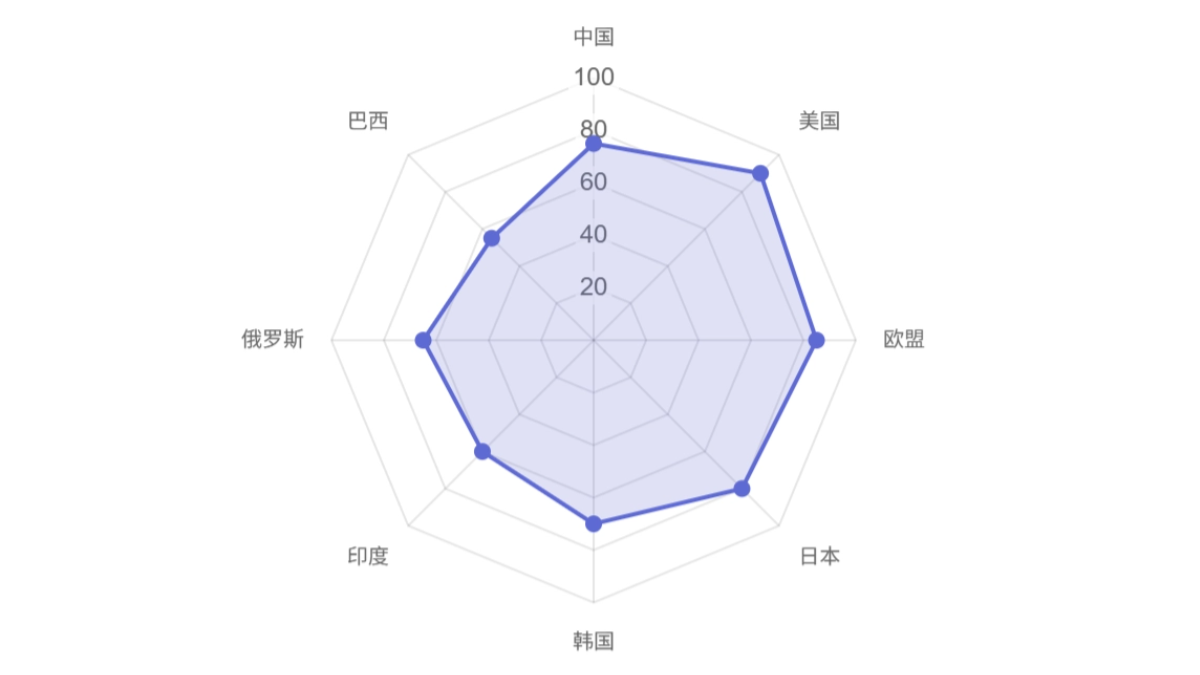
- Core Position: AI Cannot Be an Author: As of 2025, the mainstream position of the U.S. judiciary and the Copyright Office is very clear and firm:works generated entirely by artificial intelligence without sufficient human creative intervention are not protected by U.S. copyright law . The core logic is that copyright law has from the beginning been intended to protect and incentivizehumancreativity.
- Landmark Case: Thaler: The most classic manifestation is the famous "Stephen Thaler v. U.S. Copyright Office" (Stephen Thaler v. U.S. Copyright Office). Dr. Thaler is an AI scientist who developed an AI system called the "Creativity Machine." The system independently created an image titled "A Recent Entrance to Paradise." Thaler attempted to register copyright for the work, listing the author as the "Creativity Machine" and himself only as the owner of the work. The application was repeatedly rejected by the U.S. Copyright Office (USCO). Thaler sued the Copyright Office, and from the district court to the appellate court, the rulings were consistent. In March 2025, the U.S. Federal Court of Appeals issued a ruling explicitly supporting the Copyright Office's decision and reaffirming "human authorship is a basic requirement for copyright protection" . The judges held that the term "author" in copyright law, both historically and contextually, refers to humans. Allowing non-human entities to enjoy copyright would require explicit legislative amendment by Congress.
China: Embracing the Wisdom of "Human-Machine Collaboration"
In sharp contrast to the United States, Chinese courts have adopted an open and pragmatic attitude in judicial practice, tending to recognize the results of "human-machine collaboration."
- Core Position: Recognizing the User's Authorship Under Certain Circumstances: Chinese courts generally hold that the key to determining whether AI-generated content constitutes a work lies in examining whether it reflects creative intellectual input. In the process of using AI, users engage in creative conception, design, and selection, and the generated work can be recognized as a work of fine art protected by the Copyright Law, with the user regarded as the author of the work.
- Landmark Case: The First "AI Text-to-Image" Case of the Beijing Internet CourtIn the case, the plaintiff, Mr. Li, used the Stable Diffusion model to generate an ancient-style beauty image titled "Spring Breeze Brings Warmth" by inputting a large number of detailed prompts and setting complex parameters, and published it on social media. The defendant blogger, without permission, removed the plaintiff's watermark and used the image as an illustration in their own article. When hearing the "AI text-to-image" case, the Beijing Internet Court found that the intellectual labor in prompt design and parameter adjustment for the image at issue possessed originality and constituted a work of fine art, and that the plaintiff was the author and enjoyed copyright. The defendant used the work without authorization, infringing the plaintiff's right of authorship and right of communication through information networks, and was required to bear liability for making a formal apology and compensating losses.
- The far-reaching impact of the judgment:The judgment caused a huge response in China and even globally, clarifying that, on the premise of intellectual labor being invested, works created with AI can obtain legal protection. It encourages the application of AI technology in the cultural and creative industries and provides a clear judicial path for the adjudication of similar cases in the future.
The European Union and other regions: a "middle ground" still being explored
The legal framework of the European Union is in a "middle ground" between China and the United States. The EU copyright directives emphasize that a work should be "the author's own intellectual creation" (author's own intellectual creation). This leaves greater room for interpretation in case-by-case rulings. In EU countries, legal application and case law outcomes are not yet unified, and the region as a whole is still in a period of active legal exploration and adaptation.
A Creator's Guide in the AI Era: A Handbook on Copyright Ownership and Compliant Use
If I use AI to generate an image, who owns the copyright?
Based on the analysis in this report, a concise conclusion can be drawn:
- If in the United States: By default, purely AI-generated imagesare very likely not protected by copyright. To obtain copyright, one must prove that one has carried out extensive, creative secondary processing on the AI output (such as complex collage, extensive painting modifications, etc.), and the protection covers only the part of one's own contribution.
- If in China: As long as one can prove that sufficient "original intellectual input" was made during the creative process (such as detailed records of prompt conception, iterative adjustment process, final aesthetic choices, etc.),there is a very high possibility of being recognized as the author, enjoying the complete copyright in the image.
- In other regions: The situation is not yet clear, and a more cautious attitude is recommended.
Core recommendation: No matter where you are, be sure to keep good records of the creative process! This includes the original prompts, modified prompts, important parameter settings, iterative drafts of different versions, etc. When asserting rights in the future, this is the strongest evidence to prove one's "intellectual input."
Will AI painting infringe the copyright of original artists?
It mainly involves two links of AI, the "input end" and the "output end."
- Input end—disputes over training data: The training data of many AI models is suspected of using copyrighted works without authorization. As ordinary users, we cannot control the training behavior of AI companies.
- Output end—"style imitation" and "substantial similarity":
- Style imitation: Copyright law protects specific "expression," not abstract "style." Using AI to generate a painting in the "Van Gogh style,"does not constituteInfringement of Van Gogh's works. Similarly, imitating the style of a living contemporary artist may raise moral controversy, though it is difficult to be recognized as infringement under the law.
- Substantial Similarity: This is the true red line. If, through prompts, an AI is deliberately made to generate an image highly similar to a copyrighted work in composition, characters, or key elements, the generated image is very likely to constitute infringement.
How to use AI-generated art safely?
To minimize legal risk and enjoy the fun of creation, please refer to the following practical suggestions:
- Choose an AI service with "pure pedigree": Prioritize AI platforms that publicly commit to lawful and compliant training data. For example, Adobe's Firefly model explicitly states that its training data comes from the Adobe Stock image library, open-source, and public domain content. Getty Images has launched an AI generation tool trained on its own lawful image library, which can significantly reduce infringement risk on the input side.
- Exercise originality: Do not just use simple prompts. Fuse multiple unrelated concepts, design complex scenes and details, and create truly unique personal expression.
- Avoid direct replication: Never use AI to directly imitate or copy well-known copyrighted characters, brand logos, or specific artworks.
- Read the terms of service carefully: Before using any AI tool, spend a few minutes reading its user agreement. The terms will stipulate important information such as ownership of generated content and commercial use permissions.
Conclusion and Outlook: Toward a Future of Human-AI Co-creation
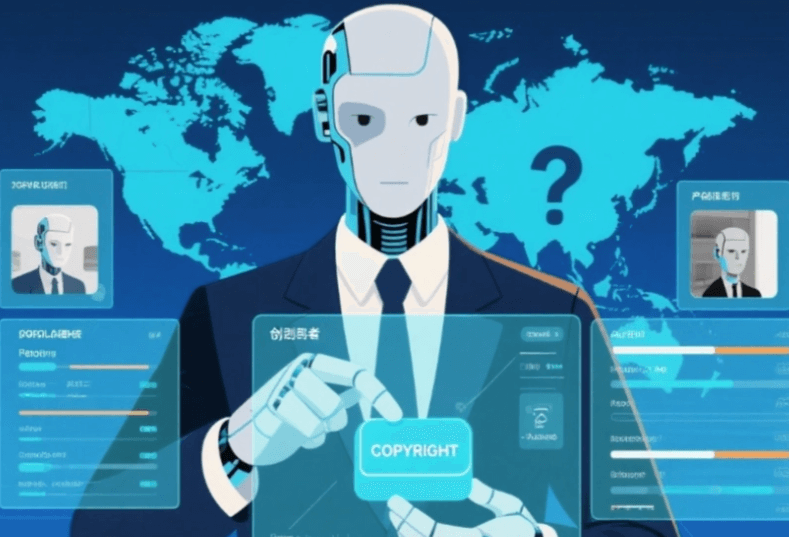
The copyright issue of AI-generated art is essentially a race between technological development and the legal system. At present, no unified legal consensus has formed globally, and judicial practice in various countries shows differentiated trends. The core dispute has always revolved around defining "human intellectual input" and "the role of AI tools." The complexity of the issue stems from the rapid iteration of AI technology and the lag of the legal system, making the boundaries of copyright protection blurry in AI-generated content.
In the future, AI-generated art will be more deeply integrated into the creative ecosystem, and the boundaries between law and technology will be continually redefined. As technology matures and the law evolves, AI-generated art will move from "controversy" to "regulation," ultimately achieving the healthy development of human-AI collaborative creation. The interaction among law, technology, and society will jointly promote the healthy development of AI-generated art and provide more diverse possibilities for the expression of human creativity.