
Introduction
Artificial Intelligence (AI) is becoming increasingly widespread in various industries, and the field of human resource management is no exception. Employment is the foundation of a business, and high-quality talent means competitiveness for the enterprise. From screening massive resumes to selecting and developing outstanding talent, and then to fair and reasonable performance evaluation, every step is full of challenges. How to manage talent more efficiently, accurately, and fairly has become a core issue of concern for many corporate HR (Human Resources) departments.
Through technologies such as data mining, machine learning, and natural language processing, AI is gradually penetrating every link, including recruitment, talent matching, and performance evaluation, greatly improving efficiency and inspiring entirely new development directions for human resource management. This article, in plain and accessible language, explains in detail for business managers and HR professionals without a technical background: how enterprises can use AI to optimize recruitment, talent matching, and performance evaluation processes, making human resource management more scientific, more intelligent, and more human.
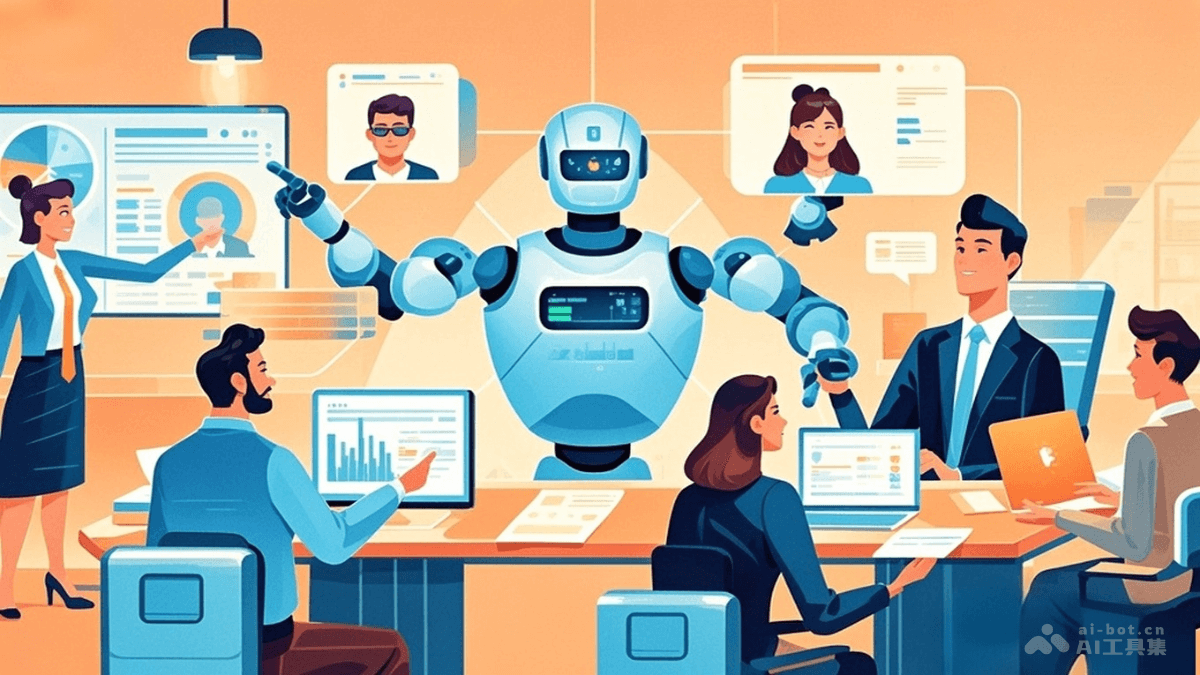
The Challenges of Traditional Human Resource Management
The Current State and Pain Points of Enterprise Talent Management:
- Low Recruitment Efficiency: Once a position opens, thousands of resumes are received. Screening requires a large amount of manpower and is prone to omissions and misselections.
- Difficult Talent Matching: Enterprises are not just short of a person; they are short of the "right person." Candidates who truly fit the position are difficult to find.
- Highly Subjective Performance Evaluation: Traditional performance assessments are heavily influenced by subjective impressions, making it difficult to fully reflect employees' abilities and growth potential.
- Wasted Training Resources: A one-size-fits-all training model often makes most people feel it "doesn't suit them," and the effect is greatly reduced.
- High Talent Turnover: If talent cannot be given important roles or feel room for growth, they are very likely to seek other opportunities.
Enterprises urgently need a more scientific, precise, and forward-looking management tool, and this is exactly the change that AI brings.
How AI Optimizes the Recruitment Process
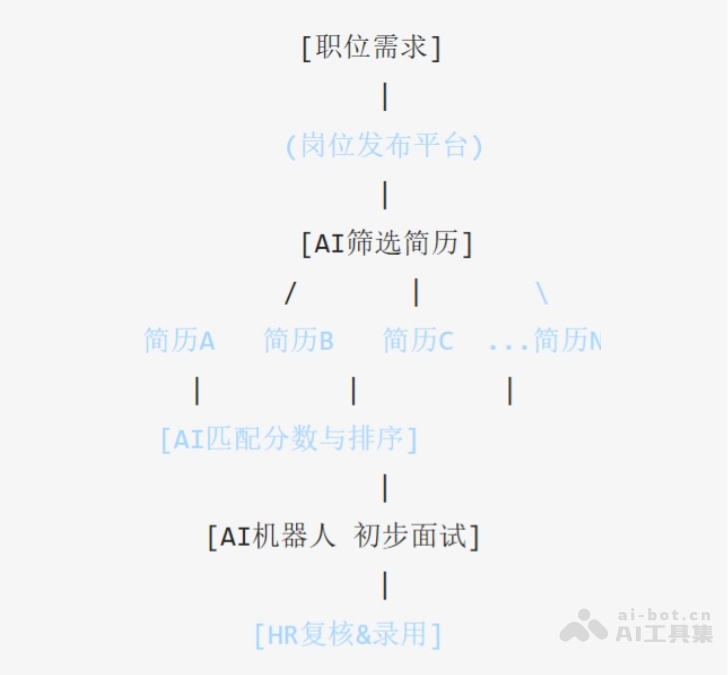
Intelligent Resume Screening
For corporate HR, initial resume screening is manual labor that consumes time and is prone to errors. AI can help HR automatically scan, analyze, and initially screen resumes, for example:
- Intelligent Semantic Recognition: It does not merely screen by keywords (such as "accounting," "three or more years of experience"); AI can automatically understand meanings such as "experience with financial statements."
- Automatic Scoring and Ranking: AI can automatically analyze the match between each resume and the position based on the job description, and provide scores and ranking suggestions. HR only needs to focus on high-scoring resumes, greatly saving time.
- Removing Bias: AI will not develop unconscious bias due to gender, age, or educational background, and can evaluate every candidate more fairly.
Intelligent Recommendation Matching
Relying only on resumes received through recruitment channels will miss many excellent or passive job seekers. Based on big data integration and talent profile modeling, AI can achieve:
- Matching Potential Candidates: Based on the excellent traits of the company's existing employees and historical success cases for the position, find market talent with similar characteristics.
- Mining Internal Resources: AI can analyze employees' past projects and capabilities, discover on-the-job employees who fit a position but were not originally within the scope of attention, and facilitate internal mobility and transfers.
- Automatic talent pool maintenance: Recommend resumes that were screened out but show good performance, add them to the talent pool, and automatically remind HR to pay attention when a suitable position arises in the future.
Automated interviews and chatbots
Initial interviews are time-consuming and standardized, with routine questions such as work experience, expected salary, and start date. AI interview robots can achieve:
- 24/7 candidate Q&A: Answer job-related questions, recruitment process questions, and more at any time, improving the candidate experience.
- Behavioral characteristic analysis: Based on video and voice interviews, AI can analyze a candidate's expression, emotions, and body language, and from this make a preliminary judgment of communication ability, confidence, and other qualities.
- Automated initial screening: The robot automatically scores based on predetermined questions and gives recommendation opinions, allowing HR to focus on in-depth face-to-face communication.
How AI helps talent matching and growth
Establish data-driven talent profiles
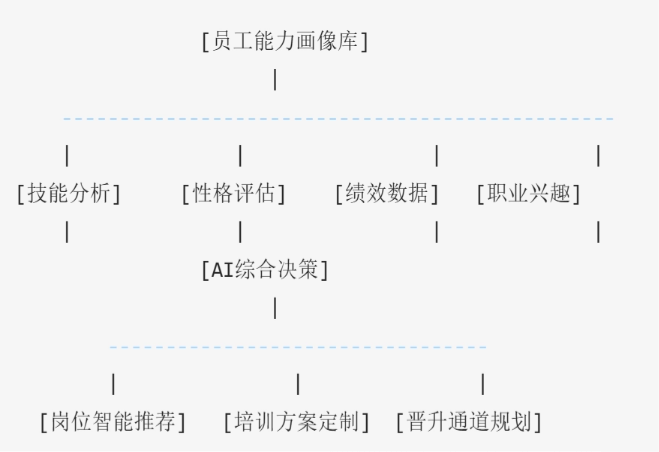
Traditional talent management stays at the level of judging seniority and educational background, and is not comprehensive. By analyzing employees' project experience, past performance, capability assessments, and daily behavior (such as email communication, project participation, etc.), AI can:
- Multidimensional three-dimensional talent profiles: Combine "what they can do" with "what they are good at," "how fast they grow," and "what styles of team projects they fit" to maintain the talent pool;
- Capability radar chart: Give managers an at-a-glance "talent capability map," making it convenient to identify, use, and develop people.
Scientific person-job matching
Matching positions and employees mainly relies on HR experience and employee self-recommendation, and mismatches easily occur. Through intelligent comparison of job requirements and talent profiles, AI can:
- Predict interview success rate and onboarding adaptability: Reduce the cost of trial and error;
- Encounter collaborator recommendations: For example, when a cross-department project needs a specific skill group, AI automatically recommends suitable internal candidates to form a "dream team";
- Potential position discovery: Identify which employees are suitable for promotion and which types of employees are more suitable for lateral transfers, letting employees see more directions for growth.
Intelligent training and career development
AI can combine talent profiles and external knowledge bases to automatically recommend the most suitable growth paths and training courses for employees. For example:
- Personalized training content push: Employee A's weakness is communication, while Employee B needs to improve professional skills. AI intelligently recommends, without wasting time and cost;
- Results tracking and feedback: Combine actual work performance after training, dynamically adjust the training plan, and keep people and job growth in sync.
AI optimizes the entire performance evaluation process
Intelligent multidimensional data collection, eliminating subjective bias
Performance evaluation fears relying on "impression scores," which can suppress employees who truly work hard. AI's strength in performance evaluation is reflected in:
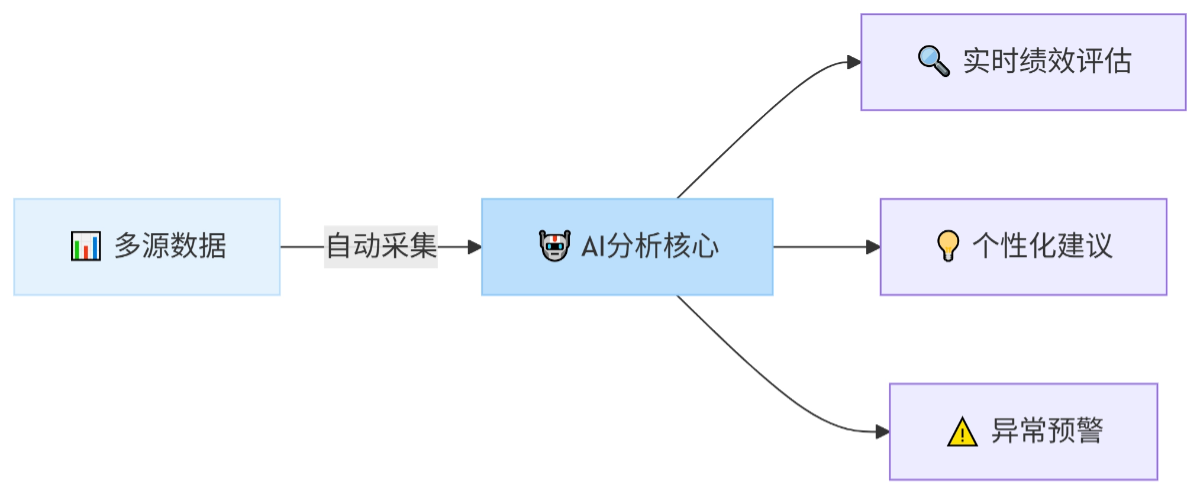
- Automatically integrate multi-source data: Work output, project scores, customer feedback, collaboration performance, management ratings, etc., forming a 360° comprehensive assessment;
- Real-time data tracking: Automatic reporting of employees' key work milestones reduces manual statistics, fraud, and oversight, and is based on facts.
Intelligent performance feedback drives continuous growth
Traditional performance reviews produce a single result, making it hard for employees to know their strengths and weaknesses and see a clear path for improvement. AI can optimize the feedback process:
- One-on-one intelligent suggestions: After the evaluation is completed, AI automatically generates concise, highly targeted feedback suggestions for each employee.
- Continuous tracking and dynamic adjustment: AI continuously collects employees' performance in new projects and new positions, intelligently adjusts employee growth goals, and avoids a one-size-fits-all evaluation approach.
- Linking performance and incentives: AI can integrate internal and external data to promptly recommend awards, promotions, and even special rewards for outstanding employees, making incentives more precise.
Early warning and talent retention
The other side of performance is promptly identifying employees' difficulties, such as consecutive low performance, low mood, and stalled growth. AI can:
- Early warning mechanism: Based on data models, it automatically alerts HR to pay attention when abnormal employee conditions are detected, such as a sudden sharp decline in a certain employee's high output, enabling timely coaching or care and preventing talent loss.
- Talent retention suggestions: Analyze employees' career paths and turnover risks, and propose targeted retention plans, such as lateral job rotation, adjusted incentives, and personalized training.
Architecture design for AI-empowered talent management
Data collection layer
The foundation must have abundant, authentic data. The data comes from:
- Within the enterprise: Resumes, interview records, attendance, performance evaluations, training records, and employees' daily behavioral data (such as project participation, email communication, etc.).
- External data: Industry talent pools, recruitment websites, social platform information, etc.
Data processing and cleaning layer
Raw data is often messy and disorganized. AI systems can standardize data formats, correct typos, and remove duplicate information to ensure that the analyzed data is usable and accurate.
AI intelligent analysis core layer
- Recruitment intelligent assistant: Automatically screen resumes, compare job requirements, prioritize, and recommend candidates.
- Talent matching engine: Through two-way matching between employee skills and job requirements, recommend the most suitable candidates.
- Performance evaluation and feedback: Real-time integration and analysis of multi-source data provides a scientific basis for performance scoring and growth suggestions.
Human-computer interaction display layer
To make it understandable and easy to use for HR leaders and employees, AI output results are presented through visual dashboards, reports, mobile apps, and other forms:
- Human resources: HR can intuitively see information such as the talent map, recruitment progress, and performance rankings.
- Employees: Employees can receive personalized growth suggestions and training recommendations.
Security and compliance assurance layer
All data must be stored encrypted, collected lawfully, and strictly authorized. Personal privacy rights must be fully protected and must meet relevant national and international data protection regulations.
With the support of artificial intelligence technology, enterprise human resource management is undergoing unprecedented transformation. From resume screening and candidate matching to performance evaluation and employee development, AI can accurately, efficiently, and objectively help enterprises identify and cultivate talent and improve the efficiency of recruiting and managing employees. Through data-driven decision-making, managers can fully understand employees' abilities and potential, tailor positions and training programs in a targeted way, and achieve optimal person-job matching. AI reduces human bias, lowers management costs, and makes processes more open and transparent. AI-empowered human resource management can enhance an enterprise's core competitiveness, provide employees with more development opportunities, and promote the shared growth of individuals and the organization.
Future Outlook
With the continuous optimization of AI algorithms and the increasing abundance of human resource data, the application of AI in the human resources field will tend toward greater intelligence and humanization. Future AI systems will place more emphasis on emotional understanding and personalized services, and can provide more suitable job recommendations and career planning based on employees' personalities, interests, and corporate culture. AI will further break through current technical bottlenecks, realize cross-departmental and cross-enterprise talent collaboration and sharing, and drive innovation in organizational management. Enterprises should actively adapt to technological innovation, pay attention to data privacy and ethical development, seize new opportunities for human-machine collaboration, and build a solid talent foundation for achieving sustainable, high-quality development.
Appendix: Frequently Asked Questions (FAQ)
Q1: Can ordinary small and medium-sized enterprises use AI recruitment and performance systems?
- Of course they can. Many human resources SaaS platforms today have introduced AI resume screening, talent profiling, and intelligent performance evaluation functions, and small and medium-sized enterprises can purchase them as needed and get started quickly.
Q2: Will employees resist AI systems?
- There may be psychological pressure at first. As long as the enterprise communicates well and lets AI become an assistant that helps them grow and get promoted, most employees will be happy to use efficient new tools.
Q3: Is collecting personal data compliant?
- Enterprises should ensure that they obtain employee authorization and protect data security strictly in accordance with relevant laws and regulations to prevent data from being misused or leaked.
Q4: Can AI replace the HR department?
- AI tools can only assist decision-making and cannot replace HR's soft skills such as emotional intelligence, judgment, and complex communication. The optimal model is "AI + HR" working in collaboration.