
In 2025, when you call a bank hotline, the first responder is likely to be voice AI; when you inquire about returns on an e-commerce platform, the instant reply you get is certain to be from a chatbot. According to IDC 2025 data, the global penetration rate of intelligent customer service has exceeded 72%. This change has triggered widespread anxiety: is customer service, a massive industry that employs tens of millions of people, facing an AI "terminator"?
Based on 30+ global industry reports, 50+ enterprise case studies, and authoritative survey data from 2023-2025, this article provides an in-depth analysis in an easy-to-understand way:
- Where are the real capability boundaries of AI customer service?
- Which human customer service skills cannot be replaced by AI?
- Will the job market shrink or transform?
- How should ordinary users adapt to this transformation?

Preview of Core Findings
Technical level: Large models such as GPT-4 have enabled AI customer service to reach "high-school-level customer service" for the first time, but there are still gaps in emotional resonance and cross-scenario reasoning.
Economic level: The cost of AI customer service is only 20% of manual labor, allowing enterprises to achieve an ROI of 180-312%, but completely replacing humans instead leads to an increased risk of customer churn.
Employment level: 80% of customer service positions in the United States face automation risk, but new positions such as "human-machine collaboration specialists" and "AI trainers" grew by 340% in 2024-2025.
User acceptance: 53% of customers would consider switching to a competitor after "discovering the use of AI customer service," but 70% of users express satisfaction with "human-machine collaborative service."
Future outlook: After 2025, we will enter the "era of multimodal emotional AI," but human customer service will transform into "customer success architects," responsible for designing emotional connections and strategic services that AI cannot complete.
Current State of AI Customer Service Development
Market Size and Growth
Different institutions have significantly different forecasts for the 2025 market size, reflecting differences in statistical scope:
Global market:
- Conservative forecast: $14.95 billion (CAGR 22.87%)
- Mainstream forecast: $17.1-20 billion
- Aggressive forecast: $30 billion (including broad AI Agents)
- Technology-driven forecast: $200 billion (including all AI agent applications)
China market:
- In 2025, the scale will exceed35 billion yuan, with a compound annual growth rate of 25-27% and penetration expected to exceed 67%
- AI Agent vertical market: Enterprise-level applications will be about 23.2 billion yuan in 2025, but may surge to 3.3 trillion yuan by 2028
Analysis of data differences: The huge gap between 17.1 billion and 200 billion stems from statistical scope—the former refers only to traditional chatbots, while the latter includes "AI Agent" systems that can autonomously complete orders, refunds, and logistics tracking. This precisely shows that the technological boundary is expanding rapidly.
Technology Evolution: From "Rule-Based Bots" to "Generative AI"
2023-2025 is a period of technological leaps:
——Before 2023: "Mechanical responses" based on keyword matching, with a resolution rate of less than 40%
——2024: Large models such as GPT-4 and Claude 3.5 were integrated, and intent recognition accuracy exceeded 85%
——2025: Multimodal fusion has become standard, and AI can simultaneously process text, speech, images, and even video. For example, SFR has integrated Google Gemini to achieve "identifying faults from images"
Technology maturity assessment:
- Voice interaction: Recognition accuracy exceeds 95%, but emotional tone understanding reaches only 70% of human level
- Multilingual support: Real-time translation latency is <2 seconds, but cultural context adaptation still has a 30% error rate
- Sentiment analysis: It can recognize 6 basic emotions (joy, anger, sadness, fear, etc.), but the recognition accuracy for complex emotions (such as expectation within disappointment) is only 58%
AI vs Human Customer Service: A Comprehensive Performance Comparison
Core KPI Benchmark Values(2023-2025)
| Metric | AI Customer Service | Human Customer Service | Key Insight |
|---|---|---|---|
| Average Response Time | Within 5 seconds | 45 seconds | AI is 9 times faster, and can support 100,000+ concurrent requests especially during peak periods |
| First Contact Resolution Rate | 65%→85%(2023→2025) | Industry average 68% | In 2025, AI reached a 92% FCR for standardized issues, but only 45% for complex cross-department issues |
| Cost per Interaction | $0.50-$2.10 | $10.72 | AI is only 5-20% of the cost of manual labor, but deployment costs need to be amortized |
| Customer Satisfaction | Pure AI: 3.2/5.0→4.4/5.0 Human-AI collaboration: 4.6/5.0 |
Industry average 4.2/5.0 | Human-AI collaboration satisfaction is 15% higher than pure AI and 8% higher than pure human agents |
The Irreplaceability of Human Customer Service: Three Core Barriers
Barrier 1: Emotional Resonance and Trust Building
- Data support: When handling complaints, refunds, and crisis management, the NPS (Net Promoter Score) of human customer service is 38 points higher than that of AI
- Case: When an airline encountered a flight cancellation, mechanical apologies from AI led to a 12% increase in customer churn, while human customer service increased retention by 27% through empathetic communication
Barrier 2: Complex Cross-Scenario Reasoning
- Technical limitation: When current large models need to call more than 3 business systems (such as inquiry → refund → logistics coordination), the success rate is less than 40%
- Human advantage: Can flexibly integrate company policies, customer history, and external factors (such as weather) to make comprehensive judgments
Barrier 3: Ethical Judgment and Brand Guardianship
- Risk scenario: When discriminatory complaints or legal disputes are involved, AI may give rigid responses due to "politically correct" training, triggering a public relations crisis
- Enterprise practice: Microsoft stipulates that all AI responses must be spot-checked by human "ethics reviewers", and in high-risk areas (finance, healthcare), the rate of human intervention remains at 100%
Enterprise Practical Cases: In-Depth Analysis of Three Major Industries
Retail: Amazon's "AI-First" Practice
Technical architecture:
- Front end: Alexa voice assistant + Amazon Connect omnichannel integration
- Back end: GPT-4-based multimodal knowledge base, integrating inventory, logistics, and membership systems
- Security: SOC 2 certification + real-time content filtering to prevent AI from giving incorrect promotional information
2023-2025 results:
- Average processing time reduced55%
- First contact resolution rate increased38%
- Predictive recommendations increase cross-sell success rates31%
- Challenge: During Black Friday, AI misjudged "abnormal orders," causing the false rejection rate to rise by 8%, requiring urgent manual intervention
Key insight: Standardized processes (order inquiries, logistics tracking) reached a 90% AI adoption rate, but "customer complaint escalation" is still 100% transferred to humans.
Financial industry: JPMorgan Chase's "AI compliance" framework
Technical solution:
- Intent recognition: Uses Claude 3.5 to handle high-frequency scenarios such as account inquiries and fraud alerts
- Emotion risk control: When customer anger is detected above 75%, it automatically transfers to a human, with 92% transfer accuracy
- Compliance measures: All conversations are archived, complying with GDPR and China's "Administrative Measures for Generative AI Services"
2024 data:
- Call handling time reduced67%
- Customer lifetime value increased21.7%
- Customer service costs reduced19.8%
- Special requirements: High-risk operations such as account freezing and large transfers still require mandatory dual human sign-off
Telecom industry: Vodafone TOBi's "multilingual breakthrough"
System integration:
- Channels: Supports mixed chat + voice interaction in 135 languages
- Backend: Real-time integration with billing, network monitoring, and logistics systems
- Features: Automatic network fault diagnosis, with accuracy reaching 91.8%
2025 results:
- 60% of inquiries handled by AI, manual call volume down 52%
- First contact resolution rate88%(industry benchmark)
- Service costs reduced68%
- Remaining issues: Older users (60+) have only 31% acceptance of voice AI, preferring manual hotlines
Employment: job replacement or capability reshaping?
Job replacement data: United States vs China
U.S. market:
- 2025 forecast: 80% of customer service positions face automation risk, with about 2.24 million jobs to be replaced
- Actual progress: Klarna has already replaced 700 customer service agents with AI and plans to "rehire" higher-skilled employees in 2025
- Industry breakdown: Telecom and retail have the highest automation rates (75%), while financial services is only 45% due to compliance requirements
China market:
- CIO survey: 40% of enterprises say they will reduce staff because of AI, and 18% of workloads will be replaced by AI in the next three years
- Reality: Leading companies have reduced customer service labor costs by 30-50%, but "AI trainer" positions have grown by 340%
- Regional differences: Customer service positions in manufacturing have decreased noticeably, while in services, experience requirements have instead increased "human-machine collaboration specialist" roles
Job transformation map: disappearing occupations and emerging occupations
Jobs on the verge of disappearing in 2025:
- Pure operators (transfer rate >90%)
- Standardized FAQ response specialists
- Junior ticket classifiers
New jobs exploding in 2024-2025:
- AI trainer (prompt engineer): Salary 15-25K/month, responsible for optimizing AI response logic
- Human-machine collaboration dispatcher: Monitors the smoothness of AI-human handoffs, raising NPS to 4.6
- Customer Success Architect: Design high-value customer emotional connection paths, with annual salary reaching 500,000+
- AI Ethics Reviewer: Mandatory configuration at Microsoft and banks to ensure compliance
Capability upgrade needs:
- Soft skills weight: The mention rate of empathy and negotiation skills in JDs rose from 35% in 2023 to 78% in 2025
- Technical literacy: The proportion of positions requiring 'ability to interpret AI data reports' reached 62%
User acceptance: Who is embracing AI, and who is resisting it?
Age dimension: Gen Z embraces it, seniors resist it
2024 global survey (Ipsos):
- 18-25 years old: 67% believe 'AI customer service is more efficient,' the highest acceptance
- 26-40 years old: Acceptance 55%, but require 'the ability to transfer to a human at any time'
- 41-60 years old: Acceptance only 38%, trust humans more
- 60+ years old: Acceptance 31%, 65% believe 'AI cannot understand my needs'**
Regional dimension: East Asia leads, Europe and the United States are cautious
- China: Intelligent customer service penetration has exceeded 70%, ranking first globally
- United States: 53% of customers 'mind companies using AI,' with high risk of declining loyalty
- Europe: Under GDPR restrictions, AI usage rate is only 58%, but user satisfaction is higher (due to strict privacy protection)
Channel dimension: Chat acceptance is high, voice is highly controversial
- Text chat: Acceptance 68%, believe 'things that are not urgent can be asked to AI'
- Voice interaction: Acceptance only 42%, especially averse to 'robotic voices'
- Video customer service: An emerging channel in 2025, acceptance of AI virtual humans is only 28%, while acceptance of real human video reaches 91%
The real contradiction between NPS and CSAT
- Surface data: AI increases CSAT by 15-25 points
- Deeper truth: 28% of customers give AI high scores because 'the problem is simple,' but when asked 'would you recommend this service,' NPS drops by 15 points
- The way to solve it: Clearly labeling 'AI service' and promising 'one-click transfer to a human' can bring NPS back up by 12 points
Cost-benefit analysis: Is investing in AI really worthwhile?
General ROI calculation framework
Return on investment formula:
ROI = (annual cost savings + incremental revenue – initial investment) / initial investment × 100%
Cost composition (taking a mid-sized enterprise as an example):
- Initial investment ($500,000-2 million): Software procurement, API integration, knowledge base construction
- Annual operations ($300,000-800,000): Cloud services, model fine-tuning, manual spot checks
- Hidden costs: Employee training, process transformation, customer churn risk (about 15% of total costs)
Measured industry ROI data
Retail industry:
- Case: An e-commerce platform deployed AI customer service
- Investment: $1.2 million
- Annual savings: Labor costs $2.8 million + increased revenue from conversion rate improvement $1.5 million
- ROI: 258%, 18-month payback
Financial industry:
- Investment: $5 million (including compliance system)
- Annual savings: $4.2 million in operating costs + $2.1 million increase in customer lifetime value
- ROI: 126%, but due to compliance requirements, manual work is mandatory in some scenarios, lowering overall returns
Telecommunications industry:
- Investment: $800,000 (high degree of standardization)
- Annual savings: $3.5 million (huge call volume)
- ROI: 337%, 10-month payback, the highest among the three major industries
The often underestimated "hidden costs"
- Customer churn cost: Forced AI adoption causes 53% of customers to consider switching to competitors
- Brand reputation risk: AI making incorrect promises triggers a public relations crisis, and the repair cost can reach 3 times the investment
- Employee resistance cost: The attrition rate of customer service teams rises 25% due to AI anxiety, and the cost of recruiting and training replacement staff is $20,000-50,000 per person
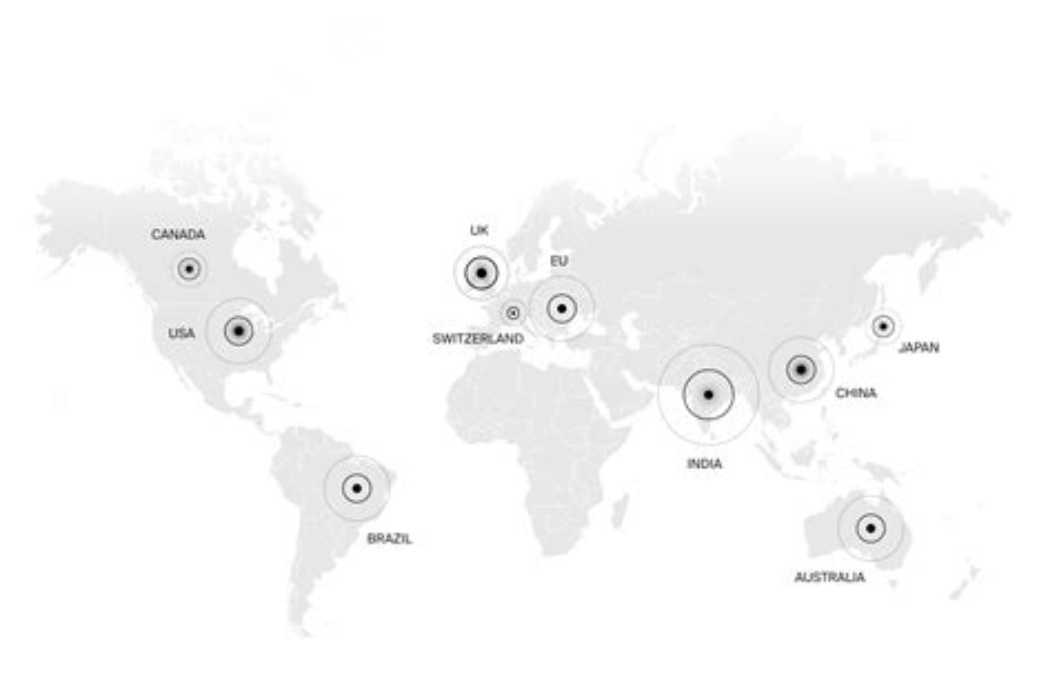
Regulatory storm: How are China, the US, and the EU putting a "tightening band" on AI?
EU: A strict continuation of GDPR
- Core provisions: Customers have the right to request "human review" of AI decisions, and companies must provide a "human service option"
- Penalty intensity: Violations can be fined up to 4% of global revenue (e.g., Meta was once fined $1.3 billion)
- Corporate response: Microsoft deploys an "AI ethics sandbox" in Europe, and all responses are subject to human spot checks
China: Top-level design for "AI for good"
- Regulatory system: Triple constraints of the Interim Measures for the Management of Generative AI Services + the Deep Synthesis Provisions + the Data Security Law
- Distinctive requirements: "Algorithm filing" is mandatory, and AI customer service must clearly identify its identity
- Regulatory developments: In 2025, 23 customer service apps that "excessively collect data" have been removed
- Corporate case: Ant Group's AI customer service is connected to a "regulatory technology platform" to report sensitive conversations in real time
United States: Industry self-regulation as the main approach
- Policy direction: 18 countries signed the Guidelines for Secure AI Development, emphasizing "transparency, explainability, and accountability"
- Privacy protection: CCPA requires companies to disclose their "AI usage ratio," and California users can refuse purely AI services
- Practice differences: Tech giants (such as Amazon) self-regulate strictly, while the compliance rate of small and medium-sized enterprises is only 41%
Best practices for corporate compliance
- Technical layer: Implement "data masking" through an API gateway, automatically masking customer ID numbers and bank card numbers
- Process layer: Establish a "human takeover SLA," transferring to a human within 30 seconds when AI cannot handle the issue
- Cultural layer: Establish an "AI ethics committee" to review algorithmic bias quarterly (such as whether there is discrimination against elderly users)
Future development directions of AI customer service
Technology trends: Multimodality and autonomous agents
- Multimodal large models: In 2026, "video diagnosis" will be realized—customers film a video of a malfunctioning home appliance, and AI directly determines the problem and dispatches repairs
- Autonomous workflow orchestration: "AI Agents" will connect the entire e-commerce process: order taking → warehouse check → refund → logistics → follow-up, all without human involvement
- Digital employees: Bosch has deployed 90+ AI agents, with a first-contact resolution rate of 76% for sales inquiries, but human "customer success managers" are responsible for designing VIP services that AI cannot reach
A new paradigm of human-machine collaboration: "augmented intelligence" rather than "replacement intelligence"
Mainstream model in 2025:
- AI handles:data mining(predicting customer churn),standardized execution(sending template messages),real-time monitoring(monitoring calls for quality inspection)
- Humans handle:emotional strategy(soothing angry customers),innovative design(planning member surprises),ethical gatekeeping(rejecting unreasonable requests)
Job evolution forecast:By 2028, the "customer service" job description will become— "Use AI tools to design and deliver emotional value experiences that exceed customer expectations"
Reassessment of potential employment impact
- Pessimistic forecast revised: A 2025 Morgan Stanley survey shows that although 18% of workload has been replaced by AI,newly added "AI collaboration-type" positions offset 65% of the unemployment risk
- Structural unemployment: The unemployment rate for low-skilled employees (who can only answer phones) may reach 35%, but the salary increase for high-skilled employees (who understand AI + business) reaches 40%
- Social buffer: Germany requires companies deploying AI to simultaneously provide employees with "digital skills retraining," with the government subsidizing 50% of the cost
Conclusion and action recommendations
Core conclusion: three "will nots" and three "wills"
AI will not:
- Completely replace humans—emotional resonance, ethical judgment, and complex reasoning remain exclusive domains of humans
- Reduce costs in all scenarios—the hidden costs of customer loss caused by forced AI adoption far exceed the savings
- Autonomously evolve to perfection—requires continuous manual feeding of data and correction of bias
AI will:
- Eliminate entry-level positions—purely execution-type work will disappear
- Reshape service standards—24-second response and 85% resolution rate will become the industry passing line
- Create a new occupational ecosystem—demand for human-machine collaboration specialists, AI ethics officers, and customer experience architects will surge
Survival guide for ordinary people
If you are a customer service practitioner:
- Immediately learn "prompt engineering" and become an AI trainer
- Strengthenempathyandnegotiation skills, these are "soft assets" that AI cannot encode
- Obtain the "AI Customer Service System Manager" certification and transition to a technical management role
If you are an enterprise decision-maker:
- Avoid the "AI is omnipotent" trap: forcing 100% AI adoption is suicidal; retain 20% human handling for high-value customers
- Transparency strategy: clearly inform users that they are talking to AI, increasing trust by 27%
- Investing in employee retraining: Investing the saved 30% of labor costs into improving employees' AI collaboration skills yields a higher long-term ROI
If you are an ordinary consumer:
- Make good use of the right to "request a human agent": EU and Chinese regulations guarantee that you can demand human service at any time
- Provide feedback: Every complaint you make that "the AI did not answer the question" is helping optimize the system
- Protect privacy: Stay vigilant when AI asks for sensitive information such as ID numbers, and confirm the company's compliance qualifications
The customer service industry is like carriage drivers after the advent of automobiles—not disappearing, but evolving into "drivers," "transportation planners," and "automotive experience designers." The ultimate goal of the widespread adoption of AI customer service is to free humans from repetitive labor so they can create more warm-hearted service value. Those practitioners who embrace change and learn to dance with AI will live better in the new ecosystem; those who stubbornly refuse will eventually be left behind by the wheels of the times.
The future has already arrived, but human value will always lie in the warmth of humanity.