
The wave of artificial intelligence is sweeping the globe, and the "engine" driving it all, AI computing power, has become the core infrastructure of the intelligent era. From the training of trillion-parameter large models to the real-time decision-making of autonomous vehicles, none of it is possible without the support of powerful computing capability. This article systematically explains the nature and impact of AI computing power: from technical principles to the hardware ecosystem, from industry applications to market scale, from current challenges to future trends. It focuses on the technical metrics of computing power, on how it reshapes the industrial landscape and pushes the boundaries of innovation, and on the real challenges it faces such as energy consumption and security. To understand AI computing power is to understand the technological foundation and future direction of the intelligent era.
What Is AI Computing Power?
Definition
AI computing power refers to the overall computational capability that drives artificial intelligence models to learn from data and make decisions. It is quantified as the speed and scale of executing floating-point operations (especially core AI operations such as matrix multiplication), and is a key metric for measuring the performance of AI systems. This capability is not provided by a single piece of hardware; it is a complex system realized through the collaboration of computing chips (such as CPUs, general-purpose GPUs, and dedicated AI chips TPU/NPU), high-speed memory, large-scale cluster networks, and software stacks. It runs through the entire lifecycle of AI: in the training phase, computing power determines the efficiency with which a model learns from massive data and the scale it can reach; in the inference phase, computing power directly affects the speed and cost of application responses.
Core
The core of AI computing power is the "brute-force computation" and efficient system capability required to process massive data and complex models. The essence of deep learning is fitting highly complex functions (models) through large amounts of data. The surge in model parameter counts (such as GPT-3's 175 billion) and training data volumes (TB or even PB scale) has caused computing demand to expand exponentially. True core computing power requires not only that chips have extremely high theoretical computing power (such as TFLOPS), but also that this computing power can be efficiently applied to actual tasks: this includes large-scale parallel computing to handle millions of computational tasks simultaneously, extremely high memory bandwidth (such as HBM) to prevent data supply from becoming a bottleneck, and advanced interconnect technologies (such as NVLink) to enable the coordinated work of tens of thousands of chips, forming a powerful single virtual computer. AI computing power is the primary physical prerequisite and decisive constraint for breaking through the current ceiling of AI capabilities and achieving more intelligent and more general artificial intelligence.
The Importance of AI Computing Power
One of the Three Pillars of AI Development
In the artificial intelligence technology system, data, algorithms, and computing power together constitute the three fundamental pillars, and the three are interdependent and evolve in coordination.
Data is the "fuel" of AI, providing the raw material for models to learn and optimize;
Algorithms are the "brain" of AI, determining the logic and methods by which models extract patterns and knowledge from data;
Computing power is the "engine" that drives it all, the physical computational capability that transforms massive data and advanced algorithms into actual intelligence.
Without sufficient computing power support, even the largest datasets and the most ingenious algorithms cannot train an effective model within an acceptable time. For example, training a modern large language model often requires deploying tens of thousands of high-performance AI chips for months of continuous computation. Breakthroughs in computing power can greatly shorten R&D cycles, making it possible to explore deeper and more complex neural network architectures, and directly driving algorithmic innovation and evolution.
Driving the Growth in Scale and Complexity of AI Models
The exponential increase in AI computing power is the core driving force behind the explosive growth in model scale and complexity. Following the "scaling laws," model performance improves predictably as the number of parameters, the amount of training data, and the amount of computation used increase. From early models with only a few million parameters to today's giant models with hundreds of billions or even trillions of parameters (such as the GPT series), every leap in scale has directly depended on the leapfrog development of computing infrastructure. To meet demand, ultra-large-scale intelligent computing centers are being built at an accelerating pace worldwide. A powerful computing foundation enables researchers to break through the limitations of traditional models, experiment with more advanced and more complex architectures such as Mixture of Experts (MoE) and novel attention mechanisms, and continuously explore the boundaries of AI capabilities.
Accelerating the deployment and application of AI technology across industries
Powerful AI computing power is a key enabling factor for AI technology to move from the laboratory to thousands of industries and achieve broad deployment. AI applications include two major stages, training and inference; the latter relies on stable, efficient, and economical computing support to deploy trained models into real-world scenarios. In fields with extremely high requirements for real-time performance and reliability, such as autonomous driving, real-time financial trading, industrial quality inspection, and smart healthcare, powerful edge computing power or cloud computing power is the fundamental guarantee that a system can process sensor data in real time and make precise decisions. With the maturity of cloud computing services and the widespread adoption of specialized AI hardware, the cost and threshold for obtaining powerful computing power have been greatly reduced. Computing power has become a public service as easily accessible as water and electricity, enabling a broad range of small and medium-sized enterprises and even individual developers to afford the cost of AI research and applications. The trend toward democratization of computing power has greatly accelerated the penetration of AI into areas such as financial risk control, smart manufacturing, smart retail, and personalized education, improved the operational efficiency and intelligence level of various industries, and spawned entirely new product and service models.
The Technical Principles and Hardware Composition of AI Computing Power
Technical Principles
Neural Network Computation Process
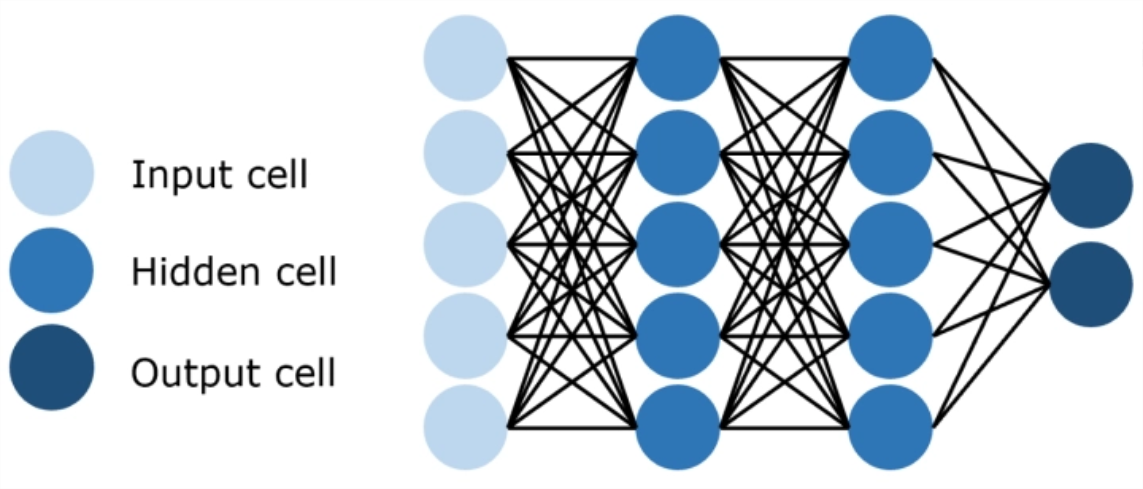
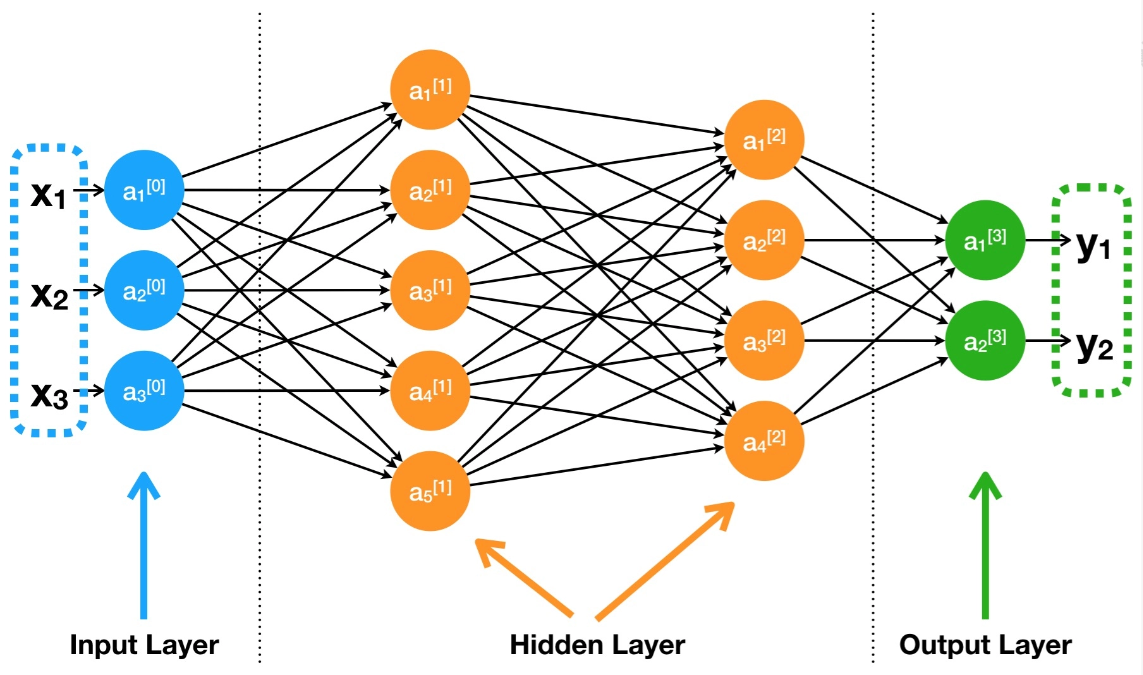
AI computing power is mainly used to execute the forward propagation and backpropagation of neural networks. Forward propagation transforms input data into predicted output through layer-by-layer weighted computation and nonlinear transformations, with dense matrix multiplication at its core. Backpropagation, based on prediction error, uses the chain rule to calculate from back to front each parameter's contribution to the error (gradient), and updates the model parameters accordingly. The entire training process is the repeated iteration of these two steps, and the enormous volume of matrix operations constitutes the fundamental source of AI computing power demand.
Parallel Computing and Matrix Operations
The efficiency of AI computation stems from the fact that its core is highly parallelizable matrix/tensor operations. The computation of each layer in a neural network can be transformed into large-scale matrix multiplication, and the computations of different elements within a matrix or different samples are mutually independent. Therefore, specialized hardware such as GPUs and TPUs adopts the SIMD (Single Instruction, Multiple Data) architecture, integrates thousands of computing cores, can execute a large number of identical simple operations synchronously, and uses specialized tensor cores to accelerate matrix multiplication at the hardware level, achieving extremely high computational throughput.
Differences in Computing Power Requirements Between Training and Inference
Training and inference place different emphases on computing power requirements. Training requires extreme computing power, performing high-precision, long-cycle iterative computation including backpropagation on clusters, with the aim of optimizing model parameters; inference pursues efficiency and requires a single forward propagation, but must meet the requirements of high throughput (cloud) or low latency and high energy efficiency (edge/terminal). With the spread of AI applications, the total computing power demand for inference is growing rapidly, approaching or even surpassing training.
Core Hardware
GPU (Graphics Processing Unit)
GPUs are currently the most widely used AI computing hardware. Having evolved from graphics processors, they leverage a massively parallel architecture with a huge number of compute cores and high memory bandwidth, perfectly matching deep learning's demand for matrix operations. Dominated by NVIDIA (NVIDIA), the CUDA computing platform and dedicated Tensor Cores it provides have further consolidated the GPU's dominant position in the fields of AI training and inference. Through technologies such as NVLink, multi-GPU interconnection is achieved, supporting ultra-large-scale cluster computing.
TPU (Tensor Processing Unit)
The TPU is an application-specific integrated circuit designed by Google specifically for machine learning. At its core is a huge systolic array matrix multiplication unit, optimized specifically to accelerate tensor operations in neural networks. The TPU's greatest advantage lies in its extremely high energy efficiency ratio; when executing specific AI tasks, its performance-per-watt is significantly better than that of GPUs. The TPU is deeply integrated with Google's software ecosystem (such as TensorFlow), is mainly deployed on Google Cloud, and serves its internal AI applications as well as the training and inference of large models.
FPGA (Field-Programmable Gate Array)
An FPGA is a semiconductor device with programmable hardware, whose logic circuits can be configured according to requirements. In the AI field, the advantages of FPGAs lie in their high degree of flexibility and customization capability, as well as low latency and high energy efficiency. They are very suitable for scenarios such as rapid algorithm iteration, optimization for specific models, and extremely high real-time requirements (such as edge inference). However, development requires hardware expertise, and the threshold is relatively high, which limits widespread adoption.
ASIC (Application-Specific Integrated Circuit)
An ASIC is a chip customized to perform specific tasks, and once the hardware circuit is manufactured, it is fixed. In the AI field, ASICs (such as TPUs, which belong to this category) represent the ultimate form of extreme optimization for performance, energy efficiency, and cost, and are designed for mature AI scenarios deployed at large scale. The disadvantage is a lack of flexibility, high R&D costs, and long development cycles. Once the algorithm undergoes major changes, it may become obsolete; therefore, it is suitable for markets where algorithms are stable and demand is huge.
Application Scenarios and Market Size of AI Computing Power
Application Scenarios of AI Computing Power in Various Industries
Healthcare
AI computing power is profoundly transforming the healthcare sector, with application scenarios covering the entire process from disease diagnosis and treatment to drug development.
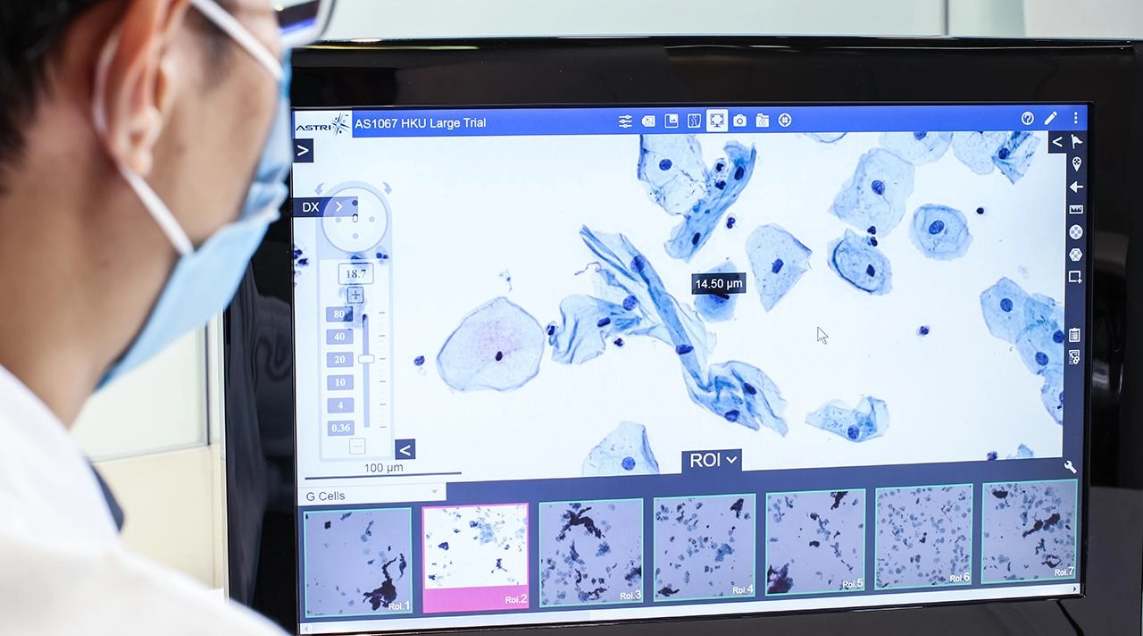
- In assisted diagnosis, AI models analyze massive amounts of medical imaging data (such as CT, MRI, and X-ray images) and can identify early lesions with extremely high accuracy, assisting doctors in diagnosis. For example, AI-driven medical image analysis can accelerate the early detection of diseases such as cancer and improve the accuracy and efficiency of diagnosis. In addition, AI plays an important role in formulating personalized treatment plans. By analyzing patients' genomic data, medical history, and lifestyle habits, AI tailors the most effective treatment plans for patients, enabling precision medicine.
- In the field of drug development, the application of AI computing power has greatly shortened R&D cycles and reduced costs. The traditional drug discovery process is time-consuming and expensive. AI can rapidly screen potential drug targets and candidate compounds by analyzing massive amounts of biomedical literature and compound databases. AI models can simulate the interactions between drugs and the human body, predict drug efficacy and side effects, and eliminate large numbers of ineffective candidate drugs before they enter clinical trials. For example, AI tools developed by IBM Watson Health can analyze massive amounts of medical data and provide insights for drug development. Behind these applications, powerful AI computing power is needed to support the processing and analysis of massive and complex data.
Finance
The financial industry is one of the fields where AI computing power is most widely and deeply applied. Core application scenarios include intelligent risk control, quantitative trading, and personalized financial services.
- In intelligent risk control, AI models can analyze massive amounts of transaction data in real time, identifying abnormal transaction patterns and potential fraudulent behavior. For example, banks and payment platforms use AI algorithms to determine within milliseconds whether a transaction carries risk, effectively preventing credit card theft, money laundering, and other financial crimes. AI can also analyze multidimensional data such as users' credit history and spending behavior to build more accurate user profiles for credit approval and risk assessment, enabling dynamic, personalized credit limit management.
- In the field of quantitative trading, AI computing power is even more indispensable. Quantitative funds use AI models to analyze massive amounts of market data, news information, and social media information, uncovering complex patterns and trading signals that are difficult for humans to discover, and automatically executing trading strategies. High-frequency trading firms such as Renaissance Technologies and Citadel rely precisely on powerful AI computing power and complex algorithmic models to obtain excess returns in the market. In addition, AI-driven Robo-Advisors provide automated, low-cost asset allocation recommendations based on clients' risk preferences and financial goals, enabling ordinary investors to enjoy professional investment services.
Manufacturing
AI computing power is driving the manufacturing industry toward intelligent and automated transformation, with intelligent quality inspection and predictive maintenance being the two most representative application scenarios.
- In terms of intelligent quality inspection, traditional production lines rely on manual visual inspection, which is inefficient and prone to errors. AI quality inspection systems based on computer vision use high-definition cameras and AI models to conduct uninterrupted 24/7 automated inspection of products, identifying tiny flaws and defects with accuracy and efficiency far exceeding manual work. For example, in industries such as semiconductors, automobiles, and electronics, AI quality inspection has become an important means of ensuring product quality.
- Predictive maintenanceis another major manifestation of AI's value in manufacturing. Traditional equipment maintenance models are usually regular maintenance or repair after failure; the former may cause unnecessary waste, while the latter leads to production interruptions and huge losses. AI predictive maintenance systems install sensors on equipment to collect operating data in real time (such as temperature, vibration, pressure, etc.), use AI models to analyze this data, predict possible equipment failures, and issue warnings in advance. Enterprises can schedule maintenance before equipment fails, minimizing unplanned downtime and improving equipment utilization and production efficiency. In addition, AI plays an important role in optimizing supply chain management, automating production processes, and improving energy efficiency, helping the manufacturing industry achieve cost reduction, efficiency improvement, and sustainable development.
Other Fields
In addition to the above industries, AI computing power plays an important role in many fields such as autonomous driving, natural language processing (NLP), and computer vision (CV).
- In the field of autonomous driving, AI computing power is key to a vehicle's perception of the environment, decision-making, and driving control. Vehicles need to process data from sensors such as cameras, LiDAR, and millimeter-wave radar in real time and perform complex computations such as object detection and path planning, placing extremely high demands on the real-time performance and reliability of computing power.
- In the field of natural language processing, AI computing power supports the training and inference of large language models, enabling machines to understand and generate human language and realize functions such as intelligent question answering, machine translation, and text generation.
- In the field of computer vision, AI computing power enables machines to recognize and understand images and videos, realizing functions such as facial recognition, object detection, and scene understanding.
Applications in these fields all place enormous demands on AI computing power. For example, training an autonomous driving model requires processing PB-level data and performing trillions of calculations. Training and inferring a large language model consumes enormous computing resources. With the continuous development and application of technology, the demand for AI computing power will continue to grow. Therefore, continuously improving the performance and energy efficiency of AI computing power is key to driving technological progress and widespread application in these fields.
Market Size and Trends of AI Computing Power
Global AI Computing Power Market Size and Growth Forecast
The global AI computing power market is experiencing unprecedented high-speed growth, with both market size and demand showing exponential increases. According to a report by Straits Research, the global computing power market size reached 238.9 billion USD in 2024, is expected to grow to 254.7 billion USD in 2025, and will further expand to 620.5 billion USD by 2033, with a compound annual growth rate (CAGR) of 11.5% during the period. This growth is mainly driven by strong demand for high-performance processing capabilities in fields such as artificial intelligence, big data analytics, cloud computing, and edge computing. Among these, AI model training, especially the rapid adoption of large language models (LLMs) and generative AI systems, is the primary driver of computing power demand growth.
From a hardware perspective, high-performance GPU servers held the largest market share in 2024, thanks to their critical role in workloads such as AI training, scientific computing, and simulation. From the application side, technology giants (such as AI startups, SaaS companies, and hyperscale data center operators) are the largest consumers of computing power. Analysis by Epoch AI points out that the growth rate of AI computing demand even exceeds Moore's Law; over the past decade, the computing demand of AI models has grown by about 4-5 times per year. Explosive demand growth indicates that the global AI computing power market will continue to maintain strong growth momentum over the next decade.
Current Development Status and Potential of China's AI Computing Power Market
As the world's second-largest economy, China's AI computing power market is showing enormous development potential and growth vitality. According to official data, as of June 2025, China's intelligent computing power scale had reached 788 EFLOPS, a significant increase compared with 90 EFLOPS at the end of 2024, and the proportion of intelligent computing power in the country's total computing power rose to 32%. The rapid growth benefits from the country's strong promotion of the "new infrastructure" strategy and domestic enterprises' active布局 in the field of AI large models. For example, technology giants such as Baidu, Alibaba, Huawei, and DeepSeek have successively launched their own large model products and continued to iterate and upgrade them, greatly stimulating demand for AI computing power.
Market data shows that in 2024 China's AI computing market size reached 19 billion USD, a year-on-year increase of 86.9%. IDC predicts that by 2028, China's AI server market size is expected to reach 55.2 billion USD, and the compound annual growth rate (CAGR) from 2024 to 2028 will reach an astonishing 30.6%. The construction of China's computing power infrastructure is also accelerating. By mid-2025, China had deployed 10.85 million standard server racks, with storage capacity exceeding 1680 EB. With the widespread application of AI technology in industries such as finance, healthcare, manufacturing, and autonomous driving, as well as the prosperity of the open-source large model ecosystem, China's AI computing power market is expected to continue maintaining high-speed growth and become an important engine for global AI computing power development.
Analysis of the AI Computing Power Industry Chain
The AI computing power industry chain is a vast and complex ecosystem, covering everything from core technologies and hardware manufacturing in the upstream, to system integration and service provision in the midstream, and then to diversified applications in the downstream. The upstream is the foundation of the entire industry chain, mainly including semiconductor materials and equipment, chip design and manufacturing. It is mainly dominated by a few international giants, such as NVIDIA, AMD, Intel, etc. Chips are the core of AI computing power, and their performance directly determines the computing capability of the entire system. The midstream segment mainly includes the manufacturing of AI servers and data center hardware, as well as the system integration of supercomputing centers and cloud server clusters. Enterprises in this segment integrate upstream chips and other hardware components into complete computing systems and provide them to downstream customers. The main participants include server manufacturers (such as Lenovo and Inspur), cloud service providers (such as AWS, Azure, Google Cloud, and Alibaba Cloud), and professional data center operators. The downstream is the final application scenario of AI computing power, covering almost all industries such as cloud computing, big data, autonomous driving, intelligent manufacturing, healthcare, and finance. These industries use powerful AI computing power to develop and deploy various AI applications, improve efficiency, reduce costs, and create new business value.
The Challenges and Future of AI Computing Power
Energy Efficiency and Sustainable Development Issues
The High Energy Consumption Challenge of AI Computing Power
The high energy consumption of AI computing power has become a core bottleneck in its development. As model parameters and training data grow exponentially, computing demand increases by about 4-5 times per year, far exceeding the linear improvement in hardware energy efficiency (26%-40% annually), creating a huge "energy consumption scissors gap." It is predicted that by 2030, the global power demand generated by AI in data centers will reach as high as 156 gigawatts (GW), bringing enormous energy and environmental pressure and forcing the industry to seek systemic energy-saving solutions.
Green Computing and Energy Efficiency Optimization Technologies
To address the high energy consumption challenge, comprehensive optimization is needed at the hardware, software, and system levels.At the hardware level, chip energy efficiency is improved by adopting advanced processes, dedicated low-power architectures, and low-precision computing (such as FP8).At the software level, technologies such as model quantization and pruning are used to reduce model size and computational load.At the data centerlevel, PUE (Power Usage Effectiveness) is reduced through liquid cooling technology, optimized power supply, and the use of renewable energy. For example, China Mobile has set the design PUE target for newly built data centers at below 1.3.
Exploration of Sustainable Development Paths
To achieve the long-term sustainable development of AI computing power, it is necessary to explore jointly from technology, policy, and application models. The fundamental technical aspect lies in continuous innovation, exploring entirely new low-power paradigms such as neuromorphic computing and quantum computing. In terms of policy, it is necessary to formulate energy efficiency standards and encourage the use of green energy. In terms of application models, promote the decentralization of computing by migrating some inference tasks to terminal devices to reduce energy consumption from data transmission. At the same time, track the carbon footprint of AI applications through tools to raise green awareness across the entire industry.
Implementation Challenges and Opportunities in Specific Industries
Healthcare Industry
The primary challenge for AI implementation in the healthcare field is data security and privacy protection. Medical data (such as medical records, images, and genetic information) is highly sensitive, and centralized training can easily trigger leakage risks. For example, the U.S. company Confidant Health once leaked 5.3TB of mental health data due to a configuration error. An IBM report shows that the average cost of a data breach in the healthcare industry is as high as $9.77 million, the highest among all industries. This requires the adoption of privacy computing technologies such as federated learning to realize value mining under the premise of protecting data privacy.
Financial Industry
The core challenges of applying AI in the financial industry (such as risk control and quantitative trading) lie in model interpretability and regulatory compliance. Complex deep learning models are often regarded as "black boxes," and their decision-making processes are difficult to explain, which conflicts with the financial sector's strict requirements for transparency and accountability. At the same time, global regulation is becoming stricter (such as the EU's Artificial Intelligence Act), requiring financial institutions to ensure that AI applications are safe, controllable, and auditable. Therefore, developing explainable AI and meeting dynamic regulatory requirements are key to the implementation of AI in finance.
Manufacturing
The main bottlenecks in manufacturing AI applications (such as intelligent quality inspection and predictive maintenance) are data quality and model adaptability. The factory environment is complex, and old equipment makes data collection difficult, with large amounts of noise and missing values that affect model accuracy. In addition, production lines and processes vary greatly, making it difficult to directly apply general-purpose models; they need to be customized at high cost for specific scenarios and continuously iterated as the production environment changes. Strengthening data governance and using edge computing for localized inference are important directions for addressing these challenges.
Relationship with Data Security/Privacy Protection
Challenges of AI Computing Power to Data Security
AI computing power, especially large model training, poses severe challenges to data security. Massive training data contains sensitive information and carries a high risk of leakage; the model itself may suffer adversarial attacks and data poisoning, causing decisions to be manipulated; its "black box" characteristics make security auditing and accountability difficult. This requires building a protection system at multiple levels: technical (encryption, access control), managerial (security systems), and legal (improving regulations).
Application of Privacy Computing Technologies
To balance data utilization and privacy protection, privacy computing technologies have become a key solution. Federated learning supports multiple parties in collaboratively training models without sharing raw data; secure multi-party computation ensures joint computation is completed under encrypted or separated states; differential privacy protects individual information by adding noise. These technologies can effectively break down "data silos" in fields such as healthcare and finance, but they still face technical challenges such as computational efficiency and communication overhead.
Laws and Regulations on Data Security and Privacy Protection
Increasingly strict laws and regulations worldwide are profoundly affecting the application of AI computing power. The EU's General Data Protection Regulation (GDPR) and Artificial Intelligence Act, the U.S. California Consumer Privacy Act (CCPA), and China's Cybersecurity Law, Data Security Law, and Personal Information Protection Law, among others, jointly establish the principles of legality, legitimacy, and necessity in data processing, requiring AI systems to be secure, transparent, and interpretable. Compliance has become a precondition for the design and deployment of AI products.
Potential Impact on the Job Market and Socioeconomic Structure
Structural Transformation of the Job Market
AI computing power is triggering a structural transformation of the job market. On the one hand, automation has replaced repetitive, process-based positions (such as assembly line workers and data entry clerks); on the other hand, it has given rise to new professions such as AI algorithm engineers and data scientists. This has intensified labor market polarization: opportunities for high-skilled workers have increased, while low-skilled workers face the risk of unemployment, potentially worsening income inequality. This needs to be addressed through vocational education and lifelong learning systems.
Emerging Professions and Skill Demands
The development of AI has given rise to new occupations such as "generative artificial intelligence system application specialist." The World Economic Forum predicts that by 2030, AI will create 11 million new jobs while displacing 9 million. The fastest-growing occupations include AI/machine learning specialists, big data specialists, and others. New jobs require workers to have a solid STEM foundation, interdisciplinary integration capabilities (such as AI + healthcare), continuous learning ability, and an understanding of AI ethics, placing new demands on education system reform.
The transformation and upgrading of the socioeconomic structure
AI computing power is driving a profound transformation of the socioeconomic structure. As a new productive force, it drives the intelligent upgrading of traditional industries (manufacturing, agriculture, services) and reshapes the value chain. At the same time, it has given rise to new industrial ecosystems such as AI chips and AI services, which, integrated with technologies such as 5G and the Internet of Things, have become new engines of economic growth. In addition, by optimizing resource allocation (such as intelligent transportation and energy scheduling), AI improves the overall operational efficiency of society and drives society toward a more intelligent and sustainable direction.