
The rapid development of artificial intelligence (AI) has brought unprecedented technological breakthroughs, and has also given rise to the "black box" problem, namely the phenomenon in which the decision-making process of AI models is difficult for humans to understand. This problem affects trust in technology and involves multidimensional challenges such as ethics, fairness, and security. This report systematically analyzes the AI "black box" problem from five aspects: definition, causes, challenges, solutions, and future trends, providing a comprehensive cognitive framework for AI beginners.
The AI "black box"—you can see the result, but you cannot understand the process
What Is the AI "Black Box"?
The "black box" problem refers to the phenomenon in which the internal decision-making process of an AI model is opaque and users cannot understand its decision logic. For example, an AI model may correctly recognize a "cat" in an image but cannot explain the basis for the judgment (such as "the cat's ear features" or "background interference"). The problem stems from the complexity of AI models, not from a design flaw.
In the field of AI, we input data (such as X-ray images or loan application information) and obtain the AI's output results (such as "malignant tumor" or "loan rejected"), but we cannot understand the basis for the internal decision. The opacity stems from the interaction of hundreds of millions of parameters inside the model, forming an extremely complex "decision maze."

The Universality of the "Black Box" Problem
The "black box" problem is not an isolated case; it widely exists in the most cutting-edge AI technologies today:
- Deep learning models: such as convolutional neural networks (CNNs) used for image recognition and recurrent neural networks (RNNs)/Transformers used for language translation, contain thousands, tens of thousands, or even billions of neurons and connections, and the decision logic is deeply hidden in the complex mathematical relationships among these parameters.
- Ensemble learning models: such as random forests and gradient boosting machines. A single model (decision tree) is interpretable, but when hundreds or thousands of such models are combined to make decisions together, the final logic becomes difficult to trace.
Understanding the "black box" problem is the first lesson that anyone who wants to gain a deeper understanding of modern AI technology cannot avoid.
Where Does the "Black Box" Come From?
Imitating the Brain: From Neurons to Neural Networks
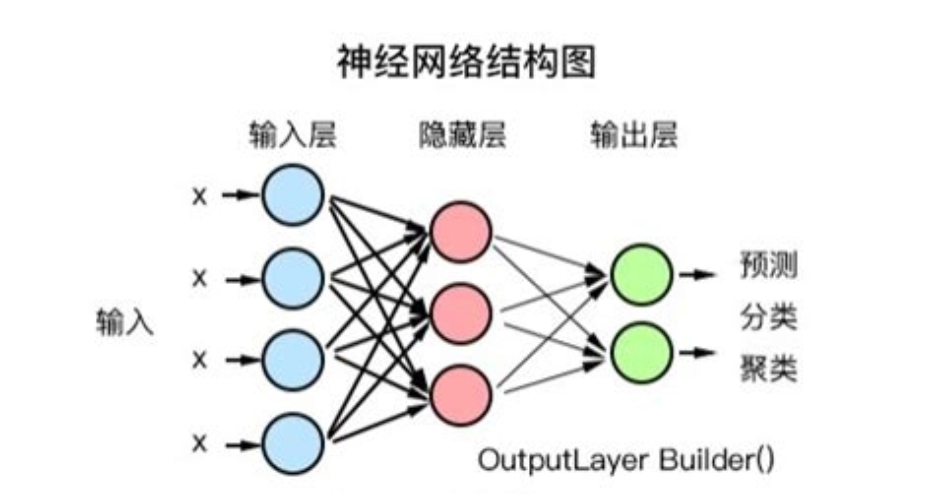
The basic inspiration for neural networks comes from the neuron structure of the biological brain. An artificial neuron receives multiple input signals, each signal is assigned a "weight" (representing importance), and then the weighted signals are summed. When the sum exceeds a threshold, the neuron is activated and passes a signal to the next layer.
When millions of neurons are organized into a hierarchical structure, a neural network is formed. Data enters from the "input layer," is processed through one or more "hidden layers," and finally results are obtained in the "output layer."
The Curse of "Depth": Exponential Growth in Complexity
So-called "deep learning" uses neural networks containing a large number of hidden layers. "Depth" is the key to powerful capability and the root of the "black box" problem.
- Hierarchical abstraction and feature extraction: In image recognition tasks, the first hidden layer only learns to recognize simple features such as edges and color blocks. Subsequent layers combine the features of the previous layer to form more complex concepts, such as eyes, noses, and then complete faces. The process is completed automatically by the model through learning from massive amounts of data; humans do not set specific recognition rules. The abstract features automatically learned in high-dimensional space often do not have semantics that humans can understand.
- The interweaving of massive parameters: Large language models like GPT-4 have hundreds of billions or even trillions of parameters (that is, the connection weights between neurons). The parameters jointly determine the model's behavior. Trying to understand any single decision requires tracing minute changes in hundreds of millions of parameters and their interactions, which is an almost impossible task both computationally and cognitively.
- The charm and curse of nonlinear activation: Neurons do not simply add inputs together; they process them through a "nonlinear activation function." This enables neural networks to learn extremely complex patterns, but it also completely breaks simple linear causality, making the relationship between input and output highly complex and unintuitive.
AI's "black box" is not a design flaw; it is an intrinsic property generated in the pursuit of ultimate performance by the depth of the model structure, the scale of the parameters, and the nonlinearity of computation.
Why open the "black box"?
If the predictions of "black box" AI are very accurate, why go to the trouble of understanding its internal mechanisms? The answer is that in many high-risk and high-impact scenarios, knowing "what" is far from enough; one must know "why."
Trust and reliability
In fields such as healthcare, finance, and autonomous driving, wrong decisions can lead to catastrophic consequences.
- Medical diagnosis: When an AI system diagnoses a patient with cancer, both doctors and patients need to know which imaging features the AI based its conclusion on. If the AI's judgment is based on an irrelevant artifact in the image rather than the lesion itself, then a "correct" answer may conceal enormous risk. The lack of explainability prevents us from fully trusting AI diagnoses and makes it difficult to effectively debug and repair them when problems arise.
- Autonomous driving: When an autonomous vehicle makes a decision in an emergency (for example, whether to hit an obstacle or avoid a pedestrian), the decision logic must be transparent and reviewable. If an accident occurs, it is necessary to be able to trace the car's "thinking process," determine responsibility, improve the system, and avoid repeating the same mistakes in the future.
Fairness and bias
AI systems learn from data. If the training data itself contains historical biases from human society, AI will learn them without reservation and amplify the bias.
- AI recruitment: A company once developed an AI recruitment tool for screening resumes. Because the training data mainly came from successful male employees in the past, the system learned to downweight resumes containing the word "female" or graduating from women's colleges. The "black box" nature hides discriminatory behavior behind complex algorithms, making it difficult to discover and correct, and posing a serious threat to social fairness.
- Credit approval: If an AI credit model rejects a loan application from a certain ethnic minority group, it is necessary to know whether this is based on legitimate financial indicators or is affected by racial bias implicit in the data. The lack of transparency makes it difficult for regulators to ensure the fairness of financial services.
Safety and robustness
"Black box" models may "take shortcuts" in unexpected ways, or be extremely sensitive to tiny input changes imperceptible to the human eye (that is, "adversarial attacks").
For example, researchers have found that adding carefully designed tiny noise to the input images of an image recognition AI can make the model recognize an image of a "panda" as a "gibbon". For safety-critical systems such as facial recognition and autonomous driving, this fragility is fatal. Opening the "black box" and understanding the features the model focuses on helps discover the "Achilles' heel" and build more robust and safer AI systems.
Overview of Explainable AI (XAI) Technologies
To address the "black box" challenge, the field of Explainable AI (XAI) has emerged. The goal of XAI is to develop a series of techniques and methods that provide meaningful and understandable explanations for AI decisions.
Post-hoc Explanations
Treating the existing "black box" model as a whole and explaining its behavior through external "probing", without changing the model itself:
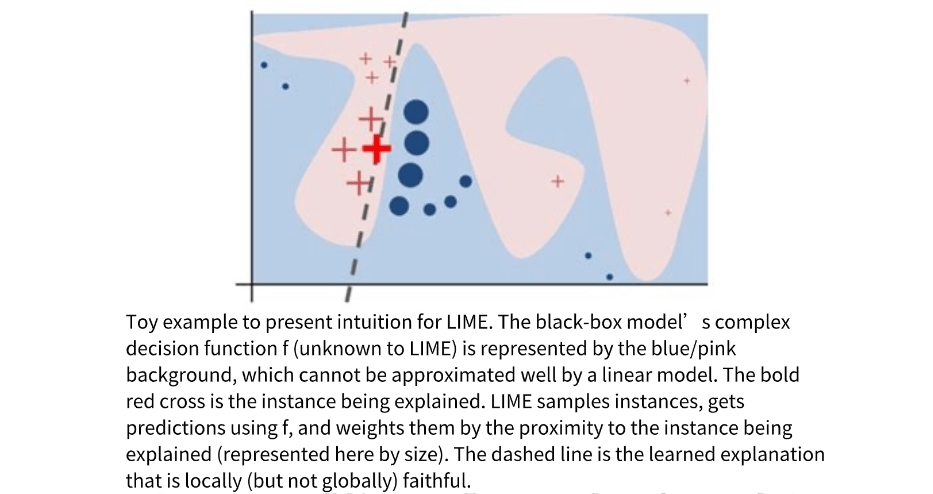
- LIME (Local Interpretable Model-agnostic Explanations): The core idea of LIME is to "use simplicity to master complexity", focusing on explaining a single prediction. Generate a large number of slightly perturbed data points around the sample point to be explained, and use a simple surrogate model (such as linear regression or a decision tree) to fit the behavior of the local data points.
- SHAP (SHapley Additive exPlanations): SHAP originates from the concept of the "Shapley value" in game theory, treating the "model prediction" as a cooperative game in which each "input feature" is a player. The SHAP value calculates the marginal contribution of each feature to the final prediction result.
- Visualization Methods: Especially in the field of computer vision, class activation maps (CAM) and Grad-CAM can generate "heatmaps" overlaid on the original image, highlighting the pixel regions that contribute most to the model's classification.
Intrinsically Interpretable Models
Another path is to directly design and use models whose own structure is relatively transparent, the so-called "white box" models:
- Decision Trees: As clear as a flowchart, the decision path can be traced along nodes and branches.
- Linear Regression: Directly reflects feature importance through the magnitude of coefficients.
- Logistic Regression: Likewise provides intuitive explanations through coefficients.
In recent years, researchers have been striving to create new model structures that attempt to intrinsically incorporate interpretability while maintaining high performance, such as models with attention mechanisms, where the attention weights themselves can serve as a kind of explanation.
"Transparency" in Practice — In-depth Analysis of Typical Cases
The value of theory lies in practice. Through three highly relevant cases below, we specifically examine the impact of the "black box" problem and how XAI technologies can bring about change.
Case 1: Medical Imaging Diagnosis
- Background: A hospital introduced an advanced AI system to assist doctors in screening for early-stage lung cancer through chest X-rays. The system showed extremely high accuracy in testing.
- Black Box Problem: After being put into clinical use, doctors found that although the AI's diagnostic results were mostly correct, they did not dare to fully trust them. When the AI marked an image as "highly suspicious", the doctors could not know whether the AI had seen a typical tumor nodule or had been misled by rib shadows or a stain on the X-ray machine. This uncertainty reduced the AI to a "suggestion" tool, and its potential was far from being realized.
- Application of XAI Technologies: The hospital integrated an interpretability module based on Grad-CAM for the system. Whenever the AI makes a "highly suspicious" judgment, the system simultaneously outputs a heatmap that precisely highlights the area the AI considers most suspicious on the original X-ray image.
- Result:Doctors can immediately see the AI's "focus of attention." If the highlighted area matches the suspicious area judged by the doctor based on professional expertise, the doctor's confidence in the AI diagnosis will be greatly enhanced. If the highlighted area appears in an atypical location or one the doctor overlooked, it can remind the doctor to conduct a more careful examination. If the highlighted area falls on an obviously irrelevant place, the doctor can quickly determine that this is a false positive. The AI transforms from a disturbing "black box" into an intelligent assistant with which doctors can "dialogue" and mutually verify.
Case Two: Financial Credit Approval
- Background: An online bank uses a complex gradient boosting tree model to automatically approve personal consumer loans. Loan applications from young customers with good credit records and stable income are rejected within seconds.
- Black Box Problem: When customers call customer service to ask why they were rejected, customer service staff cannot explain either. The system log only shows "risk score too high" and cannot provide specific reasons. This harms the customer experience and exposes the bank to compliance risks—under the laws and regulations of many countries and regions (such as the EU's GDPR), users have the right to obtain meaningful explanations regarding automated decisions. The model may produce hard-to-detect bias due to excessive punishment in the training data for certain consumption habits of young people.
- XAI Technology Application: The bank introduced a SHAP-based explanation system. When the next similar customer's application is rejected, the system automatically generates a concise explanation report.
- Result: The report may display as follows: "Your loan application was rejected, mainly based on the comprehensive assessment of the following three factors: 1) too many recent credit card inquiries(largest negative impact); 2) high existing debt-to-income ratio(second-largest negative impact); 3) short length of credit history(some negative impact)." The report lets customers understand the reason for rejection and can guide them on how to improve their financial situation to obtain approval in the future. For the bank, by analyzing explanations in batches, it can gain insight into whether the model has systematic bias, adjust it, and achieve fairer and more responsible credit decisions.
Case Three: Autonomous Driving Perception System
- Background: An autonomous vehicle in the testing phase suddenly performed unnecessary emergency deceleration at an intersection, confusing the safety officer and engineers in the vehicle.
- Black Box Problem: Engineers replay the sensor data but cannot immediately determine what triggered the sudden braking. Was it an erroneous reading from the lidar? Was it the camera misidentifying a plastic bag on the roadside as a pedestrian? Or was there a problem in some logic branch of the control algorithm? Without understanding the root cause of the behavior, the potential bug cannot be fixed, and future driving safety cannot be guaranteed.
- XAI Technology Application: The autonomous driving system has a built-in visualization explanation tool based on the "attention mechanism." The tool can display in real time which parts of the image the vehicle's perception system (especially the vision module) focuses on most in each frame of decision-making.
- Result: By explaining the data through playback, engineers discovered that in the instant before the emergency braking, the system's attention weights were abnormally highly concentrated on a billboard suspended in the air in the distance, on which was printed an image of a person running. The system misclassified this image as a real pedestrian about to intrude into the lane, triggering defensive braking. With a clear clue, engineers could specifically use more images containing billboards to "reverse train" the model, improving its ability to distinguish real from изображений and eliminating the safety hazard.
Conclusion and Outlook
Through a systematic analysis of the AI "black box" problem, we can draw a core conclusion: the "black box" is not a technical defect that can be easily eliminated, but an inherent "complexity cost" of modern high-performance AI models. What we face is not a simple either-or trade-off between "performance" and "interpretability," but how to harness and illuminate its internal decision-making maze through innovative methods while embracing the powerful capabilities of the technology.
Future Outlook
Cracking the "black box" problem will be a continuous co-evolution of technology and society, and its development will show three major trends:
- From "explainable" to "conversational": a paradigm upgrade in XAI technology: Future XAI will no longer be satisfied with generating static, one-way explanation reports. It will develop in an interactive, conversational direction.
- From "external add-on" to "intrinsic design": trustworthy AI becomes the core of research and development: The concept of "design first" will become mainstream. Future AI systems will embed interpretability, fairness, and robustness as core indicators from the very beginning of architectural design. This means that trustworthiness will become an intrinsic attribute of AI, no longer an external add-on feature.
- From "technical option" to "regulatory requirement": the improvement of global governance frameworks: Interpretability will rapidly transcend the technical domain and become a mandatory legal and ethical requirement. As foreshadowed by global regulatory frameworks such as the European Union's Artificial Intelligence Act, providing clear and timely explanations for high-risk AI systems will become an inescapable legal responsibility for enterprises. This will drive the entire industry to develop in a more transparent and more responsible direction.
Ultimately, illuminating the AI "black box" is not only to satisfy our curiosity, but also to fulfill our responsibility. This is an imperative action concerning technological health, social fairness, and human well-being. When the decision-making process of artificial intelligence becomes clearly visible, we can truly join hands with it to build a safer, fairer, and more trustworthy intelligent future.