
Simply put,Traditional computer programs are "faithful executors," working strictly according to fixed rules written by humans, and their output results are deterministic; while artificial intelligence (AI) is an "autonomous learner," discovering patterns and making judgments by analyzing massive amounts of data, and its output is probabilistic, able to adapt to unknown situations. The fundamental difference from "execution" to "thinking" determines the huge differences in their applications: traditional programs are good at handling structured, repetitive tasks (such as financial calculations), while AI is good at tackling complex, vague, and uncertain problems (such as autonomous driving and medical diagnosis).
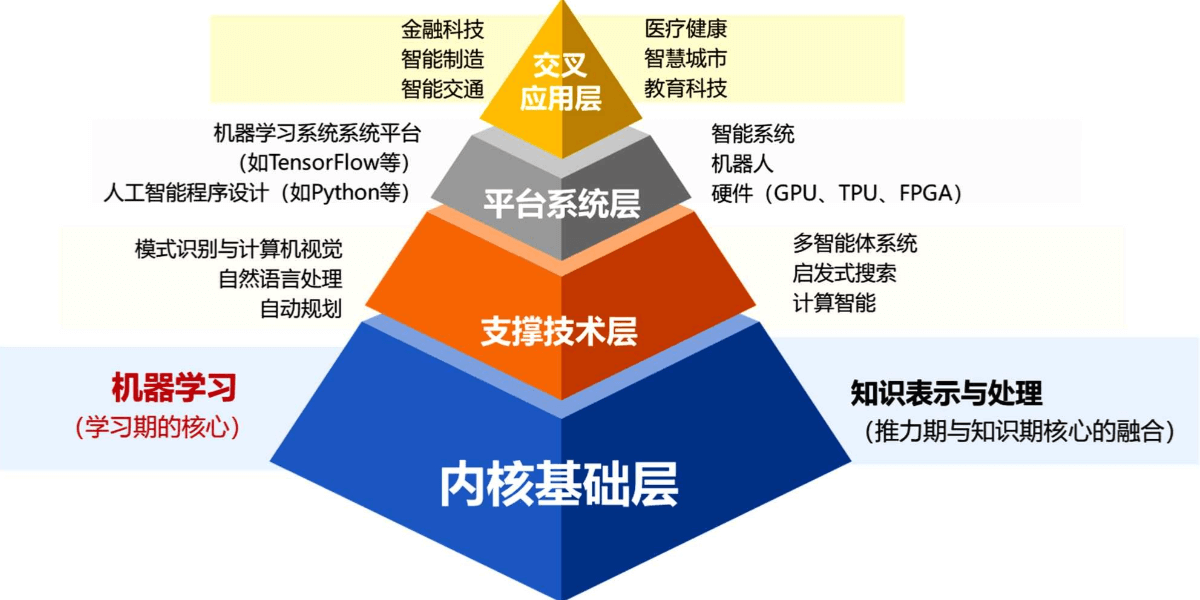
Core working principles: rule-driven vs. data-driven
To understand the essential difference between artificial intelligence and traditional computer programs, it is necessary to delve into their core working principles. The most fundamental difference between the two lies in the source of their "decisions" or "behaviors": one comes from explicit rules pre-written by human experts; the other comes from patterns autonomously learned and extracted from data.
Traditional computer programs: precise instruction executors
Traditional computer programs, that is, the foundation of the vast majority of software we use daily, have at their core "determinism" and "instructiveness" . Developers are like architects: when designing blueprints (writing code), they need to precisely plan every detail of the building (define all logic and rules). The computer is like a meticulous construction team, strictly following the blueprints and not deviating, and unable to deviate, in the slightest.
- Based on preset rules and logic: Developers write out the steps and logic for solving a problem in a language that a computer can understand (such as Python, Java, etc.). This process requires developers to have a comprehensive and in-depth understanding of the problem, to be able to foresee all possible situations, and to write corresponding handling rules for each situation. The program itself does not have the ability to understand tax law; it merely mechanically executes the calculation rules already set by the developer. Under this model,the intelligence of the program comes entirely from the human developers behind it, and the program itself is merely an efficient execution tool。
For example, for a program used to calculate personal income tax, the developer must translate the complex tax law provisions issued by the state one by one into conditional judgment statements such as "if income is between X and Y, then the tax rate is Z%."
- Output results are deterministic: For a given input, the output of a traditional computer program is completely deterministic. As long as the input data is the same, the program code has not changed, and the operating environment is consistent, then no matter when it is run, its output result will be exactly the same. This determinism also means the program lacks flexibility. It cannot "optimize" its own behavior based on past experience, nor can it make a "best guess" when facing vague or uncertain input.
For example, when you use a calculator to calculate "2+2," the result is always "4."
Artificial intelligence: decision-makers that learn from data
The core of artificial intelligence (especially machine learning) is "learning" and "probability" . It no longer relies on detailed rules pre-written by human experts, but instead analyzes large amounts of data, discovers the patterns and models contained therein on its own, and uses these patterns to make predictions or decisions.
- Based on data training and pattern recognition: The "intelligence" of an artificial intelligence system is not innate; it is through a process called "Training" Developers prepare a large amount of labeled data (for example, thousands of images labeled "cat" or "dog") and then "feed" it to an AI model (such as a neural network). Through complex mathematical algorithms, the model automatically analyzes this data to find key features that can distinguish "cat" from "dog" (such as ear shape, nose contour, etc.).
The process is like teaching a child to recognize animals. We show him many pictures and tell him, "This is a cat, that is a dog." Over time, the child can summarize the differences between cats and dogs on his own.
- Autonomously discover patterns and make predictions: After sufficient training, the AI model possesses "generalization" ability and can make judgments about new data it has never seen before. For example, a trained image recognition model, when seeing a completely new picture of a cat, can identify it as a "cat" with high probability. The key is that the model does not simply memorize the training data, but has learned an abstract, general pattern about "cats."
- Output results are probabilistic: Unlike the deterministic output of traditional programs, AI output is probabilistic. When an AI model makes a judgment, it is actually giving a "possibility" or "confidence." This means that AI decisions are not absolutely correct and have a certain error rate. This uncertainty is one of the essential characteristics of AI and also the most core difference from traditional programs. AI's "intelligence" is reflected in its ability to make the most likely correct judgment under uncertainty, based on existing data and learned patterns.
For example, after analyzing an X-ray image, an AI doctor may output, "There is a 95% probability that this image shows pneumonia."
Comparison of Core Characteristics
| Dimension | Traditional Computer Programs | Artificial Intelligence (AI) |
|---|---|---|
| Core Principle | Based on preset rules and logic, with all behaviors explicitly defined by developers | Based on data training, autonomously learning and discovering patterns from data |
| Source of Decision-Making | Knowledge and experience of human experts, encoded as program instructions | Statistical patterns and patterns extracted from massive data |
| Learning Method | Does not have self-learning ability; behavior is completely determined by code | Has the ability to learn and improve through experience (data) |
| Output Results | Deterministic, for the same input, the output is always consistent | Probabilistic, the output is a prediction or judgment with a confidence level |
| Handling Complexity | Good at handling tasks with clear logic and explicit rules | Good at handling tasks that are vague, complex, and highly uncertain |
| Adaptability | Weak; developers need to manually modify code to adapt to new situations | Strong; can adapt to new environments and new data through continuous learning |
Differences in Practical Applications and Functions: Each Has Its Role, Complementary Strengths
Traditional Programs: Good at Structured and Repetitive Tasks
Traditional computer programs are the cornerstone of the efficient operation of modern society. Their greatest advantages lie instability, reliability, and ease of control. Like a tireless worker, it can execute precise, repetitive tasks continuously 24/7.
Typical application scenarios,software development, website construction, and data processing. For example, the operating systems we use (such as Windows and macOS), office software (such as Word and Excel), and the various apps on our phones are all built on traditional computer programs at their foundation. In enterprise-level applications, traditional data processing programs are widely used for financial report generation, inventory management, customer relationship management (CRM), and more. These tasks are characterized by clear processes and well-defined rules, making them very suitable for implementation using "if-then" logic.
For example, the order processing system of an e-commerce website strictly follows a preset series of steps—"user places order -> system confirms inventory -> generates order -> deducts inventory -> notifies logistics"—to ensure that every transaction is accurate and error-free.
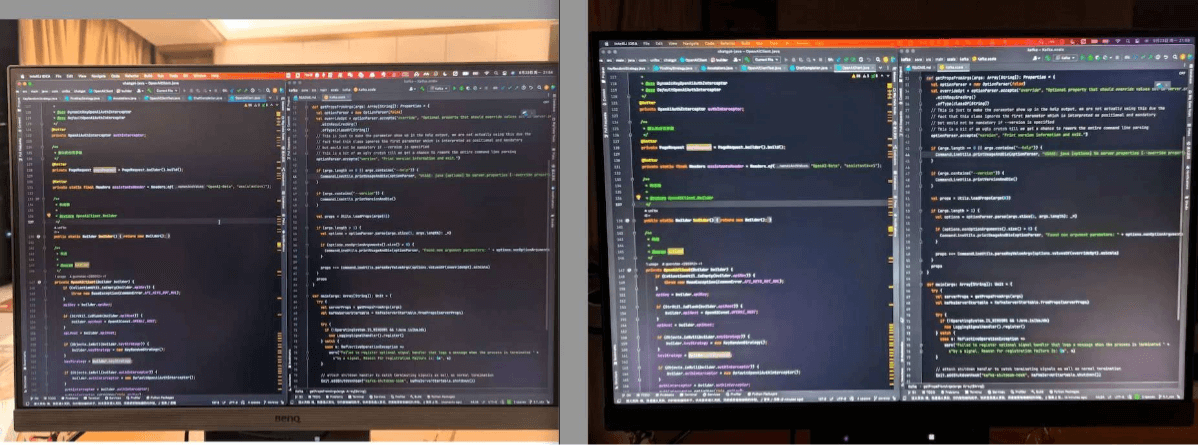
Core advantages,stable, reliable, and easy to control. The biggest advantage of traditional programs is theirpredictability and controllability of behavior. Developers can know exactly what each line of code does and ensure that the program runs as expected under any circumstances. When a program has problems, developers can use debugging tools to trace the execution process of the code step by step and precisely locate and fix errors. This high degree of controllability and interpretability makes traditional programs an irreplaceable choice in scenarios that require high reliability and security.
Artificial Intelligence: Conquering Complexity and Uncertainty
It excels at handling tasks that arevague in rules, complex in data, and full of uncertainty. Its powerful learning and adaptability have achieved breakthrough progress in many fields.
Typical application scenarios,autonomous driving, medical diagnosis, and speech recognition. In theautonomous drivingfield, AI systems need to process large amounts of data from sensors such as cameras and radar in real time, recognize roads, vehicles, pedestrians, traffic signs, and more, and make driving decisions in complex traffic environments. It is a dynamic process full of uncertainty, and it is impossible to enumerate all situations with simple rules. In themedical diagnosisfield, AI can assist doctors in the early screening of diseases such as cancer by learning from large amounts of medical images (such as CT and MRI), and its recognition accuracy can even rival or surpass that of human experts in some aspects. In daily life, theintelligent voice assistantswe use (such as Siri and Xiao Ai Tongxue), personalized recommendations on online shopping platforms, and information feed ranking on social media are all powered by artificial intelligence technology behind the scenes.
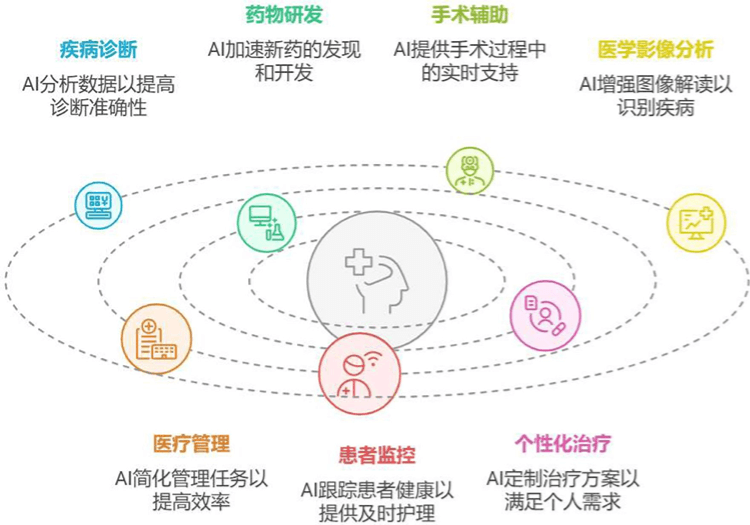
Core advantages,strong adaptability and the ability to handle unstructured data. The core advantage of artificial intelligence lies in itspowerful learning and generalization ability. It can learn from massive amounts of unstructured data (such as images, text, and speech) and adapt to constantly changing environments.
Capability comparison: performance differences in key scenarios
1. Facing unknown situations
When a traditional program encounters an input or situation that the developer has not preset, it will report an error, crash, or enter an unhandleable infinite loop.
Artificial intelligence is different; it is inherently designed to handle uncertainty. When faced with a vague, incomplete, or entirely new input, AI will give a "most likely" guess based on the patterns it has learned.
For example, even if an AI image recognition system sees a picture of a cat that is partially obscured, it still has a high probability of recognizing that it is a cat.
This ability to "guess" makes AI far more robust than traditional programs in open real-world environments。
2. Handling ambiguous information
Traditional programs have extremely strict requirements for input data; it must be precise and formatted data.
Artificial intelligence, especially natural language processing (NLP) technology, can "understand" humans' vague and colloquial expressions.
For example, you can say to an intelligent voice assistant: "Help me find a delicious but inexpensive Sichuan restaurant nearby." AI can understand subjective and vague concepts such as "delicious" and "inexpensive," and combine them with your location information to give suitable recommendations.
This ability to handle ambiguous information greatly lowers the threshold for human-machine interaction。
3. User interaction experience
The user interface (UI) and interaction flow (UX) of traditional software are usually fixed. Users must operate according to the path designed by the software, lacking personalization and flexibility.
AI-driven software can provide a more intelligent and personalized interaction experience.
For example, some AI video editing tools can automatically recommend suitable background music, transition effects, and editing plans based on the video content uploaded by the user, and can complete complex editing operations according to the user's voice commands.
This flexible and intelligent way of interacting makes software no longer a cold tool, but more like an "intelligent partner" that can understand the user's intent 。
Future impact and significance
The fundamental difference between artificial intelligence and traditional computer programs is not only an innovation at the technical level, but also heralds a profound social transformation. It is and will continue to reshape our daily lives, ways of working, and the operating model of society as a whole, bringing unprecedented opportunities and challenges.
Impact on daily life
Personalized experience: from "one face for a thousand people" to "a thousand faces for a thousand people"
The services provided by traditional computer programs are often standardized and "one face for a thousand people." For example, on a traditional news website, all users see the same homepage content.
Artificial intelligence can provide highly personalized content and services based on each user's historical behavior and interest preferences. For example,short video platforms such as Douyin and Kuaishou, whose recommendation algorithms will create a unique content stream tailored for you based on the videos you watch, like, and comment on, so that you can always see content you are interested in. Similarly, e-commerce platforms (such as Taobao and JD.com) will use AI to analyze your shopping history and browsing behavior, recommend products you may like, and achieve "a thousand faces for a thousand people" precision marketing. This personalized experience not only improves user satisfaction, but also greatly improves business efficiency.
Intelligent assistants: making life more convenient and more efficient
AI-powered intelligent assistants are becoming capable helpers in our lives. From voice assistants on smartphones (such as Siri and Google Assistant), to smart home devices (such as smart speakers and smart light bulbs), to self-driving cars, AI is freeing us from tedious daily chores. For example, you can use voice commands to have a smart speaker play music, check the weather, and set alarms; smart home systems can automatically adjust indoor lighting and temperature according to your living habits; future self-driving cars will completely change the way we travel, allowing us to rest, work, or entertain ourselves during our commute. By automating repetitive tasks, these intelligent assistants save us a great deal of time and energy, allowing us to focus on more creative and valuable things.
Changes to the way we work
AI's impact on the labor market is twofold: on the one hand, it replaces a large number of repetitive, process-based jobs through automation; on the other hand, it also gives rise to new occupations and imposes new requirements on workers' skills.
Automation upgrade: the replacement from "manual labor" to "mental labor"
Traditional computer programs mainly replace human manual labor and some simple mental labor (such as data entry and calculation).
The rise of artificial intelligence is beginning to push automation toward more complex cognitive tasks. For example,
- in the customer service field, intelligent chatbots can handle a large number of user inquiries, replacing part of the work of human customer service agents;
- in the programming field, AI code generation tools (such as GitHub Copilot) can help programmers automatically complete part of the code writing work, and Devin, an AI software engineer capable of handling development projects end to end, has emerged, which has triggered widespread discussion about whether "coders will be eliminated."
This replacement from "manual labor" to "mental labor" will have a profound impact on the job market, and many traditional positions will face the risk of being disrupted.
Emerging occupations: giving rise to new positions such as data scientists and AI trainers
While technological progress eliminates old jobs, it will inevitably create new employment opportunities. The development of artificial intelligence has given rise to a series of entirely new occupations, such asdata scientists, machine learning engineers, AI algorithm engineers, AI trainers, and AI ethicists. These new positions require practitioners to possess interdisciplinary knowledge and skills, including mathematics, statistics, computer science, and business knowledge in specific fields. For example, the development of an AI medical diagnosis system not only requires top-tier AI algorithm engineers but also requires a large number of medical experts to label data and verify the accuracy of models. Therefore, the future job market will place greater emphasis on higher-order cognitive abilities, innovation ability, and the ability to solve complex problems.
Shift in skill demands: from "execution" to "creation" and "decision-making"
In the age of artificial intelligence, the skills workers need are also undergoing profound changes. Those repetitive, process-based skills will become increasingly unimportant, because machines can do them better and faster.
Human value will be reflected more in areas that are difficult for machines to replace, such ascreativity, critical thinking, complex problem-solving ability, interpersonal communication, and teamwork ability Future work will no longer be a competition between humans and machines, but humans and machines working together. Workers need to learn how to collaborate with AI tools, using AI to enhance their abilities and complete more complex and more creative tasks. For example, future designers can use AI to generate a large number of design sketches, then select and optimize among them, greatly improving design efficiency and quality.
Significance for Future Society
The development of artificial intelligence concerns not only individual life and work, but will also have a profound impact on the productivity, governance models, and ethical norms of society as a whole.
Productivity Revolution: Driving Global Economic Value Growth
Artificial intelligence is widely regarded as thecore driver of the Fourth Industrial Revolutionafter the steam engine, electricity, and computers. By optimizing production processes, improving resource utilization efficiency, and accelerating technological innovation, it will greatly liberate and develop social productivity. It is predicted that AI technology is expected to add trillions of dollars in value to the global economy .
- In manufacturing, AI-driven intelligent robots can achieve flexible production and meet the needs of personalized customization;
- in agriculture, AI can, through means such as precision irrigation and pest and disease prediction, increase crop yields and reduce resource waste .
The productivity revolution driven by AI will create enormous material wealth for human society and promote the sustained development of the economy and society.
Social Governance: Optimizing Public Services and Urban Management
Artificial intelligence also shows great potential in improving the efficiency of social governance. Insmart city construction, AI can
- through analyzing traffic flow data, achieve intelligent traffic scheduling and alleviate urban congestion;
- through analyzing environmental monitoring data, it can provide real-time early warnings for air pollution incidents .
- Through video surveillance systems, it can automatically identify abnormal events and improve emergency response speed.
- Provide 24-hour online intelligent Q&A services, simplify administrative procedures, and improve the government's service efficiency and transparency.
By applying AI technology to all aspects of social governance, a more efficient, convenient, and intelligent social operation system can be built.
Ethics and Challenges: Data Privacy, Algorithmic Fairness, and the "Black Box" Problem
The development of artificial intelligence has also brought unprecedented ethical and social challenges. The first is
- the data privacy issue, the operation of AI systems requires massive amounts of data, raising concerns about excessive collection and misuse of personal information .
- the algorithmic fairness issue, if the data used to train AI itself contains bias (such as racial or gender discrimination), then the AI system may replicate or even amplify these biases, leading to unfair decision outcomes .
- the "algorithmic black box" issue, many advanced AI models (such as deep neural networks) have extremely complex decision-making processes that are difficult for humans to understand, which brings difficulties to responsibility attribution and accountability .
For example, if a self-driving car has an accident, should responsibility be borne by the owner, the car manufacturer, or the algorithm designer? These issues all require us, while developing technology, to establish comprehensive laws, regulations, and ethical norms to ensure that artificial intelligence can develop in a direction beneficial to humanity.