
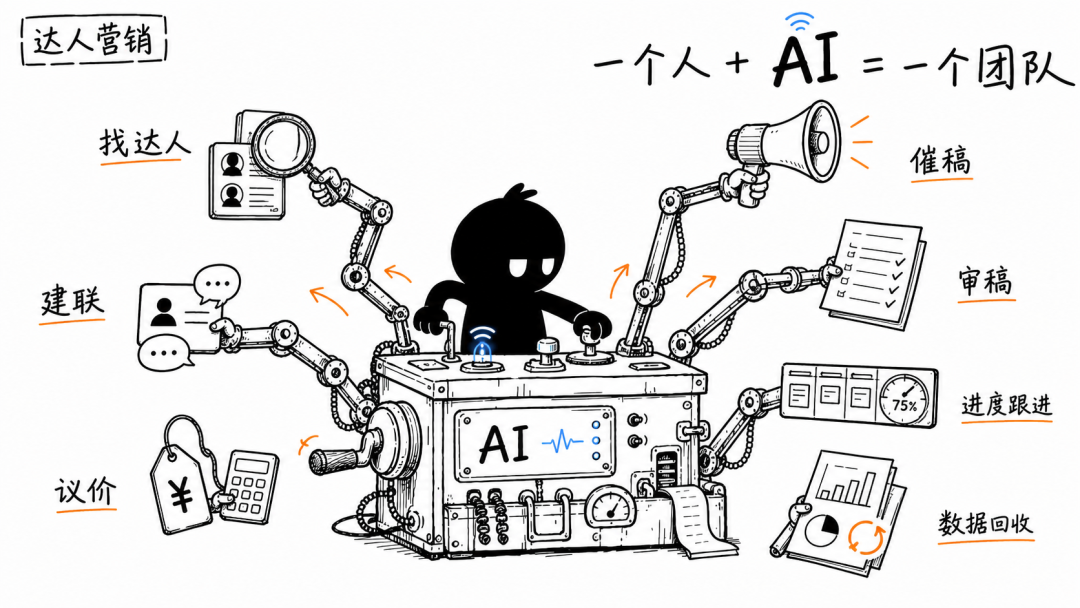
Last month, I had a meal with a friend who works on overseas expansion for an AI product. He said their team had been feeling a bit "off" lately. In the past, one campaign from finding people to going live normally took two to three months, and they chased drafts until they wanted to smash their phones. But over the past few months, with the same team size, they completed one round in three weeks, and the number of creators produced multiplied several times over.
Sure enough, AI is great,Their company's entire execution chain for overseas creator marketing had been taken over by AI employees.
At the time I thought, another creator database packaged as AI, huh? I've seen plenty of this. Things like "smart matching" and "automated outreach" — you click in and see it's just an Excel spreadsheet with filtering, and the truly tiring work still has to be done yourself.
Until I got the AhaCreator demo environment and ran through it myself from start to finish. It really is different.
01. Hands-On Test
Step 1: Create a marketing plan in 20 minutes
I simulated a real scenario: taking our own AI navigation website and doing overseas promotion, focusing on high-willingness-to-pay markets like North America and Europe, with a budget of around $2000, and wanting mid-tier creators who "share sincerely, don't do hard ads, and have high fan stickiness."
We open the official website. The homepage looks like this. We first register and log in.

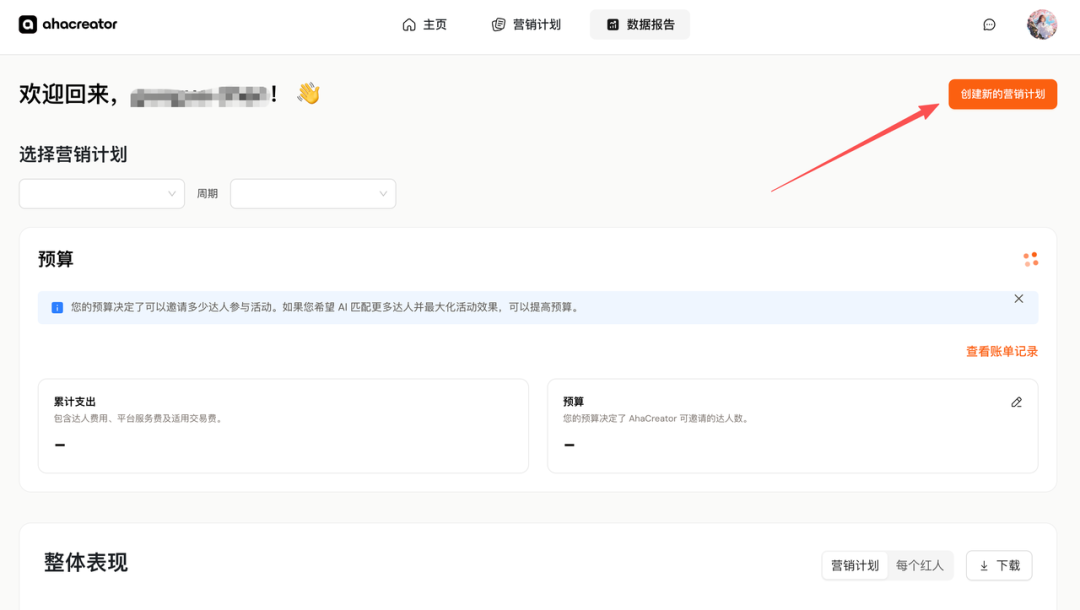
After logging in, you'll see this interface. Click [Create New Marketing Plan] to get started~
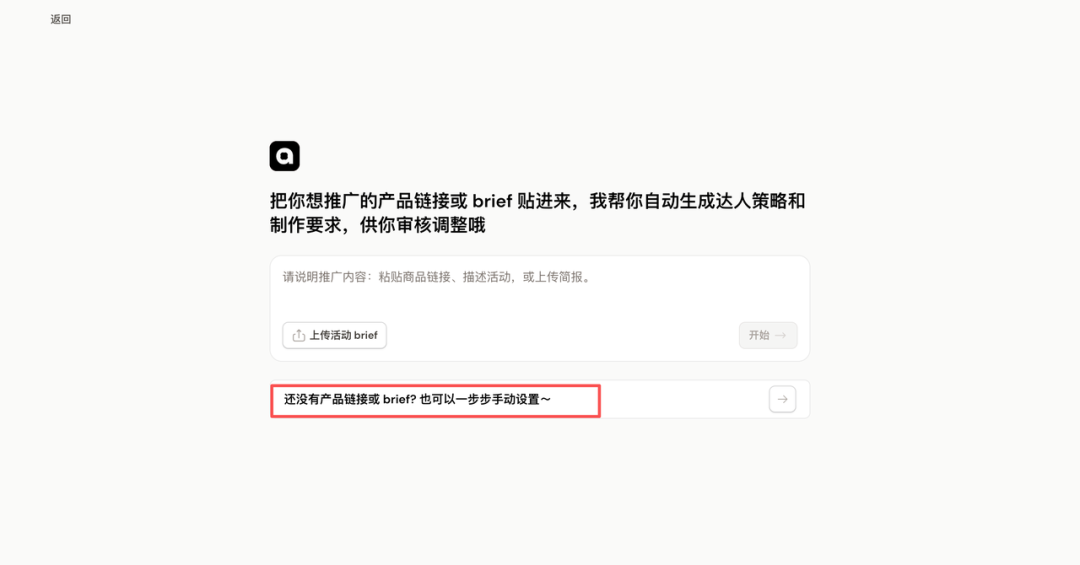
Next, it will ask you to enter a Brief. It's okay if you don't have a Brief for now; you can click here to continue.
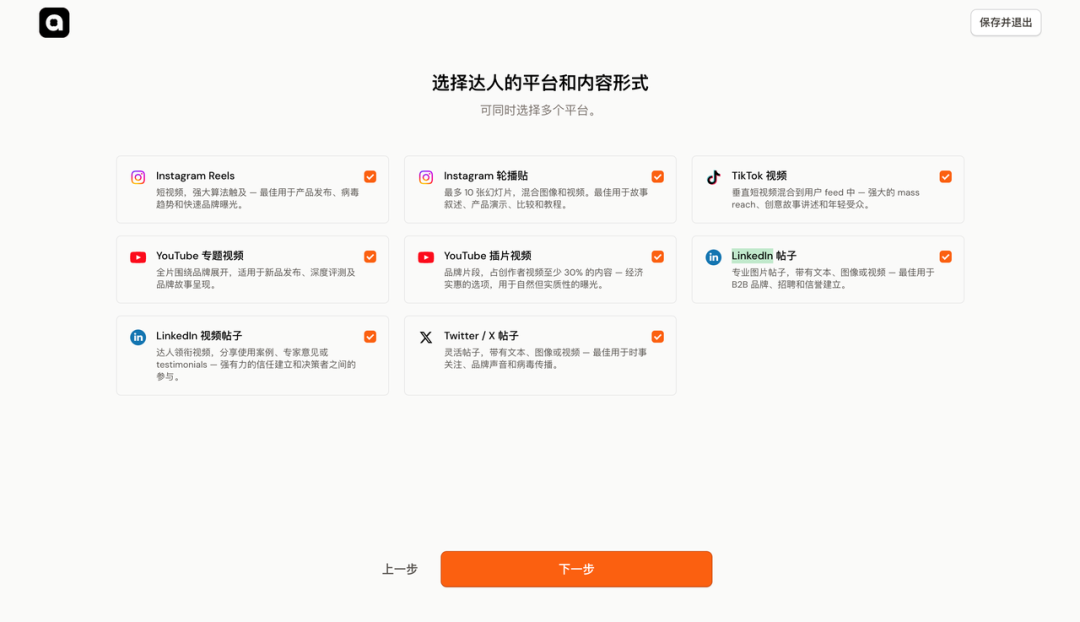
It will ask you to choose platforms and content formats. Our website has audiences on all platforms, so I selected all and clicked next.
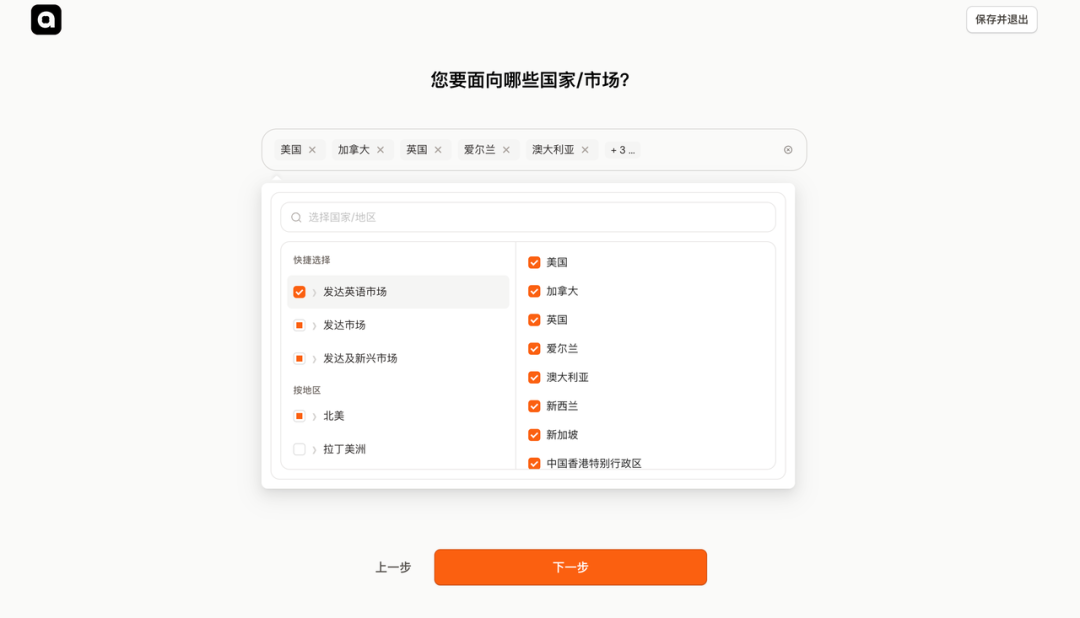
This step asks me to choose the countries or markets to target. I chose developed English-speaking markets.
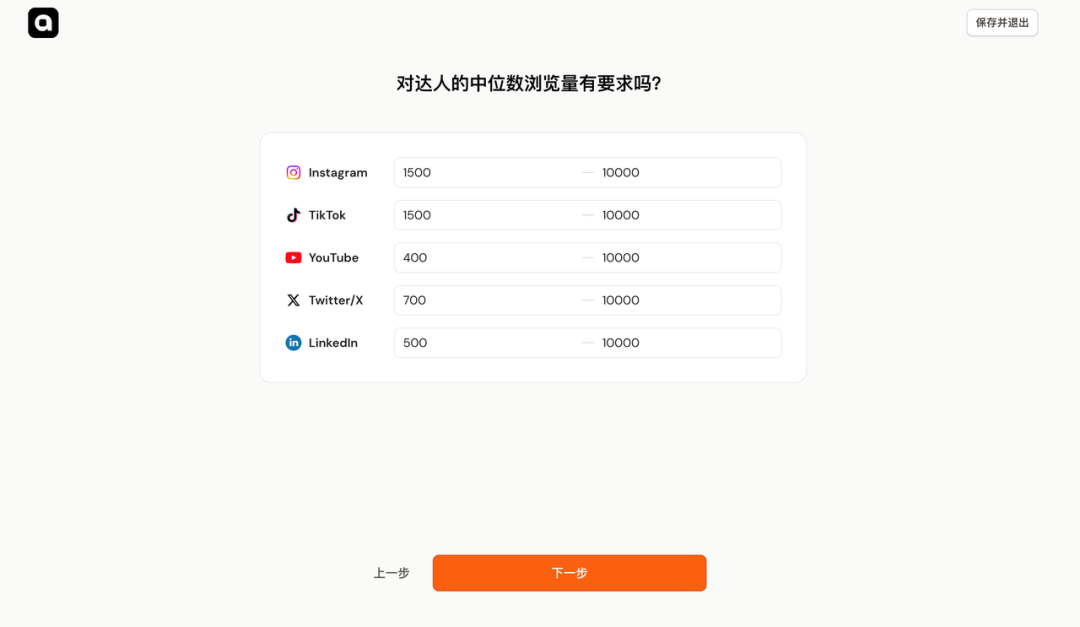
Next is choosing the median view count of creators. We mainly target mid-tier creators, so I set the upper limit to 10,000.
Then fill in the basic information for the campaign.
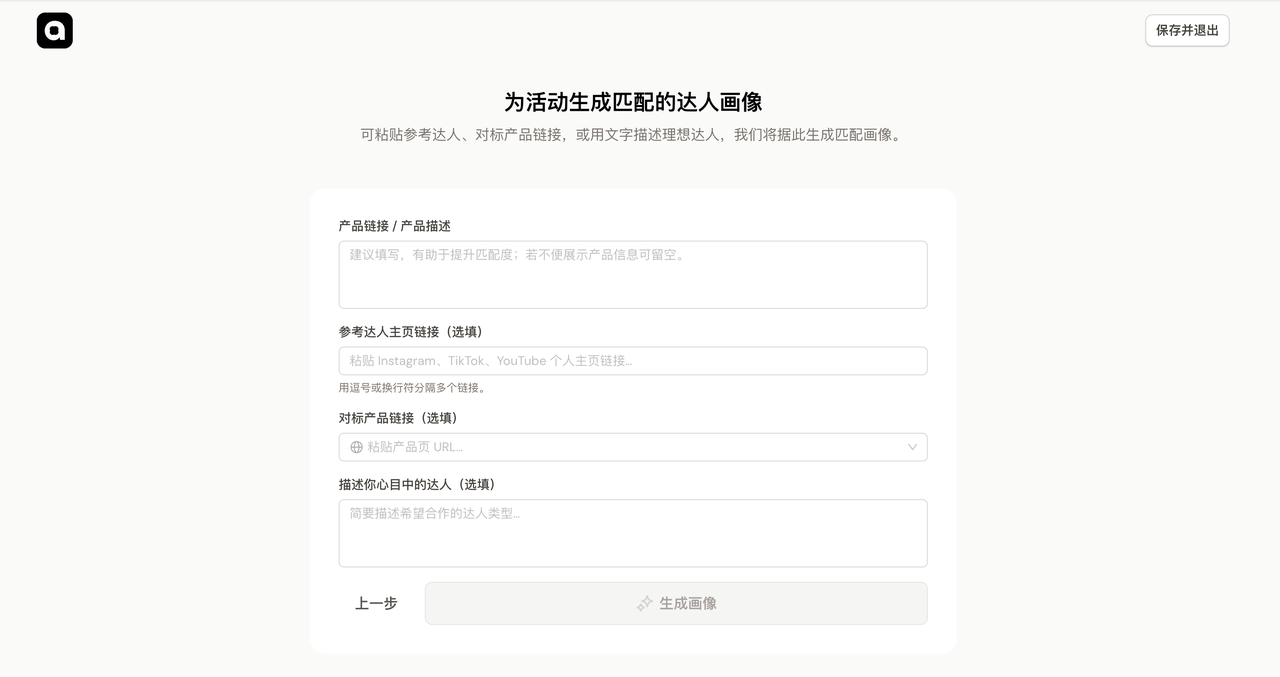
Start selecting creator personas suitable for the campaign.
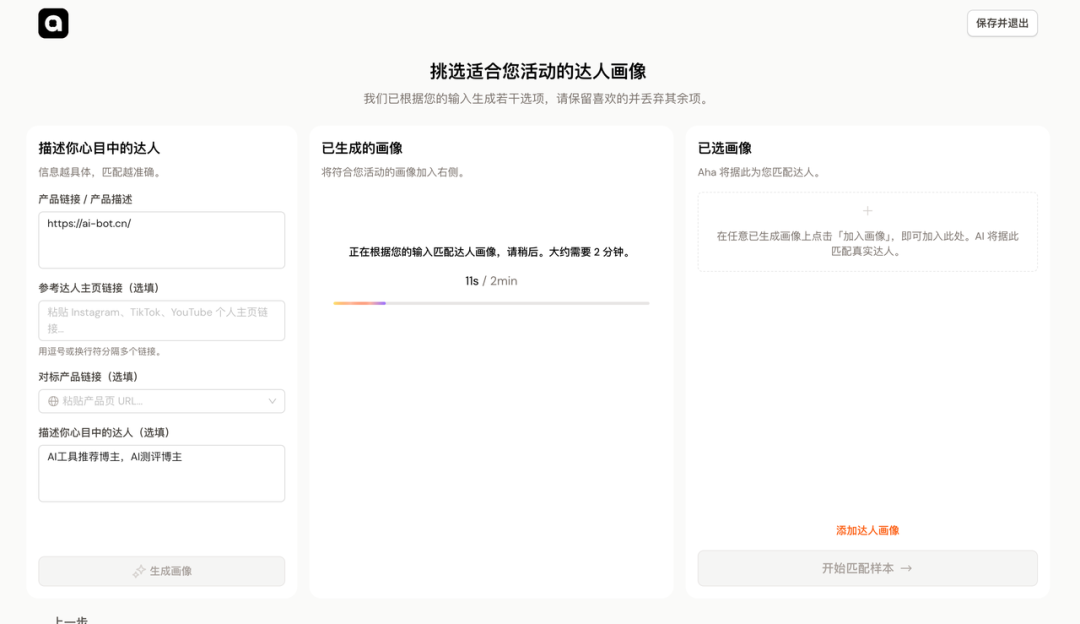
The system then starts matching creators based on the personas.
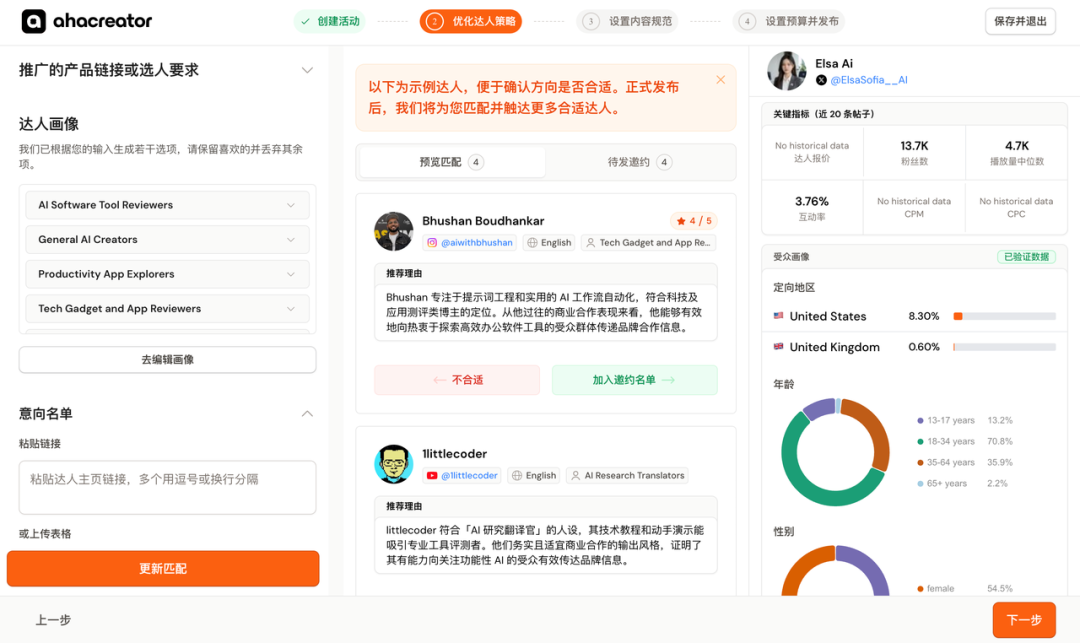
Right after that, you can start selecting creators. This page is divided into three parts: on the left are creator personas and the intent list, which supports batch import. In the middle is the page for selecting creators, along with recommendation reasons. On the right is the detailed information of the creators being viewed, so when selecting creators you can be more confident.
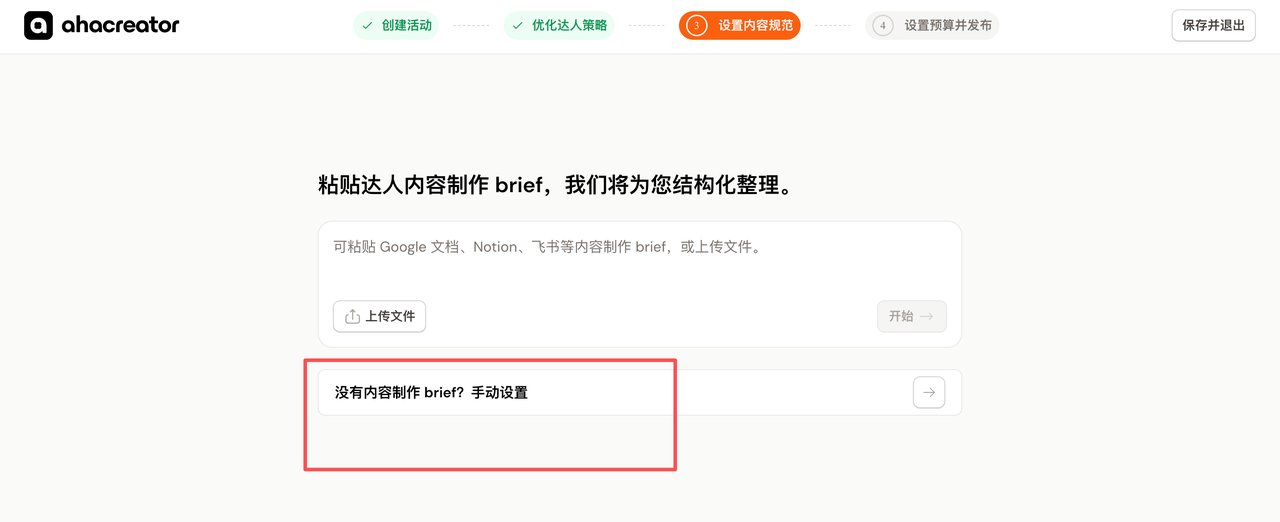
After selecting creators, start setting content specifications. If there is no ready-made Brief, you can set it manually.
Once opened, the AI has actually already written 90% of the content. You just need to confirm it, and if there are no problems, you can move to the next step.
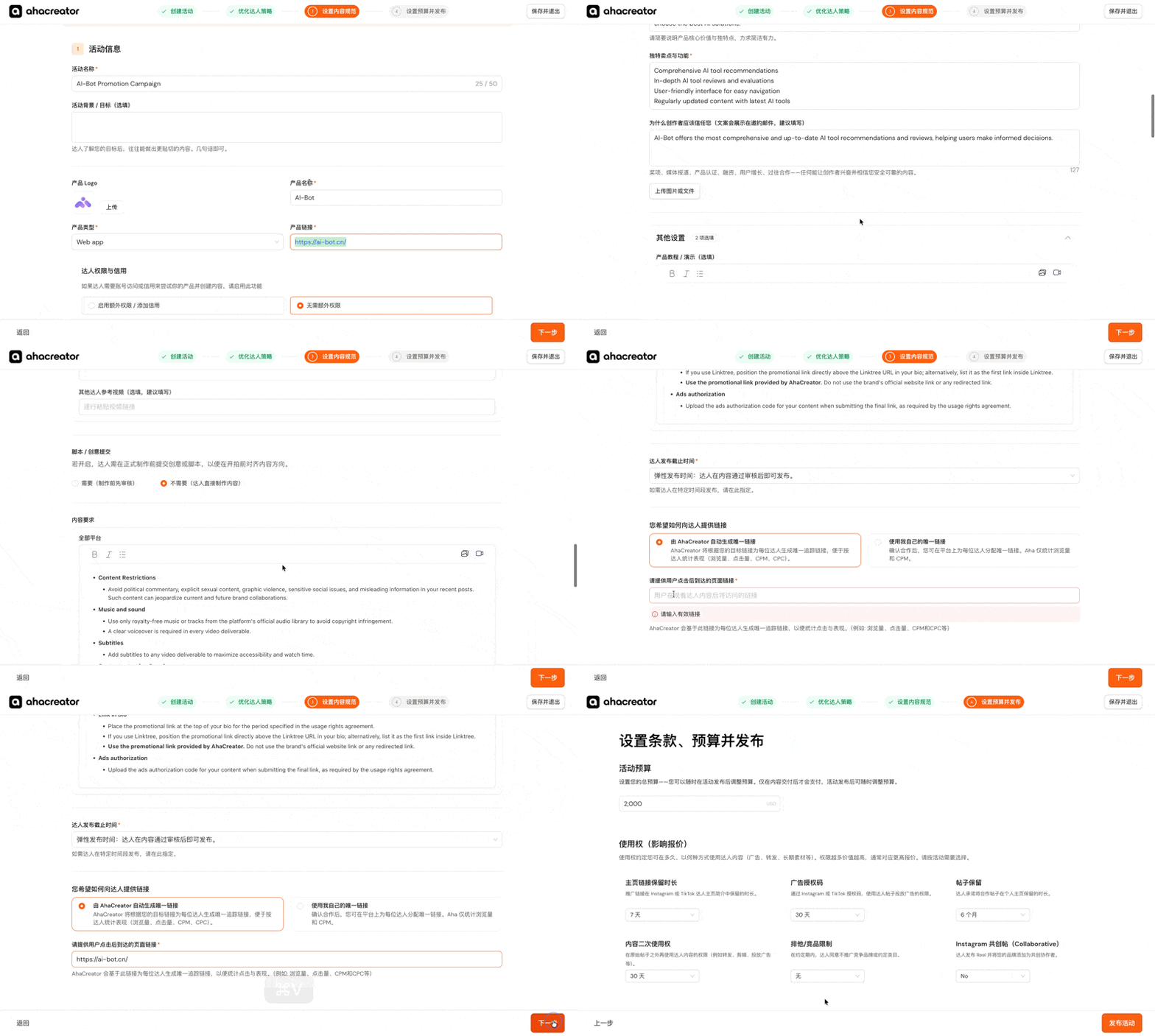
This step is for setting the budget and publishing stage.
After clicking to publish the campaign, you'll enter a recharge page like this.
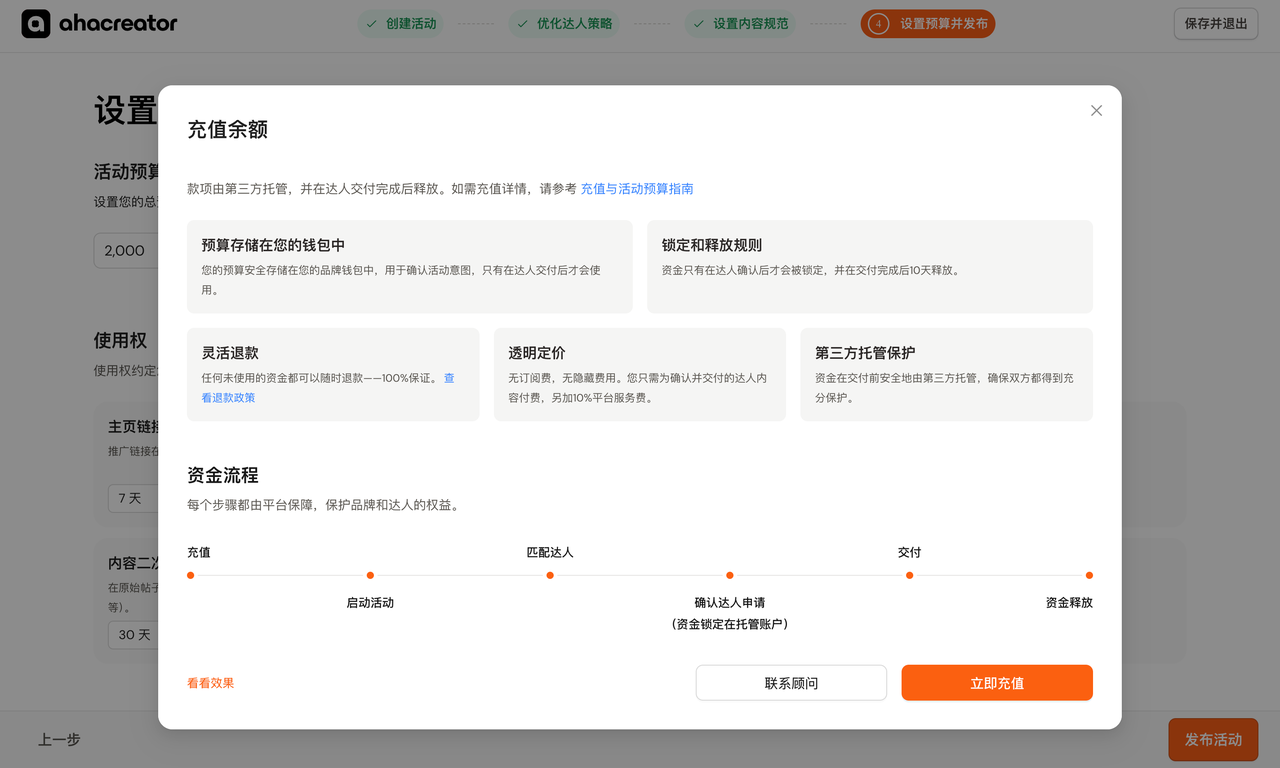
Currently, both online payment and bank transfer are supported.
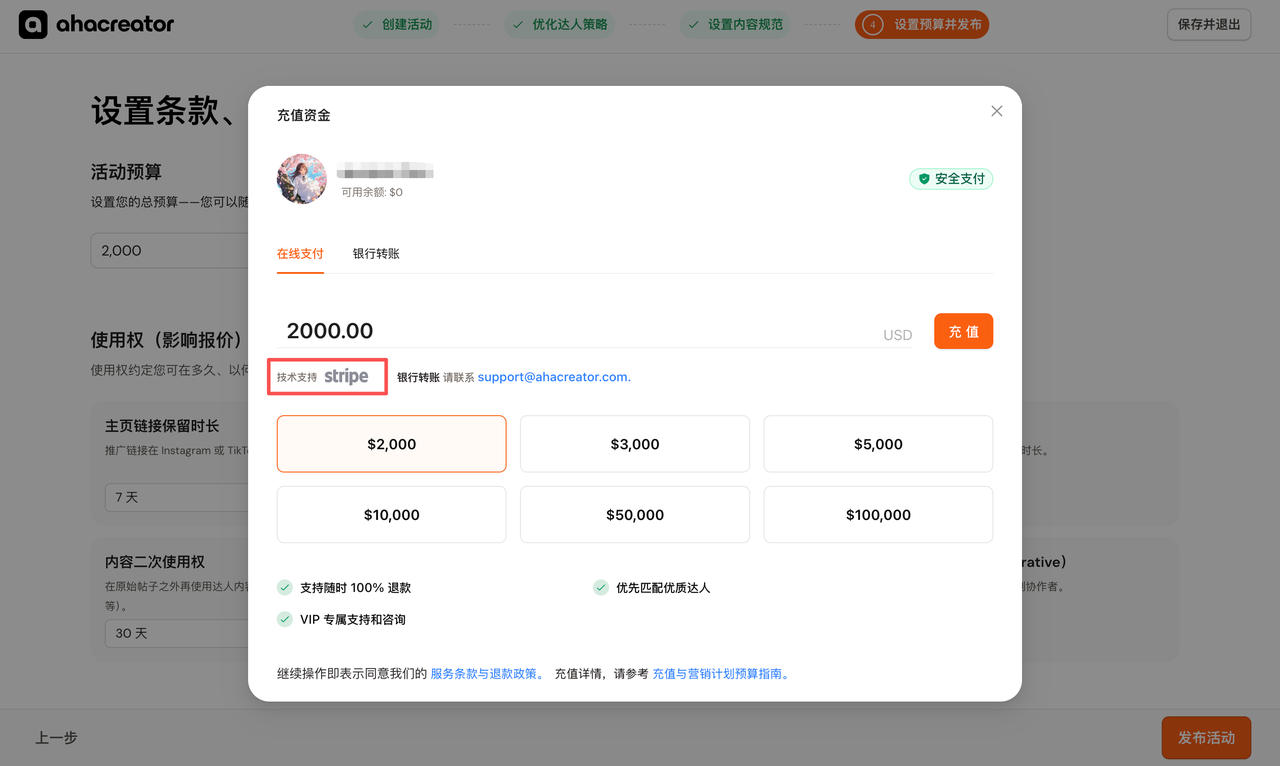
After recharging, click publish, and a campaign is created. The whole process takes less than 20 minutes.
Step 2: 100,000 creators already onboarded
After publishing, we enter the management page, and you can see this is already a very mature process.
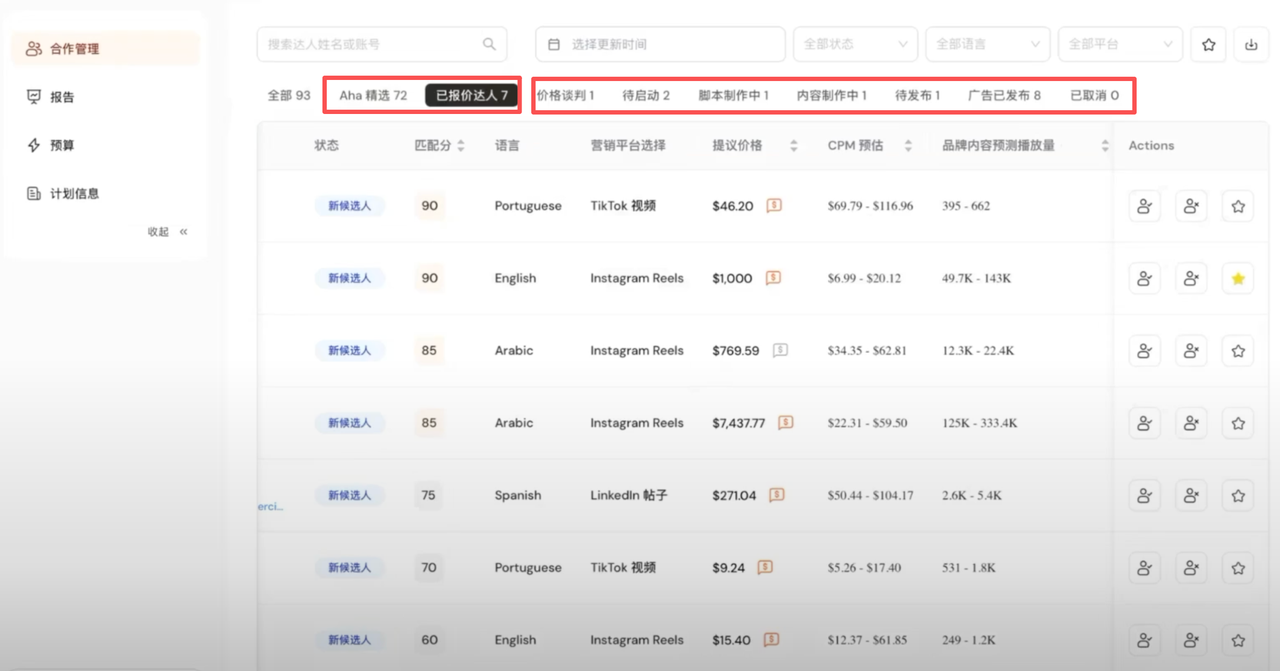
Many creator marketing tools give you a "potential creator list" with contact information, and then you send emails yourself, wait for replies, and negotiate prices, with a reply rate that is movingly low.
AhaCreator is different.It has 100,000 active creators with genuine collaboration records, and it is currently the largest AI-native influencer marketing platform in the world, with relatively high visibility and trust in the overseas creator ecosystem.The influencers on AhaCreator have all completed collaborations on the platform and have credit scores, historical delivery records, and on-time rate data.
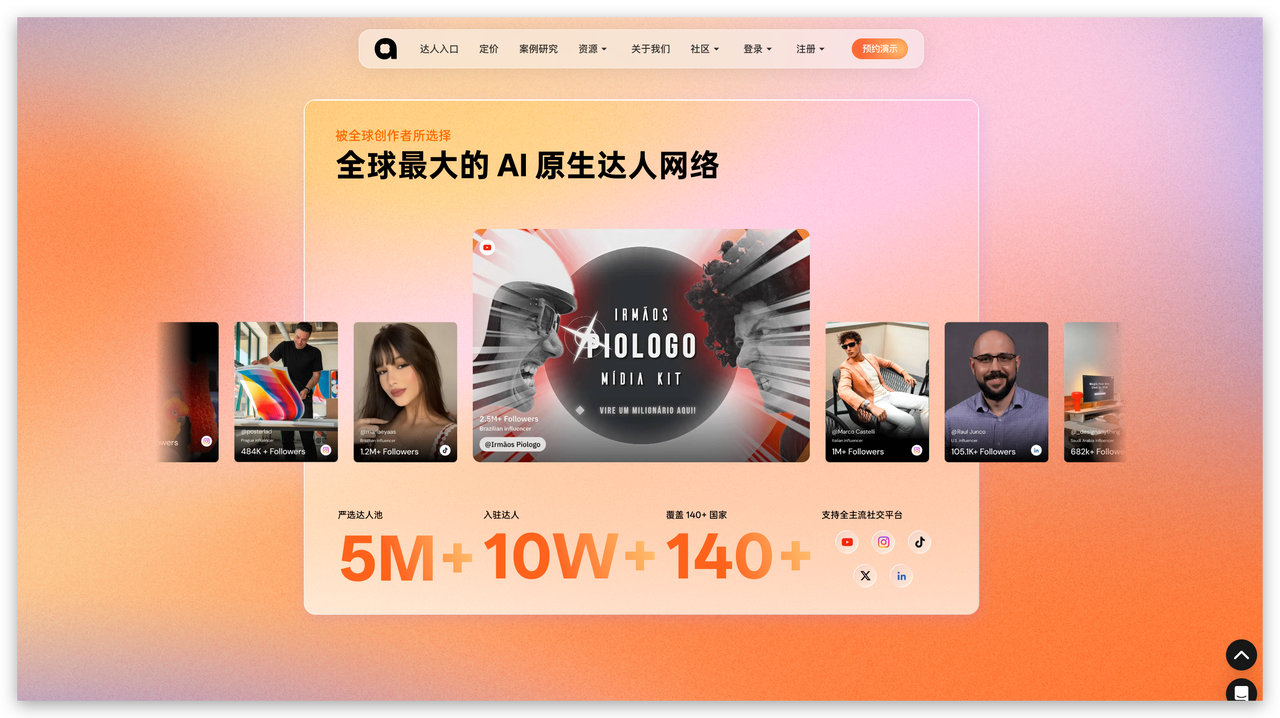
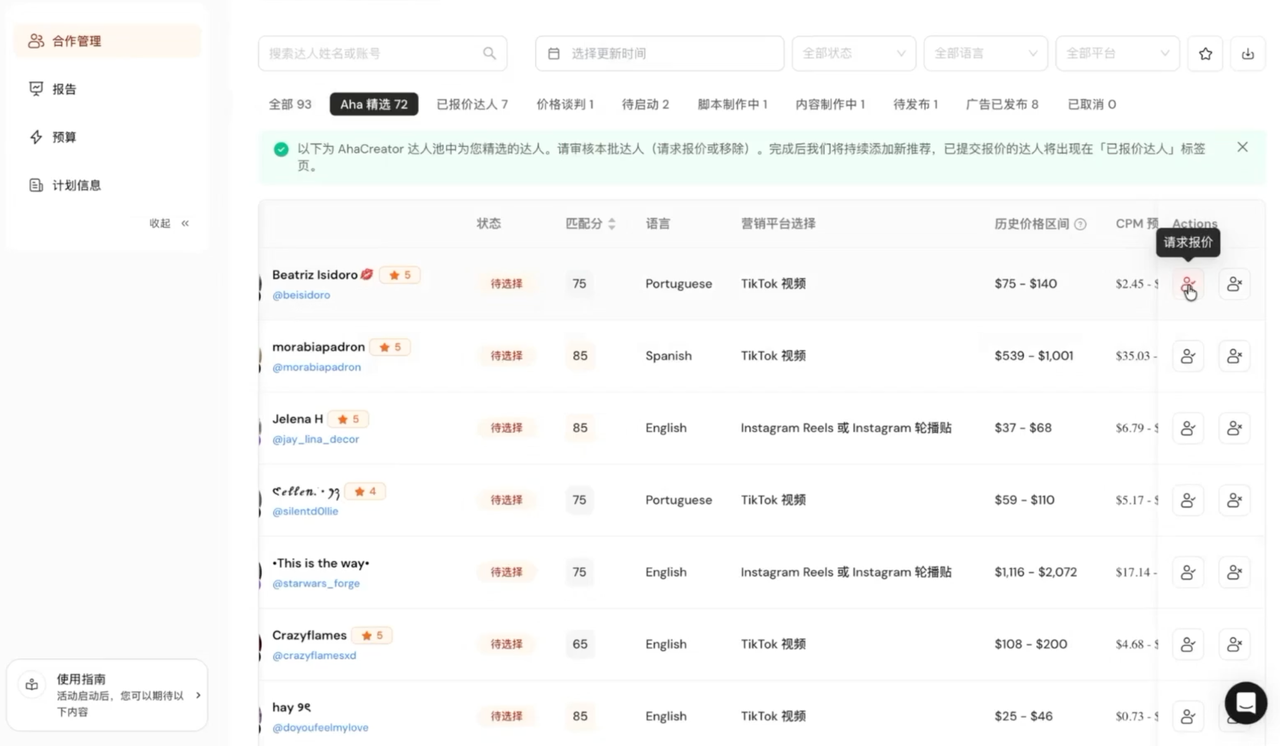
Those in this Aha Selection are influencers who have been active on the platform within 30 days, and you can directly request a quote.
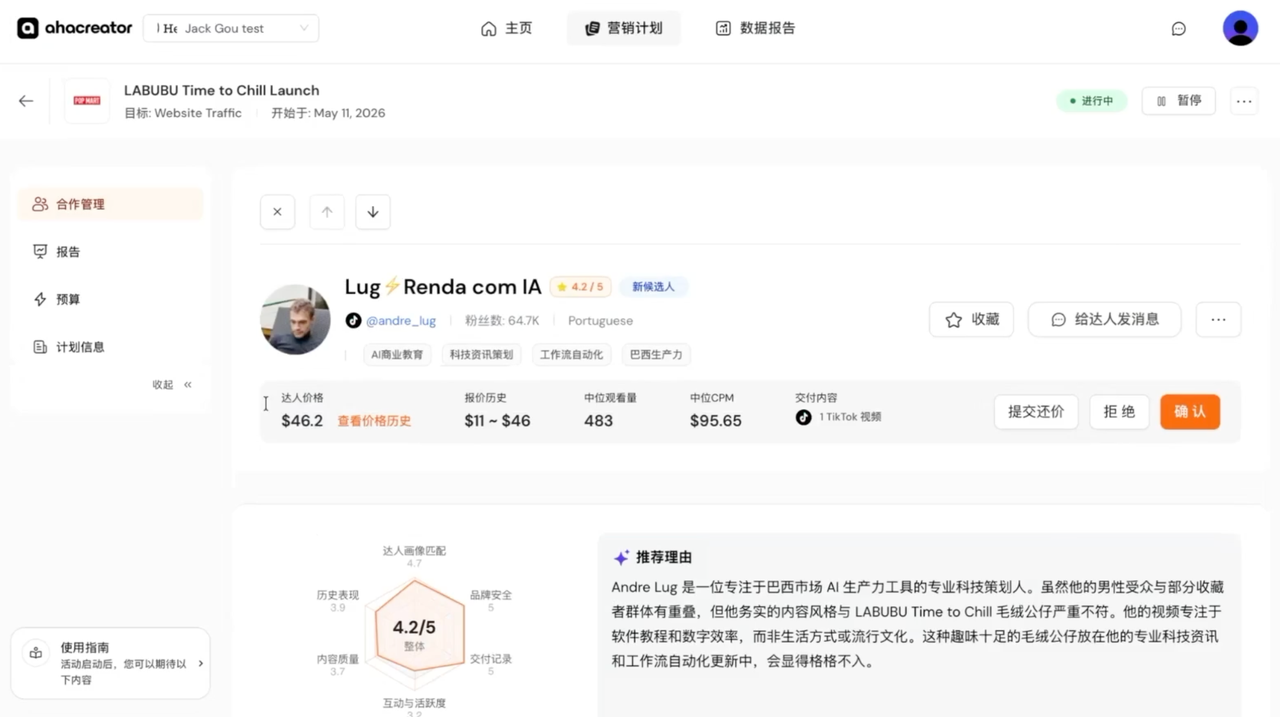
You can also open an influencer's page to view detailed information.
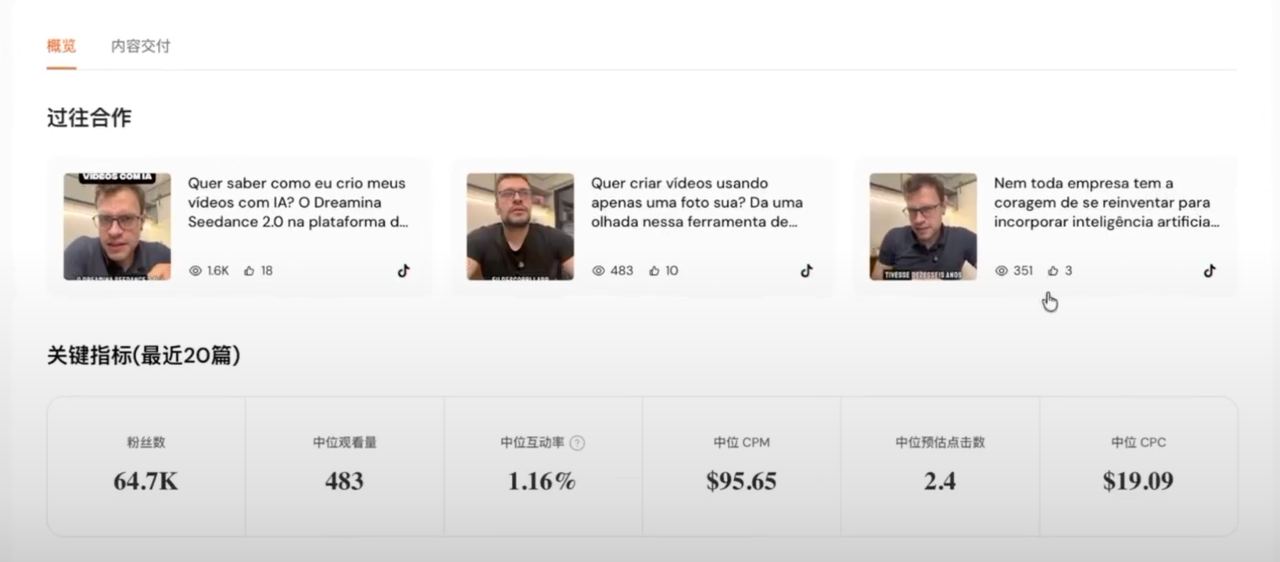
You can also see the blogger's past collaboration cases and detailed data.
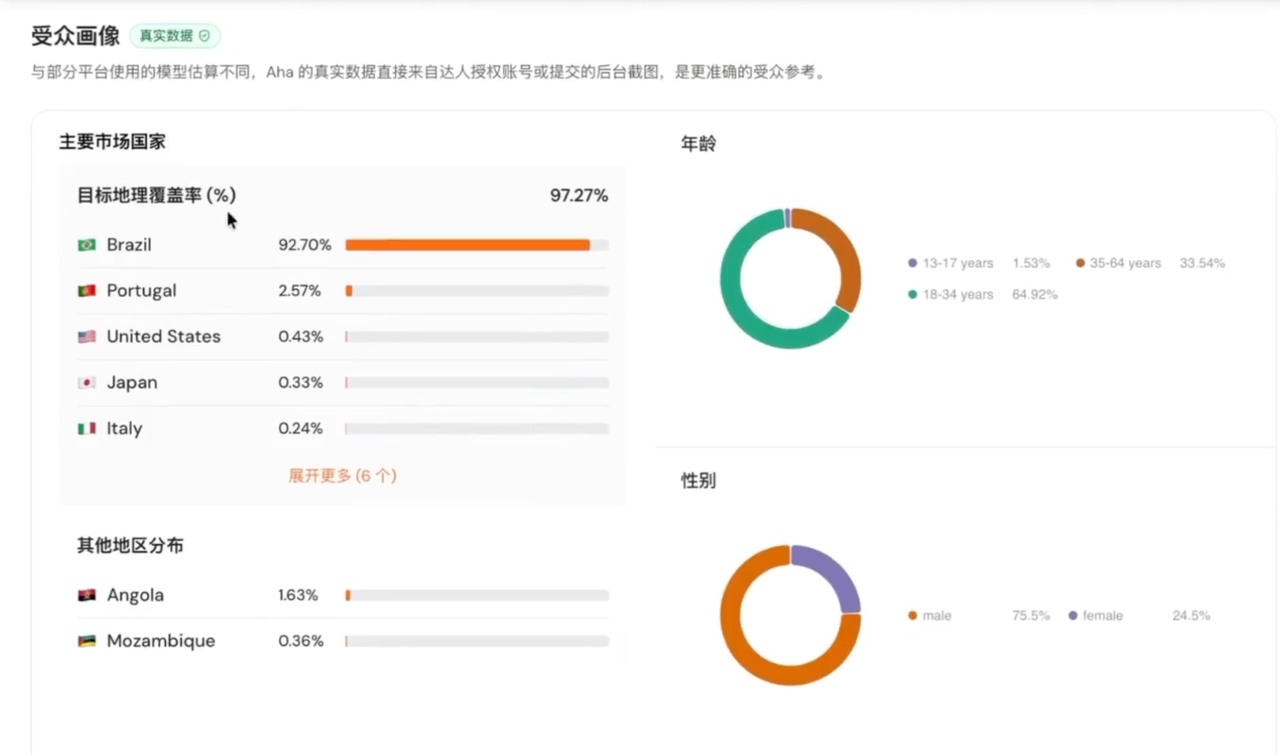
The audience profile is also very clear, including main market countries, age, and gender.
In the basic information, there is also whether they show their face, whether it is a talking-head video, and whether they have an accent. This team really understands ad placement—very detailed. Finally, there are delivery records.
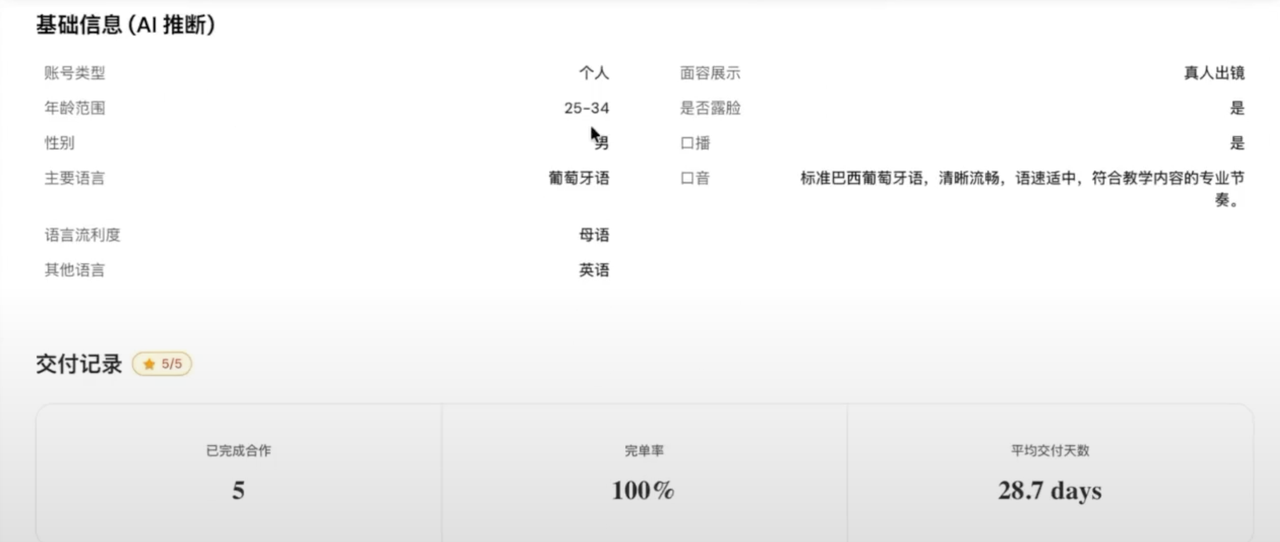
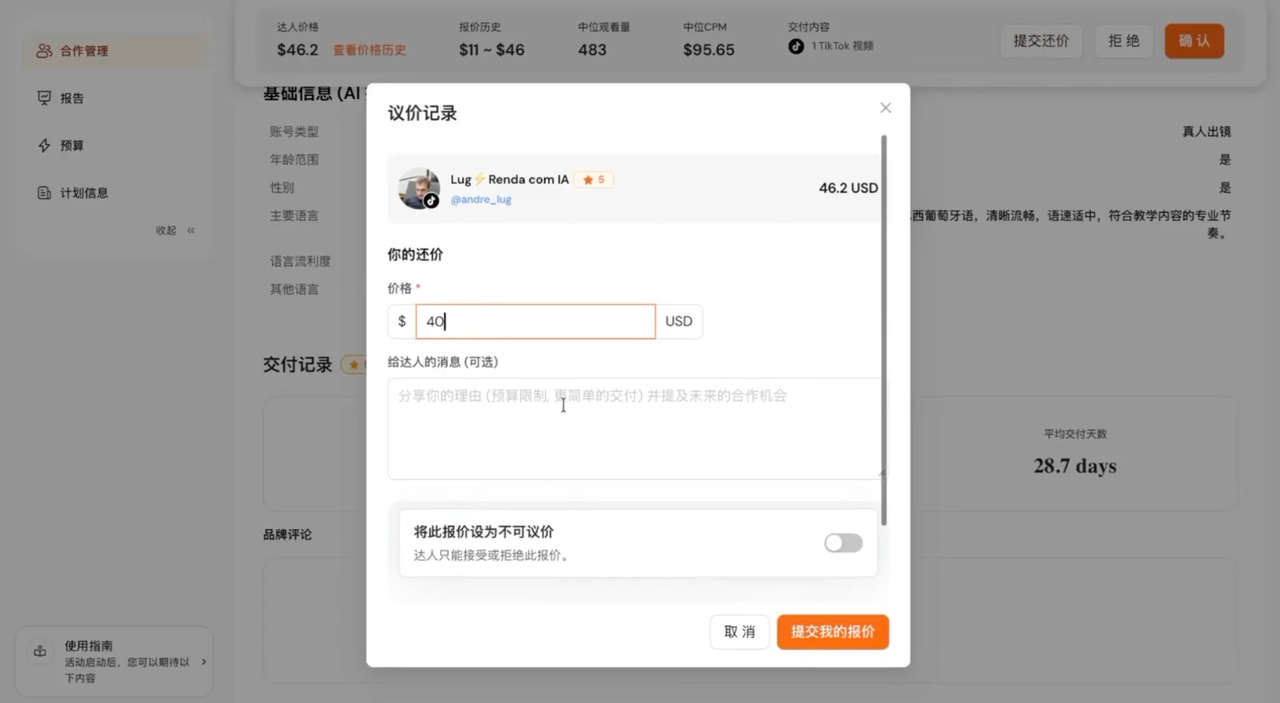
This information can better help us make selections. After selecting an influencer, you can also negotiate the influencer's quote, and multi-round negotiation is supported.
If broader coverage is needed, AhaCreator can also conduct deep mining from a pool of 5 million influencers. For those influencers who have not joined but match the profile, AI will automatically send invitations. But in my test this time, the 100,000 active influencers alone were enough.
"Post a request and someone takes the order"—this is really rare in influencer marketing.
Step 3: AI Risk Screening
What are you most afraid of when selecting influencers? It is not that you cannot find people, but that you find them and they fail.
Some bloggers have good-looking data, but only after collaborating do you discover that their followers were bought, comments were bot-generated, and the blogger even previously made controversial remarks. With this kind of pitfall, one misstep and the budget is wasted, the rhythm of the entire Campaign is disrupted, and the brand image is damaged.
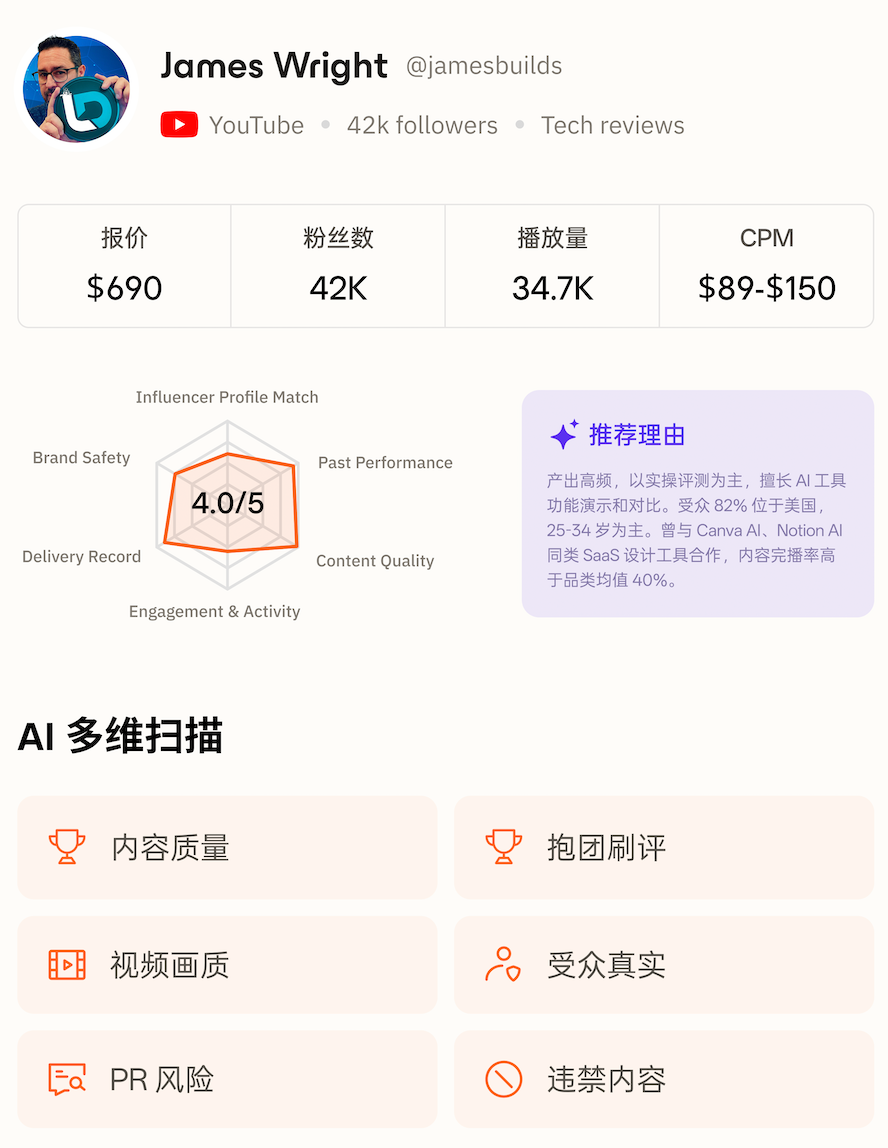
I found that AhaCreator has a feature called "AI Risk Screening." It can conduct comprehensive checks from two aspects: brand safety and content quality.
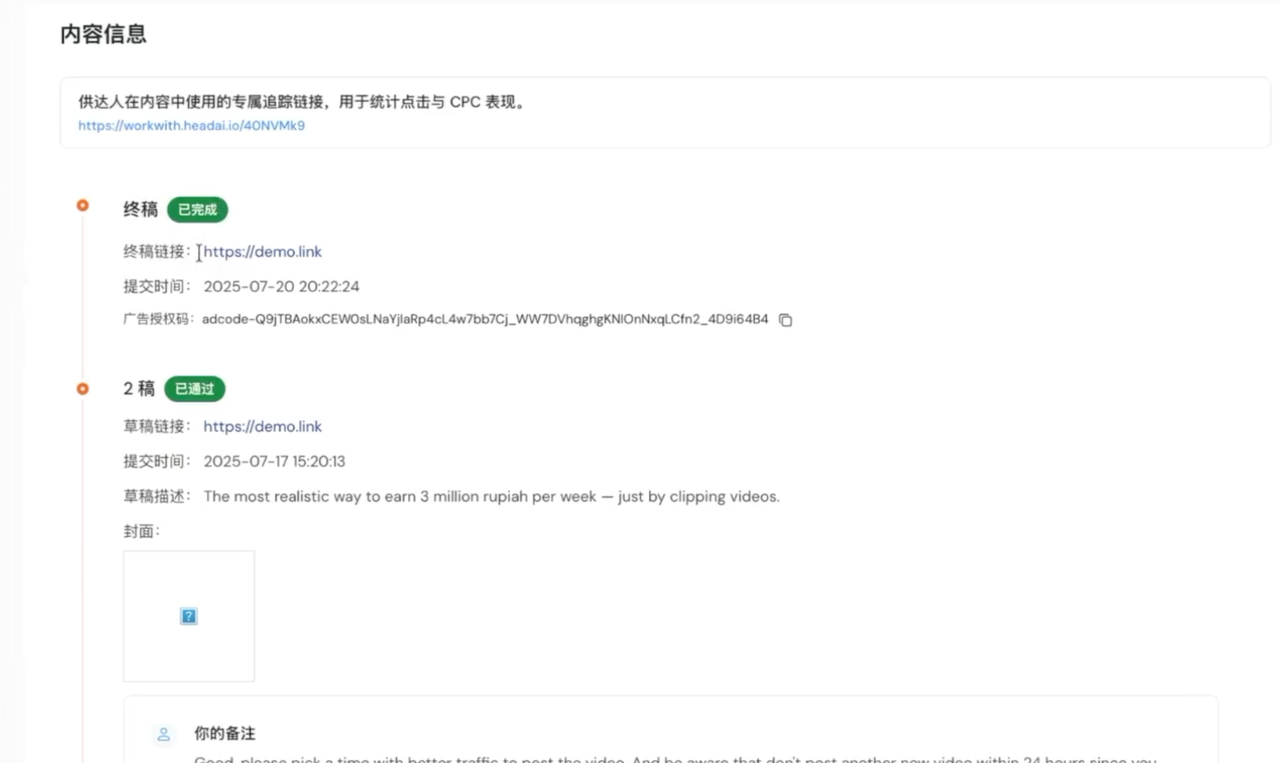
Without this screening, I would very likely have directly sent an invitation just because the blogger's homepage looked good, the photos were polished, and the data was decent. AI helped me flag potential risks before confirmation, and this really avoided big trouble.
It is equivalent to every blogger on your list having gone through a round of health checks in advance.
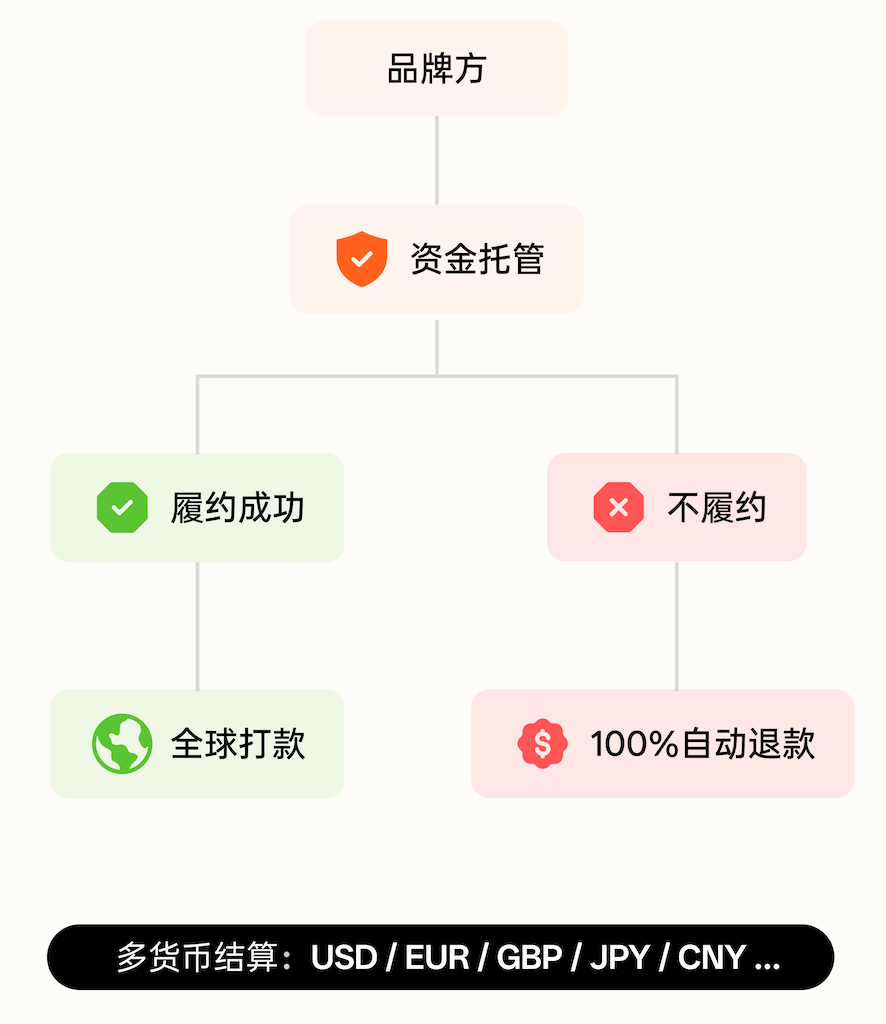
I think AhaCreator also has another major advantage, which is fund escrow. Payment is only settled after the blogger publishes, and if they fail to perform, 100% refunds are supported. I no longer have to worry about spending money without getting the job done.
Step 4: Full-process automatic advancement + AI automatic review
After the influencer confirms the collaboration, AI will automatically generate a timeline: first draft deadline, revision feedback window, final delivery date, and go-live milestone.
Then, AhaCreator automatically advances the entire process.
When the time comes, the system will send a reminder to the influencer. If the influencer does not respond for a long time, the system will automatically escalate, send a second-round reminder, and copy me at the same time. If the delay is severe, a refund process will be triggered.
I tried a simulated task, and from beginning to end I did not send a single direct message. AI was chasing the draft, following up, and recording progress on my behalf. I only appeared when my decision was needed—such as content review and confirmation of revision comments.
In the past, when doing influencer placements, the most frustrating part was not finding people, but watching them.
When confirming the collaboration, everything was said nicely, and then there was no movement for a week. You chase them, and the other party says "next week." Next week arrives and there is still no movement. You chase again, and the other party says "it's being filmed." Another week later, they give you a first draft, and it is completely wrong. You provide revision comments, and then wait another week...
With this AI execution system, I finally don't have to be that annoying "nag" anymore. Also, the AI automatic review feature is really great.
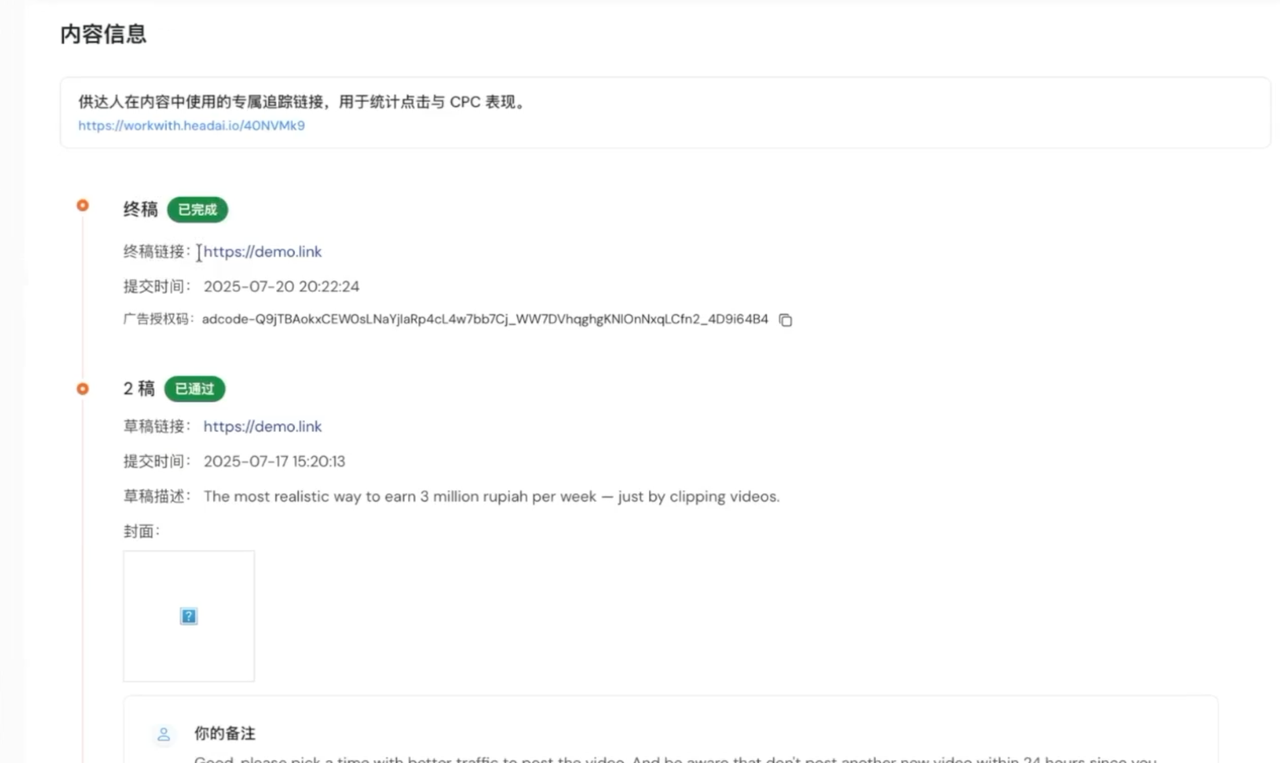
AhaCreator's AI review first looks at the completeness of the core selling points—whether the brand information, product features, and usage scenarios required in the Brief are covered. Then it checks the content structure compliance—whether it follows the suggested structure, and whether you've changed things on your own. Finally, it checks compliance, screening for prohibited words and brand safety risks.
This isn't a simple pass or fail—it's more like an experienced editor revising your draft for you.
Step Five: Data Review Automation
In the past, after a Campaign finished, the most painful part—data review—was just beginning.
You had to export data from each backend: view counts and watch time from YouTube, engagement rate and completion rate from TikTok, likes, comments, and link clicks from Instagram... then manually match this data to each creator and each piece of content, and compile it into one big table. For a 50-person Campaign, just organizing the data took two days. And you'd often run into creators giving the wrong links, incomplete data screenshots, or missing reports from some platform...
I've found that AhaCreator's automated data review feature is truly a game-changer.
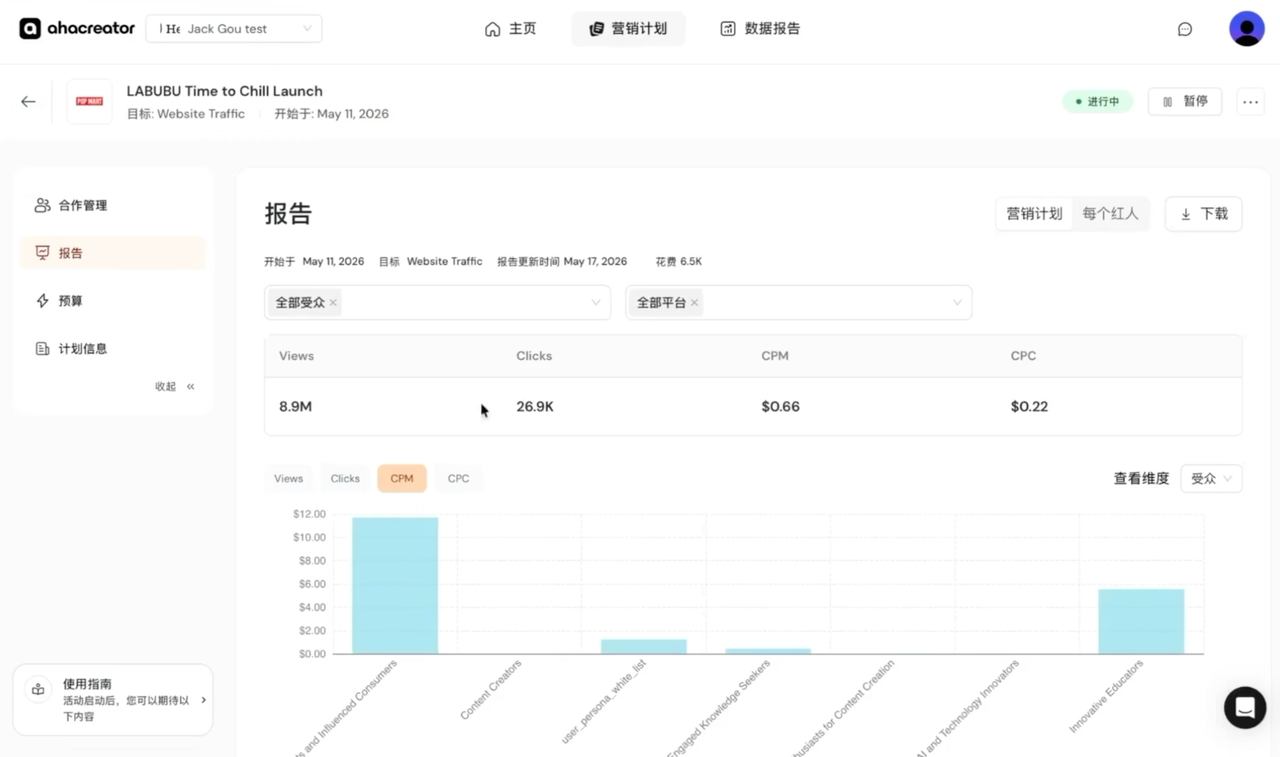
Once the Campaign ends, the AI generates a complete review report. First, there's an overall report for the entire marketing plan—total impressions, clicks, and so on.
Then, there's also a data review based on each individual creator.
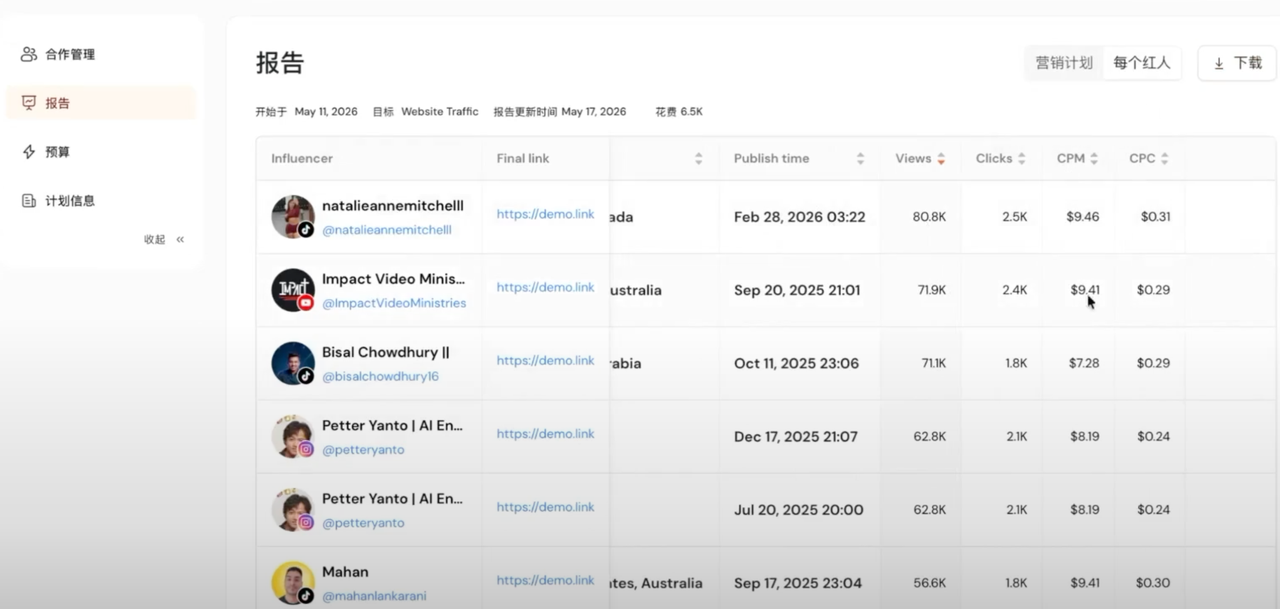
It clearly lists each creator's views, engagement, and click-through rate, and even calculates key ROI metrics like estimated CPM and CPC for you.
Creators are ranked from high to low, so you can see at a glance who truly performed and who's dragging the team down.
From now on, review is no longer about organizing data—more energy goes into reading reports and making decisions, clarifying how to do better next time. Anyone who's done ad placements understands the difference.
02. Some Sharing
I've been thinking about a question lately: in the AI era, what ability is truly valuable for people in marketing?
I think it should be judgment.
Because execution-level tasks are already being done by AI—finding creators, sending emails, chasing progress, reviewing content. Products like AhaCreator have already proven this out. What's left for humans is judgment: who to choose, what content to make, what strategy to take.
Execution is disappearing; decision-making is the moat.
If your brand is still at the stage of "only finding two or three top influencers a year," you probably don't need such a heavy system. AhaCreator is designed for scaled creator marketing, suitable for teams with a certain budget, wanting to improve efficiency, and tired of repetitive labor.
Also, you still need to spend a bit of time getting started. Although the process isn't complicated, creating a Campaign for the first time and understanding the functions of each module takes about 20-30 minutes. I myself watched a 20-minute video explanation, then spent half an hour trying it out, and basically got the hang of it.
But once you've run your first Campaign, the subsequentmarginal costis almost zero.