
Entering 2025, we are in an era of profound transformation driven by artificial intelligence, especially large language models (LLMs). The breakthrough progress of theoretical models is inspiring, and how to transform a powerful "brain" into an entity that can reliably and safely execute complex tasks in the real world has become a core issue of common concern for industry and academia. This is precisely the context and mission behind the birth of "Agent Engineering." Agent Engineering is not only about writing code, but also about a systematic discipline for building, managing, and governing a new generation of intelligent systems.
Starting from the most basic concepts, this article explores construction methods, technical architecture, and lifecycle management in depth, and looks ahead to the challenges and future trends it faces. Whether you are a technical developer, product manager, corporate decision-maker, or a learner curious about the future of AI, it will provide a comprehensive and easy-to-understand knowledge framework.

What Is Agent Engineering
Agent Engineering is an interdisciplinary engineering methodology that systematically designs, develops, deploys, maintains, and governs agents that can autonomously perceive the environment, make decisions, and take actions to achieve specific goals. If AI models (such as the GPT series) are the "brain" of an agent, then Agent Engineering is the complete science and art of building its "body," "senses," "memory," and "code of conduct."
The Core Connotations of Agent Engineering
- Autonomy: Agents can make decisions and take actions autonomously based on internal states and the external environment without human intervention.
- Goal-Oriented: All behaviors of an agent unfold around one or more preset goals.
- Environment Perception & Adaptation: Agents can perceive their environment (physical or digital) through various sensors or APIs and adjust their behavior according to environmental changes.
- Learning & Evolution: Advanced agents have the ability to learn from experience, continuously optimize their strategies and knowledge bases, and achieve self-evolution.
The Connotation of "Engineering"
"Engineering" emphasizes that it differs from purely academic research or personal projects. It means that when building agents, we adopt a systematic, standardized, and measurable methodology. This includes comprehensive consideration of reliability, stability, security, scalability, maintainability, and cost-effectiveness. The goal of Agent Engineering is to move agent development from "alchemy-style" manual workshops to "industrialized" assembly-line production, ensuring the high quality and high availability of the final product.
Core Differences from Traditional Software Engineering
Agent Engineering and traditional software engineering share the same roots and many basic principles (such as modularity and version control). Their core difference stems from the fundamental uncertainty of the object they deal with—"intelligence."
| Dimension | Traditional Software Engineering | Agent Engineering |
|---|---|---|
| Core Logic | Deterministic, rule-based: Input A necessarily outputs B. Code logic is precisely defined by programmers. | Probabilistic, learning-based: Input A may output B, C, or D, depending on the model's training data and internal state. Behavior is uncertain and emergent. |
| Development Paradigm | Code as Logic: Programmers write explicit instructions and algorithms to define system behavior. | Model as Logic: Developers primarily shape and guide the model's behavior through selection, training, fine-tuning, and prompt engineering. |
| System Behavior | Predictable, fully reproducible: Under the same environment, the program's behavior is stable and consistent. | Dynamic, adaptive, difficult to fully predict: The agent's behavior evolves according to environmental changes and its own learning, and may produce unexpected "emergent" behaviors. |
| Testing and Verification | Methods such as unit testing and integration testing can effectively verify the correctness of functionality. | Traditional testing methods are insufficient; adversarial testing, scenario simulation, evaluation benchmarks, and continuous online monitoring need to be introduced to ensure that its behavior remains within "safety boundaries". |
| Maintenance and Iteration | Mainly focuses on code bug fixes and feature updates. | In addition to code, there is more focus on model drift, data quality, and hallucination issues, requiring continuous data engineering and model retraining. |
Agent engineering is the evolution and expansion of software engineering in the AI era. It acknowledges and embraces the uncertainty of AI models, and around this characteristic has established a whole new set of design patterns, development processes, and governance systems to create intelligent, reliable autonomous systems.
The Path of Agent Evolution
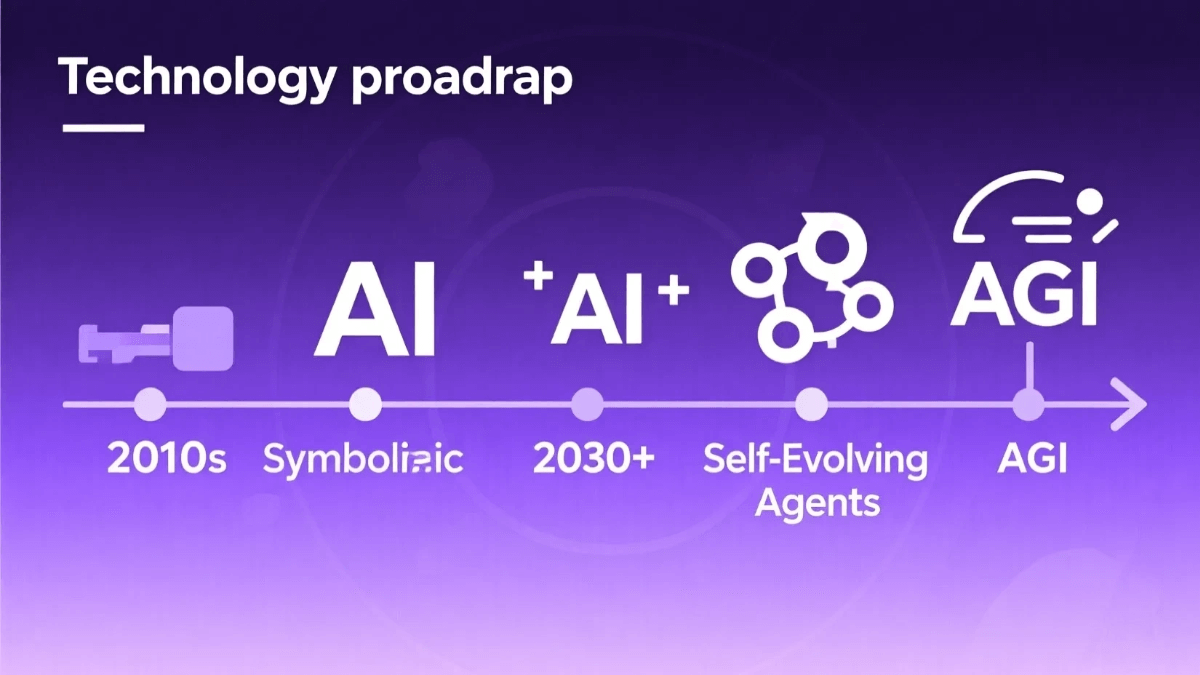
The development history of agents profoundly reflects the shifts in artificial intelligence research paradigms.
Early Exploration: Rule-Based Symbolic Agents
The idea of agents can be traced back to the mid-20th century artificial intelligence "Dartmouth Conference." Early agent research was mainly built on Symbolicism. Agents of this period, such as expert systems, derived their "intelligence" from a large number of "IF-THEN" rules prewritten by human experts. They performed excellently in a closed, deterministic environment and could carry out logical reasoning tasks. The drawbacks were also obvious: the knowledge base was costly to build, they could not handle unknown situations outside the rules, and they lacked learning and adaptive capabilities.
The Rise of Connectionism: The Embryonic Form of Learning and Adaptation
With the rise of Connectionism, especially deep learning, the research paradigm of agents underwent a transformation. Models based on neural networks gave agents the ability to learn from data for the first time. Driven by Reinforcement Learning, agents such as AlphaGo surpassed the top human level in specific tasks such as board games. Agents at this stage demonstrated strong pattern recognition and strategy learning capabilities, but their abilities were usually limited to a single domain and required massive amounts of training data and computational resources.
The Large Language Model (LLM) Revolution: The Birth of the Agent's "Brain"
In the early 2020s, the emergence of large language models (LLMs) represented by the GPT series brought revolutionary breakthroughs to the development of agents. LLMs demonstrated unprecedented capabilities in language understanding, generation, reasoning, and knowledge integration, making them an ideal "brain" for building general-purpose agents. LLM-based Agents no longer need to be trained from scratch for each task; they can use the broad world knowledge contained in LLMs to understand complex tasks through natural language instructions and perform preliminary planning and reasoning.
The Frontier of 2025: The Golden Age of LLM-based Agents
2025 is precisely the golden age of LLM-based Agent development. The focus of research and development has shifted from improving the performance of LLMs themselves to how to build around LLMs a complete intelligent agent system that can interact with the outside world and execute tasks. Today's agents can "speak," can "see" and "hear," and can "do" by invoking tools such as APIs, demonstrating a trend toward generalization and multimodality.
The Core Technical Architecture of Agent Engineering
The powerful capabilities of modern agents do not come only from the core LLM, but from a carefully designed, modular technical architecture. The technical architecture ensures that agents can effectively perceive the world, think, and take action.
General Architecture Model: The Closed Loop of Perception-Planning-Action
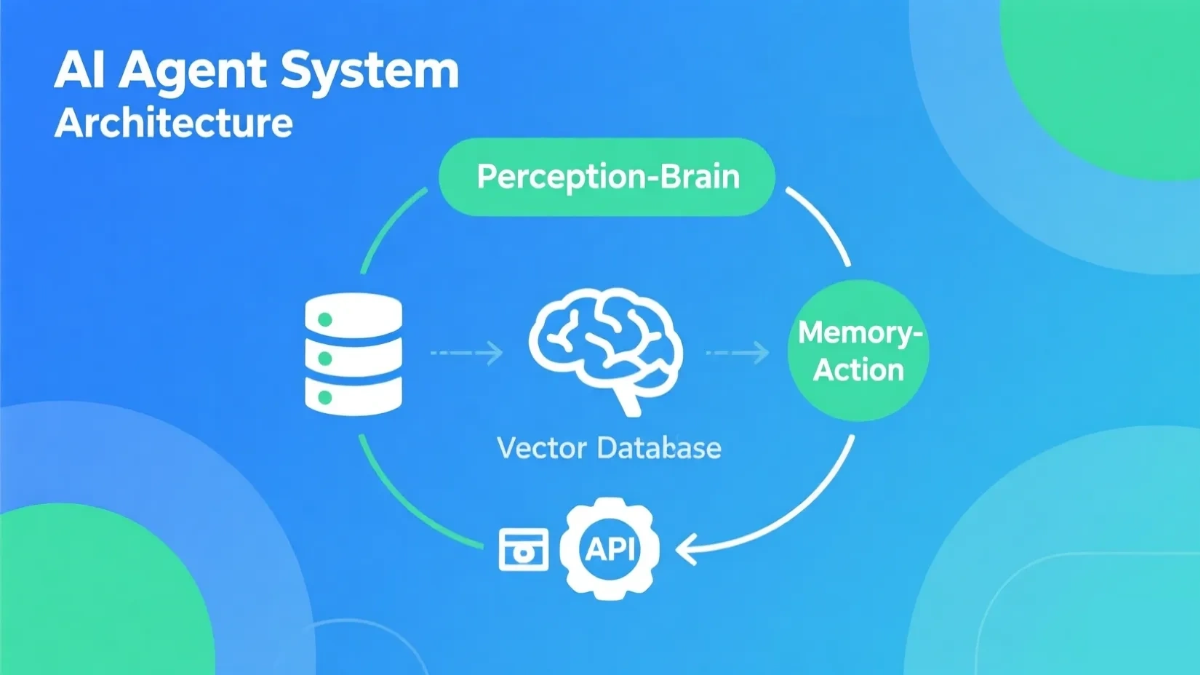
Currently, mainstream agent systems follow a closed-loop architecture of "Perception-Planning-Action" or similar ideas. The architecture mimics the basic working mode of biological agents:
- Perception: Receive various kinds of information from the external environment.
- Planning: Based on the perceived information and internal goals, carry out thinking, reasoning, and decision-making, decomposing complex tasks into a series of executable steps.
- Action: Execute the planned steps and interact with the external world by invoking tools or APIs.
- Feedback and Iteration: The results of actions change the environment, and the agent perceives the new environmental state again, forming a closed loop of continuous learning and optimization.
The cyclical process enables the agent to dynamically adapt to environmental changes and continuously advance toward the ultimate goal.
In-Depth Analysis of Core Modules
Perception Module
The perception module is the information input end of the agent, responsible for collecting information from diverse sources and converting it into a format that the "brain" can understand. For purely software agents, information sources are web page text, databases, JSON data returned by APIs, natural language input by users, and so on. For embodied agents that interact with the physical world (such as robots), the perception module needs to process data from sensors such as cameras, microphones, and lidar. Advances in multimodal technology enable the perception module to fuse and process multiple kinds of information such as text, images, and sound, providing the agent with a more comprehensive cognition of the environment.
"Brain" Module
The core of the agent, composed of one or more large foundation models, especially LLMs. The "brain" module is responsible for the highest-level cognitive activities, including:
- Understanding and Intent Recognition: Parse the information passed in by the perception module and the instructions issued by the user, and understand the ultimate goal of the task.
- Reasoning and Decision-Making: Based on its own knowledge and the current situation, carry out logical reasoning and causal analysis, and make decisions about the next action.
- Task Planning and Decomposition: Decompose a grand goal into a series of specific, executable subtasks. This is the key capability of agents for handling complex problems.
Memory Module
To avoid "forgetfulness," agents need a memory module to store and retrieve information. The memory module is usually divided into:
- Short-term Memory: Used to store contextual information of the current task, such as dialogue history, results of intermediate steps, and so on. It is crucial for maintaining the coherence of the task.
- Long-term Memory: Used to store knowledge learned from past experiences, user preferences, successful solutions, etc. Through long-term memory, agents can continuously accumulate experience and become increasingly "smart" and personalized. Technologies such as vector databases are often used to implement efficient long-term memory retrieval.
Planning Module (Planning)
The planning module receives macro-level decisions from the "brain" and translates them into detailed action plans. For example, if the goal is to "book a business trip to Shanghai next week," the planning module will break it down into a series of ordered steps such as: "query flight information," "query hotel information," "compare prices and times," "select the optimal option based on user preferences," and "call the booking API." Advanced prompt engineering techniques such as Tree of Thoughts are often applied here to explore and evaluate different action paths.
Action Module (Action)
The action module is the agent's "hands" and "feet," responsible for executing the planned specific operations. Rather than directly executing all tasks, it interacts with the external world through a "toolbox." The toolbox includes:
- Search Engine API: Used to obtain the latest external information.
- Calculator or Code Interpreter: Used to perform precise mathematical calculations or code.
- Enterprise Internal API: Used to query inventory, place orders, update customer relationship management (CRM) systems, etc.
- IoT Device Control Interface: For embodied agents, used to control robotic arms, turn lights on and off, etc.
By giving agents the ability to use tools, the boundaries of their capabilities are greatly expanded, enabling them to complete tasks that LLMs themselves cannot accomplish.
Key Technology Stack Driving Agents
Large Language Models (LLMs) and Foundation Models
LLMs are the absolute core of the current agent revolution. Their powerful natural language processing capabilities and rich world knowledge provide agents with a general foundation for understanding and reasoning. In addition to LLMs, the integration of multimodal foundation models such as vision and speech also enables agents to process more diverse information. The continuous improvement of model performance is the fundamental reason why the upper limit of agent capabilities is constantly being broken.
Chain of Thought (CoT) and Tree of Thoughts (ToT)
To solve complex problems, agents cannot simply think in one step. Chain of Thought (CoT) technology significantly improves performance on tasks such as logic and mathematics by guiding LLMs to generate step-by-step reasoning processes. Going further, Tree of Thoughts (ToT) supports agents in exploring multiple reasoning paths simultaneously, evaluating intermediate results, and selecting the optimal path to continue deeper, greatly enhancing the robustness of planning and problem-solving.
Retrieval-Augmented Generation (RAG)
The knowledge of LLMs is static after training is completed, cannot obtain the latest information, and does not include private knowledge in specific domains. Retrieval-Augmented Generation (RAG) technology solves this problem. When an agent encounters a knowledge blind spot, the RAG framework first retrieves relevant information from external knowledge bases (such as enterprise internal documents or the internet), then provides the information as context to the LLM to assist in generating more accurate and more timely answers.
Tool Use
The key technology for upgrading agents from "chatbots" to "actors." Through APIs, agents can call external tools to complete tasks they are not good at. For example, using a calculator for precise calculations to avoid LLM "hallucinations" in mathematics; calling search engines to obtain real-time news; connecting to an enterprise's ERP system to query order status. Tool use capability is the core of agent engineering, connecting the LLM's language intelligence with various functional services in the real world.
Multimodal Fusion Technology
Future agents will not only be text processors. Multimodal Fusion technology enables agents to simultaneously understand and process information from multiple modalities such as text, images, audio, and video. A multimodal agent can "see" images shared by users, "hear" users' voice commands, and generate comprehensive reports containing images and text, greatly enriching the human-computer interaction experience and the application scenarios of agents.
Development and Practice of Agent Engineering
Building powerful agents requires following a systematic engineering methodology.
Systematic Engineering Methodology
Agent engineering emphasizes applying the best practices of software engineering to the agent development process. This includes:
- Requirements Engineering: Clearly define the agent's goals, capability boundaries, performance metrics, and user interaction methods.
- Architecture Design: Select an appropriate technical architecture and design the interfaces and data flows between modules.
- Agile Development and Iteration: Adopt a small-step, fast-running, rapid iteration approach to continuously optimize the agent's performance and user experience.
- Testing and Evaluation: Establish a comprehensive evaluation system to assess the agent's performance from multiple dimensions such as task completion, accuracy, robustness, and security.
- Observability and Interpretability: Ensure that the agent's operating status can be monitored and that a certain degree of explanation can be provided for its decision-making process, facilitating debugging and trust building.
Overview of the Development Lifecycle
A complete agent project usually goes through the following stages, each with clear goals and deliverables:
- Phase One: Requirements Definition and Goal Setting. Clarify the agent's application scenarios, core functions, performance indicators (KPIs), and user personas. This is the starting point of the entire project and determines the direction and focus of subsequent development.
- Phase Two: Architecture Design and Technology Selection. Select a general architecture (such as PDE), design core modules, determine the LLM base model, toolset, and memory system technical solutions, determining the overall structure and performance ceiling of the system.
- Phase Three: Core Model (LLM) Integration and Fine-tuning. Integrate the selected LLM, conduct Prompt Engineering or model Fine-tuning based on specific tasks and domain knowledge, which is a key step in giving the agent a "brain."
- Phase Four: Toolset and API Integration. Develop or integrate the external tools that the agent needs to use, such as search engine APIs, database interfaces, internal system APIs, etc., to expand the agent's capability boundaries.
- Phase Five: Memory System Construction. Design and implement short-term memory and long-term memory mechanisms, configure vector databases, etc., to give the agent "memory" capabilities so that it can accumulate experience.
- Phase Six: System Integration and TestingIntegrate all modules together and conduct comprehensive system testing, including unit testing, integration testing, performance testing, and security testing.
- Phase Seven: Deployment and LaunchDeploy the agent to the production environment, conduct canary releases and A/B testing, collect user feedback, and gradually expand the scope of use.
- Phase Eight: Operations and Continuous OptimizationMonitor the agent's operating status, collect user feedback, regularly update models and tools, and continuously optimize performance and user experience.
Challenges and the Future
Major Challenges Currently Faced
Reliability & Stability:
- Hallucination problem: As the core of decision-making, LLMs sometimes "spout nonsense with a straight face," producing "hallucinated" outputs that do not match the facts. In high-risk fields such as finance and healthcare, this can be fatal.
- Fragility of long-chain tasks: When a task is decomposed into dozens of steps, a tiny error in any link can cause the entire task chain to fail. The robustness of the system faces a huge test.
Security & Governance:
- Prompt injection and jailbreaking: Malicious users bypass safety guardrails through carefully crafted inputs (prompts), inducing the agent to perform malicious operations or leak sensitive information.
- Data privacy and security: When an agent interacts with various APIs and databases, how to ensure that user data privacy is not leaked, and how to prevent it from being used for unauthorized purposes, is a core security issue.
- Multi-agent collusion: In multi-agent systems, how to prevent malicious "collusion" behavior among agents that harms the interests of the system or users is a cutting-edge research topic.
Complexity in Evaluation & Testing:
- Non-determinism: Because agent behavior is non-deterministic, traditional testing methods based on fixed inputs and outputs are almost ineffective. We cannot exhaustively enumerate all possible inputs and scenarios.
- Lack of evaluation standards: How can we scientifically and comprehensively evaluate an agent's level of "intelligence," quality of task completion, and security? At present, the industry has not yet formed unified, widely recognized evaluation standards and benchmark test sets.
Cost & Efficiency:
- High inference costs: The large models that drive agents, especially the most advanced models, have very high API call costs and computational resource consumption. This limits their application in many cost-sensitive scenarios.
- Latency issues: Complex chains of thought (Chain-of-Thought) and multi-round tool calls significantly increase an agent's response time, affecting user experience.
Future Development Trends
Engineering & Platformization:
- Low-code/no-code agent development platforms: The future trend is the emergence of more mature platforms that allow business experts to quickly build and deploy agents through graphical interfaces or natural language, greatly lowering the development threshold.
- Maturity of AgentOps/MLOps: A DevOps/MLOps toolchain and best practices specifically for agents will be formed, covering the entire lifecycle from development, testing, and deployment to monitoring, improving development efficiency and system reliability.
Evolution of Models & Architectures:
- Domain-Specific Models: In addition to general-purpose ultra-large models, more specialized models that are deeply optimized for specific domains (such as finance, law, and biology), smaller, more efficient, and lower-cost, will emerge.
- Hybrid Architectures: Systems will increasingly adopt architectures that combine "fast and slow thinking," using small, fast models to handle simple, high-frequency tasks and invoking expensive large models only when deep reasoning is needed, balancing cost and performance.
Enhanced Autonomy & Collaboration:
- Self-Learning and Evolution: Agents will possess stronger self-reflection and learning capabilities, able to automatically optimize their own behavioral strategies from both successful and failed experiences, and even achieve self-repair and iteration of code.
- Complex Social Collaboration: Multi-agent systems will develop more complex collaboration and negotiation protocols, able to form dynamic teams to solve open-ended problems like human organizations, achieving true "swarm intelligence."
Built-in Security & Ethics:
- The spread of the "shift-left security" concept: Security and ethical considerations will no longer be after-the-fact remediation, but will be deeply integrated into the agent's architecture and development process from the outset of design.
- Explainability and Traceability: Technology will continue to advance, improving the transparency of the agent's decision-making process so that humans can understand, audit, and even intervene in its behavior, ensuring that AI always remains accountable to humans.
Agent engineering, as a bridge connecting artificial intelligence theory with real-world applications, is rapidly evolving from a cutting-edge concept into a core engineering discipline. By introducing systematic design thinking, rigorous lifecycle management, a layered technical architecture, and comprehensive security governance, it provides us with methodologies and toolkits to harness and unleash the enormous potential of AI.
Currently, agent engineering is still in its early stages of development, and many challenges remain to be resolved. Just as with every technological revolution in history, the process of overcoming challenges is precisely the process of driving technological maturity, catalyzing industrial transformation, and shaping future society. It can be foreseen that in the coming years, with continuous technological breakthroughs and increasingly mature engineering practices, agents will become deeply integrated into every aspect of our work and life, becoming a key engine driving the development of social productivity. Mastering agent engineering is mastering the key to opening the door to the next intelligent era.