
What Is AG-UI
AG-UI (Agent-User Interaction Protocol) is an open-source, lightweight, event-based protocol that supports standardized interaction between AI Agents and frontend applications. AG-UI defines 16 standard event types, supports multiple transport methods such as SSE, WebSocket, and Webhook, and enables streaming communication and bidirectional state synchronization. AG-UI is highly flexible and compatible, supporting seamless integration withLangGraph、CrewAIand many other Agent frameworks. AG-UI makes it easy for developers to quickly build interactive AI applications, such as intelligent customer service and intelligent Q&A interfaces, greatly improving development efficiency and user experience.
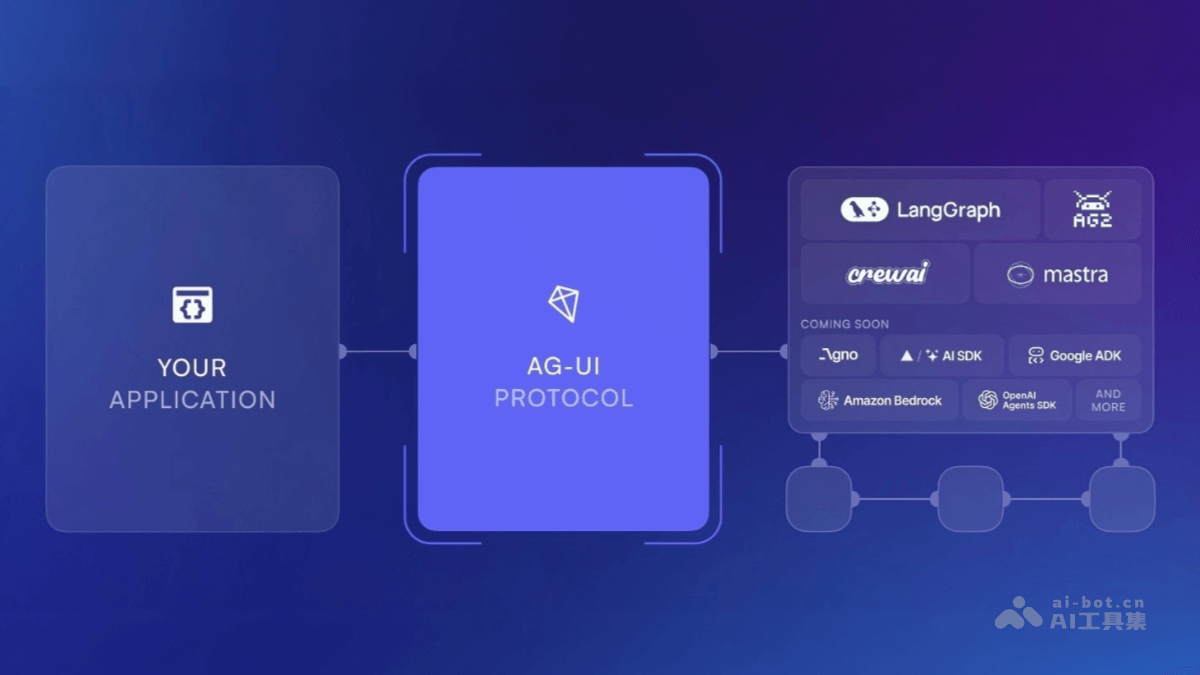
Main Features of AG-UI
- Event-Driven Communication: Defines 16 standard event types and supports real-time interaction.
- Bidirectional State Synchronization: Agent and frontend states are synchronized in real time to ensure UI updates.
- Streaming Communication Support: Supports transport methods such as SSE, WebSocket, and Webhook.
- Structured Messages and UI Controls: Supports generative UI and card-style replies.
- Multi-Agent Integration: Supports multi-Agent collaboration and works together with protocols such as MCP and A2A.
- Flexible Framework Compatibility: Compatible with frameworks such as LangGraph and CrewAI, and provides TypeScript and Python SDKs.
Technical Principles of AG-UI
- Event-Driven Architecture: Based on an event-driven communication method, the Agent emits a series of events during execution, and the events are captured and processed by the frontend application. Event types are standardized to ensure compatibility and interoperability between different Agents and frontend applications.
- Flexibility of Transport Mechanisms: AG-UI does not mandate the use of a specific transport mechanism and supports multiple transport methods such as SSE, WebSocket, and Webhook. Developers can choose the most suitable transport method according to specific needs to ensure the efficiency and reliability of data transmission.
- Middleware Layer: AG-UI includes a flexible middleware layer that ensures the event formats of different Agent frameworks are compatible with the AG-UI standard. The middleware layer enables Agent frameworks to adapt to the AG-UI protocol with minimal changes, improving the protocol's generality and ease of use.
- Reference Implementation: AG-UI provides a reference HTTP implementation and default connectors to help developers quickly start projects. The reference implementation provides developers with concrete implementation examples, reducing development difficulty.
- Secure Agent: Based on a Secure Proxy, it ensures secure routing of requests and protects the security of communication between the Agent and the frontend application. The Secure Agent can prevent data leakage and malicious attacks, ensuring application security.
AG-UI Project Address
- Project Website:https://docs.ag-ui.com
- GitHub Repository:https://github.com/ag-ui-protocol/ag-ui
Application Scenarios of AG-UI
- Intelligent Customer Service Systems: Quickly build AI customer service to implement functions such as automatic replies, question answering, and ticket generation, improving customer service efficiency.
- Intelligent Q&A Interfaces: Develop intelligent Q&A UIs to provide users with real-time, accurate answers and enhance user experience.
- Multi-Agent Collaboration Platforms: Build platforms for multi-Agent collaboration, support interaction and task allocation among different Agents, and improve the ability to handle complex tasks.
- Embedded Device Interaction: Integrate AI Agents into embedded devices to enable intelligent control and interaction of devices.
- Real-Time Collaboration Tools: Build a real-time collaboration tool that supports multi-user online collaboration, synchronizes data and status in real time, and improves team collaboration efficiency.