
Today I'm sharing something suitable for academics.
Nowadays there are more and more AI academic tools, and writing speed has gone up, but once you carefully check it over, it's full of holes.
What's even more frustrating is that AI can write an argument very firmly, but the original literature it cites doesn't necessarily actually support that argument.
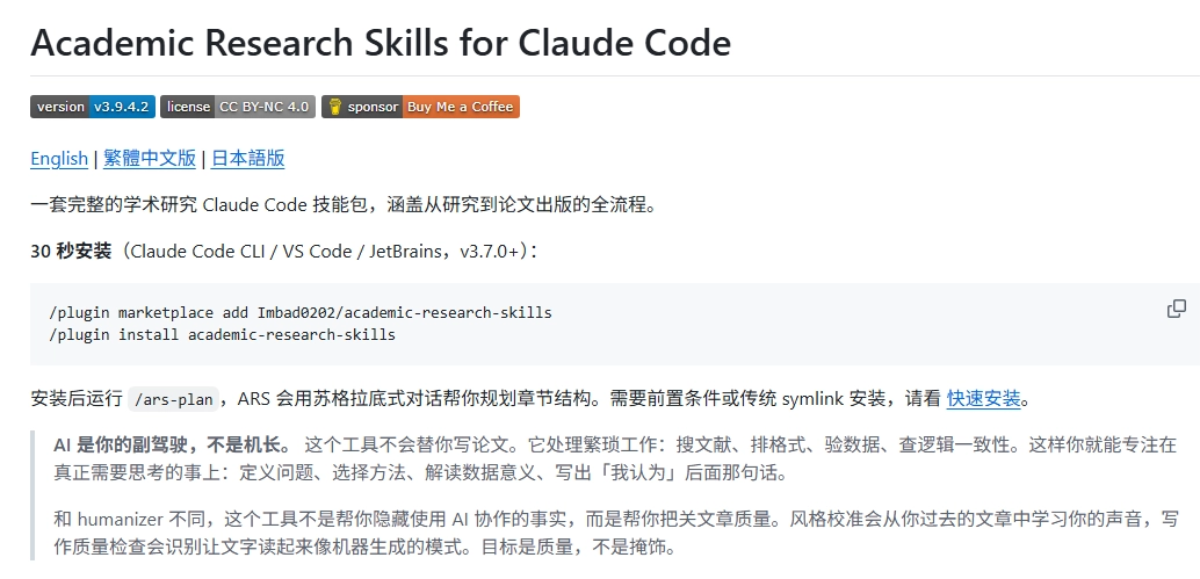
Recently I saw an academic research project on GitHub that specifically solves this kind of problem, and it already has 30K stars.
 01
Project Introduction
01
Project Introduction
Academic Research Skills (ARS) is an open-source academic research Skill pack for Claude Code. It breaks apart stages such as topic selection, literature search, paper writing, peer review, revision, and formatting, letting AI participate in stages, while key judgments are still left to us.
This project covers the complete academic workflow from topic research, literature search, paper writing, peer review, and revision to final formatting and process summary.
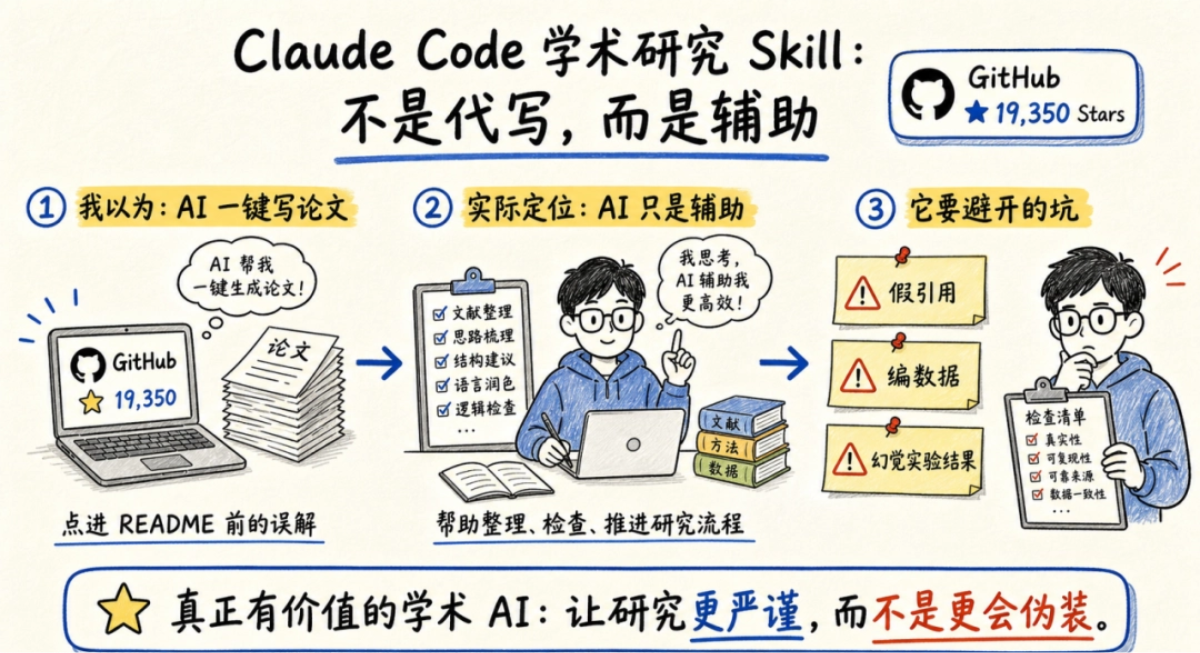
This project mainly contains four groups of Skills:
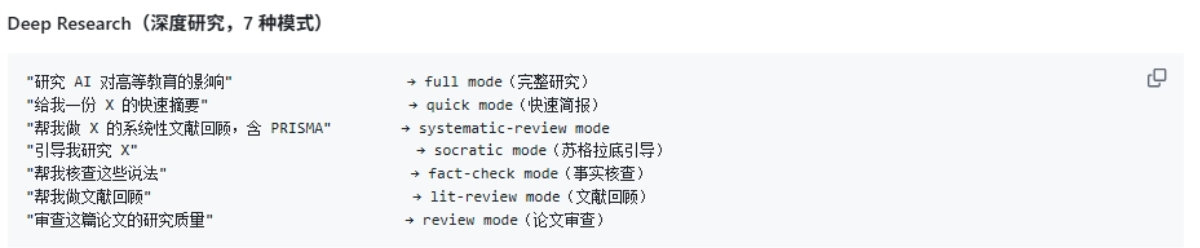
Deep Research: conducting in-depth research, literature reviews, systematic reviews, and fact-checking.
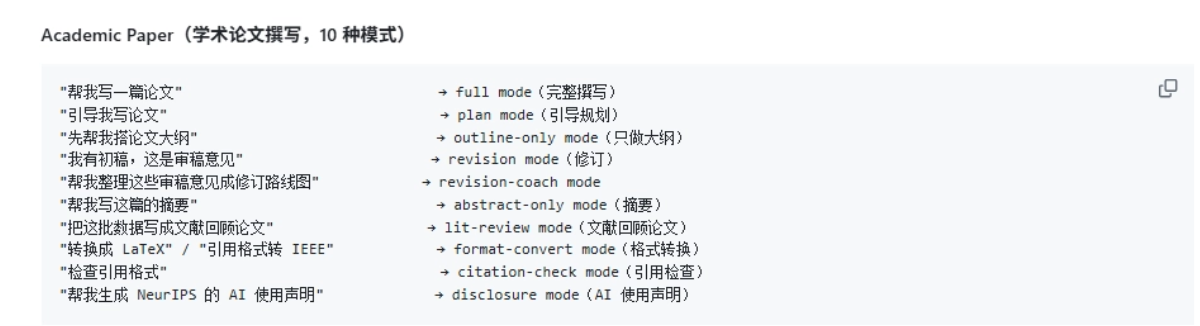
Academic Paper: assisting with paper writing, abstract generation, format conversion, citation format checking, and LaTeX / PDF output.
Academic Paper Reviewer: simulating peer review, reviewing papers from multiple perspectives, and giving quality scores and revision suggestions.

Academic Pipeline: linking the process from research to manuscript together, advancing it by stages, and adding academic integrity checks in between.

It is also especially simple to use.
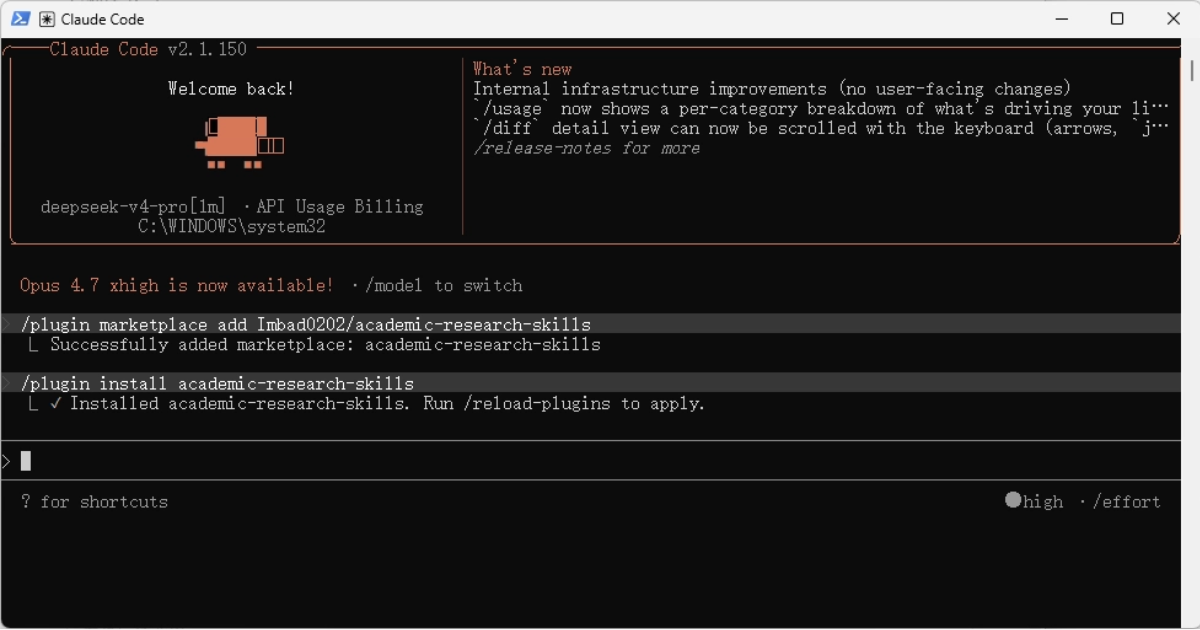
If we are already using Claude Code, two lines of commands can directly install the plugin.
/plugin marketplace add Imbad0202/academic-research-skills
/plugin install academic-research-skills
 02
Project Hands-On Test
02
Project Hands-On Test
The four groups of skills in the project complement each other, and more than a dozen skills will appear alternately throughout the process of completing our paper. For example, let the project guide us in writing a paper:
Prompt: Guide me in writing a paper about the impact of declining birth rates.
The plan mode skill in the Academic Paper group of skills will use a guided method to help us plan a paper.
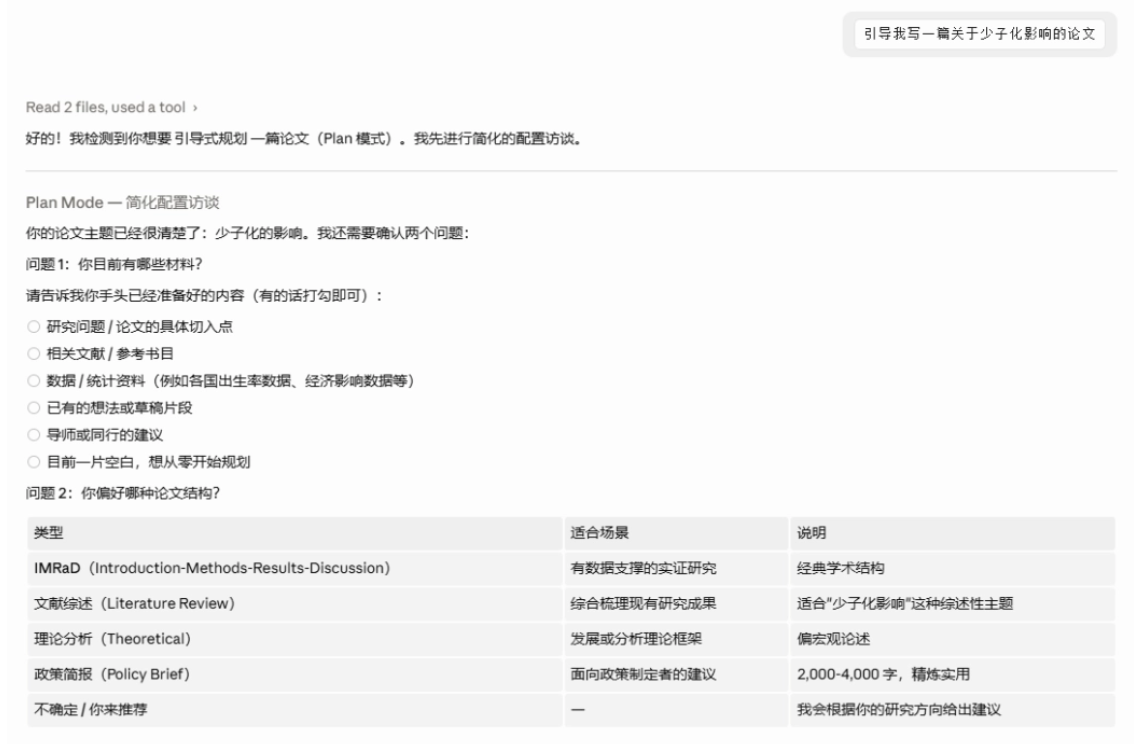
Through asking questions, it obtains the paper's current progress and which structure we want to use.
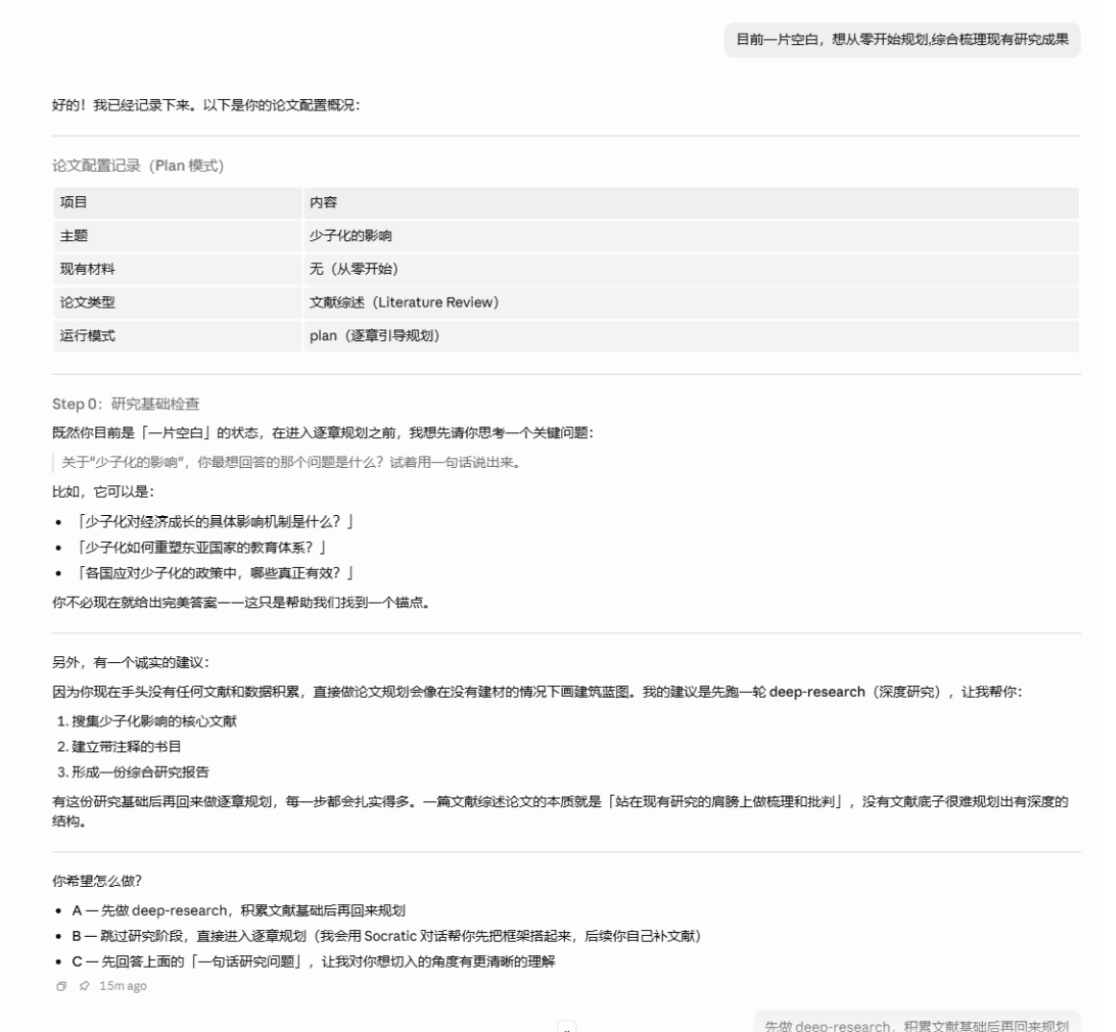
After we finish answering the progress question and choose the paper structure, based on the current paper progress, it will again recommend that we first conduct deep-research.
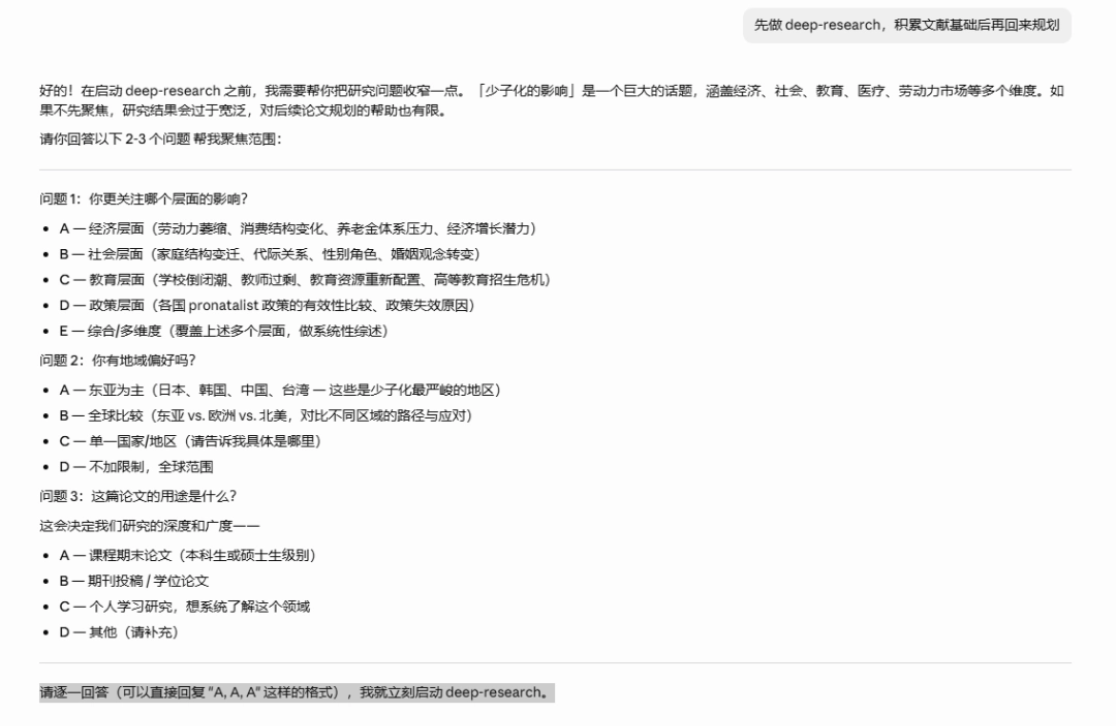
Of course, during deep-research it will also confirm some directional issues for the paper through follow-up questions.
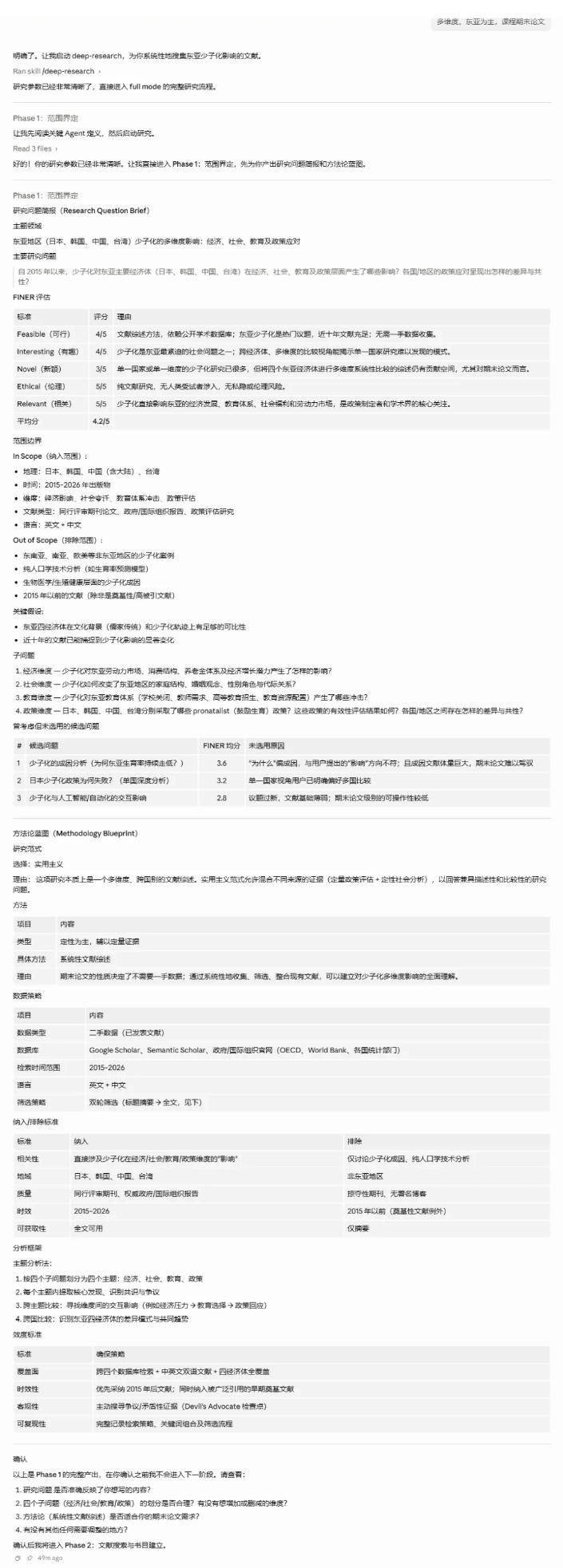
As you can see, here it switches to the full mode process of the Academic Paper skill group.
The process directly enters Phase 1: it produces a research question brief and methodological blueprint for us.
It will also carefully confirm some directional issues before conducting the literature search; the process is really very detailed.

I thought the literature search results divided into four directions were already comprehensive enough, but I didn't expect it could even list some limitations.
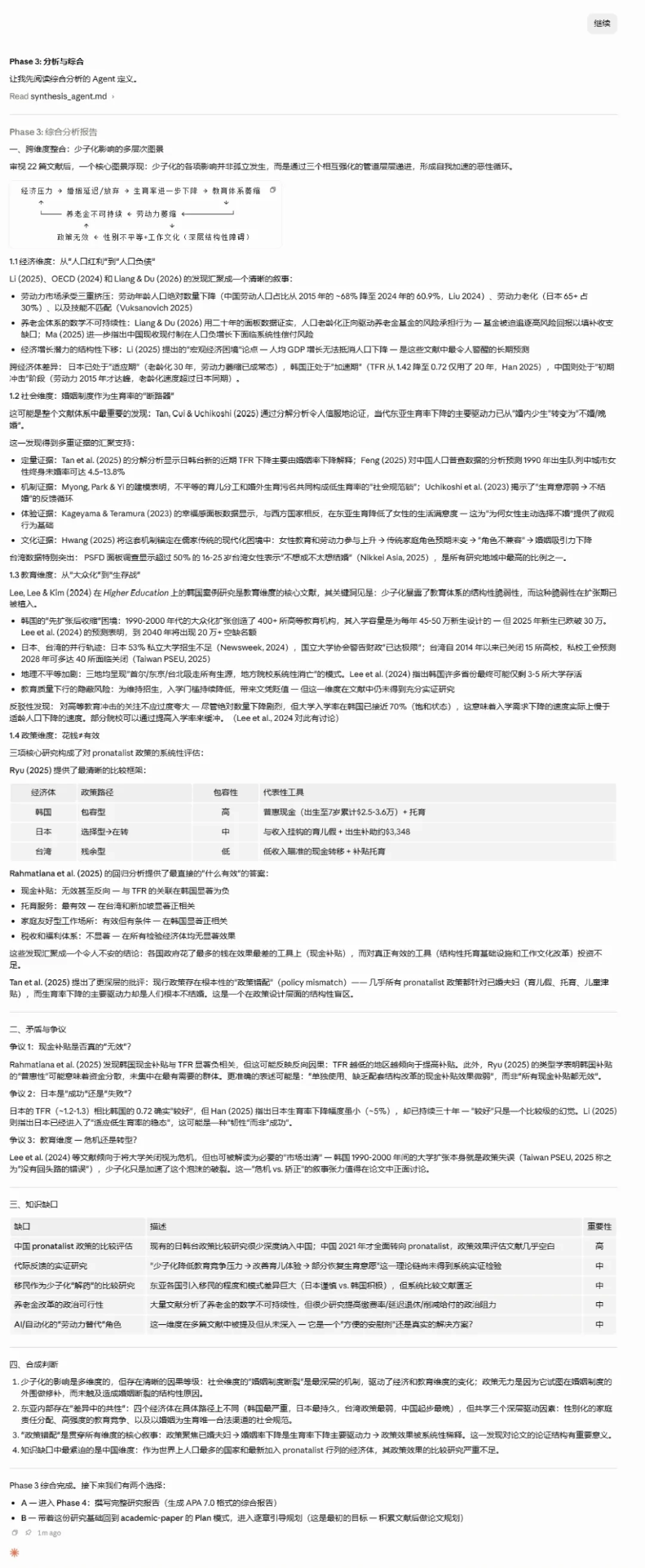
After Phase 3: Analysis and Synthesis is completed, it gives us two options:
Enter Phase 4: directly write the complete research report.
Or take this research foundation back to the Plan mode of academic-paper and enter chapter-by-chapter guided planning.
The second option is to return to our original goal: accumulate literature first, then do paper planning.
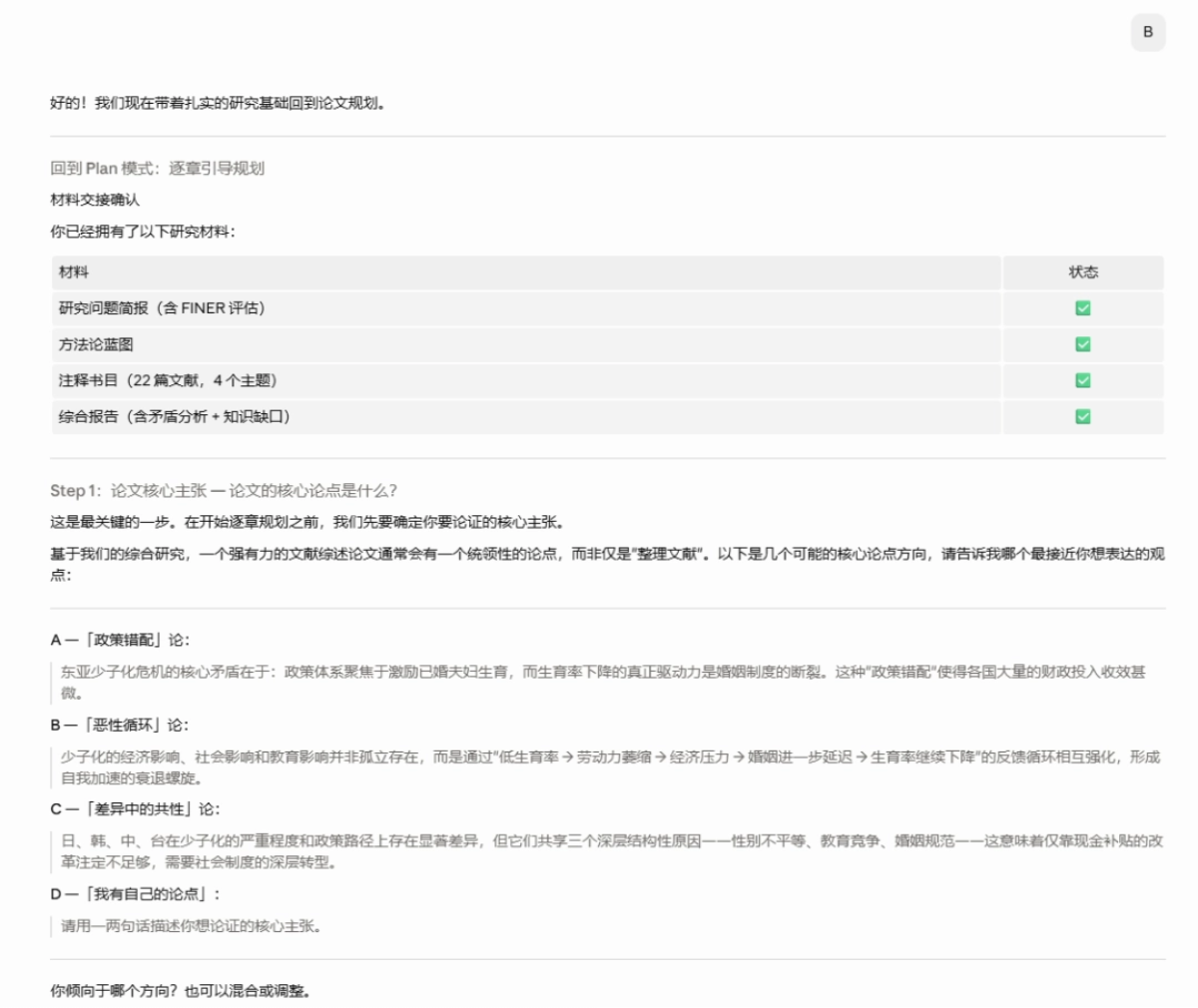
We then have initial literature collection, and the progress is no longer a blank slate. And through the process just now, the core claim of our paper has also been distilled.

Once we have the core argument, it will help us plan chapter by chapter. ARS won't directly write the entire paper for us; instead, it conducts a series of Q&A through skills, trying as much as possible to incorporate our viewpoints.
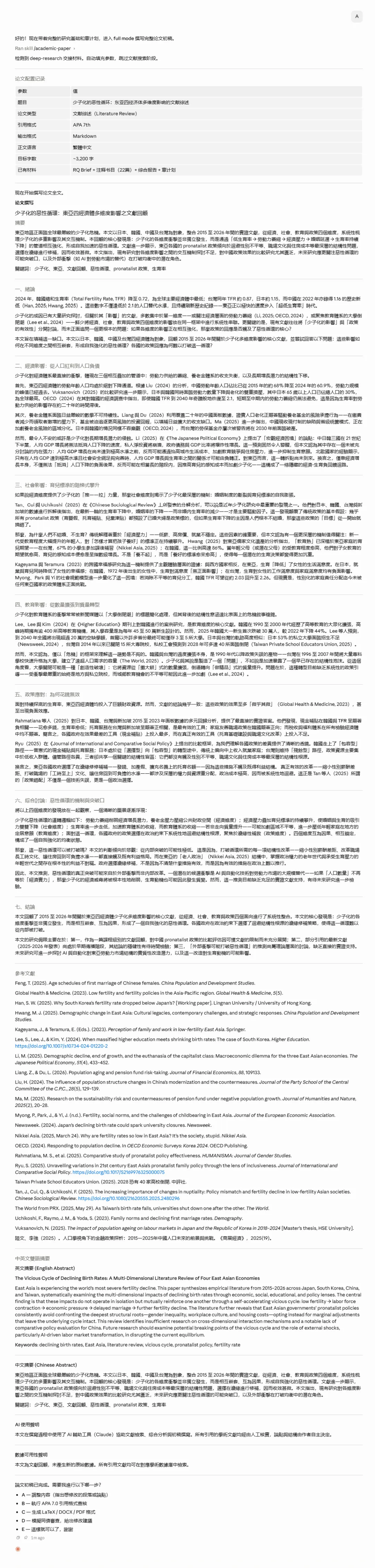
After one round of questioning, if there are no modifications, it will enter full mode and let the AI write a complete first draft of the paper.
The essence of this project lies in the academic integrity gate and citation audit.
We simply ask, "Help me review the entire paper." ARS will specifically insert checkpoints into the paper workflow to check for fabricated citations, data errors, claims not supported by literature, methodological packaging, AI hallucination results, and these kinds of issues.
Specifically, this is embodied by directly invoking the Academic Paper Reviewer set of skills to accomplish it.
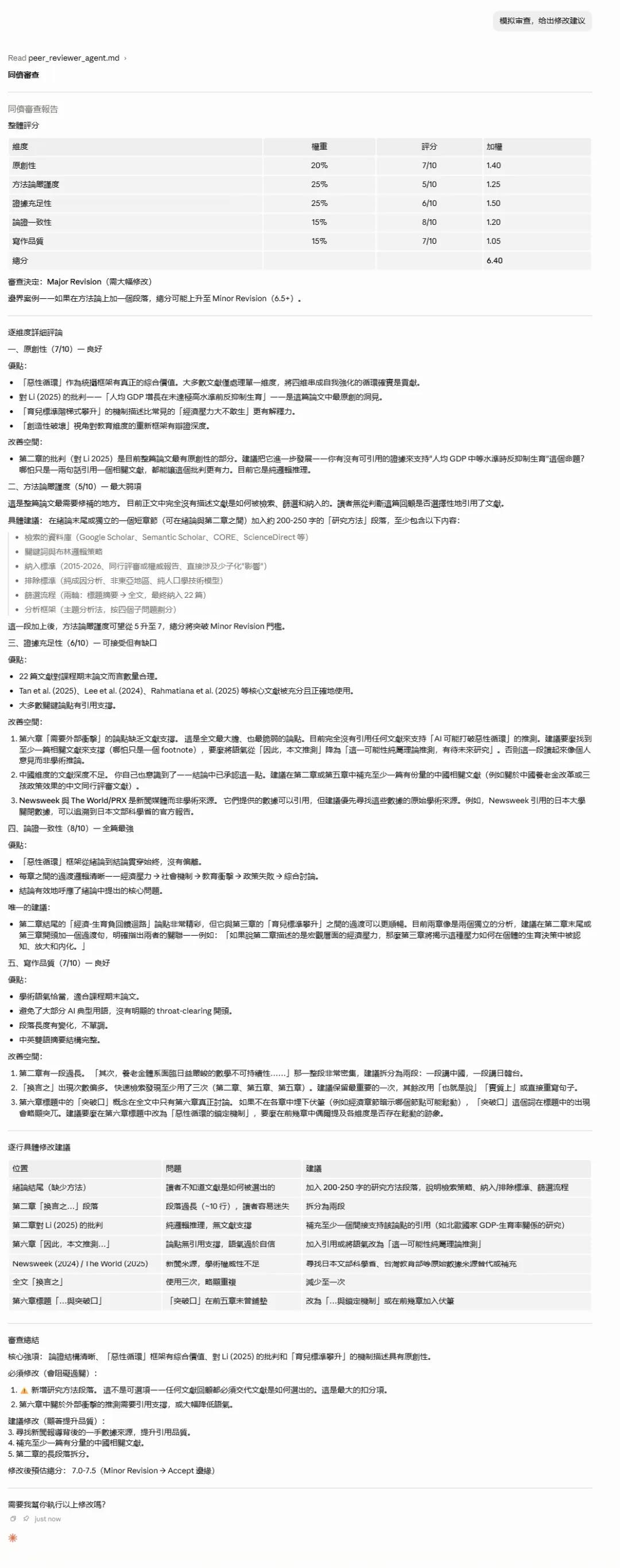
You can see that ARS will score our paper across many dimensions at a high level, and will also get down to specifics and tell us which paragraphs or sentences need revision.

You can see the final result: the structure is very complete, and the content is also very substantial. As a course-level paper, it is already presentable.
03 Dig a little deeperCompared with writing a complete paper, what I care more about is the approach behind ARS: breaking academic research into a set of AI workflows that can be repeatedly executed, leave a process behind, and be inspected.
Schools can use ARS for paper writing tutoring and also for academic integrity checks. Research teams can use ARS for literature reviews and project pre-research. Journals and educational institutions can use it for preliminary screening review. R&D, consulting, and investment research teams in enterprises can also use similar workflows to check the evidence chain in reports.
In particular, functions such as "citation audit" and "claim support checking" are very likely to become core charging points for future AI academic tools.
Many AI tools today are still stuck at the level of "helping you write more like a paper," but the real trouble has not been solved: Does every conclusion have literature support? Have citations been distorted? Was the data moved over from another context?
AI does not have to rush to finish professional work all at once. A better approach is to embed itself into professional workflows, help people ask further questions, verify, and review, and fill in the links that are most easily overlooked.
Original link:GitHub raked in 30,000 stars, equivalent to stuffing an advisor into Claude Code!